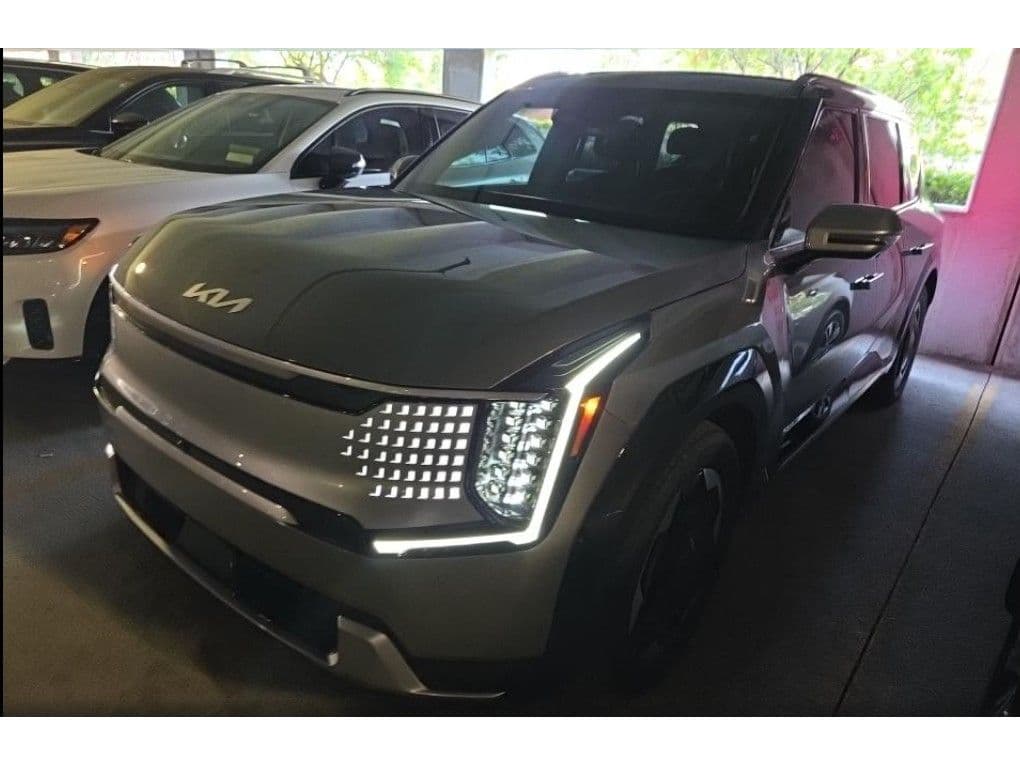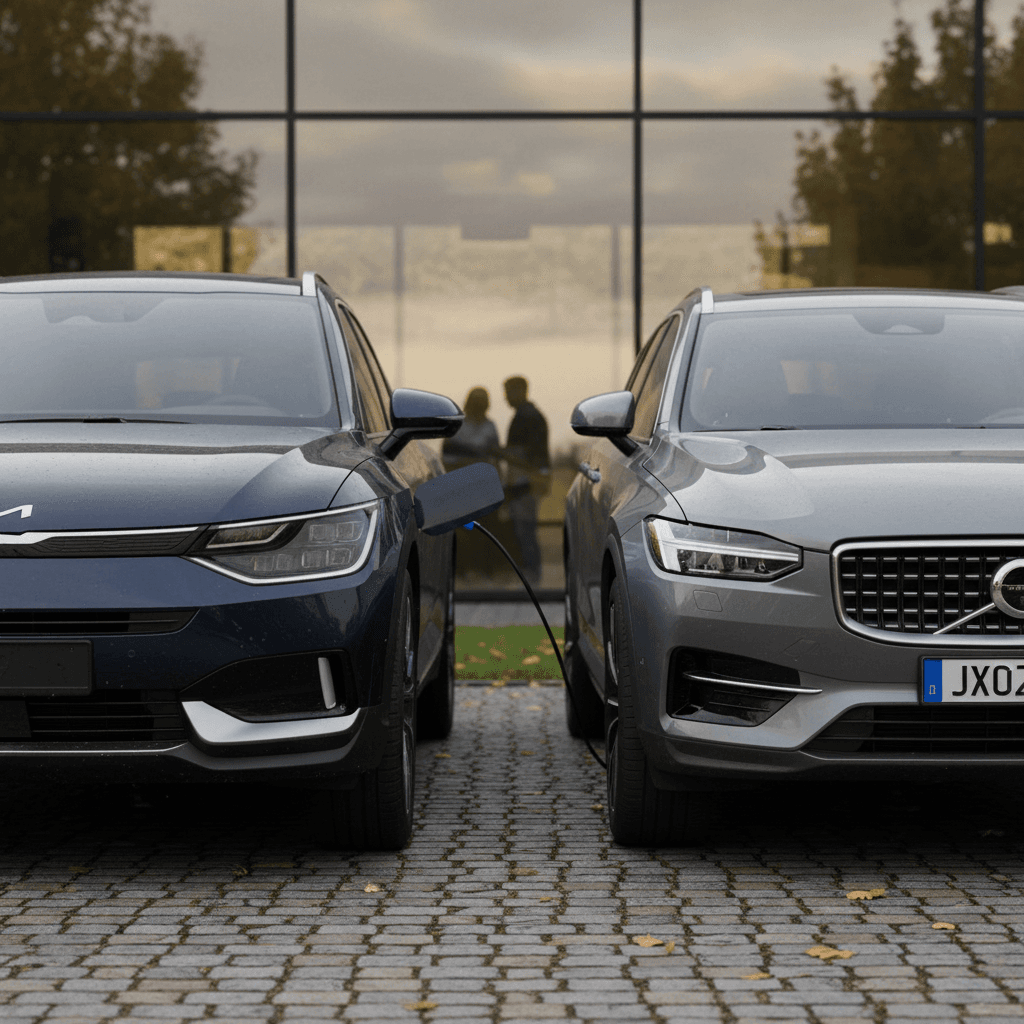
If you’re shopping the used market in 2026 for a three-row electric SUV, a **used Kia EV9 vs Volvo EX90 comparison** is probably at the top of your list. Both deliver real family space, luxury features, and long-range EV capability, but they take very different paths on price, personality, and ownership costs.
Two flagships, two philosophies
Why compare the EV9 and EX90 as used buys in 2026?
The Kia EV9 arrived in the U.S. for the 2024 model year as one of the first mainstream three-row electric SUVs. By 2026, it’s on its third model year, with plenty of off-lease and early trade‑in examples starting to hit the market. The Volvo EX90 began U.S. sales for 2025 and continues into 2026, giving shoppers a second, more traditional luxury alternative.
New, these two line up closely in concept, large, three-row, all‑electric SUVs with advanced safety tech and strong performance. But **used shoppers see a very different picture**. Kia’s aggressive incentives and volume sales have pulled used EV9 prices down quickly, while the EX90’s high MSRP and limited supply keep used pricing loftier, at least for now.
Think like a value investor
Quick take: which used EV SUV fits you?
Used Kia EV9 vs Volvo EX90: at-a-glance recommendations
Match the SUV to your budget, priorities, and driving style
Used Kia EV9 is better if…
- You want **maximum space per dollar** and a lower entry price.
- You’re comfortable with a mainstream badge and slightly firmer ride.
- You value **quick DC fast-charging** and easy road‑trip capability.
- You’re shopping payment first and can live without top‑tier cabin materials.
Used Volvo EX90 is better if…
- You prioritize **luxury feel and safety image** above all.
- You’re okay paying more for a smaller supply of gently used examples.
- You like Volvo’s minimalist design, natural materials, and quiet cabin.
- You’re planning to keep the vehicle longer and want a premium experience every mile.
The short answer
Pricing and value: used market reality
On paper, new MSRPs tell one story; actual used transaction prices tell another. The EX90 launched with a starting price near the $80,000 mark for 2025 models, with higher trims in the mid‑$80,000s and above. The 2026 Kia EV9 lineup, by contrast, carries MSRPs starting in the mid‑$50,000s for Light models and low‑$70,000s for a fully loaded GT‑Line, before destination charges and incentives.
Typical 2026 used price ranges (U.S., early 2026)
Those broad numbers hide a lot of variation. A base‑trim EV9 Light with higher miles can slip under $40,000, while a low‑mile GT‑Line can still scrape $60,000 in a tight local market. EX90s are newer and rarer, so discounts from MSRP are smaller, and dealers often hold firm on certified pre‑owned pricing.
Watch the incentive hangover
Used Kia EV9 vs Volvo EX90: price and value snapshot
Approximate U.S. asking ranges you’re likely to see in early 2026, assuming average miles and good condition.
| Model & trim | Typical used model years in 2026 | Approx. price band | Value notes |
|---|---|---|---|
| Kia EV9 Light / Light LR | 2024–2025 | $38,000–$47,000 | Strong value; plenty of range for families; interiors are simpler but practical. |
| Kia EV9 Wind / Land | 2024–2025 | $44,000–$55,000 | Sweet spot for features vs price; dual‑motor AWD versions cost more but tow better. |
| Kia EV9 GT‑Line | 2024–2025 | $50,000–$60,000+ | High performance and luxury touches; only worth it used if priced well under a new lease deal. |
| Volvo EX90 Plus | 2025 | $60,000–$70,000 | Entry to Volvo’s flagship EV; prices stay elevated due to low supply. |
| Volvo EX90 Ultra / Performance | 2025 | $70,000–$80,000+ | Top trims remain expensive used; compares more directly with new premium EVs than with used EV9s. |
Always compare against current new‑vehicle incentives and local market data before committing.
Range, battery, and charging performance
On the road, both SUVs deliver usable real‑world range and high‑speed DC fast charging. But they’re built on different electrical architectures and tuned for slightly different missions, which matters if you road‑trip often or live with limited home charging.
Kia EV9: 800‑volt highway cruiser
- Built on an 800‑volt platform for **very fast DC charging** when the station can deliver it.
- Long‑range trims are estimated around **280–305 miles** of EPA range for 2026, depending on wheels and drivetrain.
- Real‑world highway range for a used EV9 typically lands in the 230–260‑mile window when fully charged, driven at U.S. highway speeds with family and cargo.
- Can add a big chunk of range, often from 10% to 80%, in well under 30 minutes on a strong DC fast charger.
Volvo EX90: big battery, evolving hardware
- Early 2025 EX90s launched on 400‑volt hardware with strong but not class‑leading fast‑charge speeds.
- Volvo has announced **upgraded 800‑volt capability** for the 2026 EX90, designed to improve efficiency and charging times; 2025 owners are slated to receive upgrades as well.
- EPA range projections vary by trim, but most configurations cluster in the mid‑to‑high‑200‑mile range, similar in practice to the EV9.
- As with the EV9, expect lower range in winter, at high speeds, or with a full crew of passengers and gear.
Battery health matters more than brochure range
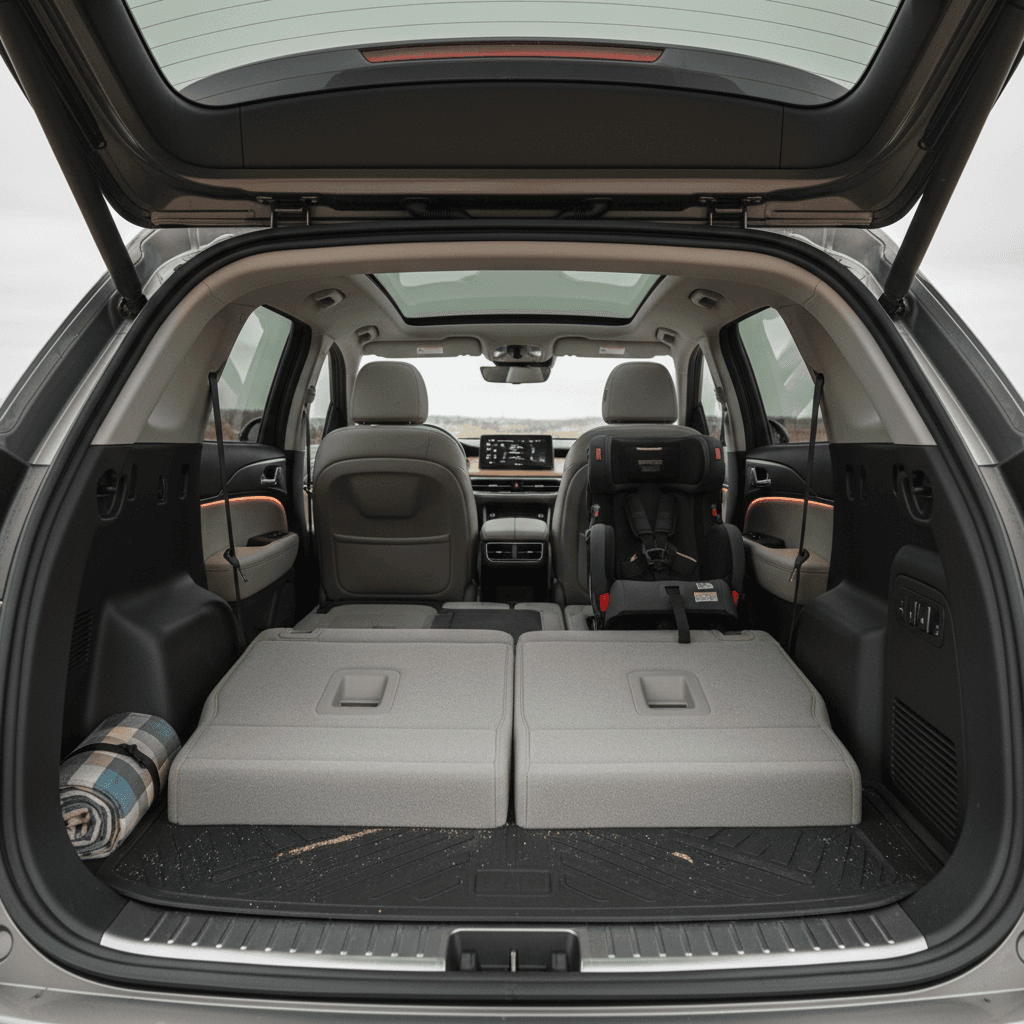
At Recharged, every vehicle gets a **Recharged Score battery health diagnostic**, so you see measured capacity, not guesses. That’s especially important when you’re cross‑shopping two relatively new platforms like the EV9 and EX90, where long‑term degradation data is still maturing.
Space, comfort, and interior tech
Size‑wise, these two are close cousins. The Kia EV9 is a wide, blocky three‑row SUV with a surprisingly spacious third row and generous cargo hold. The Volvo EX90 is slightly narrower and wears sleeker proportions, but still offers genuine three‑row capability. The big differences are in feel, materials, and interface philosophy.
Cabin experience: used EV9 vs EX90
How each SUV feels once you’re settled behind the wheel
Room & packaging
EV9: Exceptionally good space efficiency, especially in the third row. Boxy roofline and sliding second row make it easy to fit adults in back. Flat floor helps with comfort.
EX90: Still adult‑friendly in rows two and three, but feels more like a traditional luxury SUV, comfortable, not cavernous.
Ride & refinement
EV9: Tends toward a firmer, more controlled ride, especially on larger wheels. Quiet overall but not as cocooned as the Volvo.
EX90: Softer, more isolated feel. Emphasis on low wind and road noise. The cabin ambiance skews upscale and relaxed.
Infotainment & controls
EV9: Wide dual screens, straightforward menus, and plenty of physical controls where you want them. Wireless phone integration is common.
EX90: Tall central touchscreen running Google‑based software with few physical buttons. Clean design, but some owners find it menu‑deep for simple tasks.
What to sit in and test on a used example
Safety, driver assistance, and brand reputation
Volvo has built its brand on safety, and the EX90 is positioned as one of its most advanced vehicles ever in that respect. It layers radar, cameras, and lidar, plus a robust driver‑monitoring system, on top of substantial passive safety engineering. The EV9, meanwhile, brings a deep suite of standard active‑safety and driver‑assist features that compares well with many luxury rivals, even if it doesn’t lean as hard on the safety‑branding message.
- Both SUVs offer a **full set of modern safety aids**: automatic emergency braking, lane‑keeping assist, blind‑spot monitoring, rear cross‑traffic alert, and more.
- Volvo’s EX90 adds particularly advanced driver‑monitoring, intended to reduce crashes related to distraction or fatigue.
- Kia’s Highway Drive Assist and related features provide confident semi‑automated highway driving when used correctly.
- Insurance and repair costs for the EX90 can trend higher, reflecting its premium badge and complex sensor suite.
Crash tests and real‑world data are still emerging
Ownership costs and resale outlook
Total cost of ownership goes well beyond the purchase price. Electricity, insurance, maintenance, tires, and future resale all play roles, and the EV9 and EX90 diverge more here than their shared body style suggests.
Kia EV9 ownership picture
- Lower used prices create a friendlier starting point for your payment or cash outlay.
- Service and parts availability benefit from Kia’s broader dealer network and shared components with other Hyundai‑Kia EVs.
- Insurance costs are often more mainstream than for a European luxury brand, though this varies by zip code.
- Heavy early depreciation suggests **future resale value will be modest**, but because you’re buying after the big drop, your downside risk is smaller.
Volvo EX90 ownership picture
- Higher used prices mean you’re tying up more capital upfront, even if the vehicle holds value better percentage‑wise.
- Service and repairs may be pricier at Volvo dealers, and not every independent shop will be comfortable with EX90‑specific systems.
- Insurance can be elevated due to repair complexity, luxury positioning, and parts costs.
- If Volvo manages supply tightly, the EX90 could enjoy **stronger relative resale**, but you’re starting from a much higher baseline.
Don’t forget tire and wheel costs
How Recharged helps with used EV9 and EX90 shopping
Because both the Kia EV9 and Volvo EX90 are young nameplates, the usual used‑car shortcuts, like relying on 10 years of resale charts, don’t tell the full story. That’s where **data‑driven inspection and pricing** become critical.
- Every EV Recharged lists comes with a **Recharged Score Report** that includes battery health diagnostics, charging history indicators, and detailed condition notes.
- Pricing is benchmarked against real‑world transactions so you can see whether a specific EV9 or EX90 is **fairly priced for its trim, mileage, and market**.
- You can arrange **expert-guided video walk‑throughs** of vehicles, ask EV‑specialist questions, and get help comparing payment and financing options.
- If you already own an EV9 and are thinking about switching to an EX90, or vice versa, Recharged can give you an **instant offer or help you consign** your current EV.
Nationwide, EV‑specialist support
Ready to find your next EV?
Browse VehiclesChecklist: what to inspect on each model
Used EV9 vs EX90 inspection checklist
1. Confirm battery health and charging history
Ask for a recent **battery health report** (Recharged provides this automatically). Look for signs of frequent DC fast‑charging and very high mileage in a short time frame, which can accelerate wear.
2. Inspect wheels, tires, and suspension
On both SUVs, check for curb rash on large wheels, uneven tire wear, and any clunks over bumps. These vehicles are heavy; worn tires and suspension components are common on poorly maintained examples.
3. Test all driver‑assist systems
On a test drive, safely engage adaptive cruise, lane‑keeping, and parking aids. In an EX90, pay attention to any warnings from driver‑monitoring systems. In an EV9, verify Highway Drive Assist operates smoothly on a straight highway stretch.
4. Evaluate seat comfort in all three rows
Have adults actually sit in the second and third rows. Check legroom, headroom, and ease of access. If you plan to use the third row frequently, the EV9’s boxier shape can be a real advantage.
5. Check infotainment performance and updates
Confirm that software is up to date on both vehicles. In the EX90, make sure the Google‑based system responds quickly and that maps and apps work correctly. In the EV9, test wireless Apple CarPlay/Android Auto (if equipped).
6. Review service records and any warranty work
Because both models are new, you’ll want to see how early bugs were handled. Look for **documented software updates, TSBs, and recall fixes** completed at authorized dealers.
FAQs: used Kia EV9 vs Volvo EX90
Frequently asked questions about used EV9 vs EX90
Bottom line: which one should you buy?
For most used‑EV shoppers in 2026, the **Kia EV9 is the more rational buy**. It offers outstanding space, strong range, very quick fast‑charging, and a rich feature set, often for **tens of thousands less** than a comparable Volvo EX90 on the used market. If you’re focused on value, practicality, and road‑trip ease, it’s hard to beat.
The **Volvo EX90 earns its keep** if you’re drawn to Volvo’s safety heritage, want the softer, more insulated luxury experience, and are comfortable paying a premium for the badge and cabin ambiance. For buyers who keep vehicles a long time and are less price‑sensitive, that can be worth it.
Whichever direction you lean, don’t buy on specs alone. Look at **battery health, service history, software updates, and real‑world condition**. A well‑cared‑for EV9 can easily outrank a neglected EX90, and vice versa. If you’d like a second set of eyes on the numbers, a **Recharged EV specialist** can walk you through specific VINs, Recharged Scores, and payment scenarios so you drive away in the right three‑row EV SUV for the way you actually live.