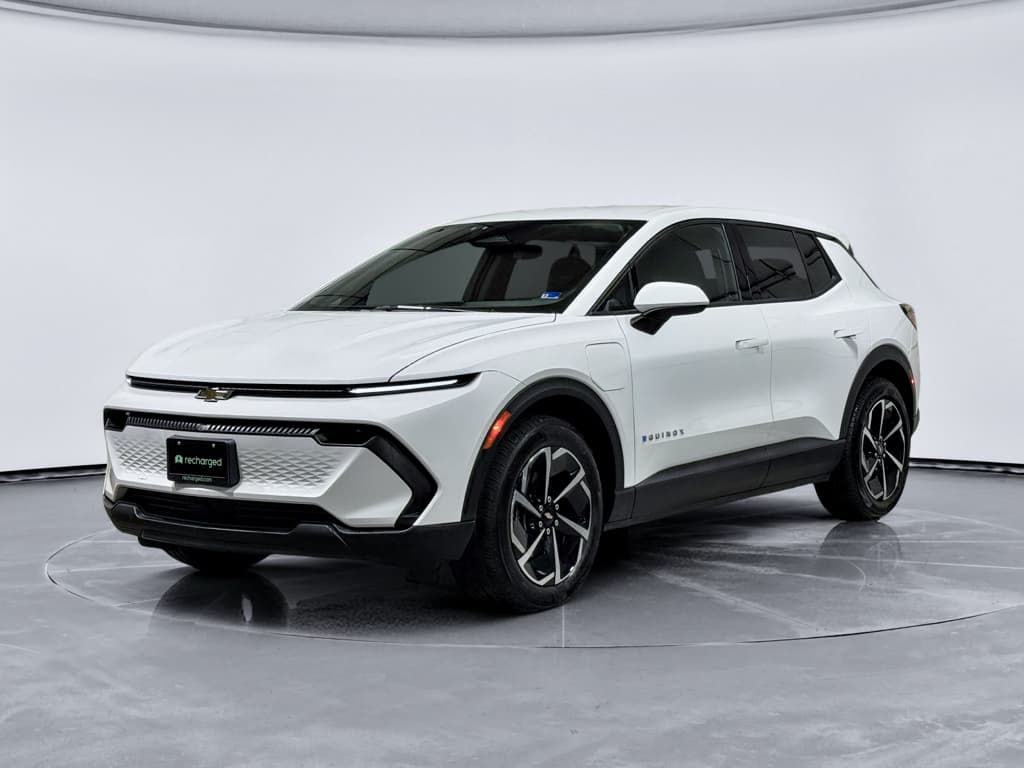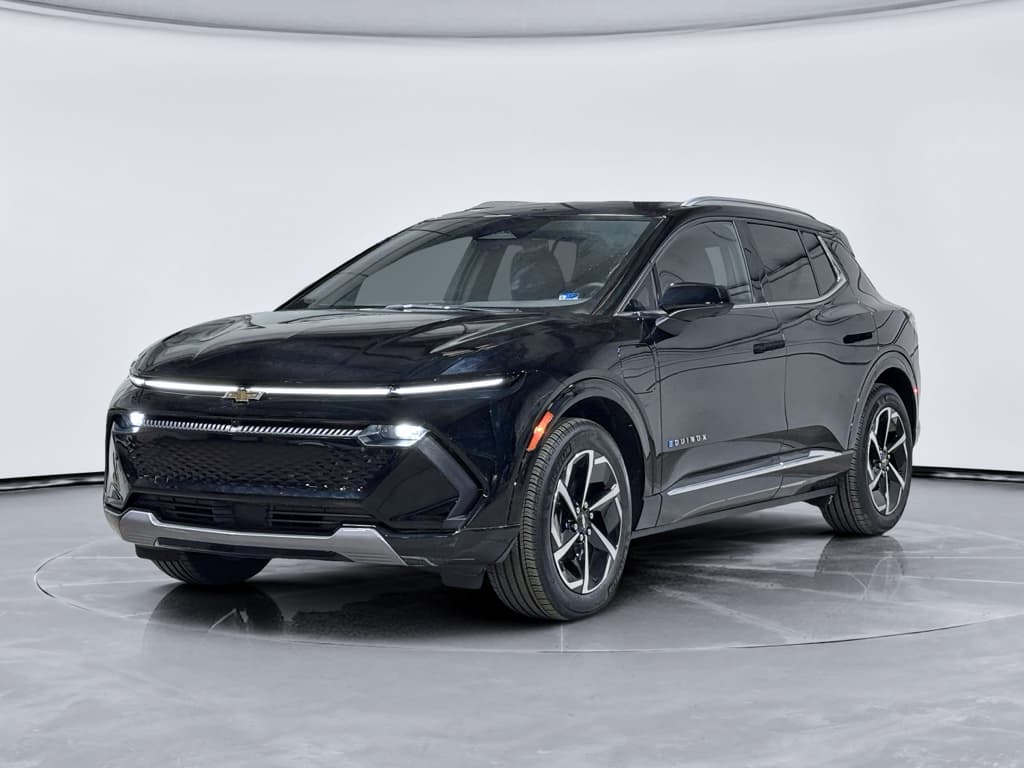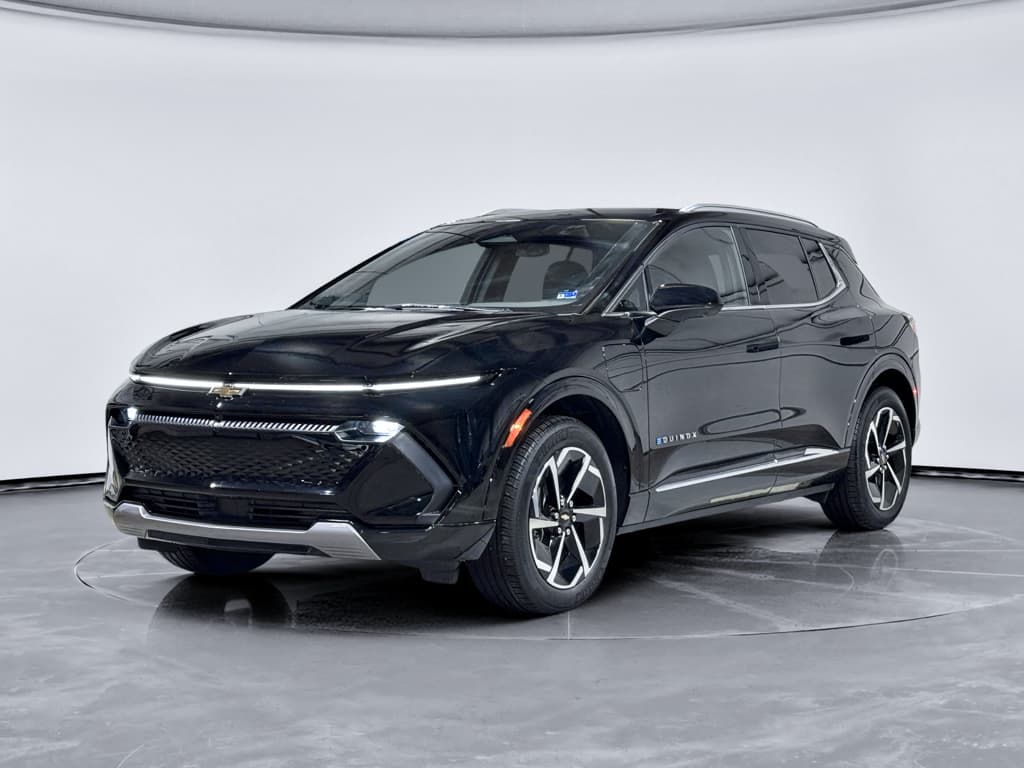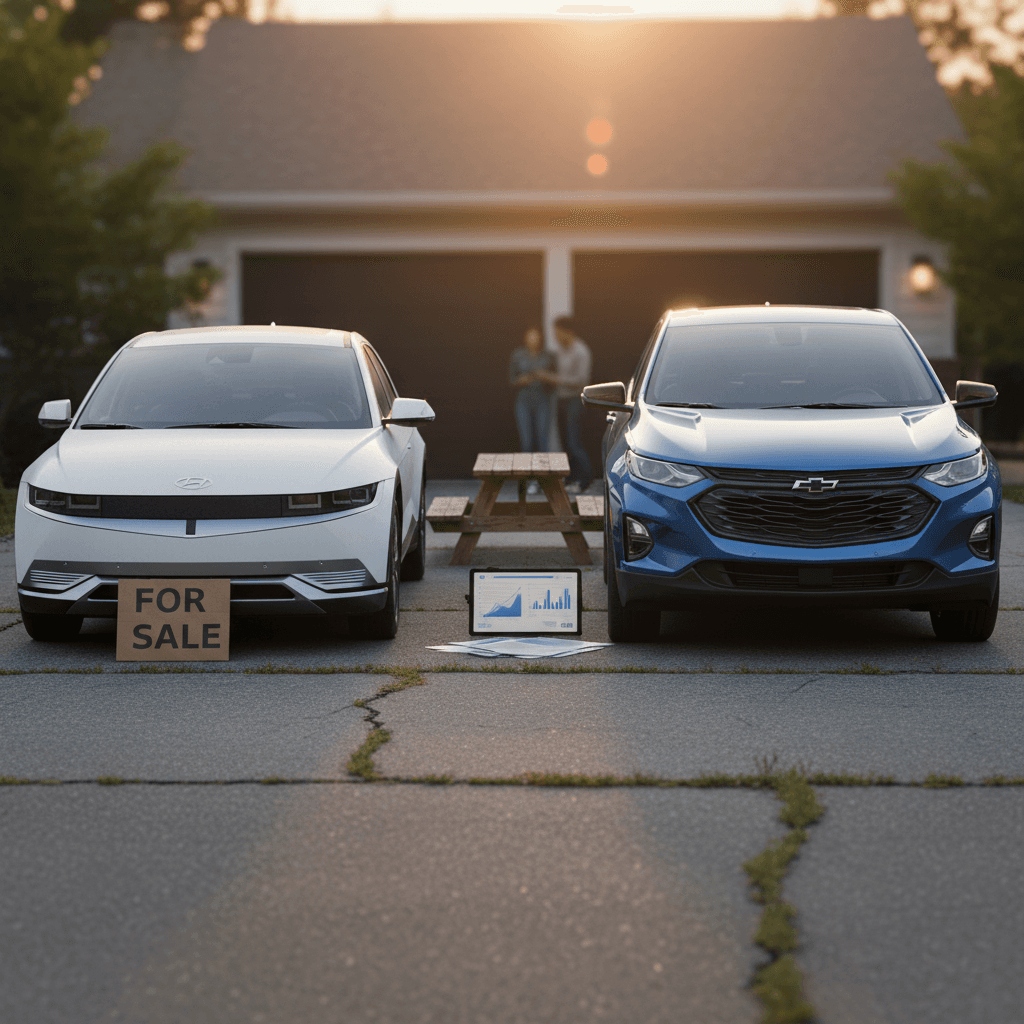
If you’re shopping the used EV market in 2026, a used Hyundai Ioniq 5 vs Chevrolet Equinox EV comparison is probably on your shortlist. Both are compact electric SUVs with real family practicality, long range, and modern styling, but they get there in very different ways. This guide breaks down the details so you can decide which one fits your life, not just your spreadsheet.
Big Picture
Overview: Used Ioniq 5 vs Equinox EV in 2026
By April 2026, the Hyundai Ioniq 5 has several model years in the wild (2022–2026), so you’ll find plenty of used examples across a wide price range. Early U.S. cars used a 58 kWh or 77.4 kWh pack; 2025–2026 models step up to 63 kWh and 84 kWh batteries and add a native NACS fast‑charging port in the U.S. with an included CCS adapter for legacy stations. That evolution really matters when you’re buying used.
The Chevrolet Equinox EV arrived later. Initial 2024–2025 builds in trims like 2LT and 2RS used a large battery (around the mid‑80 kWh usable range) with GM‑estimated up to ~319 miles of range in FWD form, plus standard 11.5 kW AC charging and ~150 kW DC fast charging. As of 2026, there are far fewer Equinox EVs on the used market than Ioniq 5s, but they’re starting to appear off lease and from early adopters trading up.
Who Each Used EV SUV Fits Best in 2026
Match your driving pattern to the right electric SUV
Hyundai Ioniq 5
Best if you want:
- Ultra‑fast DC charging on road trips
- Distinctive design inside and out
- Plenty of used inventory and price variety
Chevrolet Equinox EV
Best if you want:
- Simple, familiar mainstream SUV feel
- Long range, especially in FWD trims
- Value‑oriented pricing and GM dealer network
Both Work Well If…
Ideal for drivers who:
- Mostly charge at home
- Need real back‑seat and cargo space
- Want a modern EV without luxury‑brand pricing
Key Specs: Used Ioniq 5 vs Equinox EV Side by Side
Core Specs Comparison (Typical U.S. Trims)
Approximate specs for popular used trims you’re likely to see in 2024–2025 model years.
| Spec | Used Hyundai Ioniq 5 (2024–2025 LR RWD/SE/SEL) | Used Chevrolet Equinox EV (2024–2025 2LT/2RS FWD) |
|---|---|---|
| Battery (usable, approx.) | 77–84 kWh (model‑year dependent) | Mid‑80 kWh class |
| EPA range (FWD / RWD) | ~303–318 miles (RWD, larger pack) | Up to ~319 miles (GM estimate, FWD) |
| Drivetrain options | RWD or AWD | FWD or AWD |
| 0–60 mph (quicker trims) | ~5.0–5.2 sec (AWD) | Mid‑6s (AWD est.), slower in FWD |
| Onboard AC charging | Up to 10.9–11 kW | 11.5 kW |
| Peak DC fast‑charge | Up to ~235–240 kW (800V E‑GMP) | Up to ~150 kW |
| Charging standard (U.S., 2025+) | NACS port + CCS adapter on newer cars | CCS port (NACS adapters coming to market) |
| Vehicle class | Compact 2‑row crossover | Compact 2‑row crossover |
Always confirm exact battery size, drivetrain, and options on any individual used vehicle listing.
How to Use These Numbers
Driving Range and Efficiency
For most used‑EV shoppers, real‑world range is the first filter. The good news: both the Ioniq 5 and Equinox EV easily clear the 250‑mile bar in the right trims, and both have versions that push north of 300 miles when new.
Ioniq 5 Range on the Used Market
- Early U.S. cars with the 77.4 kWh battery offered around 303 miles EPA in RWD and roughly 260 miles in AWD when new.
- For 2025–2026, Hyundai increased pack capacity to about 84 kWh on long‑range models and quotes up to the high‑200s to low‑300s of EPA range depending on wheels and drivetrain.
- Standard‑range (58–63 kWh) cars land more in the 220–250 mile real‑world zone, which may be enough if you mostly commute and charge at home.
Because the Ioniq 5 has been on sale longer, you’ll also see more variability from driver behavior, some cars have spent their life doing highway road trips, others short urban hops. That’s where a battery‑health report matters.
Equinox EV Range on the Used Market
- GM positioned the Equinox EV as an "affordable long‑range EV," and FWD trims with the big pack are quoted around 319 miles on a full charge.
- AWD trims give up a bit of range for traction and power; think high‑200s in EPA terms when new.
- Real‑world owner reports suggest the Equinox EV can be slightly less efficient than Ioniq 5 but makes up for it with a generous battery.
Because nearly all 2024–2025 Equinox EVs use the large pack, you’re less likely to accidentally end up with a short‑range configuration, but you’ll want to confirm trim, wheels, and drivetrain.
Don’t Compare Perfect Test Numbers to Your Commute
Charging Speed and Road-Trip Ability
If you plan to road‑trip, the charging curve matters as much as raw range. This is where the Ioniq 5’s 800‑volt E‑GMP platform still stands out on the used market, especially once you factor in the 2025–2026 NACS update.
Charging Highlights for Used Buyers
On a strong DC fast charger, an Ioniq 5 with the larger battery can briefly pull well over 200 kW and hold a high rate much longer than many rivals. That means you spend less time parked and more time driving. The Equinox EV tops out around 150 kW, which is perfectly adequate, but stops will typically be longer for the same energy added.
Real-World Charging Experience
How it feels to fast‑charge each SUV on a road trip
Hyundai Ioniq 5
- Excellent highway fast‑charging, especially from 10–60% state of charge.
- 2025–2026 U.S. cars add a native NACS port, letting you use Tesla Superchargers without a third‑party adapter.
- Earlier CCS‑only cars still charge very quickly, but you’ll rely more on Electrify America and other CCS networks until NACS adapters are widely available.
Chevrolet Equinox EV
- Solid but less spectacular DC charging, think mainstream, not headline‑grabbing.
- Uses the CCS standard in 2024–2025; you’ll depend on CCS public networks until GM’s NACS transition fully plays out.
- High onboard AC rate (11.5 kW) makes overnight home charging easy if you have a 240 V, 48‑amp circuit.
Used-Buyer Charging Checklist
Space, Comfort, and Practicality
Both SUVs are sized right for American families: two rows, decent cargo area, and enough footprint to feel stable on the highway without turning every parking maneuver into a three‑point turn.
Ioniq 5: Lounge on Wheels
- Design-forward cabin with sliding center console and available reclining "zero‑gravity" front seats on some trims.
- Rear seat space rivals some midsize SUVs thanks to the long wheelbase of Hyundai’s dedicated EV platform.
- Boxy, hatchback‑meets‑crossover body gives good visibility but a slightly smaller cargo hold than you might expect from the exterior.
- Available V2L (vehicle‑to‑load) outlet on some trims lets you power tools, camping gear, or even another EV in a pinch.
Equinox EV: Familiar Compact SUV Formula
- Conventional SUV layout that will feel instantly familiar if you’re coming from a gas Equinox, RAV4, or CR‑V.
- Comfortable seating for four adults, with a fifth in a pinch, and a straightforward rear bench.
- Strong, square cargo area that’s easy to load with strollers, luggage, or Costco runs.
- Cabin materials and design are more conservative than the Ioniq 5 but generally user‑friendly.
Tech, Safety, and Driving Experience
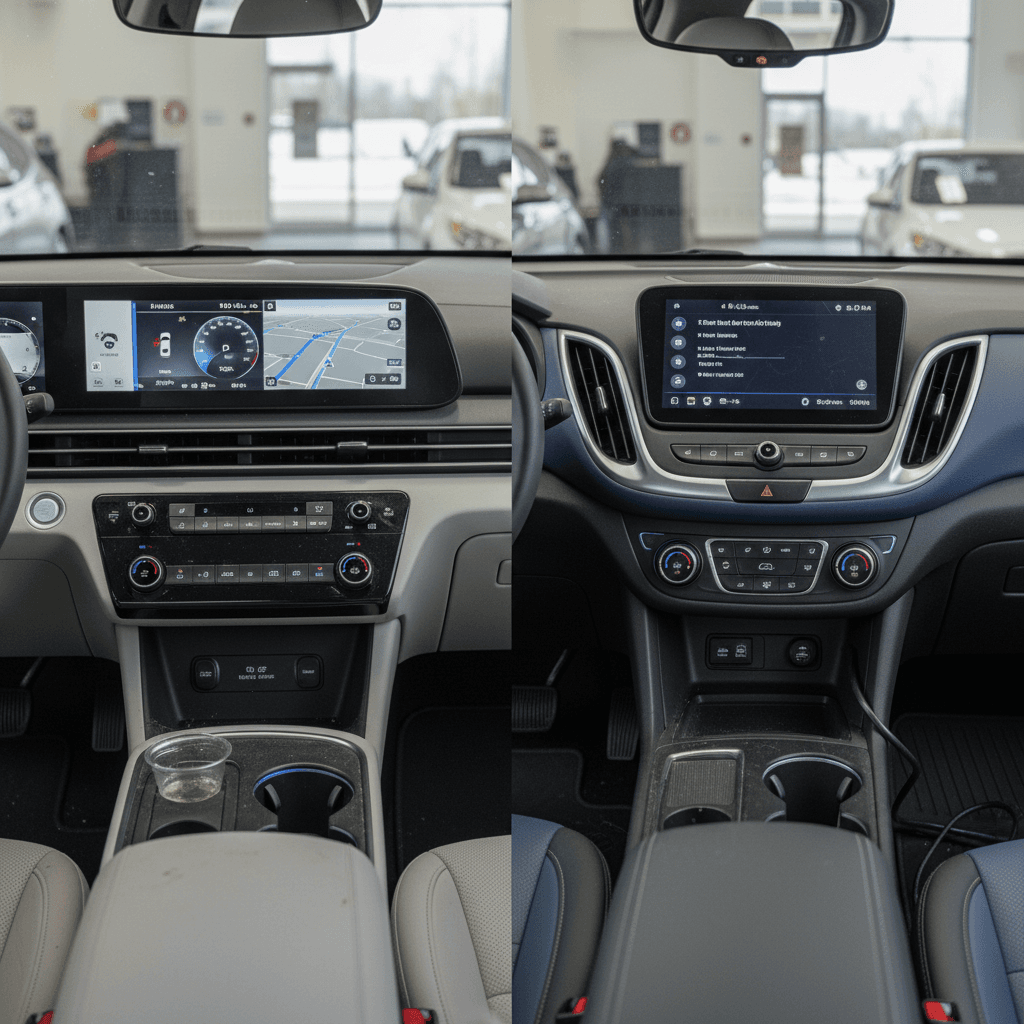
From behind the wheel, both of these EVs feel like well‑sorted modern crossovers, not science projects. The differences come down to interface philosophy, driver‑assist tuning, and how much you care about things like augmented‑reality head‑up displays versus simple knobs and buttons.
Tech & Driving Feel: Used Ioniq 5 vs Equinox EV
How these EVs feel to live with every day
Infotainment & Controls
- Ioniq 5 uses dual widescreens and Hyundai’s fast, clean UI, plus physical climate controls.
- Equinox EV runs GM’s latest infotainment with Google built‑in on many trims; more app‑centric interface.
Safety & Driver Assist
- Both offer robust ADAS suites: lane keeping, adaptive cruise, collision avoidance.
- Ioniq 5’s Highway Driving Assist can feel more natural on well‑marked highways; GM’s tuning is conservative but confidence‑inspiring.
Ride & Handling
- Ioniq 5 is planted and quiet, with a slightly firmer, more "Germanic" feel in some trims.
- Equinox EV leans comfort‑first; soft ride, light steering, tuned to feel like a familiar Chevy crossover.
Performance Perspective
Used Market, Prices, and Depreciation
Used values move quickly, but a few patterns have emerged by 2026. Ioniq 5s have had more time to depreciate, so you’ll find a wide spread from early standard‑range cars to nearly‑new 2025–2026 examples. Equinox EVs are newer and rarer, so prices tend to cluster higher for now.
Typical Used-Market Positioning in 2026 (High-Level)
These are directional observations, not price quotes, actual values vary by mileage, trim, condition, and incentives.
| Aspect | Used Ioniq 5 | Used Equinox EV |
|---|---|---|
| Years on market | Model years 2022–2026 widely available | Early 2024–2025 builds mainly just hitting used lots |
| Price spread | Wide; older standard‑range cars can be relative bargains | Narrower; most are still late‑model, higher‑priced |
| Depreciation curve | Steeper early on; stabilizing as market understands the car | Still in early steep drop from new MSRP |
| Inventory | Plentiful nationwide; easier to cross‑shop trims/colors | Limited; choice may be constrained by region and dealer pipeline |
Always check current market data and a vehicle‑specific report like a Recharged Score for precise pricing and battery condition.
Where Recharged Fits In
Battery Health and Longevity on the Used Market
Both SUVs use modern liquid‑cooled packs with robust thermal management, and neither has a widespread, systemic battery‑failure narrative as of early 2026. That said, no two used packs age exactly the same, and the details of chemistry, cooling, and fast‑charge history still matter.
Ioniq 5 Battery Considerations
- Hyundai’s E‑GMP platform was engineered for aggressive fast charging, and owner data so far suggests relatively modest degradation on well‑cared‑for cars.
- Early 58 kWh packs offer less range margin, so small losses feel bigger in daily use. Long‑range packs (77.4–84 kWh) age more gracefully from a driver’s perspective.
- Cars that lived on 350 kW chargers 3x a week will age differently than ones mostly charged at home. A detailed DC‑charging history is gold when you can get it.
Equinox EV Battery Considerations
- GM’s Ultium‑based packs combine relatively large capacity with conservative peak charging compared to the Ioniq 5.
- Because most Equinox EVs use the large pack, even moderate degradation leaves a lot of usable range on the table.
- The platform is newer, so we have fewer high‑mileage case studies, but nothing in early data suggests unusual degradation so far.
Used EV Battery Health Checklist
1. Get a Battery Health Report
Ask for a recent, <strong>independent battery assessment</strong>. On Recharged, this is baked into the Recharged Score, so you don’t have to guess about usable capacity or past charging behavior.
2. Check DC Fast-Charging History
A car that fast‑charges hard every day may age differently than one that mostly lives on Level 2. Occasional road‑trip DC use is normal.
3. Look at Range at 80–90%
On a test drive, note the estimated remaining miles at 80–90% charge compared to what the trim was rated for when new. That gives you a quick sanity check.
4. Consider Climate History
Hot‑climate cars that always parked outside age differently from garage‑kept cars in milder regions. Ask where the car spent most of its life.
Ownership Costs, Warranty, and Reliability
The calculus on ownership costs goes beyond electricity vs gas. You’re buying into warranty coverage, service networks, and brand reliability histories that look slightly different for Hyundai and Chevrolet.
Ownership Snapshot
What it costs, and feels like, to live with each EV
Warranty & Coverage
- Both brands typically offer 8-year / 100,000‑mile (or similar) battery warranties on new EVs, which partially transfers to second owners depending on age and mileage.
- Ioniq 5s from 2022–2026 will still have meaningful battery warranty remaining for most used buyers in 2026.
- Early Equinox EVs will generally have even more calendar years left on their pack warranty clock.
Service & Reliability
- Ioniq 5: Early build‑quality bugs and software wrinkles have been largely addressed via updates; mechanical reliability has been solid, with typical EV concerns around tires and brakes.
- Equinox EV: Still relatively new, but early ownership data points to mainstream Chevy levels of reliability and straightforward service via GM dealers.
Software and Recall Checks Are Non‑Negotiable
Which Used EV SUV Should You Buy?
You’re not choosing between good and bad here, you’re choosing between two competent EVs with different personalities. The right answer depends on your charging reality, daily mileage, and how sensitive you are to design and driving feel.
Choose a Used Ioniq 5 If…
- You value fast road‑trip charging and are excited about direct access to Tesla’s NACS network on newer cars.
- You want a distinctive, design‑led cabin with lounge‑like features.
- You appreciate having lots of used inventory to cross‑shop for color, trim, and pricing.
Choose a Used Equinox EV If…
- You prefer a familiar, conventional SUV feel with simple controls.
- Long freeway range matters more than eye‑popping charge speeds.
- You like the idea of GM’s nationwide dealer network and are okay with a newer platform.
When Either Is a Win
- You’re moving from a gas crossover and want to cut fuel and maintenance costs.
- You mostly charge at home and only road‑trip a few times a year.
- You shop through a marketplace like Recharged that verifies battery health, pricing fairness, and includes EV‑specialist guidance.
If you’re cross‑shopping a used Hyundai Ioniq 5 vs Chevrolet Equinox EV in 2026, don’t just compare window stickers. Compare how you actually drive, where you’ll charge, and how each specific car has been treated. A thorough battery‑health report and transparent pricing, like you get with every Recharged listing, turn a tough decision into a confident one. From there, it’s simply a matter of which EV you’ll be happier to see in your driveway every morning.