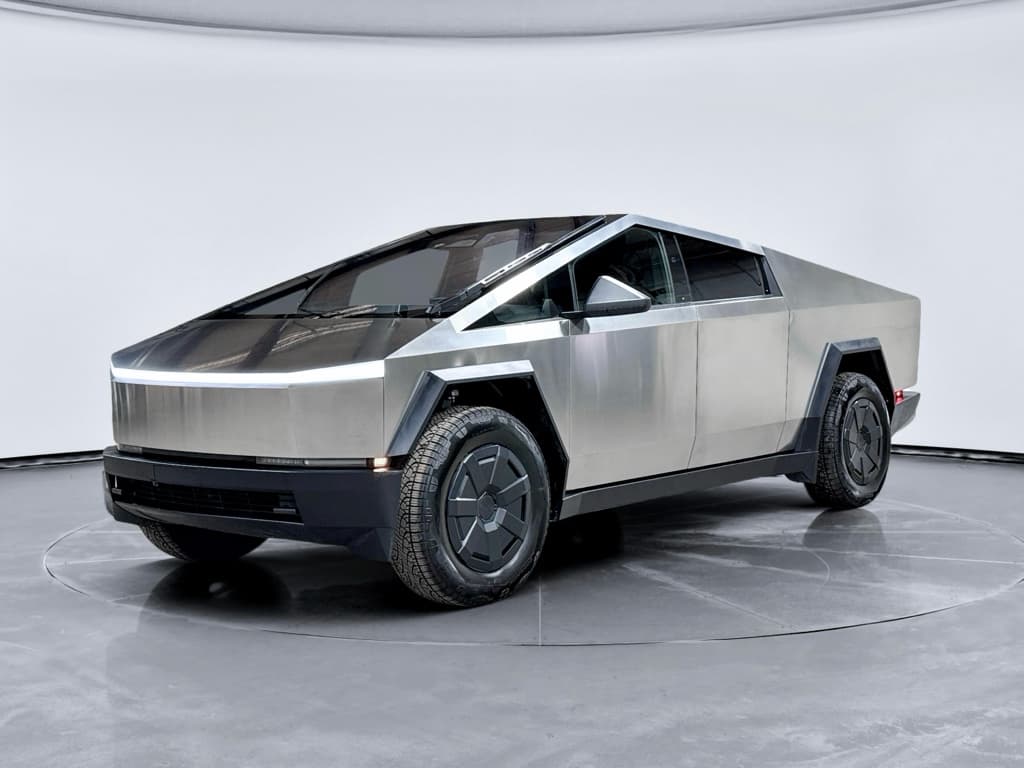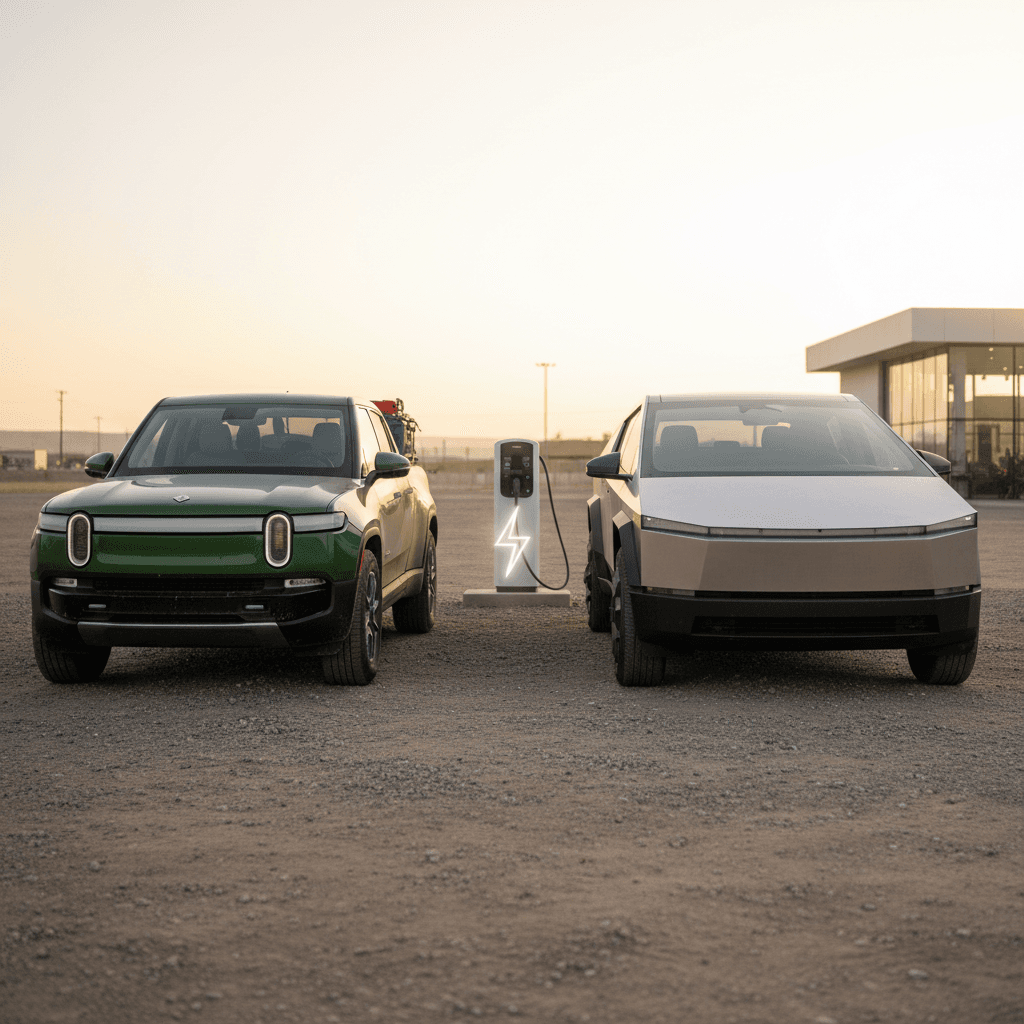
If you’re cross-shopping a used Ford F-150 Lightning vs a used Tesla Cybertruck, you’re not just picking a truck, you’re choosing between two very different interpretations of what an electric pickup should be. One leans into familiar F-150 practicality, the other is a rolling concept car that made it to production. This guide focuses on the used market in 2026 so you can decide which one actually fits your life and budget.
Context: both trucks are now firmly “used-car stories”
At a glance: who each used truck fits best
Used F-150 Lightning vs Cybertruck: quick buyer profiles
Start with how you’ll actually use the truck, not just the spec sheet.
Used Ford F-150 Lightning is best if you…
- Want a truck that looks and works like a traditional F-150 with an electric twist.
- Care more about predictable manners, comfort, and familiar controls than wild styling.
- Tow moderate loads (boats, campers, utility trailers) and value Ford’s towing tech.
- Plan to use the truck for home‑improvement runs, work around town, and family duty.
- Prefer working with a large dealer and service network if something goes wrong.
Used Tesla Cybertruck is best if you…
- Want a truck that’s as much statement piece as tool.
- Prioritize straight‑line performance and tech‑forward cabin design.
- Will tow occasionally but mostly drive unladen or with light loads.
- Live near good Tesla Service coverage and Superchargers.
- Are comfortable with a newer, more experimental product and its growing‑pains.
How to use this guide
Key specs: used Ford F-150 Lightning vs Tesla Cybertruck
Core specs comparison (popular configurations)
Approximate specs for common trims you’ll see on the used market. Exact numbers vary by model year and equipment; always verify a specific truck’s window sticker or build sheet.
| Spec | Used F-150 Lightning (Flash/Lariat ER) | Used Tesla Cybertruck AWD | Used Tesla Cybertruck Cyberbeast |
|---|---|---|---|
| Drivetrain | Dual‑motor AWD | Dual‑motor AWD | Tri‑motor AWD |
| Horsepower | Up to ~580 hp | ~593 hp | ~845 hp |
| Torque | ~775 lb‑ft | ~525 lb‑ft | ~864 lb‑ft |
| 0–60 mph (approx.) | 3.8–4.0 sec | ~4.1 sec | ~2.6 sec |
| EPA range (unladen) | Up to ~320 miles | Around 340 miles | Around 320 miles |
| Max towing capacity | Up to 10,000 lbs (properly equipped) | 11,000 lbs | 11,000+ lbs |
| Max payload (typical) | ~1,800–2,000 lbs | Up to ~3,000 lbs | Up to ~3,500 lbs |
| Bed length | ~5.5 ft conventional box | ~6 ft integrated vault | ~6 ft integrated vault |
| Charging port | CCS1 DC fast charge + J1772 AC | NACS (Tesla) DC + AC | NACS (Tesla) DC + AC |
Extended‑range dual‑motor F-150 Lightning vs dual‑motor and tri‑motor Cybertruck.
How these trucks are actually selling
Specs don’t tell the whole story
Range and real-world usage
On paper, a used Ford F-150 Lightning and a used Tesla Cybertruck live in the same range neighborhood. Extended‑range F‑150 Lightnings advertise up to about 320 miles of EPA range, while Cybertruck’s dual‑motor AWD comes in around 340 miles, with the high‑output Cyberbeast close to 320 miles as well. In daily commuting, especially at suburban speeds, both can feel surprisingly efficient for their size.
Used F-150 Lightning: what owners report
- Unladen, mixed driving: Many owners see 2.0–2.5 mi/kWh, translating to 230–280 miles on a charge depending on battery size and weather.
- Cold weather hit: Expect noticeable drops when temps dip below freezing, even with Ford’s newer heat‑pump system on 2024+ trucks.
- Payload impact: Moderate loads don’t ruin your day, but big aero penalties (roof boxes, tall trailers) cut quickly into range.
If you mainly run local errands, commute under 60 miles a day, and plug in at home, the Lightning’s range is more than enough, even with some degradation as the truck ages.
Used Cybertruck: how it behaves
- Unladen highway driving: Owners often report range close to the EPA estimate at 65–70 mph in mild weather.
- Aero‑efficient shape: The wedge profile helps at speed, but big off‑road tires and aggressive driving chew through electrons.
- Performance penalty: The Cyberbeast’s wild power is fun but not free, hard launches and high speeds will noticeably shorten range.
If you’re mostly highway cruising and like Tesla’s software‑driven efficiency displays, Cybertruck can feel a bit more relaxed on longer drives, provided you aren’t constantly dipping into the power.
Weather and altitude still matter
Towing, hauling, and work-truck duty
The conventional wisdom says Cybertruck is the brute and the Lightning is the everyday worker. There’s truth in that, but the details matter, especially if you plan to tow frequently with a used electric truck.
Towing and payload comparison
Max ratings assume the right trim and packages. Individual used trucks may have lower ratings based on configuration.
| Capability | Used F-150 Lightning (properly equipped) | Used Cybertruck AWD | Used Cybertruck Cyberbeast |
|---|---|---|---|
| Max tow rating | Up to 10,000 lbs | 11,000 lbs | 11,000+ lbs |
| Common tow rating (without max package) | 5,000–7,700 lbs | Often 11,000 lbs | Often 11,000+ lbs |
| Typical payload | ~1,800–2,000 lbs | Up to ~3,000 lbs | Up to ~3,500 lbs |
| Realistic range with 7,000‑lb trailer | Often 90–140 miles between fast charges | Often 110–160 miles between fast charges | Similar, but more sensitive to driving style |
Both trucks can tow serious weight, but range while towing is the limiting factor, not just the number on the brochure.
The towing reality check
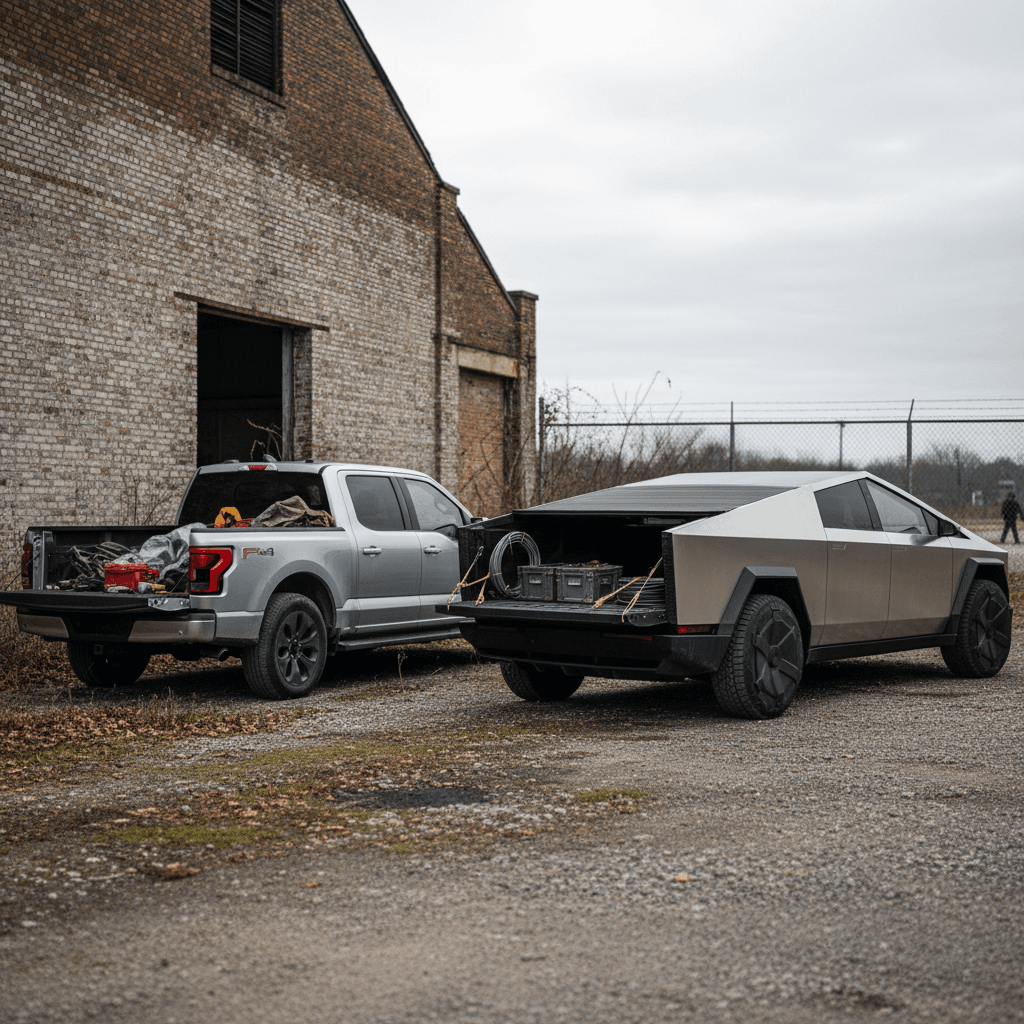
Where the F-150 Lightning shines is in its work‑friendly details: a traditional open bed that accepts the same racks and accessories as other F‑150s, numerous tie‑downs, and Ford’s Pro Power Onboard outlets turning the truck into a rolling generator. For contractors, DIYers, or weekend warriors, that familiarity counts.
Cybertruck leans the other way: its integrated bed vault with a powered tonneau cover is secure and futuristic, but less flexible for oddly shaped items, lumber lengths, or ladder racks. Its higher payload rating is impressive, but you’ll want to double‑check that the particular used truck you’re buying hasn’t spent its early life at max payload on rough roads.
Driving experience, comfort, and tech
Behind the wheel of a used F-150 Lightning
- Familiar cockpit: If you’ve driven any recent F‑150, the Lightning will feel instantly recognizable, big knobs, physical buttons for key functions, and a comfortable driving position.
- Ride and handling: Smooth, quiet, and composed. It’s still a body‑on‑frame truck, but the battery’s low center of gravity tames a lot of the bounce.
- Tech: Ford’s infotainment and optional BlueCruise hands‑free highway system are well sorted. Over‑the‑air (OTA) updates add features but tend to be more conservative than Tesla’s.
For many shoppers, Lightning is the truck they imagined when they first heard “electric F‑150”, just quieter, quicker, and easier to live with around town.
Behind the wheel of a used Cybertruck
- Minimalist, sci‑fi cabin: Central screen does almost everything. The view over the wedge hood is unlike anything else.
- Performance: Even the dual‑motor truck is seriously quick; the Cyberbeast is supercar‑fast from a stop.
- Ride and manners: Adjustable air suspension helps, but big wheels and stiff settings can make rough pavement feel harsh.
- Tech: Tesla’s software, navigation, and charging‑route planning remain strong points, though frequent UI changes come with the OTA territory.
If you want your truck to feel like a concept car inside and out, Cybertruck delivers. Just make sure every driver in the household is comfortable with a screen‑heavy interface.
Test-drive tip
Charging and road-trip viability
Charging is where Tesla has traditionally run away from everyone else, but the gap is closing, and the used market adds a twist. As of 2026, more non‑Tesla EVs, including Ford products, are gaining access to Tesla’s Supercharger network in North America via NACS adoption and adapters, while CCS fast‑charging networks continue to expand.
Charging experience compared
Think about where you’ll actually plug in 90% of the time.
Home charging
Lightning: Uses J1772 for Level 2; 48‑amp home unit is plenty for overnight charging. Ford’s bidirectional options can power your home with the right hardware.
Cybertruck: Uses Tesla’s NACS connector; comparable home charging speeds. Tesla’s ecosystem makes app setup straightforward, but whole‑home backup is less common in used trucks.
Public fast charging
Lightning: CCS DC fast charging works on non‑Tesla networks, and more newer Fords are gaining Supercharger access via NACS adapters. Speeds are solid but not always class‑leading.
Cybertruck: Native access to V3/V4 Superchargers, with reliable station density and integrated route planning. This is still a major advantage if you road‑trip often.
Trip planning
Lightning: Ford’s in‑dash planner has improved, but many owners still lean on third‑party apps for CCS routes, especially when towing.
Cybertruck: Tesla’s trip planner automatically factors elevation, weather, and available chargers. It’s one of the easiest ways to road‑trip an EV, especially if you’re not towing.
Don’t overthink public charging if you own a home
Reliability, recalls, and build quality
On the used market, reliability and recall history can matter as much as range or towing. Here, the F‑150 Lightning has the advantage of being a conventional truck from a century‑old automaker, while the Cybertruck has piled up highly publicized issues in its short life.
Used F-150 Lightning reliability notes
- Known quantity: Underneath the EV bits, it’s largely F‑150 hardware that dealers know how to work on.
- Recalls and TSBs: There have been software and hardware updates, but far fewer headline‑grabbing failures than Cybertruck.
- Battery and thermal management: Later model years benefit from improved heat‑pump systems and charging logic.
When buying used, prioritize trucks with documented software updates, completed recalls, and charging records that show regular, but not extreme, fast‑charging use.
Used Cybertruck reliability notes
- Multiple recalls: From body panels and windshield wipers to accelerator pedals, early trucks have seen a steady stream of NHTSA actions.
- Build variability: Panel alignment, trim fit, and water intrusion have all been reported by some early owners.
- Service access: If you’re far from a Tesla Service Center, repair logistics become more complicated than a Ford dealer visit.
A used Cybertruck can still be compelling, but you should treat it like an early‑adopter product: inspect thoroughly, verify all recall work, and budget extra time for future service appointments.
Always run a recall and service-history check
Used pricing, depreciation, and long-term value
Pricing swings quickly in a young segment like electric pickups, but some patterns are already clear. The F‑150 Lightning benefited from multiple price cuts new, followed by Ford’s decision to end production. Cybertruck launched much more expensive than originally promised and has required aggressive discounts to keep inventory moving.
How the money side usually shakes out (as of early 2026)
Exact prices vary by mileage, condition, and configuration, but the relative positions tend to be consistent.
Used Ford F-150 Lightning
- Plenty of lightly used 2023–2025 trucks coming off early leases and trade‑ins.
- Discounts on new trucks and Ford’s strategic pivot have pushed resale values down, good news if you’re buying, not selling.
- Well‑equipped XLT/Flash/Lariat extended‑range trucks often undercut comparable Cybertruck AWDs on the used market.
- Traditional look and broad dealer support help values stabilize in truck‑friendly regions.
Used Tesla Cybertruck
- Early “Foundation” trucks commanded big premiums when new but have softened with recalls and price cuts.
- Cyberbeast models hold some enthusiast appeal but can be expensive to insure and repair.
- Standard AWD trucks are the value play, especially if you find one with modest miles and clean service history.
- Polarizing styling and political headwinds around the brand create more regional price swings than we see with Ford.
How to think about value, not just price
Inspection checklist for any used EV truck
Step-by-step used EV truck inspection list
1. Battery health and fast-charge history
Ask for documented battery‑health data. With Recharged vehicles, the <strong>Recharged Score</strong> includes an independent battery diagnostics report, so you can see actual usable capacity and charging behavior rather than guessing from a dashboard gauge.
2. Charging equipment and connectors
Verify that the truck comes with its mobile charge cord, any included adapters (especially important for Cybertruck), and that the charge port and door operate smoothly. Plug into Level 2 if possible to confirm normal behavior.
3. Tires, suspension, and alignment
Big, heavy EV trucks are hard on tires and suspension components. Look for uneven tire wear, vibrations at highway speed, and any alignment pull. Replacing a set of 35‑inch tires on a Cybertruck is not cheap.
4. Towing and payload history
Ask how the truck was used. A former fleet or heavy‑towing truck isn’t automatically a deal‑breaker, but you’ll want a thorough underbody inspection for rust, hitch damage, and signs of overloading.
5. Software, cameras, and driver-assist systems
On the test drive, check every camera view, parking sensor, and driver‑assist feature you plan to use. Confirm that the truck is logged into the correct account and that OTA updates are current.
6. Panel fit, seals, and water leaks
Pay particular attention on Cybertruck to body panels, windshield surround, and bed vault seals. On Lightning, check doors, tailgate, and frunk for even gaps and smooth operation. Inspect carpet and under‑floor storage for signs of moisture.
How Recharged helps you shop used EV trucks with confidence
Used electric pickups are still new territory, and traditional truck shopping instincts don’t always translate cleanly. That’s where Recharged comes in. Every vehicle on our platform, whether it’s a Ford F‑150 Lightning today or another EV truck tomorrow, comes with a Recharged Score Report that includes verified battery health, transparent pricing, and expert commentary on how that specific vehicle has been used.
- Expert EV‑specialist support that can walk you through whether an F‑150 Lightning or Cybertruck‑style truck is better for your real use case, not just your wish list.
- Financing options built around used EVs, including trucks that may not fit neatly into traditional lender boxes.
- Trade‑in, instant offer, or consignment options if you’re moving out of a gas truck and into your first EV pickup.
- Nationwide delivery from our digital retail platform, plus an in‑person Experience Center in Richmond, VA if you prefer to see and touch before you buy.
Not sure which way to go?
FAQ: used Ford F-150 Lightning vs Tesla Cybertruck
Frequently asked questions
Bottom line: which used EV truck should you buy?
If you’re the kind of buyer who values predictability, practicality, and an easy ownership experience, a used Ford F-150 Lightning is the better all‑around play. It looks like a truck, works like a truck, and benefits from Ford’s deep dealer network and a rapidly maturing used‑EV market that’s pushing prices down to attractive levels.
If you want your truck to double as a conversation piece, love Tesla’s software and Supercharger access, and are comfortable navigating recalls and potential build‑quality quirks, a used Tesla Cybertruck, especially a well‑priced dual‑motor AWD, can deliver a uniquely entertaining ownership experience.
Either way, you’re buying at a fascinating moment: early EV trucks are depreciating quickly, but still have years of useful life left, especially when their battery health is independently verified. Taking the time to match the truck to your actual use, and to insist on transparent battery and service data, will matter far more than whether the spec sheet says 10,000 or 11,000 pounds of towing.
If you’d like help turning numbers and headlines into a clear decision for your driveway, a Recharged EV specialist can walk you through specific trucks, their Recharged Scores, and total ownership costs so you end up with the right used electric pickup, not just the loudest one.