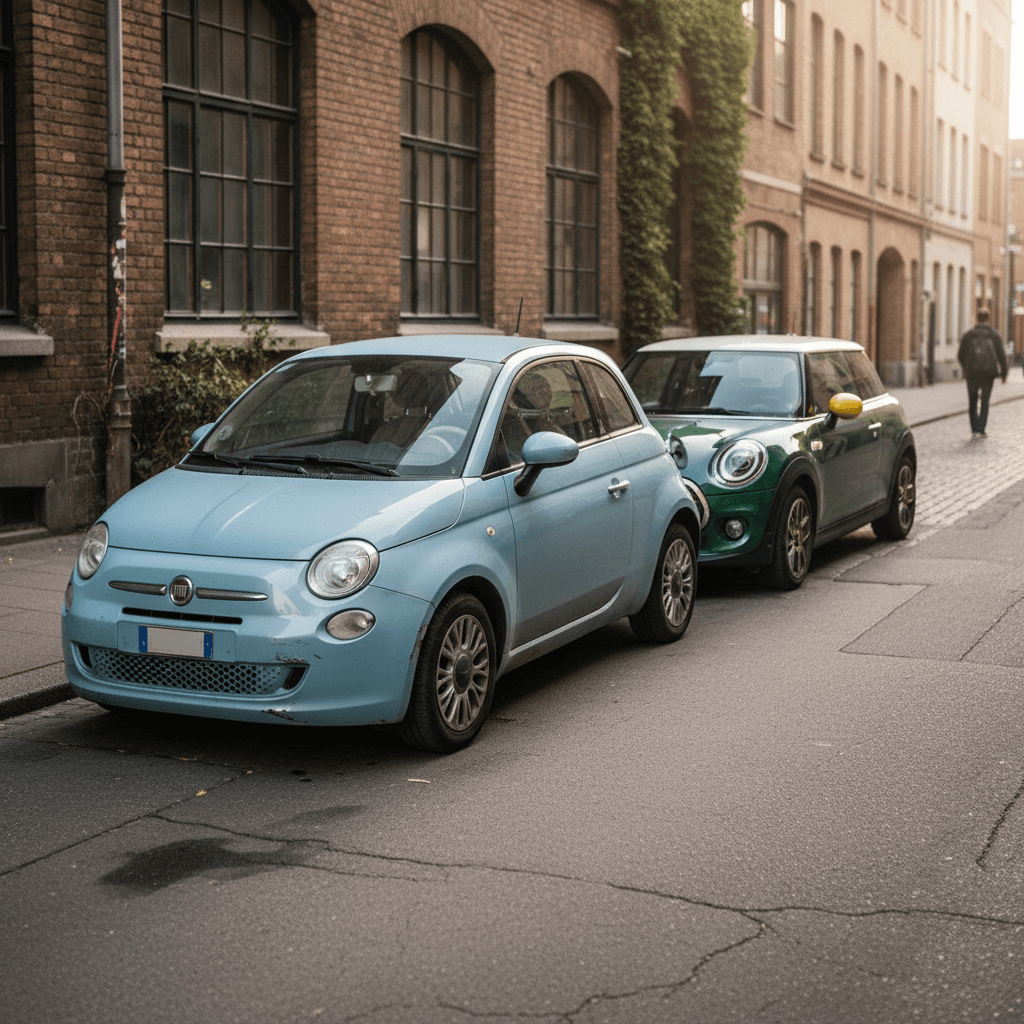
You’re shopping the used EV market in 2026, you want something small, fun, and easy to park, and you keep seeing two names: the Fiat 500e and the Mini Cooper SE. Both are characterful city cars that promise cheap electric commuting, but they do it in very different ways. This comparison focuses specifically on the used Fiat 500e vs Mini Cooper SE to help you decide which one makes the most sense for your life and budget.
Two different generations in play
Fiat 500e vs Mini SE: Who this 2026 guide is for
This comparison is aimed squarely at shoppers who: - Want a small used EV primarily for commuting, errands, or as a second car - Drive under about 70–80 miles per day most days - Care about style and fun, but need numbers that work in the real world - Are weighing a cheap used Fiat 500e against a newer, pricier but higher‑range Mini Cooper SE If you’re trying to replace a long‑range gas car for cross‑country trips, neither of these is ideal. But if you’re hunting for a city EV that’s a joy to drive and cheap to run, this is exactly the match‑up you should be looking at.
At a glance: Which used EV wins for you?
Quick recommendations before we dive into the details
Urban budget commuter
Pick: Fiat 500e (2013–2019 or early used 2024+)
- Often thousands less than a Mini SE
- Easy to park, light and nimble
- Enough range for most short city commutes
Enthusiast daily driver
Pick: Mini Cooper SE
- More power and tighter handling feel
- Higher‑quality interior and tech
- Newer cars with better safety tech
Mixed city–suburb use
Leaning: Mini Cooper SE
- More real‑world range, especially in bad weather
- Better highway confidence
- More comfortable for longer stints
Specs and range: What they look like on the used market
Core specs: Typical used Fiat 500e vs Mini Cooper SE
Numbers are typical for U.S.‑market cars you’ll see used in 2026, not absolute best‑case brochure figures.
| Model (typical used years) | Battery (gross) | EPA‑style range (new) | Power | Curb weight | DC fast charging |
|---|---|---|---|---|---|
| Fiat 500e (2013–2019) | ~24 kWh | ~84 miles | 111 hp FWD | ~2,980 lb | No DC fast charge (AC only) |
| Fiat 500e (2024+ early used) | 42 kWh | ~149 miles | 117–118 hp FWD | ~2,950–2,980 lb | Yes, DC fast charge on CCS |
| Mini Cooper SE (2020–2024) | 32.6 kWh (28.9 usable) | 110–114 miles | 181 hp FWD | ~3,000 lb | Yes, DC fast charge |
| Mini Cooper SE (2025+ J01) | ~54 kWh | ~240–250 miles WLTP (~190–210 EPA est.) | 181+ hp FWD | ~3,500 lb | Yes, faster DC fast charge |
Realistic spec snapshot for common model years on used lots.
The original U.S.‑market Fiat 500e (2013–2019) was built as a California compliance car with a small pack and no DC fast‑charging. It’s light and, when the battery is healthy, good for roughly 70–90 real‑world miles depending on conditions. The first‑generation Mini Cooper SE (2020–2024) carries a slightly bigger pack and more power. In practice, you’re looking at 90–110 miles in mixed driving when the battery is healthy. The all‑new 2025‑on Mini Electric has a much larger pack and far better range, but it’s only just starting to appear used, and at prices closer to a new mainstream EV.
Don’t shop on brochure range alone
Battery health and degradation on used examples
Battery reality on 7–10‑year‑old city EVs
Both cars use liquid‑cooled packs, and both have held up better than many people expected, but you should assume a meaningful spread in range between individual used cars. - A clean, well‑maintained 2016 Fiat 500e might still do around 80 miles in mild weather. - A high‑mileage example with a hard life could be noticeably lower, and the same is true for an early Mini SE. This is where buying from a seller that can show you real battery data, not just a guess based on the dash gauge, becomes very valuable.
How Recharged handles battery uncertainty
Fiat 500e battery notes
- Early U.S. cars (2013–2019) have modest capacity but generally low DC fast‑charge stress because they don’t fast‑charge at all.
- Liquid cooling helps, but sitting at 100% in hot climates still takes a toll.
- Replacement packs are expensive relative to vehicle value, so verifying health is critical.
Mini Cooper SE battery notes
- First‑gen cars use a relatively small pack that gets worked hard if you do lots of freeway miles.
- They do support DC fast charging, which is convenient but can add heat if abused.
- Newer packs in 2025+ Minis have more buffer and capacity, but those cars are much newer and pricier used.
Driving experience: Ride, handling, and performance
On feel alone, both of these cars punch way above their weight. They’re short, tossable, and more fun than most crossovers you’ll see at the same price. But they have distinct personalities.
Driving character: Italian charm vs British kart
How each feels on your favorite back‑road shortcut home
Fiat 500e
- Light steering and a very tight footprint make it effortless in traffic and parking garages.
- Power is modest but instant, perfect for city squirts, less inspiring on long highway grades.
- Ride can be choppy on rough pavement, especially with larger wheels.
Mini Cooper SE
- Meaningfully quicker than the Fiat off the line thanks to higher output.
- Classic Mini “kart‑like” handling with heavier, more precise steering.
- Feels more planted at 70+ mph and more confident for short highway hops.
Enthusiast’s pick
Charging and daily usability
- Home Level 2 charging: Both cars are small‑pack EVs, so they refill quickly on a 240‑volt Level 2 charger. An overnight session is plenty even if you arrive close to empty.
- Public Level 2 charging: For the original 2013–2019 Fiat 500e, public Level 2 is your only option away from home. For the Mini SE and newer 500e, it’s the cheap, battery‑friendly default.
- DC fast charging: Mini Cooper SE and the 2024+ Fiat 500e support DC fast charging. It won’t match a long‑range Tesla, but it’s handy if you misjudge range or need a quick top‑up on a busy day.
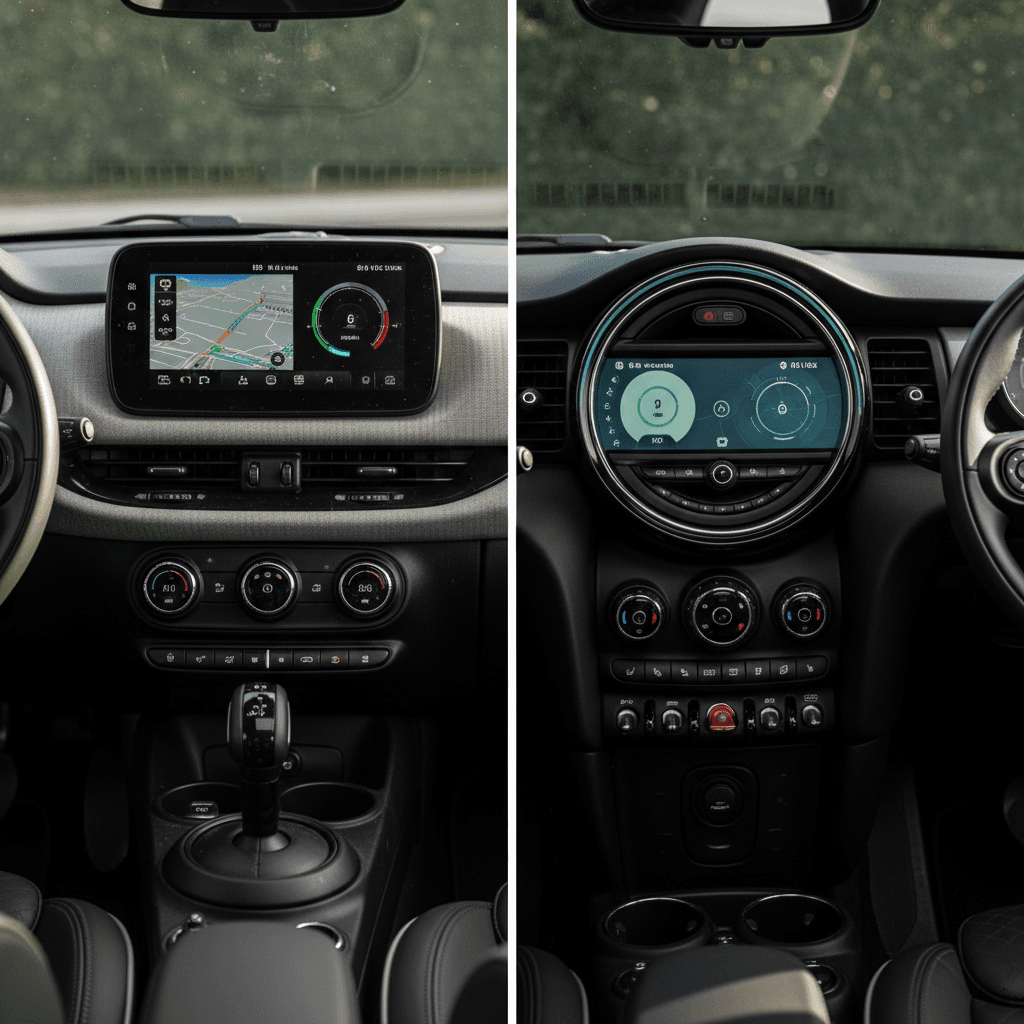
- Cargo and space: Both are sub‑compact hatchbacks with tight rear seats. The Mini feels roomier and more solid; the Fiat is easier to slot into tiny parking spaces.
DC fast charging is a safety net, not a daily habit
Reliability, known issues, and warranty realities
Neither of these cars is an unreliable disaster, but both come from brands with mixed reputations. What matters on a used EV in 2026 is less “brand image” and more how well the specific car was maintained and how transparent the seller is about past repairs.
Fiat 500e reliability highlights
- Simple powertrain with no engine, no transmission, and no turbo plumbing.
- Common issues are mostly traditional Fiat 500 items, switchgear, trim, sensors, rather than EV hardware.
- Early cars are now far beyond their original 8‑year/100k‑mile battery warranties. Any battery work will likely be fully on you.
Mini Cooper SE reliability highlights
- Shares a lot of structure and interior bits with the gas Mini, which has average reliability overall.
- Electric powertrain has fewer moving parts than the gas Cooper S, but you still have typical Mini wear items (suspension, interior electronics).
- Newer model years may still be within factory battery warranty, which can soften the risk if you buy a 2023–2025 example.
Why a pre‑purchase inspection still matters on EVs
Ownership costs: Insurance, maintenance, and depreciation
Day‑to‑day, both cars are inexpensive to run. Electricity is typically cheaper per mile than gas, and there’s no oil to change. The real spread in ownership cost comes from insurance, parts prices, and depreciation curves.
Cost of living with each car
Where the money actually goes after you buy
Insurance
Mini Cooper SE will usually cost more to insure than a Fiat 500e, reflecting its higher original MSRP and parts cost. Urban drivers with clean records may still find the difference modest, but it adds up over a few years.
Maintenance & repairs
Routine EV maintenance (tires, cabin filters, brake fluid) is similar. When something breaks, Mini parts and labor tend to be pricier than Fiat parts. The flip side is that more Minis were sold new, so independent shops may be more familiar with them.
Depreciation
The early Fiat 500e has already taken a massive depreciation hit, which is why so many look like bargains. The Mini SE, especially newer J01 models, still has more value to lose. That makes the Fiat a potent low‑cash, low‑risk commuter if the battery checks out.
Used pricing: What you’ll realistically pay in 2026
Exact numbers will move with local demand and incentives, but on the U.S. used market in early 2026 you’ll generally see:
Typical asking‑price bands in 2026
Approximate retail asking ranges for clean‑title, average‑mileage cars from dealers and well‑rated private sellers.
| Model & age | Typical mileage | Ballpark asking range (USD) | Notes |
|---|---|---|---|
| Fiat 500e (2013–2016) | 40k–80k | $6,000–$10,000 | Cheapest way into a usable EV if battery is healthy. |
| Fiat 500e (2017–2019) | 25k–60k | $8,000–$13,000 | Later years and lower miles bring a premium. |
| Fiat 500e (2024–2025 lightly used) | Under 20k | $22,000–$28,000 | Much newer car with DC fast charge and active safety tech. |
| Mini Cooper SE (2020–2022) | 25k–60k | $15,000–$23,000 | Earlier cars with smaller battery but strong performance. |
| Mini Cooper SE (2023–2024) | 15k–40k | $20,000–$28,000 | Still within factory battery warranty on many examples. |
| Mini Electric J01 (2025+ early used) | Under 15k | $30,000+ | Long‑range, new‑gen car; priced like a newer mainstream EV. |
Your local market may be lower or higher; treat these as ballparks, not promises.
Think in cost‑per‑usable‑mile, not just sticker price
How Recharged reduces the risk on used EVs
The hardest part of buying a used EV isn’t deciding between a Fiat and a Mini, it’s knowing whether the specific car in front of you is solid. That’s exactly the problem Recharged was built to solve.
What you get when you shop used EVs with Recharged
Making small‑EV ownership simpler and more transparent
Recharged Score battery report
Every vehicle comes with a Recharged Score Report that shows verified battery health, recent charging behavior, and how that translates into real‑world range. No more guessing whether the pack is tired.
Fully digital buying experience
You can browse, finance, and complete paperwork for your Fiat 500e or Mini SE entirely online. Recharged also offers nationwide delivery and an Experience Center in Richmond, VA if you prefer to see cars in person.
EV‑specialist support
Recharged’s EV specialists help you decide which car fits your commute, explain battery reports in plain English, and walk you through financing, trade‑in, instant offer, or consignment if you’re moving out of a gas car.
Ready to find your next EV?
Browse VehiclesChecklist: Deciding between a Fiat 500e and Mini Cooper SE
Key questions before you choose
1. How far do you really drive on your longest regular day?
Look at a few weeks of your actual driving. If you rarely exceed 50–60 miles in a day, either car can work. If you’re often in the 80–110‑mile range, especially in winter, the Mini SE or newer 2024+ 500e will be more comfortable.
2. Can you install or access reliable Level 2 charging?
Both cars are happiest when they can sip overnight on 240 volts. If you’ll be relying on public DC fast chargers frequently, lean toward the Mini SE or a newer 500e with factory DC fast‑charge capability.
3. Is upfront cost or long‑term flexibility more important?
If cash outlay is critical, an older Fiat 500e with a healthy pack is the value play. If you can afford more upfront to get higher range, better crash safety, and nicer materials, the Mini is easier to live with long‑term.
4. How much do interior quality and tech matter to you?
Sit in both. The Mini’s cabin generally feels more premium, with better seats, infotainment, and materials. The Fiat’s charm is its simplicity and cheerful design rather than its screen size.
5. Are you comfortable with brand‑specific service networks?
Check local dealer and independent shop support. In some areas, BMW/Mini coverage is stronger; in others, a Stellantis/Fiat dealer may be easier to reach. Factor that into your decision, especially if you’ll keep the car past warranty.
6. Do you plan to resell in a few years?
Because the older Fiat 500e is already heavily depreciated, your downside is limited if you buy right. A newer Mini SE will lose more absolute dollars over the next few years, but may also be easier to sell thanks to its broader appeal.
FAQ: Used Fiat 500e vs Mini Cooper SE
Frequently asked questions
Bottom line: Which small used EV is better in 2026?
If you’re chasing maximum value per dollar and your daily driving is short and predictable, a well‑vetted used Fiat 500e is hard to beat. It’s cheap to buy, cheap to run, and charming to look at. The flip side is limited range, no DC fast‑charging on earlier models, and the fact that many examples are now a decade old, so battery diagnostics are non‑negotiable.
If you want a car that feels more premium, more capable on the highway, and more likely to fit evolving needs, the Mini Cooper SE is the stronger all‑rounder. You’ll pay more up front, but you get better performance, a nicer cabin, and, in newer cars, stronger range and safety tech.
In either case, the smartest move in 2026 is to shop individual cars, not badges. A tired Mini with a weak pack is a worse buy than a healthy Fiat with verified range, and vice versa. That’s why Recharged builds every transaction around transparent battery health, fair market pricing, and EV‑specialist guidance from start to finish, so you can pick the right small EV for your life and feel good about it years down the road.