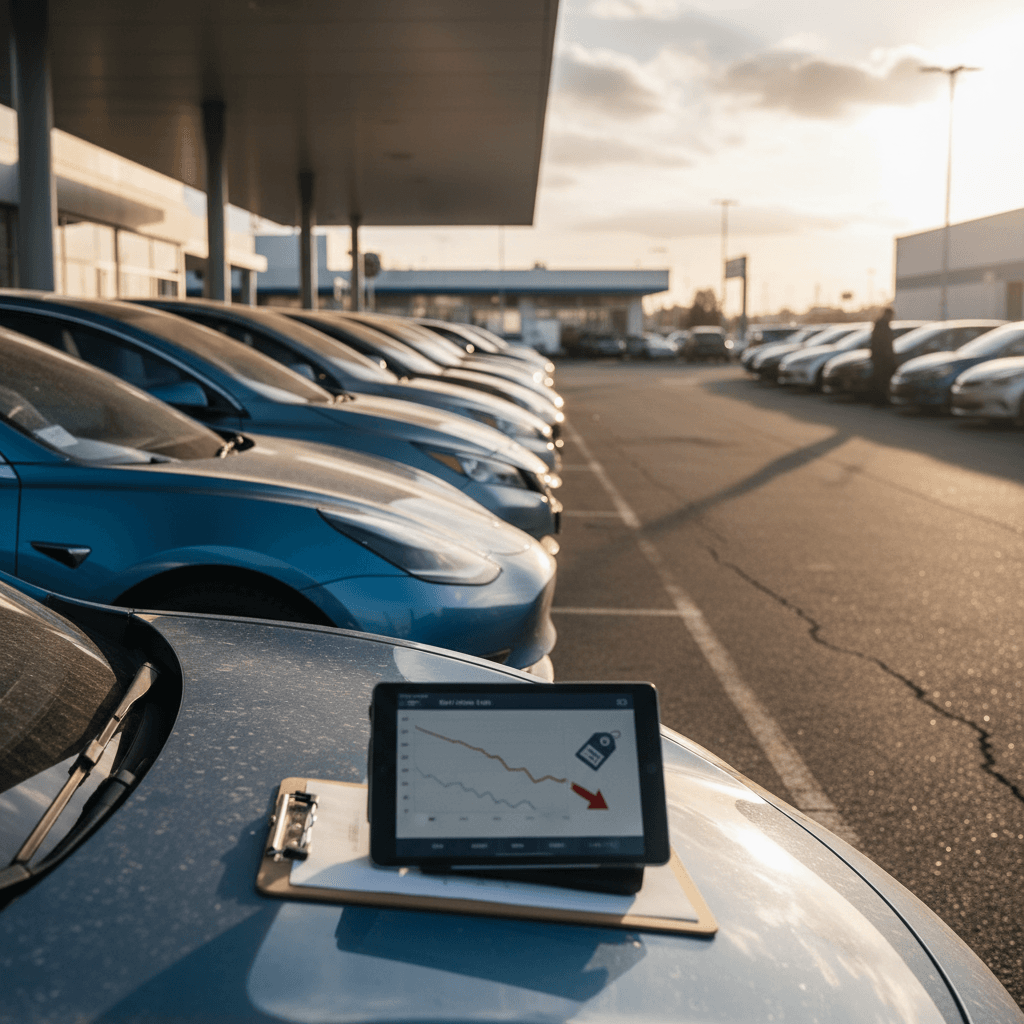
Used EV prices are dropping fast in 2026. If you’ve been watching Teslas and other electric cars tumble on used‑car sites, you’re not imagining it. After several years of aggressive new‑EV discounts, expiring tax credits, and a wave of off‑lease vehicles hitting the market, used EV prices in the U.S. have fallen far more than comparable gas cars, and that trend is still playing out this year.
Big picture
Why used EV prices are dropping in 2026
To understand why used EV prices are dropping in 2026, you have to look at both sides of the market: a surge of supply and a more cautious pool of buyers. Put simply, there are more used EVs than ever, and fewer shoppers willing to pay 2022‑era prices.
- Wave of off‑lease EVs: Market research firms estimate roughly a quarter‑million leased EVs will come off lease and hit the used market in 2026, more than triple the volume from 2025. That’s a flood of clean, low‑mileage cars all at once.
- A reset in new‑EV pricing: Since 2023, automakers, especially Tesla, have slashed new‑EV sticker prices and layered on factory incentives. When a new Model Y or Mustang Mach‑E gets cheaper, every used example below it has to re‑price too.
- Tax credit whiplash: The Inflation Reduction Act’s used EV tax credit (up to $4,000) helped support used values through late 2024, but a new budget law ended federal EV purchase credits on September 30, 2025. That pulled an artificial prop out from under resale values just as supply was spiking.
- Slower demand growth: U.S. EV sales hit records in 2023–2024, but by mid‑2025 growth had clearly cooled. When new‑car demand softens, used values tend to overshoot on the way down.
- Tech and range anxiety: Many shoppers now know that newer EVs often have more range, faster charging, and better driver‑assist tech. That makes a 2019–2021 EV feel older, faster than a comparable gas car of the same age. The result: steeper depreciation.
Don’t confuse lower prices with low quality
Used EV pricing: the 2022–2026 reset
How far used EV prices have fallen so far
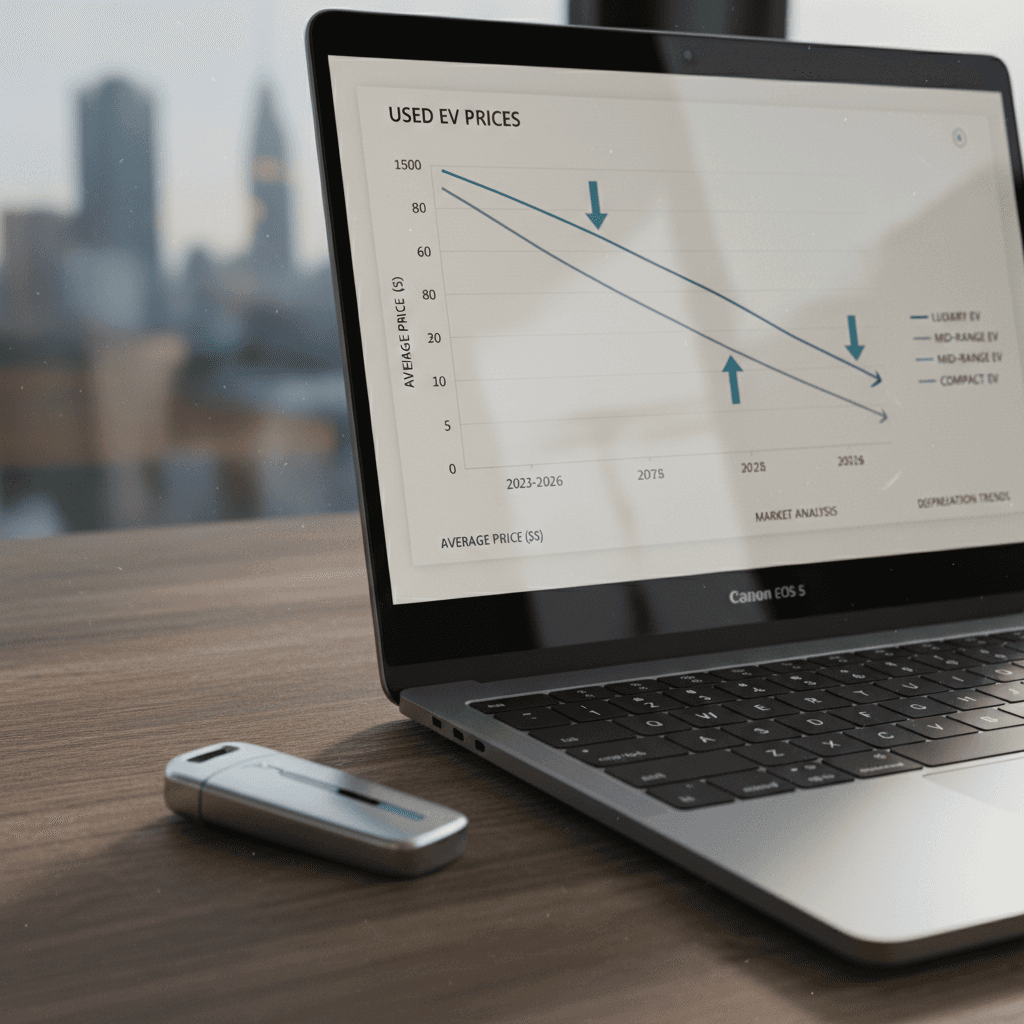
The details vary by model, but the direction is consistent: down. Looking at data from 2022 through early 2026, used EVs as a group have seen deeper price cuts than nearly any other vehicle segment.
Typical used EV price drops, 2022–early 2026 (U.S.)
Approximate retail price changes for common used EV segments since the 2022 peak. Numbers are directional, not guarantees for any specific car.
| Segment / example | Typical age in 2026 | Price change vs 2022 peak* | What shoppers now see |
|---|---|---|---|
| Compact EV (e.g., Chevy Bolt EV, Nissan LEAF) | 4–6 years | ‑35% to ‑45% | Many clean examples in the mid‑teens to low‑$20k range. |
| Entry premium EV (e.g., Tesla Model 3 RWD, Polestar 2) | 3–5 years | ‑30% to ‑50% | Well‑specced cars often under $30k; some older trims in the low‑$20k range. |
| Family SUV EV (e.g., Tesla Model Y, Hyundai IONIQ 5) | 2–4 years | ‑25% to ‑40% | Popular trims hovering in the high‑$20k to mid‑$30k range, depending on spec. |
| Early luxury EVs (e.g., Audi e‑tron, Jaguar I‑PACE) | 4–6 years | ‑45% to ‑60% | Lease‑return luxury SUVs selling for a fraction of original MSRP. |
Actual prices depend on mileage, condition, options, and local demand, but this gives you a realistic sense of how aggressively values have reset.
Remember: depreciation isn’t linear
Winners and losers: which EVs are dropping the most?
Not all used EVs are created equal. Some models are falling like a stone; others are holding value surprisingly well. In 2026, the pattern reflects brand strength, battery tech, and how aggressively new‑car pricing has been cut.
Used EV depreciation patterns in 2026
Where the steepest discounts, and the most resilience, are showing up
Big droppers: best bargains for buyers
- Mature mass‑market EVs: Models like the Chevy Bolt EV/EUV and Nissan LEAF tend to see steep drops because they compete head‑on with newer, longer‑range alternatives.
- First‑gen luxury EVs: Early Audi e‑tron, Mercedes EQC (where sold), and Jaguar I‑PACE examples have taken huge hits as newer platforms arrive.
- Volume Teslas: Tesla Model 3 and Model Y were among the fastest‑depreciating vehicles between 2022 and 2025 because of large new‑car price cuts and heavy fleet/lease volumes.
Value holders: slower to fall
- Newer‑platform crossovers: Hyundai IONIQ 5, Kia EV6, and some newer GM Ultium models have, so far, held value a bit better where supply is tighter.
- Long‑range trims: EVs with 280–300+ miles of real‑world range remain more desirable and may depreciate less steeply.
- Low‑volume or niche models: Some performance or specialty trims can keep a pricing floor simply because there aren’t many of them.
How to read big discount percentages
Will used EV prices keep dropping in 2026?
No one can time the bottom of any market perfectly, but you can understand the forces pushing prices up or down. In early 2026, the balance of forces still leans toward soft pricing, but it’s more complex than “they’ll just keep crashing.”
Forces that could push prices lower
- More off‑lease inventory: As 2023 and 2024 leases roll off, thousands more EVs will keep flowing into used channels through 2027.
- End of federal purchase credits: With the federal used‑EV credit gone after September 30, 2025, sellers can’t lean on a $4,000 incentive to hold asking prices up.
- Rapid tech progress: Each model year tends to bring better range, faster charging, and more features, pressuring older EVs, especially those under 250 miles of real‑world range.
Forces that could stabilize or lift prices
- Gas prices and running costs: If gasoline continues to trend higher, the total cost of ownership advantage tilts back toward EVs, pulling more buyers into the used market.
- Limited new‑EV demand: Automakers are already slowing some EV launch plans. Fewer new models and more modest sales could tighten future used supply.
- Growing comfort with used EVs: As more owners see batteries holding up in the real world, second owners may be willing to pay more for cars with verified battery health.
The story of used EV pricing is a classic technology curve: early adopters overpay, the market overcorrects, and then values normalize once buyers understand the tech and policy shocks fade.
Is a cheap used EV in 2026 a good deal or a red flag?
A $22,000 crossover that was nearly $50,000 new is going to feel like a “too good to be true” situation. In 2026, sometimes it is, if there’s battery damage, crash history, or incomplete recall work. But often, it’s just the math of rapid tech improvement and incentive changes. Your job is to separate healthy bargains from problem cars.
Questions to ask before jumping on a cheap used EV
1. What’s the verified battery health?
Battery condition is the heart of a used EV’s value. Ask for a <strong>third‑party battery health report</strong> that goes beyond the dash gauge. At Recharged, every vehicle includes a Recharged Score battery diagnostic so you know how much usable capacity remains.
2. Has fast‑charging behavior been abusive?
A car fast‑charged daily at peak rates in extreme heat will age differently than one mostly charged at home. Look for clues in the service history, prior use (fleet vs. personal), and, where available, fast‑charge session data.
3. Is the software up to date?
Software updates can improve range estimates, charging curves, and safety systems. Confirm that the previous owner kept up with updates and that you can continue receiving them after purchase.
4. Are all recalls and service campaigns completed?
Some EVs have had important battery, charging, or high‑voltage system recalls. Check the VIN with the manufacturer’s recall tool and make sure any required work has been done.
5. Does the asking price match today’s market, not old MSRPs?
Compare the car’s price to similar listings with the same year, mileage, and options, not what it cost new. Tools like fair‑market pricing reports, and Recharged’s pricing transparency, help you avoid paying 2022 money for a 2026 market car.
6. How does it fit your driving pattern?
A 220‑mile EV might be perfect for a 30‑mile commute but stressful for 250‑mile winter road trips. Make sure the car’s <strong>real‑world range with current battery health</strong> fits how you actually drive.
Where Recharged fits in
Ready to find your next EV?
Browse VehiclesHow to shop smart for a used EV in 2026
If you’re shopping this year, you’re entering the used EV market at a uniquely buyer‑friendly moment. The key is to exploit the price reset without setting yourself up for surprises on range, charging, or resale.
Smart shopping strategies in a falling‑price market
Turn 2026’s volatility into long‑term value
Shop nationally, not just locally
EV pricing can vary a lot by region. A Model 3 that’s common in California might be rarer, and pricier, in the Midwest. Retailers like Recharged offer nationwide inventory and delivery, so you can chase the best value, not just what’s on the nearest lot.
Prioritize usable range over badges
Instead of fixating on brand prestige, look at usable range with current battery health, efficiency, and charging speed. A less flashy model with 260 miles of real‑world range might serve you better than a luxury badge with only 190 miles left in the pack.
Lean on transparent reports
Insist on documentation: battery diagnostics, fair‑market pricing analysis, inspection reports, and full history. The Recharged Score bundles these into one report so you aren’t pulling data from ten different places.
On your test drive: what to check in a used EV
Test real‑world efficiency and range estimate
Start with a nearly full battery, drive your normal mix of roads, and compare miles driven to % charge used. You’re looking for consistency, not perfection.
Try at least one DC fast‑charge session
If possible, plug into a DC fast charger and watch the curve. Sudden throttling or error messages can hint at battery or thermal‑management issues.
Listen for drivetrain and brake noises
EVs are quiet, which makes it easier to spot abnormal whines, clunks, or grinding. Pay attention at low speeds and during gentle braking.
Check all driver‑assist and infotainment features
Verify that adaptive cruise, lane‑keeping, cameras, and the main infotainment screen all behave as expected. Fixing electronic issues can be costly out of warranty.
Consider how long you’ll keep it
Financing and tax credits in a post‑incentive world
One reason used EV prices are dropping in 2026 is policy: the federal used EV tax credit that helped support values earlier in the decade is gone for purchases after September 30, 2025. That sounds like bad news, but combined with today’s lower sticker prices, the math can still work in your favor, especially if you finance smart.
What changed with tax credits
- New EVs: The $7,500 federal credit for new EVs has been sharply curtailed, and many models no longer qualify at all.
- Used EVs: The separate used‑EV credit (up to $4,000 on qualifying cars under $25,000) ended for purchases after late 2025.
- State and utility incentives: Some states and local utilities still offer rebates or discounted charging rates. These don’t change the purchase price but can improve total cost of ownership.
How to adapt as a buyer in 2026
- Focus on out‑the‑door cost and monthly payment: With federal credits gone, the ticket price and financing terms matter more than ever.
- Use EV‑friendly lenders: Some lenders now understand that EVs can have lower running costs and may offer competitive terms when they see a solid battery‑health report.
- Pre‑qualify before you shop: Recharged lets you pre‑qualify for financing online with no impact to your credit, so you know your budget before you fall in love with a specific car.
Why used still beats new for value
Used EV prices vs. gas cars in 2026
A reasonable question in 2026 is whether cheaper used EVs are actually cheaper in the big picture than used gas cars. The answer depends on your driving, local energy prices, and which specific vehicles you’re comparing, but the trends are tilting in EVs’ favor as resale values reset.
Used EV vs. used gas SUV: 5‑year cost snapshot (illustrative)
High‑level comparison of a typical used compact SUV EV and a similar gas SUV bought in 2026 and driven 15,000 miles per year.
| Item (5 years) | Used EV (bought 2026) | Used gas SUV (bought 2026) |
|---|---|---|
| Purchase price | Higher than gas at same age in some segments, but gap is shrinking rapidly | Often slightly lower upfront |
| Energy/fuel cost | Significantly lower with home charging and reasonable electricity rates | Highly sensitive to gasoline price volatility |
| Maintenance | Lower (no oil changes, fewer moving parts, less brake wear) | Higher routine maintenance and more wear items |
| Depreciation risk | Higher percentage‑wise, but much of the drop already priced in by 2026 | More predictable but less room for future tech upside |
| Total cost of ownership | Often competitive or lower, especially if you drive more miles per year | Can be lower for very low‑mileage drivers or where public charging is expensive |
Exact numbers will vary, but falling used EV prices plus lower fuel and maintenance costs can more than offset higher purchase prices in many scenarios.
Watch charging access and rates
FAQ: used EV prices dropping in 2026
Frequently asked questions
Used EV prices dropping in 2026 are not a fluke, they’re the predictable result of a young technology maturing, incentives shifting, and supply finally catching up with early demand. For original owners, the depreciation can sting. For you, as a used‑EV shopper, it’s a rare opportunity to buy sophisticated, low‑running‑cost vehicles at prices that would have seemed impossible just a few years ago. If you pair today’s discounts with careful battery‑health verification, smart financing, and a clear view of your driving needs, you can come out of this market shift with an EV that fits both your life and your budget. And if you’d rather have a guide in your corner, Recharged’s used‑EV marketplace, diagnostic reporting, and EV‑savvy advisors are designed to help you do exactly that.