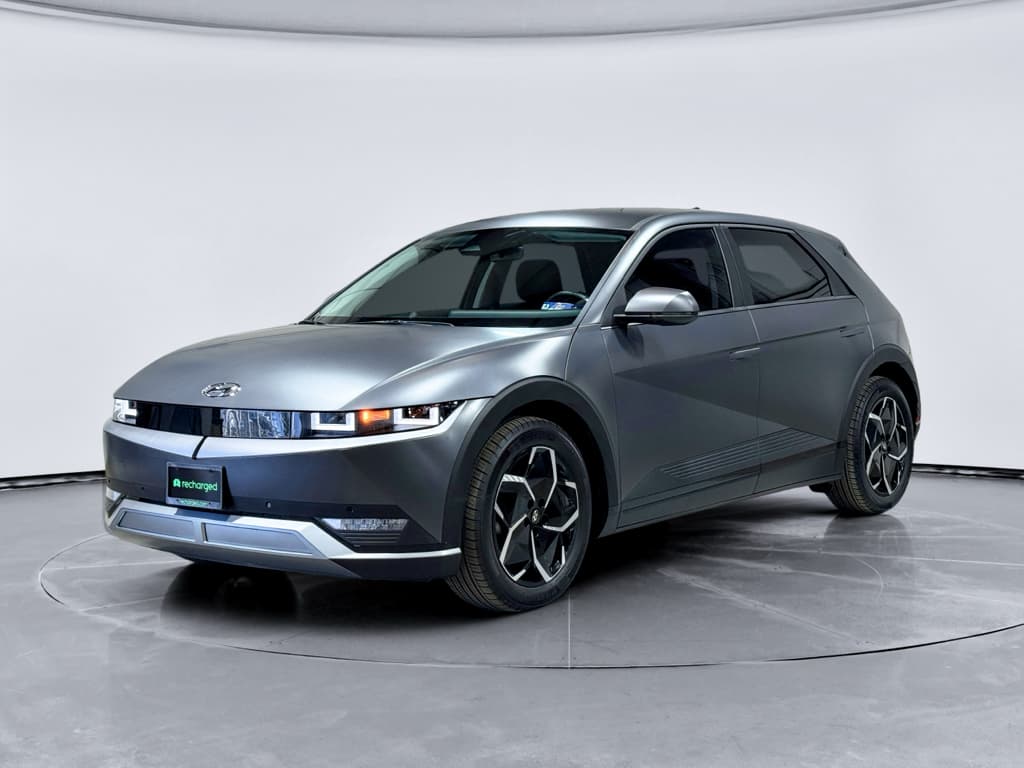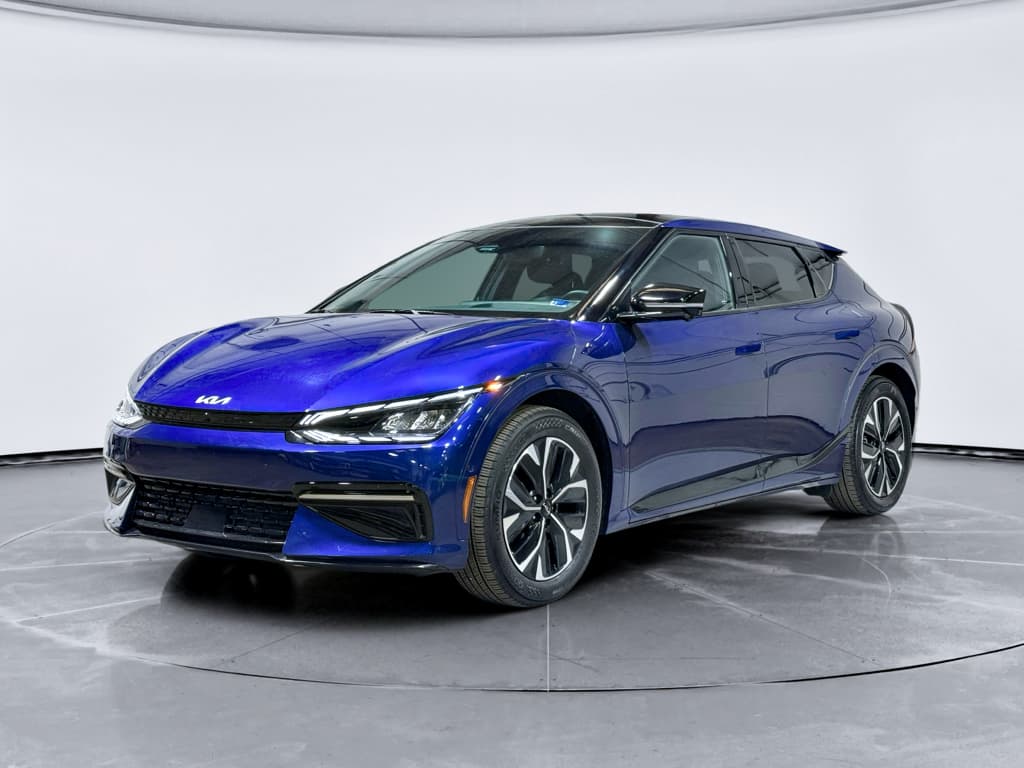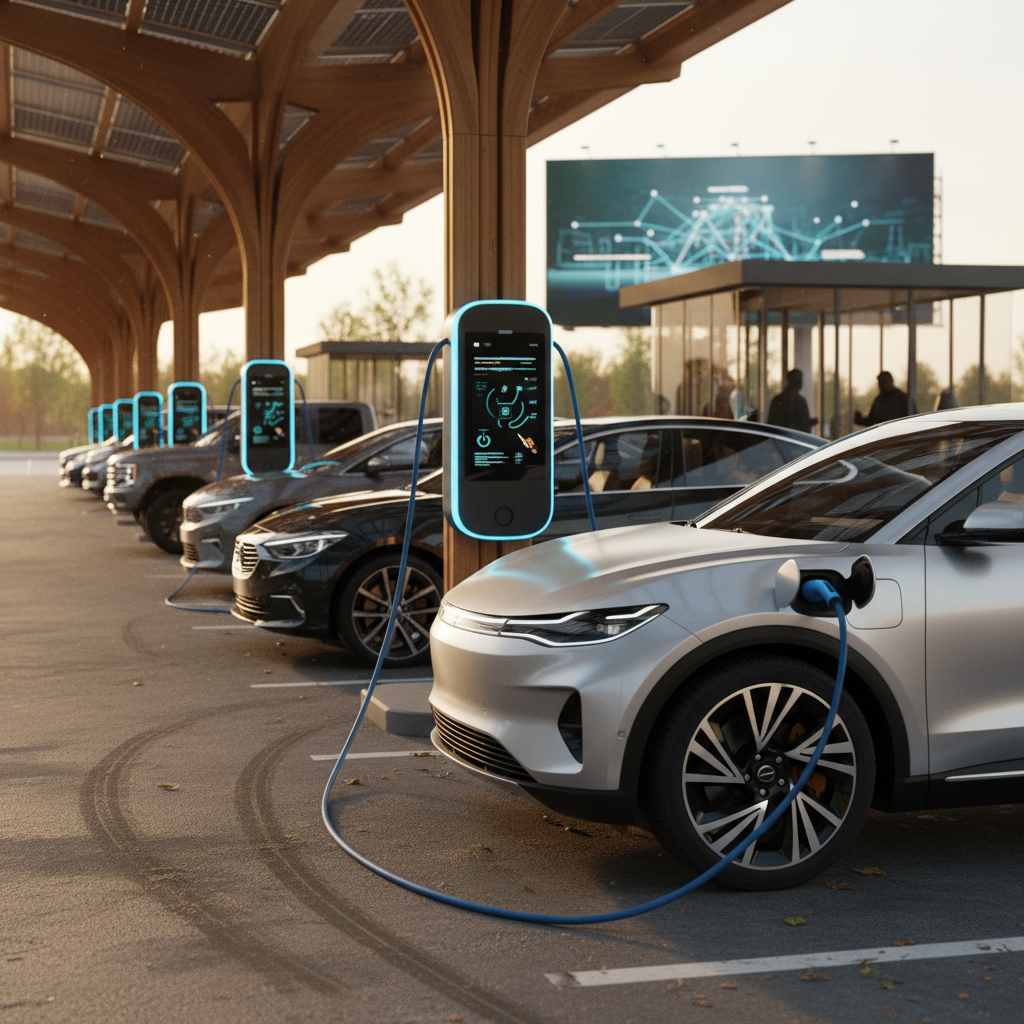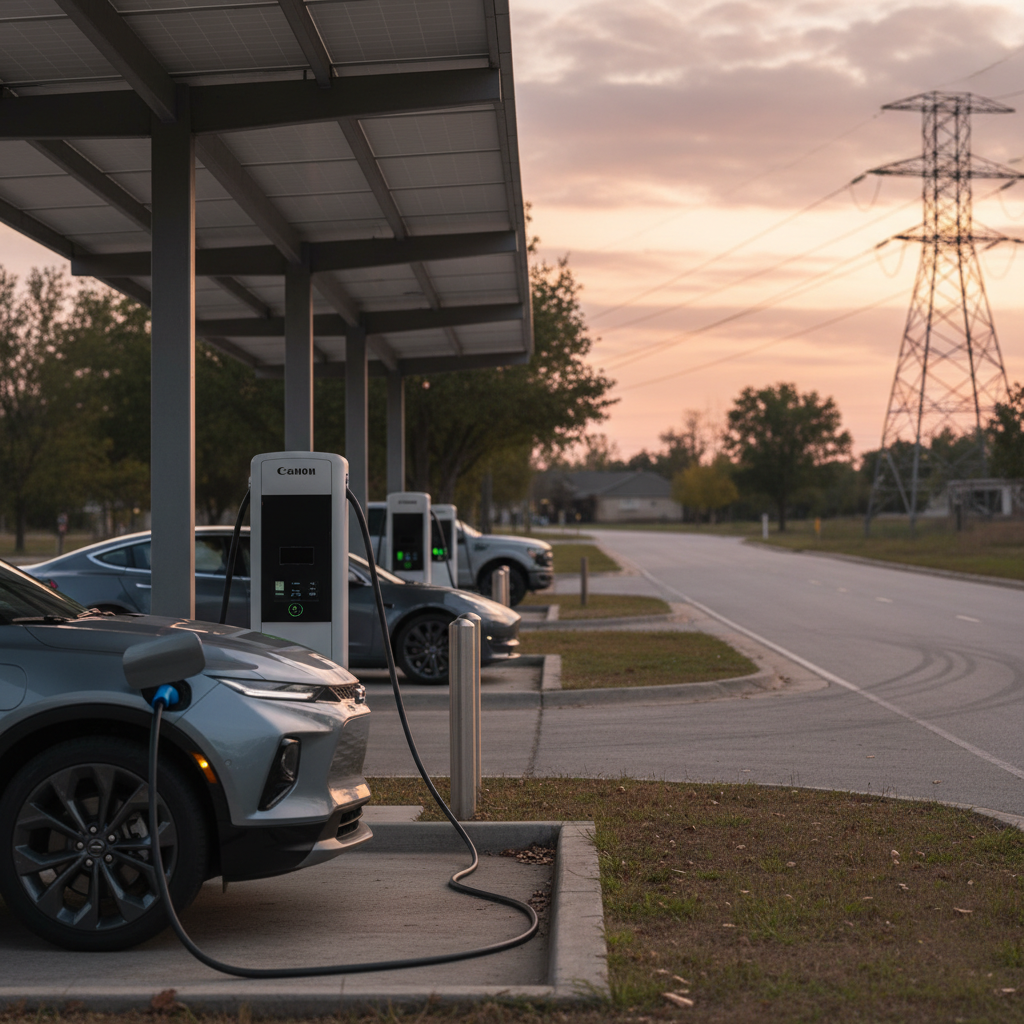
The biggest mistakes people make when switching to an electric car almost never come from the car itself. They come from expectations: expecting the EV to behave like a gas car, expecting public chargers to be everywhere and flawless, expecting the battery to stay new forever. If you understand those traps up front, especially when you’re buying a used EV, you can enjoy all the good stuff (quiet, quick, cheap to run) without the horror‑story regrets.
What this guide covers
Why switching to an EV trips so many people up
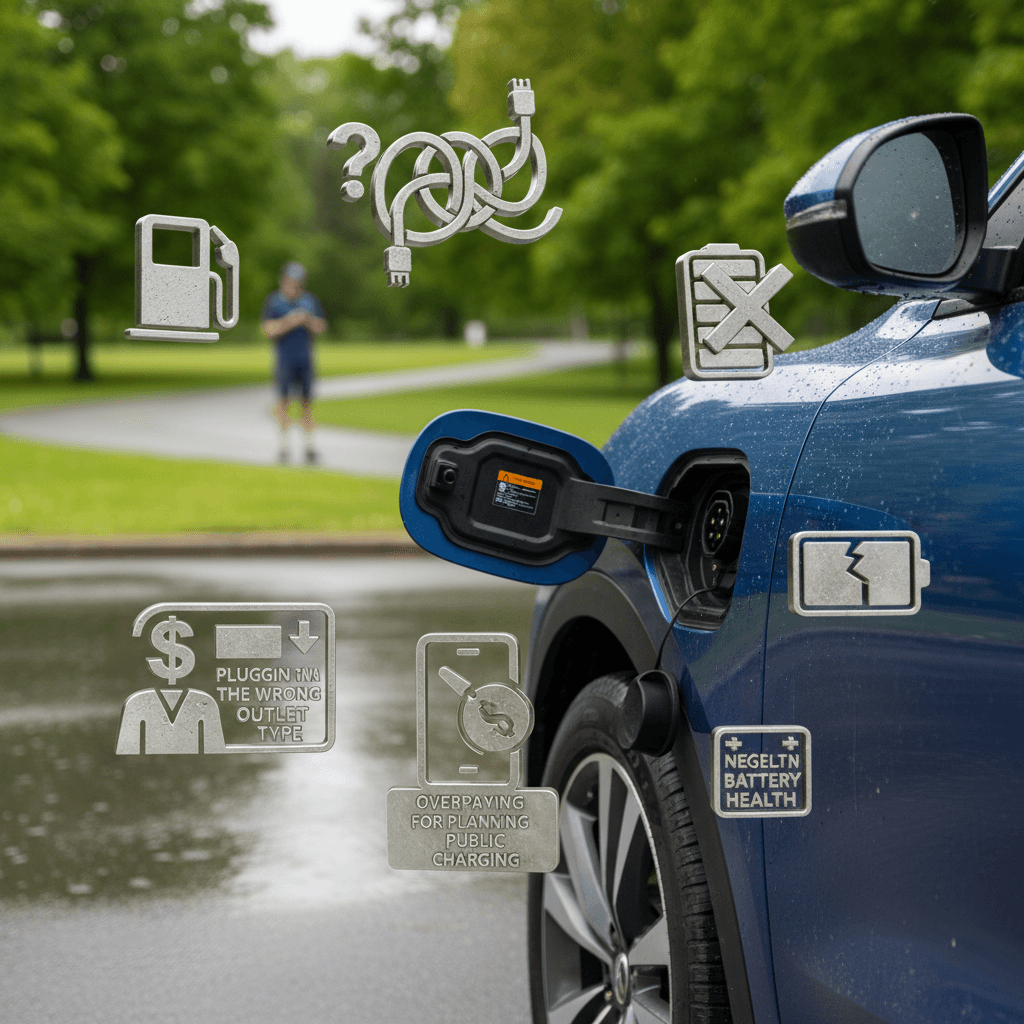
Surveys in 2024–2025 all say roughly the same thing: the top reasons people hesitate on EVs, or say they regret buying one, are range, charging access, and overall cost. Those issues aren’t mysterious. They’re the predictable outcome of going from a world where fuel is everywhere and refills take five minutes to a world where your “fuel station” is mostly your home and energy behaves differently in cold, heat, and high speed.
EV expectations vs reality at a glance
The core mistake
Mistake 1: Not locking in a way to charge at home
If you only remember one thing from this article, make it this: don’t buy an EV you can’t conveniently charge where you sleep. Not necessarily a fancy wallbox, just consistent, reliable access to a plug you’re allowed to use.
Three realistic home charging setups
Pick one before you sign anything
Standard outlet (Level 1)
What it is: 120V household outlet.
- Adds ~3–5 miles of range per hour.
- OK for short commutes and overnight top‑ups.
- Cheap, but slow, may not keep up with heavy driving.
240V home charger (Level 2)
What it is: Dedicated 240V circuit (like an electric dryer) with a wallbox or plug‑in charger.
- Commonly adds 20–40 miles of range per hour.
- Sweet spot for most owners.
- Requires electrician and sometimes permits.
Shared or assigned charging
What it is: Apartment/condo or workplace EV spots.
- Works if you reliably get a space.
- Check rules, pricing, and future availability.
- Don’t assume “we’re adding chargers soon” is a plan.
Dealbreaker alert
Before you switch, talk to your landlord or HOA, check your electric panel, and get at least ballpark quotes for a 240V circuit. Your future self, plugging in once and waking up to a “full tank” every morning, will be grateful.
Mistake 2: Overestimating real‑world range
Range is the story automakers tell in big, round numbers: 280 miles, 310 miles, 340 miles. Real life is messier. Highway speeds, cold or very hot weather, roof boxes, and heavy loads can all chip away at those ratings, sometimes by 20–30% on a bad day.
How range really behaves
- Highway vs city: EVs are often more efficient in city driving; at 75–80 mph, aero drag eats range quickly.
- Weather: In sub‑freezing temps, cabin heat and a cold battery can cut usable range significantly.
- Degradation: A 6‑year‑old EV may have 5–15% less usable capacity than when new, depending on how it was used.
What this means for you
- Base your decision on the worst week of your year: winter commute, late meetings, kids’ activities.
- Mentally discount brochure range by ~20% and ask, “Is this still workable?”
- If you’re buying used, focus on today’s tested range, not the original window sticker.
A simple sanity check
Mistake 3: Buying a used EV without a battery health report
With EVs, the battery pack is the main event. It’s also the most expensive component to replace. Buying a used EV without objective battery data is like buying a house without checking the foundation, you might get lucky, but if you don’t, the repair bill is brutal.
Quick signs a used EV’s battery may need a closer look
Use this as a red‑flag detector, not a substitute for a proper diagnostic test.
| Signal | What you see | What to ask |
|---|---|---|
| Big gap vs original range | Car shows 175 mi at 100% where the model was rated ~250 mi new | "Has the battery been tested recently? Can I see a report?" |
| Frequent DC fast‑charging history | Service records show lots of road‑trip fast‑charging | "How was this car used, mostly highway road‑trips or commuting?" |
| Out of warranty | 8‑year/100k‑mile battery warranty is nearly up or expired | "If something goes wrong, what’s the realistic repair cost?" |
| No EV‑specific inspection | Dealer only offers a basic mechanical inspection | "Do you offer a dedicated EV battery health test or third‑party report?" |
A specialized battery health report gives you real, data‑backed confidence instead of guesswork.
How Recharged handles this
Ready to find your next EV?
Browse VehiclesMistake 4: Assuming public charging will feel like gas stations
New EV owners often expect public charging to be as simple and ubiquitous as gas. Swipe card, squeeze handle, five minutes later you’re out. The reality in 2026 is better than it was, but it’s still a long way from that level of consistency, especially away from major corridors.
Public charging vs gas: key differences
You’ll enjoy road trips a lot more if you accept these up front
Time, not just price
- Even fast chargers usually mean 20–40 minutes, not five.
- Your car charges quickest from low state‑of‑charge up to ~60–70%, then slows down.
- You’re planning coffee breaks, not splash‑and‑dash fills.
Reliability and etiquette
- Stations can be busy or occasionally down.
- Some apps are clunky, cards don’t always tap right.
- Good etiquette (moving when done, not blocking stalls) matters more because there are fewer plugs than pumps.
Make the apps do the work
Mistake 5: Ignoring your driving patterns and climate
A 40‑mile round‑trip suburban commute in North Carolina is a very different use case from 120 rural highway miles in Minnesota winter. One is easy mode for almost any EV. The other demands a more careful choice and sometimes a different car entirely.
Think in patterns, not one‑off trips
- Daily baseline: Your usual commute, school runs, errands.
- Weekly spikes: Sports tournaments, client visits, gig work.
- Rare extremes: That once‑a‑year 600‑mile holiday drive.
EVs are brilliant when they match your pattern, but forcing one car to cover every imaginable edge case is how people end up disappointed.
Climate questions to ask yourself
- Do you routinely see sub‑freezing temps or long stretches above 95°F?
- Is parking indoors or outdoors most of the time?
- Does your region have lots of hills or mountain passes?
If you live in harsh conditions, give yourself an extra range buffer and invest in home charging, that combination erases a lot of seasonal drama.
Mistake 6: Misunderstanding EV costs and depreciation
Many people assume EVs are automatically cheaper. Many others assume they’re automatically too expensive. Both can be wrong, depending on how you buy and how you drive. The real picture is that EVs tend to have higher upfront prices but lower running costs, and they often depreciate faster than comparable gas cars.
Where the money actually goes with EVs
A high‑level look at cost categories when you switch from gas to electric.
| Cost area | What changes vs gas | What smart buyers do |
|---|---|---|
| Purchase price | New EVs often cost more than similar gas cars, but discounts and used prices can be aggressive. | Cross‑shop nearly new used EVs; look for remaining factory battery warranty. |
| Fuel/energy | Electricity per mile is typically much cheaper than gasoline, especially if you charge at home off‑peak. | Estimate your real kWh cost from your utility bill and your likely efficiency (mi/kWh). |
| Maintenance | No oil changes, fewer moving parts, but tires and brakes still matter. | Budget for good tires and regular inspections instead of oil services. |
| Depreciation | Some EVs drop in value quickly as tech improves and incentives shift. | Let early adopters pay the steepest drop, buy used with strong battery health. |
Used EVs, especially 2–4 years old, often sit in the sweet spot between price and remaining battery warranty.
Recharged and fair market pricing
Mistake 7: Treating the battery like a gas tank
A gas tank doesn’t care if you fill to 100% every time or run it nearly dry. A lithium‑ion battery does. Modern EVs have built‑in buffers and smart management, but your habits still shape long‑term health and resale value.
- Avoid living at 100% charge for no reason. Daily use is usually happiest in the 20–80% range unless you’re starting a trip.
- Don’t panic about going low occasionally; just don’t make 0–5% your daily habit.
- Use scheduled charging so the car finishes near your departure time instead of sitting full for hours.
- In very hot weather, avoid long fast‑charging sessions right after a high‑speed drive if you don’t need them.
Set it and forget it
Mistake 8: Leaning too hard on DC fast charging
DC fast charging is for road trips and genuine emergencies, not everyday commuting. Using it constantly can feel convenient, but it’s usually more expensive than home charging and can stress the battery more over time.
Fast charging: fantastic servant, terrible boss
Use it strategically, not as your default
Pros
- Gets you back on the road quickly.
- Makes long‑distance travel realistic.
- Great backup if home charging is down.
Cons
- Usually much higher cost per kWh than home.
- Parking or idle fees if you linger.
- Can highlight station reliability issues.
Battery impact
- High‑power charging heats the battery.
- Occasional use is fine; daily use isn’t ideal.
- Some manufacturers explicitly warn against relying on it all the time.
If you must fast‑charge regularly
Mistake 9: Ignoring software, apps, and plug types
Switching to an EV in 2026 means you’re also buying into a software ecosystem. Your phone, the car’s apps, and even the plug on the end of the cable matter to your day‑to‑day life more than they ever did in a gas car.
Apps and connectivity
- Route planning: Many EVs can plan charging stops, but third‑party apps can be more accurate for public network reliability.
- Remote features: Pre‑heat or pre‑cool while plugged in, check charge status, schedule departures.
- Updates: Over‑the‑air updates can improve range, charging, and even add features, if the car stays connected.
Plugs and standards
- NACS vs CCS vs J1772: In North America, the industry is mid‑transition to Tesla’s NACS plug; many cars still use CCS with adapters.
- When you shop, confirm which connector the car uses and what adapters are included.
- Look at the charging networks near you and make sure your car plays nicely with them.
Test the tech before you buy
Mistake 10: Skipping test drives and longer trials
A quick lap around the block doesn’t tell you what living with an EV feels like. You won’t learn how it fits in your garage, whether your kids can climb past the charging cable, or how much real‑world range you get on your actual commute.
Test drive checklist for first‑time EV drivers
Drive your real route
Take the car on your usual commute or school run at your normal speeds. Check energy use (mi/kWh or Wh/mi) rather than just the percentage drop.
Try home‑style parking
Back into your driveway or usual spot and imagine plugging in every night. Is cable length and port location going to be annoying?
Experiment with regen
Play with regenerative braking settings. Strong regen feels weird at first but quickly becomes addictive once you get used to one‑pedal driving.
Use the climate control
Run heat or A/C the way you normally would and see how it affects efficiency. Comfort matters more day‑to‑day than raw range numbers.
“The right EV doesn’t feel like a compromise. It feels like cheating, quiet, smooth, and cheap to run, if you pick the one that fits your life instead of the spec sheet.”
Mistake 11: Not planning for life changes
Cars stick around through job changes, moves, new kids, and new hobbies. If your EV only barely fits your life today, it may feel cramped or under‑ranged two years from now. That’s doubly true with used EVs that start with less range than new.
- If you’re about to move, wait until you know your new parking/charging situation.
- If you’re adding a long commute or regular road‑trips, consider a bit more range than your current pattern demands.
- If you plan to tow or haul heavy loads, understand the range hit and whether another vehicle in the household should handle that duty.
Mistake 12: Treating a used EV like a normal used car
A normal used‑car checklist catches leaks, noises, accident damage. With EVs, those still matter, but they’re not what separate a good used EV from a bad one. The dividing line is battery health, charging behavior, and software support.
How used EV shopping is different
Same dance, different lead partner
What matters more
- Verified battery health and remaining range.
- Charging speed and connector type.
- Software update support and app ecosystem.
- Remaining battery and powertrain warranty.
What matters less (but still counts)
- Oil changes (there are none).
- Traditional transmission and exhaust system checks.
- Some under‑hood items that simply don’t exist in EVs.
- Dealer familiarity with EV diagnostics, this is hit‑or‑miss.
Where Recharged fits in
Checklist: Your EV switch without regrets
Pre‑purchase checklist for switching to an electric car
1. Confirm where you’ll charge
Lock in at least one reliable place to charge where you sleep, a home plug, assigned garage spot, or consistently available workplace charger.
2. Stress‑test your range needs
Calculate your busiest days and worst‑case weather, then make sure the EV’s realistic range (not just the brochure number) covers that with buffer.
3. If buying used, demand battery data
Get a real battery health report, not just “seems fine.” With Recharged vehicles, this is baked into the Recharged Score.
4. Map your local public chargers
Use apps to find stations near your home, work, and regular weekend spots. Read recent reviews to understand reliability and pricing.
5. Talk to your utility and electrician
Check if you qualify for off‑peak EV rates or installation rebates, and get a quote for a 240V circuit if you plan to install Level 2 at home.
6. Live with the software for a day
On your test drive, pair your phone, try navigation, play with charge limits and scheduled departure. If you hate the interface, believe yourself.
FAQ: Biggest mistakes when switching to an electric car
Frequently asked questions
Bottom line: Switch to electric with eyes wide open
When people say they regret switching to an electric car, they almost always describe one of the mistakes in this list: no home charging, over‑optimistic range expectations, a used EV with a tired battery, or a car whose software and charging reality never quite fit their life. When owners love their EVs, it’s because the opposite is true, they picked a car that matches their driving pattern, locked in a sane charging setup, and went in with realistic expectations about range and cost.
If you’re looking at a used EV, that’s exactly the gap Recharged exists to close. Every vehicle gets a Recharged Score battery health diagnostic, fair market pricing, and EV‑specialist guidance on charging and ownership, plus financing, trade‑in options, and nationwide delivery. You get the fun, low‑stress part of going electric, from first test drive to the moment you pull into your driveway and plug in, without having to learn everything the hard way.