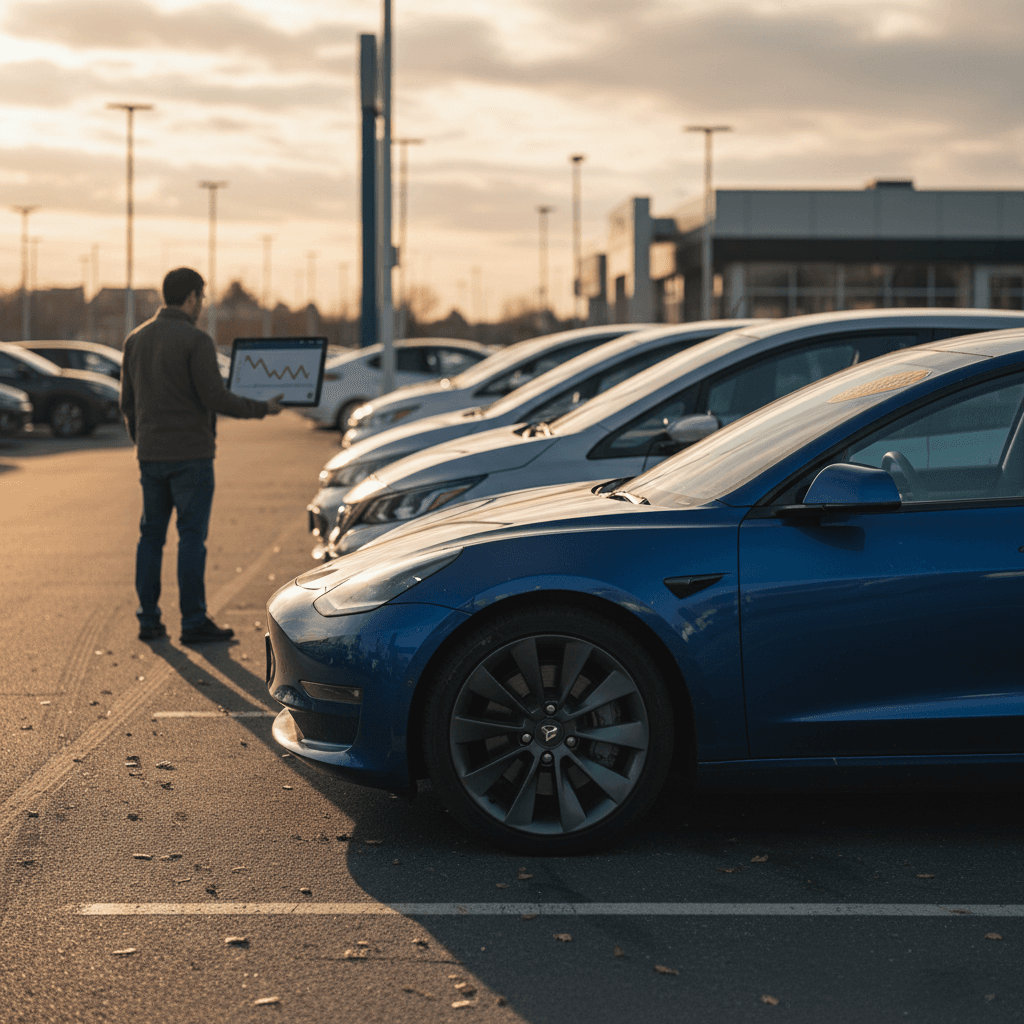
If you’ve watched the used EV market the past few years, it’s felt like a roller coaster with a loose lap belt. Prices shot up in 2021–2022, then fell hard in 2023–2025. Now you’re probably wondering: are used EV price trends going down or up in 2025–2026, and is this a smart time to buy or sell?
TL;DR on used EV prices
Why used EV price trends are so weird right now
Used EVs aren’t behaving like traditional used cars. Over the last few years we’ve seen bigger discounts, faster swings, and sharper differences between models than you typically find in the gas market. That’s because EV values depend on more moving parts: battery health, software and tech changes, federal incentives, charging infrastructure, and even how aggressively a single automaker cuts new‑car prices.
Key used EV pricing numbers heading into 2025–2026
Quick answer: Are used EV prices going down or up?
- Compared with 2022: Used EV prices are way down, often 25–40% lower for popular models like Tesla Model 3, Model Y and Chevy Bolt.
- Compared with 2024: Prices kept falling into early–mid 2025, then started to flatten. The biggest drops are behind us for many models.
- Heading into 2026: Most data points to a bottoming‑out and leveling rather than another big crash. Some used EVs, especially desirable Teslas and scarce models, are even inching back up as supply tightens or incentives shift.
What that means for you
How we got here: 2022 price peak to 2025 price crash
2021–2022: The EV price bubble
- Pandemic supply shortages and high gas prices pushed demand for EVs through the roof.
- New EVs were in short supply, so buyers chased used inventory and bid prices up.
- Some used Teslas and other hot EVs sold near or above original MSRP.
2023–early 2025: The great reset
- Tesla led a wave of aggressive new‑car price cuts, undercutting nearly‑new used cars overnight.
- Federal tax credits on new EVs made brand‑new models cheaper, pushing used values down.
- Off‑lease vehicles and fleet sell‑offs (think rental companies dumping EVs) flooded used lots.
- Result: used EVs dropped much faster than gas cars, double‑digit declines were common.
By early 2025, analysis from iSeeCars put the average price of a 1‑ to 5‑year‑old used EV around $32,198, down about 15% year over year, while comparable gas and hybrid vehicles were nearly flat. Other reports looking back to 2022 showed cumulative drops of roughly 40% on many popular EVs over that multi‑year period.
Why the crash felt so sudden
Where used EV prices stand in early 2025–2026
Fast‑forward to early 2025 and into 2026, and the story has shifted from “falling knife” to “messy stability.” The steepest declines happened in 2023–2024. Now, most indicators show prices stabilizing near a new normal, with some wiggles driven by incentives and brand‑specific news.
Average price change for late‑model used vehicles (approximate, U.S. market)
How 1‑ to 5‑year‑old used EV prices stack up against gas and hybrids heading into 2025–2026.
| Powertrain | Avg price (1–5 yrs) | YoY change | Notes |
|---|---|---|---|
| Battery electric (EV) | ≈$32,200 | -15% | Biggest declines; now similar to gas and often cheaper to run. |
| Hybrid | ≈$29,900 | -0.5% | Prices essentially flat; demand strong, supply limited. |
| Gas (ICE) | ≈$31,300 | -0.5% | Small correction from pandemic highs; market largely stable. |
Used EVs have seen the largest year‑over‑year price drops of any powertrain type.
The good news for shoppers
Why used EVs depreciate differently from gas cars
To understand where used EV prices are going next, you have to understand why they move differently from gas cars. The short version: batteries, tech, and policy all loom much larger than they do for a typical SUV or sedan.
Key forces that shape used EV price trends
Same market, very different rules of the game.
Fast tech turnover
Battery health worries
Incentives & rebates
Charging access
Inventory waves
Warranty coverage
Where Recharged fits in
Which used EVs are dropping fast, and which hold value better
Not all used EVs are sinking ships. Some have crashed in price and become screaming bargains; others are holding value more like a traditional luxury car. Broadly, the biggest drops have hit higher‑priced, fast‑depreciating models and brands that cut new‑car prices the hardest.
- Steep decliners: Tesla Model S, Model 3, Model Y, and Porsche Taycan have all seen double‑digit percentage drops year over year, with some trims losing tens of thousands of dollars since their 2022 peaks.
- Moderate decliners: Mainstream compacts like the Chevy Bolt EV, Hyundai Kona Electric, and Kia Niro EV have dropped sharply from early highs but are now stabilizing at very attainable price points in the high teens to low $20Ks.
- Stronger holders: Certain plug‑in hybrids and long‑range crossovers with limited supply, and brands that didn’t slash new‑car prices, have seen gentler curves, more in line with gas vehicles.
Beware of averages
What this means if you’re buying a used EV
If you’re shopping, these trends are your friend, if you know how to use them. The days of overpaying for a three‑year‑old EV just because gas is expensive are gone. Instead, you can often buy a well‑equipped used EV for less than a comparable gas car, then enjoy dramatically lower fueling and maintenance costs.
Smart ways to shop in a falling (or flattening) used EV market
1. Focus on total cost, not just sticker price
Compare not just purchase price, but also electricity vs. gas, maintenance, and potential home‑charging setup. A used EV that’s slightly more expensive upfront may be cheaper to own over 5–8 years.
2. Look for 1–5‑year‑old models
These sit in the sweet spot: big depreciation already baked in, but plenty of warranty coverage and modern tech. This is exactly the age band where average prices have dropped the most.
3. Prioritize transparent battery health
Ask for a battery report or capacity percentage. With Recharged, every car includes a <strong>Recharged Score</strong> with verified battery diagnostics, so you’re not guessing at range loss.
4. Check remaining battery and powertrain warranty
A car with several years of battery coverage left is worth more, and often justifies a higher asking price. Use that to compare similar models with different in‑service dates.
5. Cross‑shop brands and body styles
Some brands and segments have been hit harder by price drops. You might find a luxury‑badge EV for the same money as a mainstream one if you’re flexible on model or color.
6. Watch incentives and financing
With federal credits in flux, many lenders and dealers are using <strong>low‑rate financing</strong> or price support instead. Recharged can help you line up financing that fits a used EV, not just a gas car template.
Leverage the market to negotiate
What this means if you own or plan to sell an EV
If you bought new or nearly new in the past few years, there’s no sugar‑coating it: depreciation has likely been painful. But the picture isn’t all doom. With the steepest drops behind us for many models, you can plan your next move more strategically instead of racing the market down.
If you plan to keep your EV
- Think of the past price crash as a sunk cost. From here, your EV may lose value more like a normal car.
- Take good care of the battery: avoid chronic 100% fast‑charging, keep it in moderate temperatures, and charge at home when possible.
- Track battery health over time. A strong battery record can boost resale when you finally sell or trade.
If you’re thinking of selling
- Get multiple offers: online buyers, local dealers, and marketplaces like Recharged can value your EV differently.
- Highlight battery health and warranty status in your listing, those are your biggest value levers.
- Consider timing: selling before your battery warranty expires can lift price. Waiting out a weak local market may help if EV demand rebounds.
How Recharged can help you sell smarter
How battery health and warranty shape used EV value
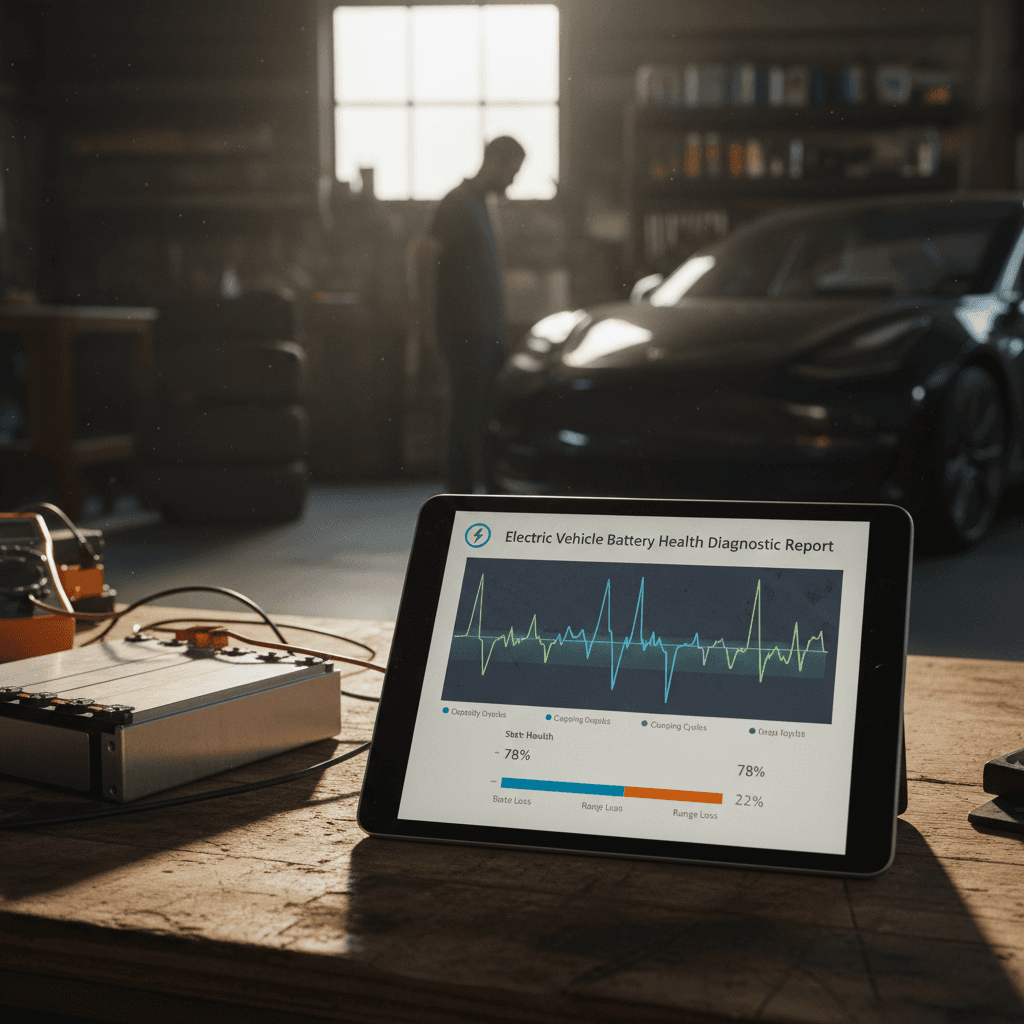
With a gas car, most buyers don’t ask how much compression cylinder three is making. With EVs, they absolutely ask about battery state of health. That’s because the battery pack is both the most expensive component and the biggest unknown for many shoppers.
Three battery realities that move used EV prices
Actual capacity vs. “EPA range”
Documented health reports
Warranty clock
Red flags that should mean a lower price
Used EV price outlook: 2026 and beyond
Forecasting any car market is part science, part weather report. But looking at inventories, incentives, and buyer behavior, there are a few likely scenarios for where used EV price trends go from here.
Where used EV prices are likely headed
Base case: Gentle declines, more normal depreciation
Most of the 2022–2024 “air” is already out of the balloon.
Used EV prices drift down slowly as more off‑lease vehicles arrive, but nothing like the 15–40% cliff dives we just saw.
EVs settle into depreciation curves closer to luxury gas cars: steeper early on, then more predictable.
Upside case: Mild rebound for the best EVs
If new‑EV incentives stay limited and interest rates ease, late‑model used EVs can look like screaming deals.
Desirable models, long range, great charging, strong tech, may actually see <strong>firming or slightly rising</strong> resale values.
Battery‑health transparency (like Recharged’s reporting) helps top‑tier cars stand out and command premiums.
Downside case: Another wave of discounting
A new round of price cuts on new EVs or a big influx of off‑lease inventory in 2026 could push used values lower again.
Policy changes, like sudden tax‑credit shifts, can jolt the market overnight.
If that happens, bargains for buyers get even better, but owners may see another leg down in resale.
How to navigate an uncertain outlook
FAQ: Used EV price trends going down or up
Frequently asked questions about used EV prices
Bottom line: How to use these trends to your advantage
Used EV prices have already done the scary part. They spiked, they crashed, and now they’re settling into a more predictable pattern. That makes this a rare moment when you can buy into a new technology wave at old‑fashioned used‑car prices, as long as you choose carefully.
If you’re shopping, focus on battery health, warranty coverage, and realistic range more than chasing the last dollar of discount. If you’re selling, lean into transparency and timing rather than hoping for a big rebound. Either way, understanding whether used EV price trends are going down or up gives you leverage instead of surprises.
Recharged was built for exactly this kind of market. With verified battery diagnostics, fair‑market pricing, EV‑savvy financing, nationwide delivery, and an expert team that lives and breathes electric cars, we make it easier to step into a used EV with your eyes wide open. The roller coaster may not be over, but you don’t have to ride it alone.