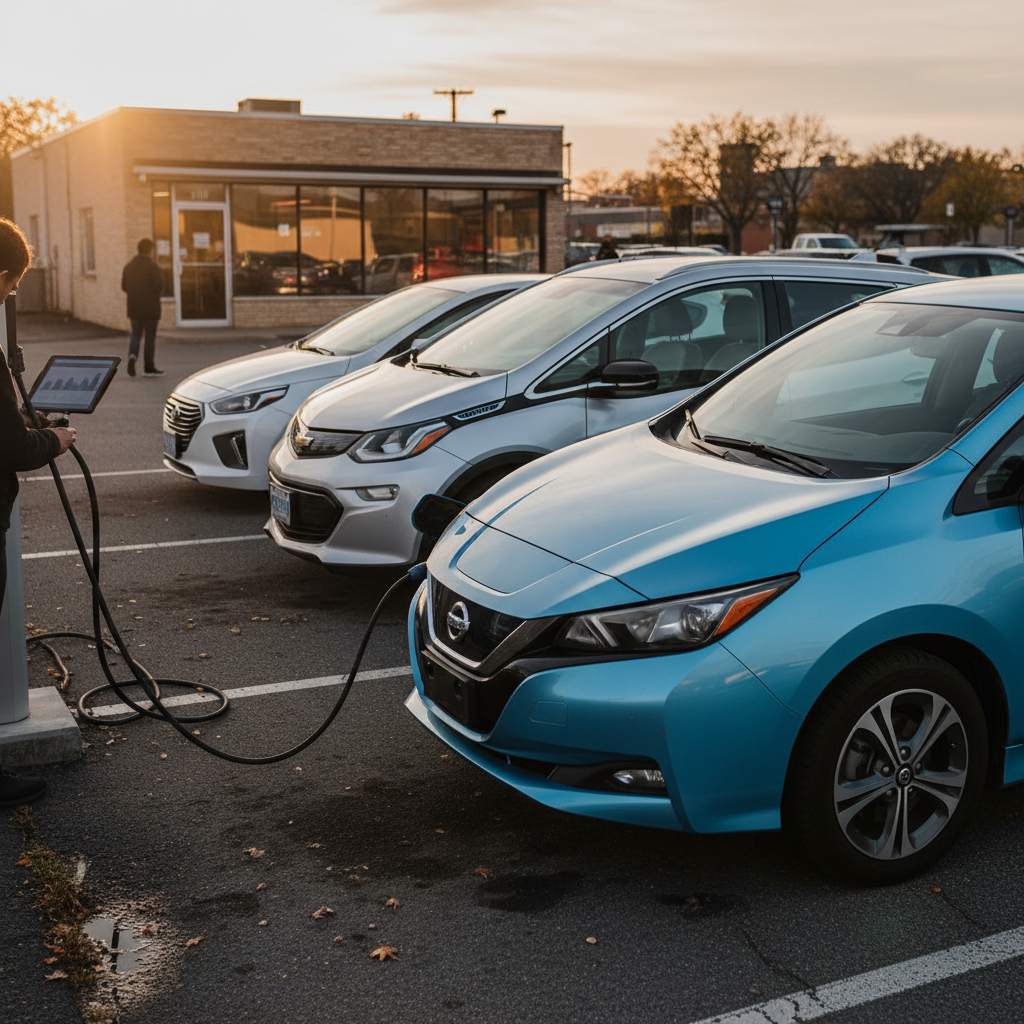
If you run a small fleet, delivery vans, sales cars, rideshare vehicles or service trucks, you’ve probably noticed how fast used EV prices have fallen while fuel and maintenance costs keep creeping up. That raises a natural question: does a used EV for fleet business operations actually save money, or are you just taking on battery risk someone else didn’t want?
Who this guide is for
Why used EVs make sense for fleets now
Why fleets are kicking the tires on used EVs
For years, the knock on EV fleets was simple: they were more expensive up front. That picture has flipped in the used market. Generous depreciation, fast product cycles, and nervous first owners have created a pool of late‑model used EVs whose resale values have been hammered, even as their batteries still perform well for typical fleet duty cycles.
Why “used” is often better than “new” for fleets
Where used EVs fit best in fleet operations
Best use cases for used electric fleet vehicles
Match routes and vehicle types before you shop the market
Last‑mile delivery
Ideal profile: 60–140 miles per day, lots of stops, predictable urban or suburban routes.
- Regen braking saves energy in stop‑and‑go traffic.
- Overnight depot charging is easy to manage.
- Noise and emissions drop in residential neighborhoods.
Sales & service cars
Ideal profile: Regional sales reps, field techs and inspectors doing 80–180 miles daily.
- Low fuel and maintenance costs improve cost per mile.
- Quiet cabins and instant torque reduce driver fatigue.
- Many compact EVs offer hatchback versatility for gear.
Rideshare & shuttle
Ideal profile: High‑utilization vehicles with access to fast charging or mid‑shift top‑ups.
- Fuel savings scale with miles driven.
- Passengers increasingly prefer low‑emission rides.
- Some platforms offer EV‑specific incentives or bonuses.
Used EVs are strongest wherever routes are predictable, repeatable and under roughly 200 miles a day. That describes a huge swath of light‑duty commercial work in urban and suburban markets. If you’re regularly sending a van 400 highway miles in winter with no charging opportunities, the math gets tougher, especially on older packs.
Use cases where used EVs struggle
TCO math: are used EVs actually cheaper?
When you evaluate a used EV for fleet business operations, ignore sticker shock, positive or negative, and build a simple five‑year total cost of ownership (TCO) model. For a light‑duty sedan or crossover, focus on purchase price, financing, fuel or electricity, maintenance, taxes and fees, and residual value.
Illustrative 5‑year TCO: used EV vs used gas sedan (per vehicle)
Rounded estimates for a U.S. light‑duty fleet vehicle driven 20,000 miles per year. Use your own fuel and electricity rates for precise modeling.
| Item | Used EV (late‑model compact) | Used gasoline sedan |
|---|---|---|
| Purchase price today | $20,000 | $18,000 |
| Financing (5 yrs, 7%) | $3,750 | $3,375 |
| Energy cost (5 yrs) | $7,000 (electricity) | $14,000 (gasoline) |
| Maintenance & repairs | $4,000 | $7,000 |
| Taxes & fees | $2,500 | $2,500 |
| Estimated resale after 5 yrs | $6,000 | $5,000 |
| Net 5‑yr TCO | $31,250 | $39,875 |
Example only; actual fleet economics will vary by region, duty cycle and acquisition costs.
In this simplified example, the used EV comes out roughly $8,500 ahead over five years, about $0.085 per mile on a 100,000‑mile duty cycle. That lines up with broader research finding that EVs can deliver single‑digit‑percentage TCO savings versus comparable ICE vehicles even after you factor in charging infrastructure.
How to pressure‑test your own TCO
Selecting the right used EVs for your fleet
- Start with duty cycles, not models. Document route lengths, dwell times, payloads and climate conditions before you ever look at a specific vehicle.
- Right‑size range. Many fleets do fine with realistic 150–220 miles per charge, which opens up more affordable models.
- Prioritize active safety and telematics. Features like automatic emergency braking, lane‑keeping, and connectivity play a big role in fleet risk management.
- Standardize where possible. Running five different EV models may create parts, training and software headaches you don’t need.
Common used EV “archetypes” that work in fleets
You don’t need an exhaustive shopping list, just a clear playbook for what types of vehicles fit your jobs.
Compact commuter EVs
Examples include compact hatchbacks and sedans like the Chevy Bolt EV or similar models.
- Great for sales, inspections and light service.
- Lower purchase prices and strong efficiency.
- Best for drivers with lighter cargo needs.
Small electric crossovers & vans
Think small crossovers and short‑wheelbase cargo vans with rear seats or configurable cargo.
- Good blend of passenger and cargo space.
- Comfortable for mixed city/highway use.
- Work well for medical, parcel and food delivery.
Light‑duty electric pickups
Still a niche in the used market, but emerging.
- Useful for trades and utility work within metro areas.
- On‑board power can replace some generators.
- Watch payload, towing and winter range carefully.
How Recharged helps fleets choose
Battery health: the make-or-break factor
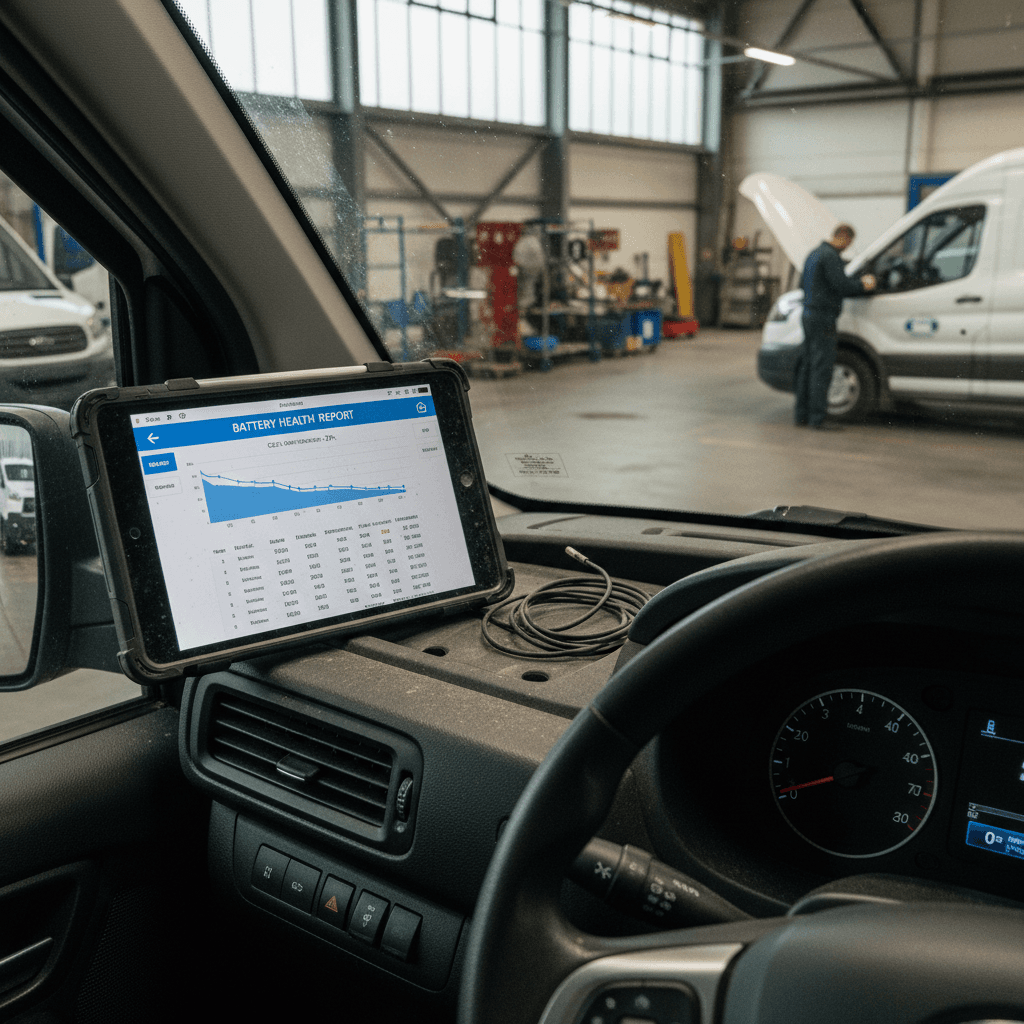
For consumer buyers, a 15–20% loss of range might be an annoyance. For fleets, that same degradation can force extra charging stops, mid‑route swaps, or complete route redesigns. That’s why verified battery health is non‑negotiable when you add a used EV to your fleet.
Battery checks every fleet should demand on a used EV
1. Objective state‑of‑health (SoH) measurement
Rely on <strong>data‑driven diagnostics</strong>, not just a dashboard bar graph. You want a quantified estimate of remaining usable capacity, compared to the original pack.
2. Fast‑charging history
Heavy DC fast‑charging isn’t automatically a red flag, but repeated high‑rate sessions on a hot pack can accelerate degradation. Ask how the vehicle was used and where it was charged.
3. Typical duty cycle match
A pack that’s fine for a 40‑mile commute may be marginal on a 160‑mile daily route. Model your worst‑case days, cold weather, full payload, highway speeds, against current capacity.
4. Thermal management system health
Confirm the vehicle’s cooling system, pumps and fans are working correctly. Vehicles with active liquid cooling typically age better in heavy use than passively cooled designs.
5. Warranty status & transferability
Even in 2026, many late‑model used EVs still have remaining battery warranties. Confirm coverage terms, mileage caps and whether the warranty transfers to a commercial owner.
What the Recharged Score adds
Charging strategy for used EV fleets
Depot & overnight charging
For most light‑duty fleets, Level 2 depot or home‑base charging does the heavy lifting.
- Install 7–19 kW AC chargers where vehicles park for 8+ hours.
- Use scheduling to charge off‑peak when rates are lower.
- Assign vehicles to parking spots with dedicated connectors to simplify operations.
Older used EVs with modest DC fast‑charge speeds can still work perfectly in this model because they refuel while drivers sleep.
Public & fast charging
Public DC fast charging is your operational safety net, not your primary fuel source.
- Use strategically for mid‑shift top‑ups on long routes.
- Validate network coverage along your key corridors in advance.
- Train drivers on apps, payment methods and connector types.
As more non‑Tesla EVs gain access to the Supercharger network, used Teslas and compatible models become especially compelling for fleets that need highway coverage.
Don’t skip load studies
Incentives and funding for commercial EV fleets
The federal landscape shifted in 2025 as several commercial EV purchase credits sunset, but fleets still have meaningful support on the infrastructure and state sides. When you’re buying used, the vehicle itself often doesn’t qualify for new‑EV tax credits, yet you can still subsidize the surrounding ecosystem.
Where fleets still find meaningful EV funding in 2026
You’ll assemble the stack from several buckets instead of one big federal check.
Charging infrastructure credit
The federal Section 30C credit can cover 30% of eligible charging equipment and install costs, up to a cap per site, if you place equipment in service before mid‑2026.
For a fleet leaning on used EVs, this turns your depot into a long‑term asset that outlives the first vehicles you plug in.
State & regional vouchers
States like California and New York offer per‑vehicle vouchers for commercial EVs and occasionally for infrastructure.
While most programs target new vehicles, some will subsidize replacing diesel or gas units with used zero‑emission vehicles if certain conditions are met. Read the fine print or work with a specialist.
Utility & local programs
Many utilities fund make‑ready work, bringing capacity to your site and sometimes subsidizing actual chargers.
Some cities and air‑quality districts also offer grants for small‑business fleets that cut local emissions.
Build incentives into your business case, not as a bonus
Phasing in used EVs: a practical rollout plan
Three‑phase roadmap for adding used EVs to your fleet
Phase 1: Pilot (3–10 vehicles)
Identify 2–3 depots or home‑base locations with predictable routes under ~150 miles per day.
Deploy a small mix of used EVs that fit your key use cases, delivery, sales, shuttle, and instrument them with telematics.
Install enough Level 2 charging to comfortably cover your pilot mileage plus a winter buffer.
Track energy use, downtime, driver feedback, and actual SoH versus expectations for 6–12 months.
Phase 2: Scale (10–50 vehicles)
Standardize on 1–3 models that performed best in the pilot to simplify training and parts.
Negotiate fleet pricing on used EVs with remarketers or platforms that understand commercial buyers.
Expand depot charging with smart load management, and lock in favorable utility tariffs.
Use pilot data to refine TCO models and update replacement policies for ICE vehicles.
Phase 3: Optimize (50+ vehicles)
Integrate charging, dispatch and telematics so routes and dwell times are optimized around real‑world range.
Develop driver coaching around efficient EV driving and charging etiquette.
Introduce battery‑health thresholds for retirement or reassignment to lighter‑duty routes.
Explore on‑site renewables or storage to shave demand charges and further cut energy costs.
Where Recharged slots into your rollout
Risks, pitfalls and how to avoid them
Common mistakes fleets make with used EVs
Buying purely on price
Chasing the cheapest used EVs often means compromised battery health or mismatched specs. Always balance purchase price with remaining capacity, charging capability and safety tech.
Ignoring climate and terrain
An EV that performs well in mild, flat conditions can struggle in cold, hilly regions. Account for <strong>winter range loss</strong> and heavy grades in your route modeling.
Under‑investing in charging
Relying on a couple of workplace chargers and public stations as backup is a recipe for bottlenecks. Design your depot to handle your peak simultaneous charging needs.
Fragmented model mix
Running too many different EV models complicates training, parts, diagnostics and driver assignment. Aim to standardize on a small set of platforms once you learn what works.
No exit strategy
You need clear rules for when a fleet EV is redeployed to lighter duty, sold, or consigned. Tracking SoH and cost per mile over time makes those decisions defensible.
Watch residual‑value risk
FAQ: using used EVs in a fleet business
Frequently asked questions about used EVs for fleets
Bottom line: when a used EV fleet actually pencils out
Used EVs aren’t a silver bullet for every fleet. But in short‑to‑mid‑range, repeatable routes with access to reliable charging, a used EV for fleet business work can trim operating costs, cut emissions and modernize your driver experience, without locking you into the capital hit of a brand‑new EV lineup.
If you approach the decision like any other capital investment, grounded in duty‑cycle data, TCO math and verified battery health, the used EV market in 2026 is less a science experiment and more a discounted on‑ramp to electrification. Platforms like Recharged are emerging specifically to make that process simpler, from Recharged Score battery reports to financing, trade‑ins and nationwide delivery. Start with a pilot, measure everything, and let the numbers, rather than the hype, tell you how fast to scale.