If you’re running the numbers on a used electric car, one of the first questions is simple: for a used EV, how much down payment do you really need? The honest answer is that there’s a comfortable range, not a single magic number, and it depends on the EV’s price, your credit, and whether you’re taking advantage of incentives.
A quick reality check on used EV prices
Why down payments work a bit differently for used EVs
Most of the conventional wisdom around down payments comes from gas cars: put 20% down, finance the rest for 60 or 72 months, and call it a day. With used EVs, there are a few extra forces in play: faster historical price swings, battery health, and incentives that used to reduce your upfront cost directly at the dealership.
- Price volatility has been higher for EVs. Used EV values fell faster than gas cars in 2023–2025 as more inventory hit the market and new EV prices dropped. That made lenders a bit more conservative, especially on newer, higher-priced EVs.
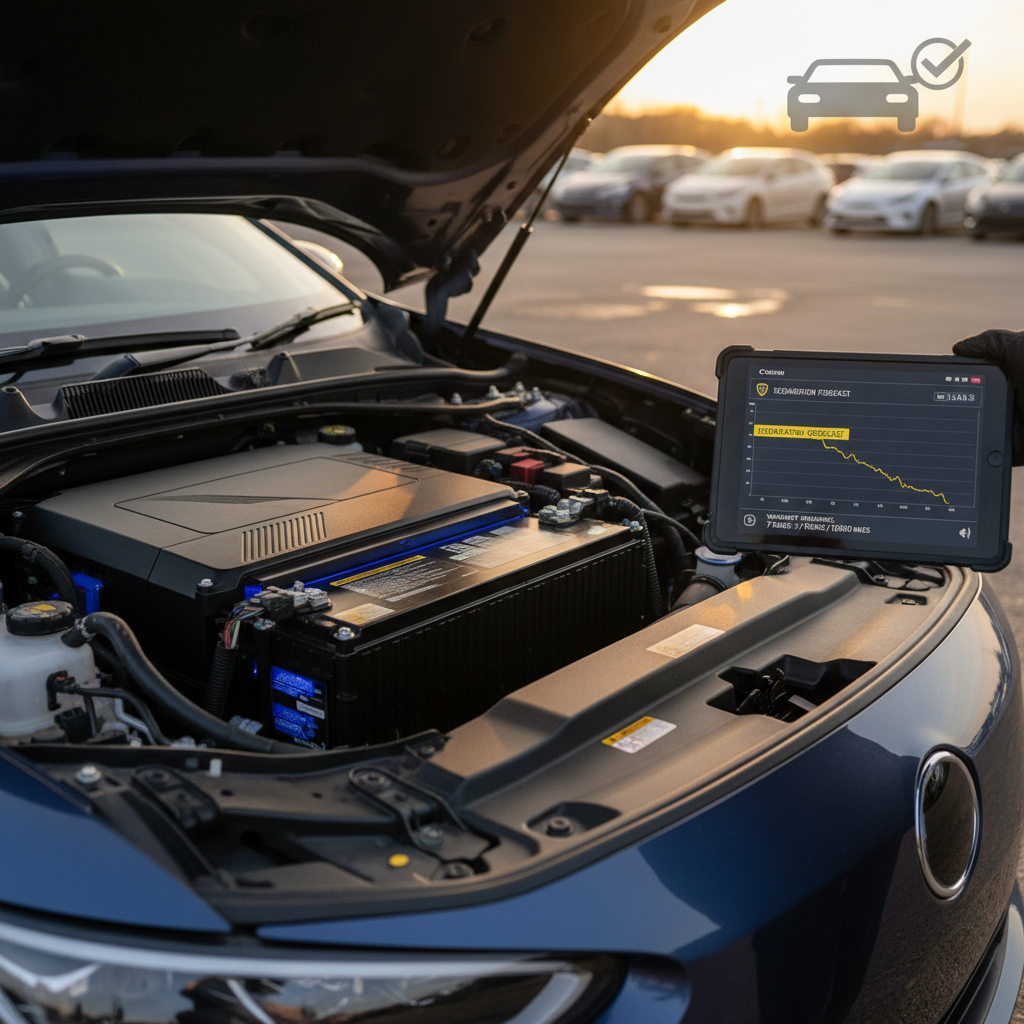
- Battery health matters more than mileage. An EV that looks cheap but has weak battery health can lose value quickly. Lenders, and smart buyers, care about verified battery condition, not just the odometer.
- Tax credits used to help the down payment. Through September 30, 2025, qualifying buyers could effectively use a federal used EV tax credit (up to $4,000) as a point-of-sale discount. After that cutoff, those credits are gone, so more of the upfront cost goes back to you.
- Gas savings change how much you can comfortably afford. Monthly fuel savings versus a gas car can offset a higher payment, which matters when you’re deciding whether to put 5%, 10%, or 15% down.
Don’t copy-paste gas-car rules
How much down payment for a used EV? The simple rule of thumb
If you want a one-line answer to “used EV down payment, how much?” here it is: plan on 10–20% of the purchase price, with 15% as a very comfortable target for most buyers.
Used EV down payment benchmarks
Lenders care less about hitting some magic percentage and more about overall risk: your credit profile, income, existing debts, and the specific car you’re buying. Someone with strong credit and stable income might get an approval with 5% down on a $20,000 EV, while a thinner-file borrower might be asked for 15–20% on that same car.
A quick way to sanity‑check your down payment
Example math: used EV down payments at different price points
Let’s turn percentages into real numbers using common used EV price points in today’s market. These examples assume you’re in the U.S. and financing over 72 months with an interest rate in the single digits. Your actual payment will depend on your rate and taxes, but the down payment math is universal.
Used EV down payment examples
How different down payment percentages translate into real dollars at common used EV prices.
| Used EV price | 10% down | 15% down | 20% down |
|---|---|---|---|
| $15,000 | $1,500 | $2,250 | $3,000 |
| $20,000 | $2,000 | $3,000 | $4,000 |
| $25,000 | $2,500 | $3,750 | $5,000 |
| $30,000 | $3,000 | $4,500 | $6,000 |
Even modest down payments can meaningfully reduce your monthly cost on a used EV.
- $2,000–$3,000 down if you’re aiming for ~10%.
- $3,000–$4,500 down if you’re targeting 15% and want a bit more cushion.
Think in total cash, not just percentage
How used EV tax credits and incentives affect your down payment
Until September 30, 2025, buyers of qualifying used EVs could use a federal tax credit, 30% of the sale price, up to $4,000, as a point‑of‑sale discount at participating dealers. That effectively worked like a boosted down payment, even if you didn’t have the cash in hand. That program ended for purchases after that date, so going forward you can’t count on the IRS to do part of your down payment for you.
Watch old advice about “$0 down thanks to the credit”
You may still see state or utility incentives that help your overall affordability, rebates for home chargers, discounted off‑peak rates, or small EV purchase incentives, but those usually don’t function like true down payment cash. Instead, they make ownership cheaper over time, which can justify being slightly more aggressive (say, 10% down instead of 15%) if your budget is tight.
What lenders look at besides your down payment
Your down payment is only one piece of the puzzle. When you finance a used EV, lenders are trying to answer a basic question: “If we give you this much money for this specific car, how likely are we to get it all back?” That risk calculation is based on more than just how much you put down.
Key factors that shape your used EV loan approval
Why two people with the same down payment can get very different offers.
Your credit profile
Debt-to-income ratio
The vehicle itself
This is where Recharged comes in: every vehicle we sell includes a Recharged Score Report with verified battery health and pricing that reflects current EV market realities. That transparency can make lenders more comfortable, which in turn can reduce how much they insist you put down compared with a similar EV from a less transparent source.
6 strategies to lower your upfront cost on a used EV
If the idea of saving up $3,000–$5,000 for a used EV down payment feels daunting, you’re not alone. The good news is that you have levers beyond just “save more.” Here are six practical ways to bring that upfront number down without making a bad long‑term tradeoff.
Ways to reduce your used EV down payment without wrecking your budget
1. Target the right price band
Instead of stretching for a $32,000 used luxury EV with a 10% down payment, consider a solid $22,000–$25,000 mainstream EV where the exact same percentage means $2,200–$2,500 down instead of $3,200+.
2. Let total cost of ownership guide you
If the EV will cut your monthly fuel and maintenance costs by $100–$150 versus your current gas car, that savings can safely support a slightly higher payment, and therefore a slightly smaller down payment, without putting you at risk.
3. Use your trade‑in strategically
Treat your existing car, or even a second household vehicle you rarely use, as part of your down payment strategy. At Recharged, you can get an instant offer or consignment, then apply that value directly to your used EV purchase.
4. Consider 72–84 month terms carefully
Longer terms reduce the monthly payment and make a lower down payment feel workable, but you’ll pay more in interest. Use them as a tool, not a default, especially on older EVs where you don’t want the loan to outlive the car’s usable life for you.
5. Fix small credit issues before you apply
Paying down a credit card or resolving a small collection can bump your score enough that lenders are more flexible on down payment and rate. Sometimes 30 days of cleanup is worth more than another month of saving.
6. Shop lenders, not just cars
Credit unions and EV‑friendly lenders may view used EVs more favorably than generic auto lenders. Pre‑qualifying for a loan before you pick the car can show you exactly how much down different lenders expect.
Should you put more money down on a used EV?
There’s a second question hiding under “how much down?”: “Should I put every spare dollar I have into this down payment?” With used EVs, the honest answer is usually: put down enough to keep your payment comfortable and your risk reasonable, then stop.
Reasons to put more down
- You want to lock in a lower monthly payment so budget isn’t tight.
- Your credit is borderline and lenders are asking for more cash to approve the loan.
- You’re buying a higher‑priced used EV (say, $35,000+) and want to avoid being upside‑down.
- You value peace of mind over maximum liquidity.
Reasons not to over‑stretch
- You’d wipe out your emergency savings to get from 10% to 20% down.
- You haven’t budgeted for insurance, registration, tires, or a home charging setup.
- You have higher‑interest debt (like credit cards) that should be paid down first.
- You expect to change jobs, move, or otherwise need flexibility in the next 1–2 years.
A practical target
Using trade-ins and instant offers as your down payment
If you own a vehicle today, your actual cash savings may not have to do all the heavy lifting. Trade‑in value or an instant offer can function exactly like down payment cash in the eyes of a lender.
Turning your current car into a used EV down payment
Three common paths, and how they affect your wallet.
Traditional trade‑in
Instant offer
Consignment
How Recharged can simplify the math
Ready to find your next EV?
Browse VehiclesChecklist before you commit to a used EV loan
Before you lock in a loan, it’s worth taking 10–15 minutes to sanity‑check your plan. This is especially true with EVs, where battery health, charging, and running costs add a few extra variables compared with the gas cars you’re used to.
Pre‑loan checklist for a smart used EV down payment
Confirm your all‑in monthly budget
Include payment, insurance, estimated charging cost, and a small maintenance reserve. Aim to keep the total under a fixed percentage of your take‑home pay (many people target 10–15%).
Verify battery health and range
Review a recent, reputable battery report, like a Recharged Score battery health diagnostic. A healthy pack makes the car easier to finance and keeps resale values more predictable.
Stress‑test the payment
Ask yourself what happens if electricity or insurance creeps up, or if you drive more than expected. If the payment still works, your down payment is likely in the right zone.
Compare at least two lenders
Even if your dealer offers financing, get a quote from a credit union or online lender. A 0.5–1.0 percentage‑point difference in rate can matter more than nudging your down payment by a few hundred dollars.
Leave some cash on the sidelines
After the down payment and taxes, try to keep at least one month of expenses in savings. That cushion is worth more than hitting a textbook 20% down target.
Plan your charging setup
If you’ll need a home Level 2 charger or electrician work, budget for it. With Recharged’s EV‑specialist support, you can estimate these costs before you sign anything.
Used EV down payment FAQ
Frequently asked questions about used EV down payments
Bottom line: how much down payment you really need
For most shoppers asking “used EV down payment, how much?” the true answer is a range, not a rule: 10–15% of the purchase price is enough to get solid approvals, reasonable payments, and a healthy amount of equity on mainstream used EVs in 2026.
What matters more than hitting a textbook percentage is whether your plan is holistically sound: the payment fits your budget even if costs nudge up, the car’s battery health is verified, and you’re not draining your last dollar to hit an arbitrary down payment target. By combining clear pricing, Recharged Score battery reports, financing support, and flexible trade‑in or consignment options, Recharged makes it easier to right‑size your down payment and step into used EV ownership with eyes wide open.
If you’re ready to see how different down payments would look on real cars, you can start browsing used EVs, get pre‑qualified with no impact to your credit, and run the numbers on monthly payments, all before you commit. The goal isn’t to put down as much as possible; it’s to put down just enough to make going electric feel effortless.