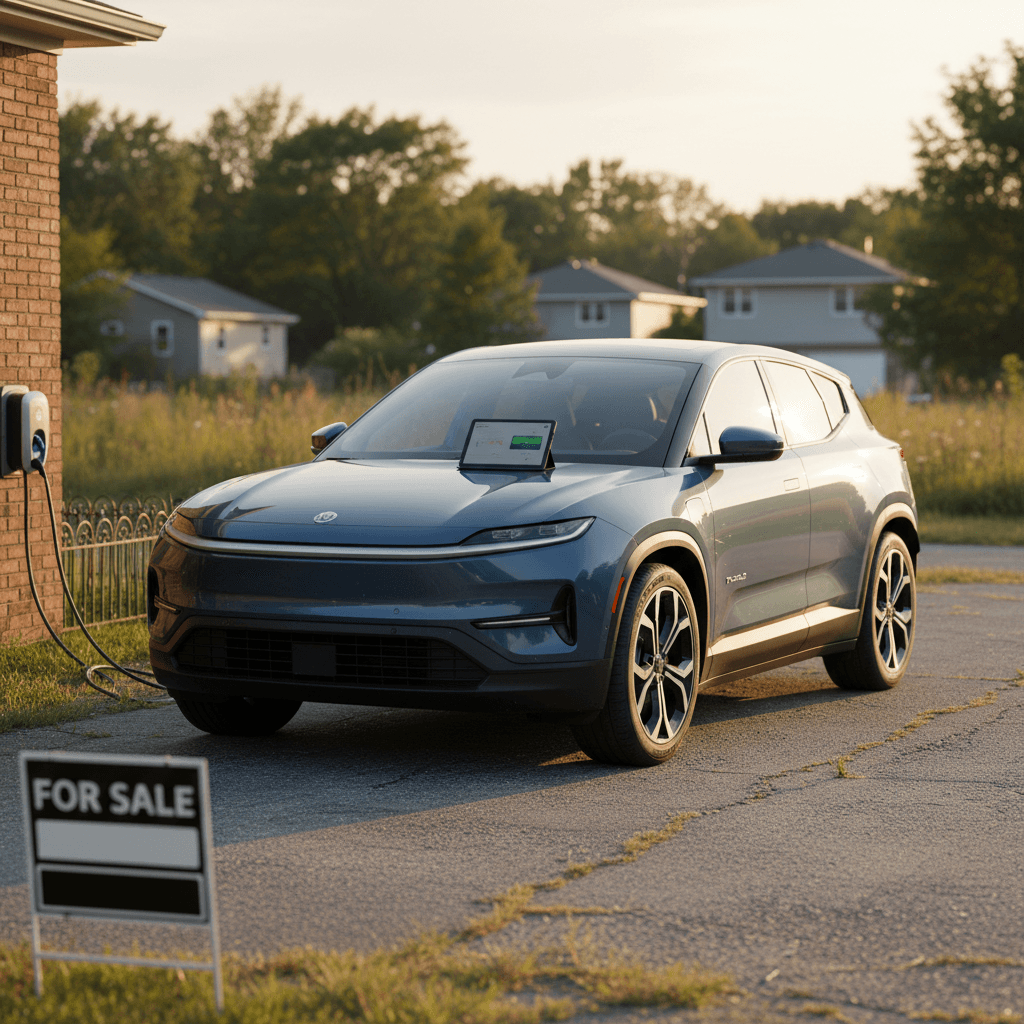
If you’re hunting for a deal on a used electric SUV, the 2023 Fisker Ocean probably keeps popping up with eye‑catching styling, big range numbers, and surprisingly low prices. This 2023 Fisker Ocean review looks past the brochure, into real‑world range, software quirks, recalls, and what Fisker’s 2024 bankruptcy means if you’re thinking about owning one now.
A promising EV from a vanished automaker
Overview: Should you consider a 2023 Fisker Ocean?
What the 2023 Fisker Ocean gets right
- Head-turning design and compact footprint with roomy interior.
- Strong advertised range on Ultra and Extreme trims compared with similar-size EV SUVs.
- Fun details like California Mode (all the windows and roof open) and a rotating center screen.
- Sustainability story with vegan interior materials and extensive recycled content.
Where it falls down
- Fisker went bankrupt in 2024, so there’s no traditional dealer/service network.
- Multiple safety recalls for software, doors, and brakes, and ongoing software instability.
- Range and charging performance don’t always match the marketing in independent testing.
- Resale values and long-term parts support are big question marks.
On paper, the 2023 Fisker Ocean lines up with mainstream EV crossovers like the Tesla Model Y, Hyundai Ioniq 5, and Kia EV6. The mid‑trim Ultra and top Extreme models offer dual‑motor all‑wheel drive and EPA‑style range estimates up to the mid‑300‑mile zone, while the base Sport trim targets a more affordable, front‑wheel‑drive buyer with around 230 miles of range. In reality, the Ocean is a much riskier, more complicated purchase today than those competitors.
2023 Fisker Ocean headline specs (manufacturer & third‑party data)
The short version
Fisker’s collapse and what it means for Ocean owners
Before we dive into the driving experience, you need to understand the backdrop. Fisker built and delivered the Ocean through 2023 and into 2024, but persistent software bugs, service delays, and financial troubles caught up with the company. By mid‑2024, Fisker had filed for bankruptcy, leaving thousands of Oceans on the road with no traditional dealer network behind them.
Life with a 2023 Fisker Ocean after Fisker’s bankruptcy
Who’s actually supporting these SUVs now?
Owner-led support groups
Independent specialists
Warranty uncertainty
Critical consideration for shoppers
At Recharged, we focus on making used EV ownership transparent. With any orphaned EV like the Ocean, we’d lean heavily on a detailed inspection, verified battery health, and a realistic conversation about who will service the car and how recalls or software updates will be handled going forward.
Design and interior: lovely ideas, rough execution
The 2023 Fisker Ocean is one of those vehicles that looks fantastic from across the parking lot. Tight, boxy proportions, short overhangs, a wide stance, and crisp surfacing give it a premium, almost European presence. The available contrasting roof and big wheels complete the look. It’s roughly Tesla Model Y–sized, but with a more upright, rugged posture that many SUV shoppers prefer.
- Cabin feels airy thanks to large glass areas and a simple dash design.
- Sustainable materials, vegan upholstery and recycled plastics, support Fisker’s eco branding.
- The rear seat is genuinely adult‑friendly, with decent legroom and headroom.
- Cargo space is competitive for a compact/midsize SUV, though not class‑leading.
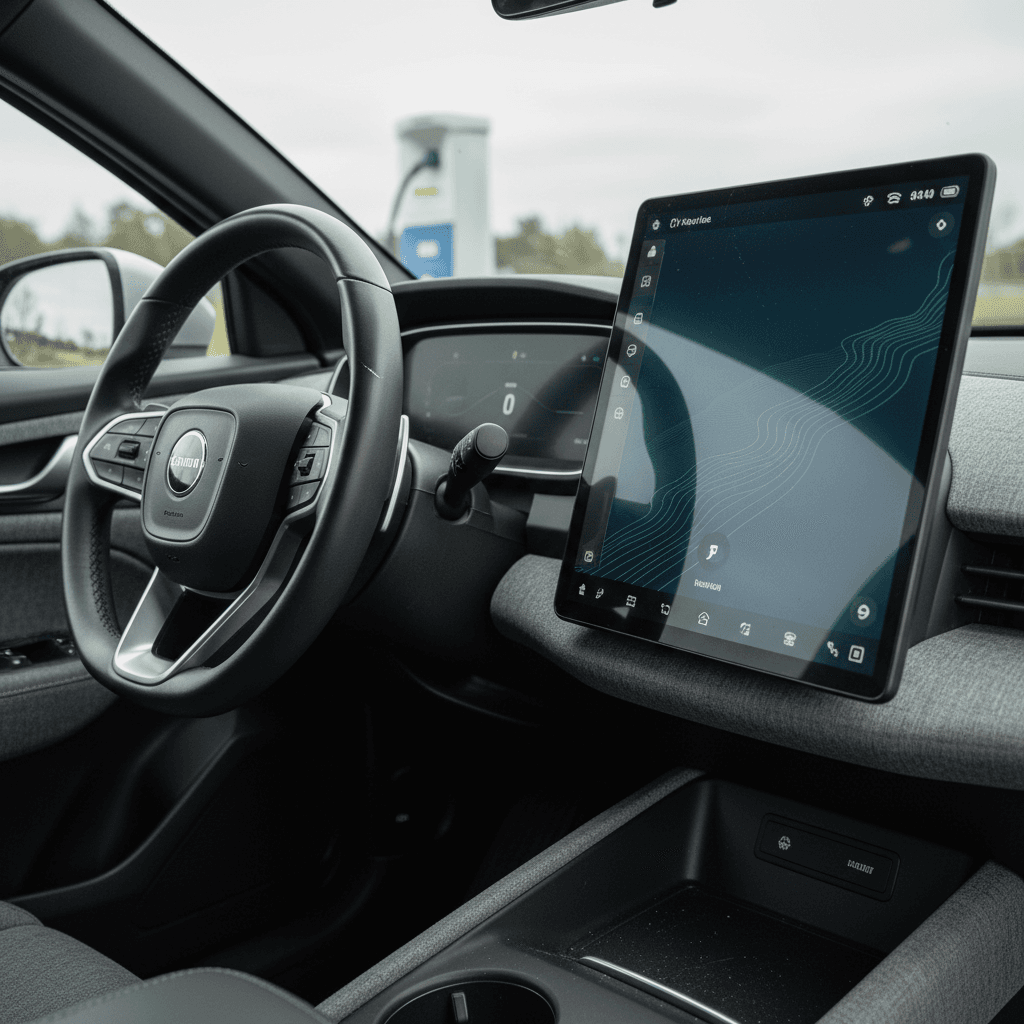
Inside, you’re greeted by a sparse dashboard dominated by a large central touchscreen and a small digital driver display. When the software is behaving, the interface looks clean and modern. When it isn’t, you’re reminded that good UX is more than pretty icons. Some test vehicles have shown inconsistent panel gaps, rattles, and trim pieces that don’t quite line up, signs of a startup still learning how to build cars at scale.
California Mode: genuinely cool
Range, battery and charging: the numbers vs. reality
Range is one of the 2023 Fisker Ocean’s biggest selling points, and also one of its biggest caveats. Fisker quoted up to about 360 miles for the dual‑motor Extreme trim, around 350 miles for the Ultra, and roughly 231 miles for the single‑motor Sport, depending on wheels and testing cycles. Independent tests, however, have sometimes struggled to match the most optimistic claims, especially at highway speeds or in colder weather.
2023 Fisker Ocean trims, powertrain and advertised range
Approximate manufacturer range figures and basic powertrain layout.
| Trim | Drive | Advertised range | Notes |
|---|---|---|---|
| Sport | Single-motor FWD | ≈231 miles | Entry trim, smaller battery, lowest price |
| Ultra | Dual-motor AWD | ≈350 miles | Middle trim; strong range and traction |
| Extreme | Dual-motor AWD | ≈360 miles | Top trim; solar roof and most features |
Real‑world range will vary with speed, temperature, terrain, wheel choice, and software version.
On DC fast charging, Fisker quoted about 34 minutes to go from 10–80% on a capable charger. That’s acceptable, but many rival EV SUVs have cut that time closer to the low‑20‑minute range. The Ocean’s peak charging speed and how consistently it holds that speed over the session can be sensitive to software versions and battery temperature, a theme that shows up again and again with this vehicle.
Battery warranty, at least on paper
Range and charging questions to ask about any used Fisker Ocean
1. Which trim and battery do I have?
Confirm whether the car is a Sport, Ultra, or Extreme, and verify wheel size. Both have a big impact on realistic range.
2. What software version is installed?
Range estimates, charging behavior, and even power delivery can change with software. Ask the seller to show the current version and update history.
3. How has it been charged?
A mix of home Level 2 charging and occasional DC fast charging is ideal. Heavy DC fast charger use isn’t a deal breaker, but it’s good context for long‑term battery health.
4. What’s the current usable range?
Take a long test drive and watch the projected range drop against the miles you actually travel. Real‑world data beats any brochure number.
Performance and driving experience
Behind the wheel, the 2023 Fisker Ocean is more about quiet confidence than sports‑car theatrics. The dual‑motor Ultra and Extreme trims provide brisk acceleration that feels competitive with other electric crossovers in this class. Instant torque makes highway merges easy, and around town the Ocean is responsive enough to feel lively without being twitchy.
- Steering is light and easy but doesn’t offer much road feel.
- Ride quality varies with wheel size; big wheels look great but add harshness over broken pavement.
- Body control is decent, but the Ocean doesn’t feel as buttoned‑down as a Model Y or Ioniq 5 in fast corners.
- Cabin noise levels are generally comfortable, though some owners report wind noise and squeaks over time.
Where the Ocean feels at home
Tech and infotainment: clever on paper, chaotic in practice
Fisker bet big on software to define the Ocean experience. A huge central touchscreen rotates between portrait and landscape orientations on higher trims, the interface is minimalist, and driving functions, from drive modes to driver assists, depend heavily on that software layer. When it all works, it feels modern and relatively intuitive. The problem is that for many early owners and long‑term testers, it often hasn’t worked perfectly.
Tech highlights
- Rotating center screen on top trims for cinema mode when parked.
- California Mode for max open‑air feel.
- SolarSky roof on Extreme trim to add a small amount of energy over time.
- Over‑the‑air (OTA) update capability for software fixes and new features.
Real-world frustrations
- Slow or unresponsive infotainment at startup for some cars.
- Glitches with driver profiles, climate controls, and driver‑assist settings.
- Occasional freezes and forced reboots of the main screen reported by testers and owners.
- OTA updates that sometimes fix issues, and occasionally introduce new ones.
"Every Fisker Ocean we’ve driven has had software bugs... they marred the launch and continued to plague the car throughout its short production run."
Why software matters so much here
Reliability, recalls and real-world owner experience
Reliability is where the 2023 Fisker Ocean’s story gets truly complicated. In 2024, U.S. safety regulators opened investigations into complaints about doors that sometimes wouldn’t open, braking behavior, and unintended vehicle movement. Fisker issued multiple recalls, many of them software‑related, to address potential loss of power, incorrect cluster warnings, braking feel, and hardware items like door handles and an electric water pump.
- Owners have reported vehicles that wouldn’t start, froze mid‑drive, or bricked after software updates.
- Some Ocean drivers experienced door latches that didn’t respond correctly, raising safety concerns.
- Over‑the‑air updates have gradually improved many behaviors, but not all vehicles have been updated promptly or consistently, especially as Fisker’s business situation worsened.
- Independent technicians have reported that a significant minority of Oceans suffered serious software issues during the OTA update process.
Safety and recall work are non‑negotiable
Reliability due diligence for a used Fisker Ocean
Confirm recall status by VIN
Ask for documentation showing all recall repairs and software updates have been completed. Cross‑check with a trusted shop or online NHTSA database if available.
Scan for diagnostic codes
Have an EV‑savvy technician scan for stored or pending error codes. Hidden software or hardware issues can show up here before you feel them on the road.
Test every function, twice
Cycle all doors, windows, cameras, driver‑assist features, drive modes, and charging functions. Repeat after a full power cycle to catch intermittent glitches.
Understand who will service it
Before you buy, identify at least one shop or specialist who can work on a Fisker Ocean in your area, and ask about their experience and parts access.
How the 2023 Fisker Ocean compares to rivals
In the new‑car market, Fisker positioned the Ocean against compact and midsize EV crossovers like the Tesla Model Y, Hyundai Ioniq 5, Kia EV6, Ford Mustang Mach‑E, and Nissan Ariya. On range and price, the Ocean actually stacked up well. Today, in the used market, the comparison looks very different because of brand stability, service access, and software maturity.
2023 Fisker Ocean vs. key EV SUV rivals (high-level comparison)
How the Ocean’s core attributes stack up against mainstream competitors in the used market.
| Model | Range potential | Charging speed | Reliability/support | Used value stability |
|---|---|---|---|---|
| Fisker Ocean | Strong on paper, variable in practice | Middling vs. best-in-class | Weak, startup with bankruptcy and recall history | Uncertain, often heavily discounted |
| Tesla Model Y | Very competitive, proven in real world | Fast, robust Supercharger network | Generally solid, strong OTA support | Strong demand, higher resale |
| Hyundai Ioniq 5 | Solid, realistic ranges | Fast 800V architecture on compatible chargers | Mainstream dealer/service support | Growing used market, stable values |
| Kia EV6 | Similar to Ioniq 5 | Fast 800V charging | Mainstream dealer/service support | Good demand, stable values |
| Ford Mustang Mach‑E | Competitive ranges | Good but not class‑leading | Established brand, broad dealer network | Reasonable resale, wide availability |
Generalized snapshot; specific trims and options will vary.
Think beyond price
Buying a used Fisker Ocean: key questions to ask
If you’re still intrigued by the 2023 Fisker Ocean, maybe because you love the design, the eco story, or the idea of rescuing an orphaned EV, you’ll want a more thorough pre‑purchase process than you might with a mainstream used EV. This is where a structured inspection and trustworthy battery data really matter.
Used 2023 Fisker Ocean pre‑purchase checklist
1. Battery health and high‑voltage system
Ask for an independent battery health report showing current capacity and cell balance. At Recharged, this is built into the <strong>Recharged Score</strong>, which verifies pack health so you’re not guessing about long‑term range.
2. Complete software and recall history
Request records of all software updates, recall repairs, and any previous bricking or loss‑of‑power incidents. Avoid cars with incomplete or unclear histories.
3. Thorough road test in varied conditions
Drive at city and highway speeds, use one‑pedal or regen modes, test adaptive cruise and lane‑keeping (if equipped), and perform several full shut‑down/restart cycles.
4. Home and public charging test
If possible, plug into a Level 2 home charger and a DC fast charger before purchase. Watch for error messages, connection issues, or unusually slow charge rates.
5. Backup plan for service
Identify where you’ll go if the car needs a high‑voltage battery repair, a door latch module, or complex software work. Talk to that shop ahead of time about parts access and labor rates.
6. Exit strategy
Because resale demand is uncertain, be realistic about how long you’re comfortable keeping the car. The Ocean makes more sense as a long‑term keeper than a short‑term flip.
How Recharged can help with unusual EVs like the Ocean
FAQ: 2023 Fisker Ocean
Frequently asked questions about the 2023 Fisker Ocean
Bottom line: who the Fisker Ocean is really for
The 2023 Fisker Ocean is one of the most fascinating EV stories of the last few years. It’s gorgeous, thoughtfully packaged, and genuinely innovative in places. It also arrives with unfinished software, a thick stack of recalls, and a parent company that didn’t survive long enough to fully sort those problems before going under. That combination makes it a far cry from a safe, set‑and‑forget family SUV.
If you’re a technically savvy early adopter who understands the risks of owning an orphaned EV, and you have access to an independent specialist who knows these cars, a carefully vetted 2023 Fisker Ocean at the right price could be a rewarding, left‑field choice. For most shoppers who simply want a dependable, easy‑to‑service electric SUV, a used Tesla Model Y, Hyundai Ioniq 5, Kia EV6, or Ford Mustang Mach‑E will deliver a calmer, more predictable ownership experience.
Whichever path you choose, don’t skip the fundamentals: a thorough inspection, verified battery health, and clear information about service support. On the Recharged marketplace, those pieces come standard with every vehicle through the Recharged Score Report, so you’re not buying a mystery, you’re choosing an EV with your eyes open.