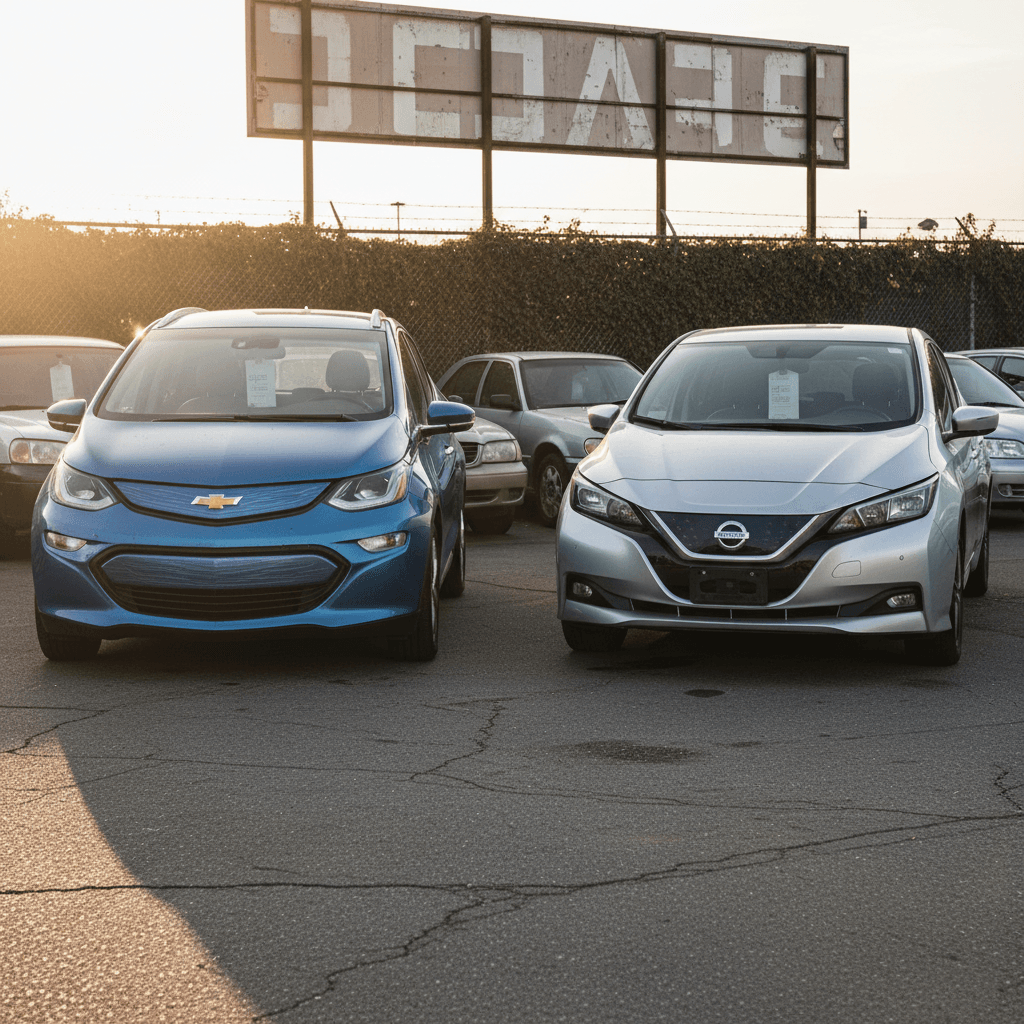
If you’re shopping for a **used electric car under $20,000**, your shortlist probably includes a used Chevrolet Bolt EV and a used Nissan Leaf. Both are proven, affordable EVs, but they’re not interchangeable. The right choice depends heavily on how far you drive, how you charge, and how long you plan to keep the car.
At a glance
Bolt vs Leaf under $20K: Who this guide is for
This comparison focuses on **U.S. shoppers in 2026** looking at **used Chevrolet Bolt EVs and Nissan Leafs priced at or below $20,000**. In that budget, you’re typically cross‑shopping:
- 2017–2022 Chevrolet Bolt EV with 60–65 kWh batteries and 238–259 miles EPA range
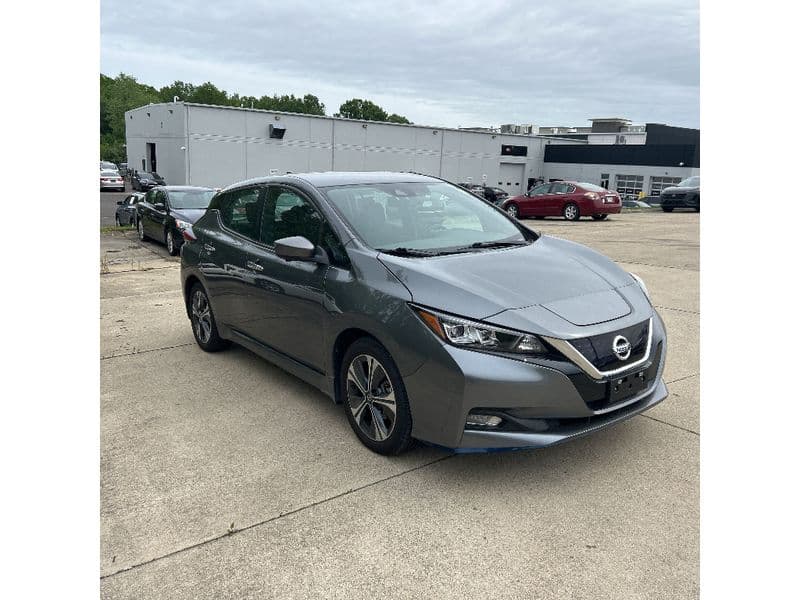
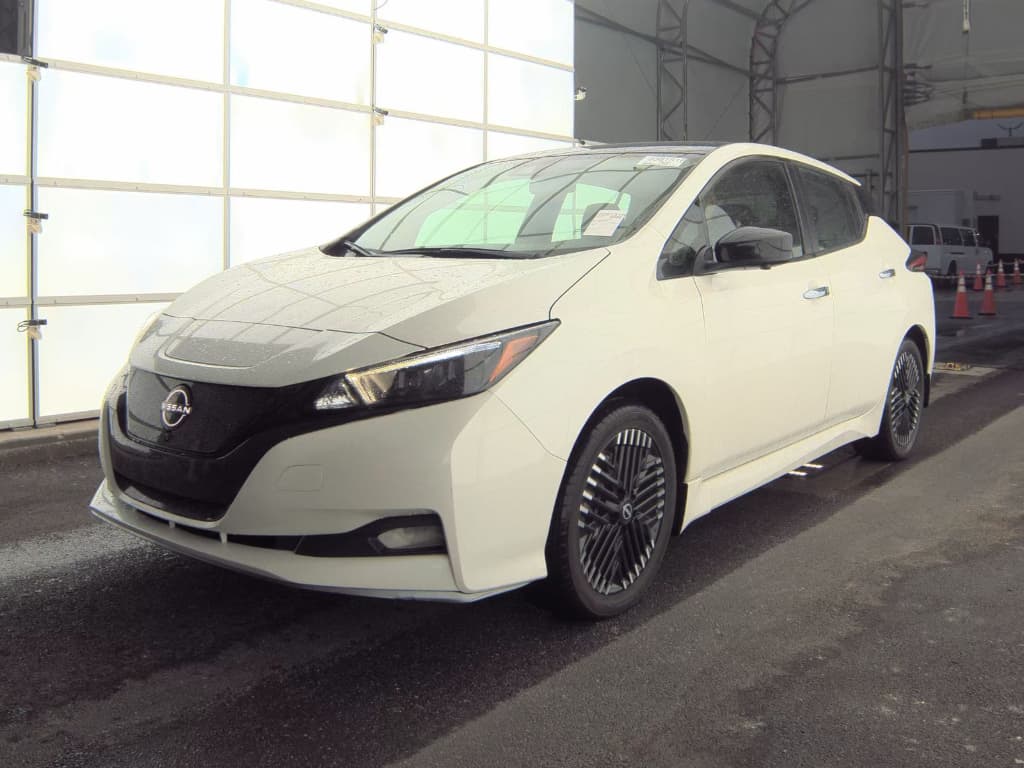
- 2018–2020 Nissan Leaf with 40 kWh battery (about 149–151 miles EPA range) and some 2019–2021 Leaf Plus models with 62 kWh packs (around 215–226 miles EPA range)
We’ll look beyond the window sticker to compare **range, battery health, charging, real‑world costs, and reliability**, and we’ll flag the situations where the Leaf actually makes more sense than the Bolt.
Quick take: Which used EV wins under $20K?
Used Bolt EV vs Leaf under $20,000: verdict in 30 seconds
Both can be smart buys, if you match the car to your daily life.
When the Chevy Bolt EV is the better buy
- You regularly drive more than 60–70 miles a day or want true one‑car‑household capability.
- You care about battery longevity and prefer a liquid‑cooled pack.
- You want stronger DC fast charging and easier long‑distance use.
- You’re okay paying a bit more than a comparable Leaf for the extra range and flexibility.
When the Nissan Leaf is the better buy
- Your driving is mostly local: short commutes, school runs, in‑town errands.
- You want the lowest possible purchase price and insurance costs.
- You can charge at home overnight and rarely need DC fast charging.
- You’re fine with shorter range and can live with faster battery aging, especially on older 24/30/40 kWh packs.
Executive summary
Price and value: Bolt EV vs Leaf under $20,000
Typical late‑2025 U.S. used prices (before taxes & fees)
In plain language, **both cars are now firmly in sub‑$20,000 territory**, especially higher‑mileage examples. If your budget ceiling is strict, the **Leaf often undercuts the Bolt by several thousand dollars**. But once you cross about **$14,000–$15,000**, you’re usually close to Bolt money, and at that point the extra range and battery cooling are hard to ignore.
How Recharged can help on price
Range and battery size: real-world differences
On paper, the **Bolt EV absolutely outguns the Leaf on range**, especially the common 40 kWh versions that dominate the under‑$20k Leaf market. Here’s how the headline numbers stack up for typical trims you’ll find in this price bracket:
EPA range and battery size: Bolt EV vs Leaf
Representative U.S. models commonly found under $20,000.
| Model/Years | Battery (usable) | EPA range (new) | Typical real‑world range in 2026* |
|---|---|---|---|
| Chevy Bolt EV 2017–2019 | ~60 kWh | 238 mi | 190–220 mi for a healthy pack, depending on climate & speed |
| Chevy Bolt EV 2020–2022 | ~65 kWh | 259 mi | 210–240 mi with normal degradation |
| Nissan Leaf 2018–2020 (40 kWh) | 40 kWh | 149–151 mi | 100–130 mi depending on battery health and climate |
| Nissan Leaf Plus 2019–2021 (62 kWh) | 62 kWh | 215–226 mi | 160–200 mi depending on use and heat exposure |
Range figures are new‑car EPA ratings. Expect some reduction from age and use.
Why real‑world Leaf range can be lower than you expect
If you want an EV that can comfortably cover **150–200 miles in mixed driving** without babying the throttle, the **Bolt EV is the safer bet**. A Leaf can work well if your regular use is more like **30–60 miles per day** and you’re disciplined about not stretching its remaining range to the limit.
Battery health and thermal management
Chevrolet Bolt EV battery: liquid‑cooled and recall‑updated
- Uses a liquid‑cooled lithium‑ion pack, which helps stabilize temperatures during hot weather, fast charging, and long highway drives.
- Earlier Bolts (2017–2019) were subject to a well‑publicized battery recall; many cars now have newer replacement packs with very good capacity.
- In real‑world owner reports, degradation tends to be modest when the car is charged reasonably and not abused.
- For a used shopper, a recall‑completed Bolt with fresh pack can actually be a hidden gem in long‑term battery health.
Nissan Leaf battery: air‑cooled, more climate‑sensitive
- Most Leafs rely on an air‑cooled battery. That saves cost and weight, but exposes the pack more directly to ambient heat.
- Earlier 24 and 30 kWh packs were known for faster capacity loss; the later 40 and 62 kWh packs are better, but still more climate‑sensitive than the Bolt.
- Frequent DC fast charging and hot‑weather use can accelerate degradation, sometimes enough to meaningfully cut range by year 6–8.
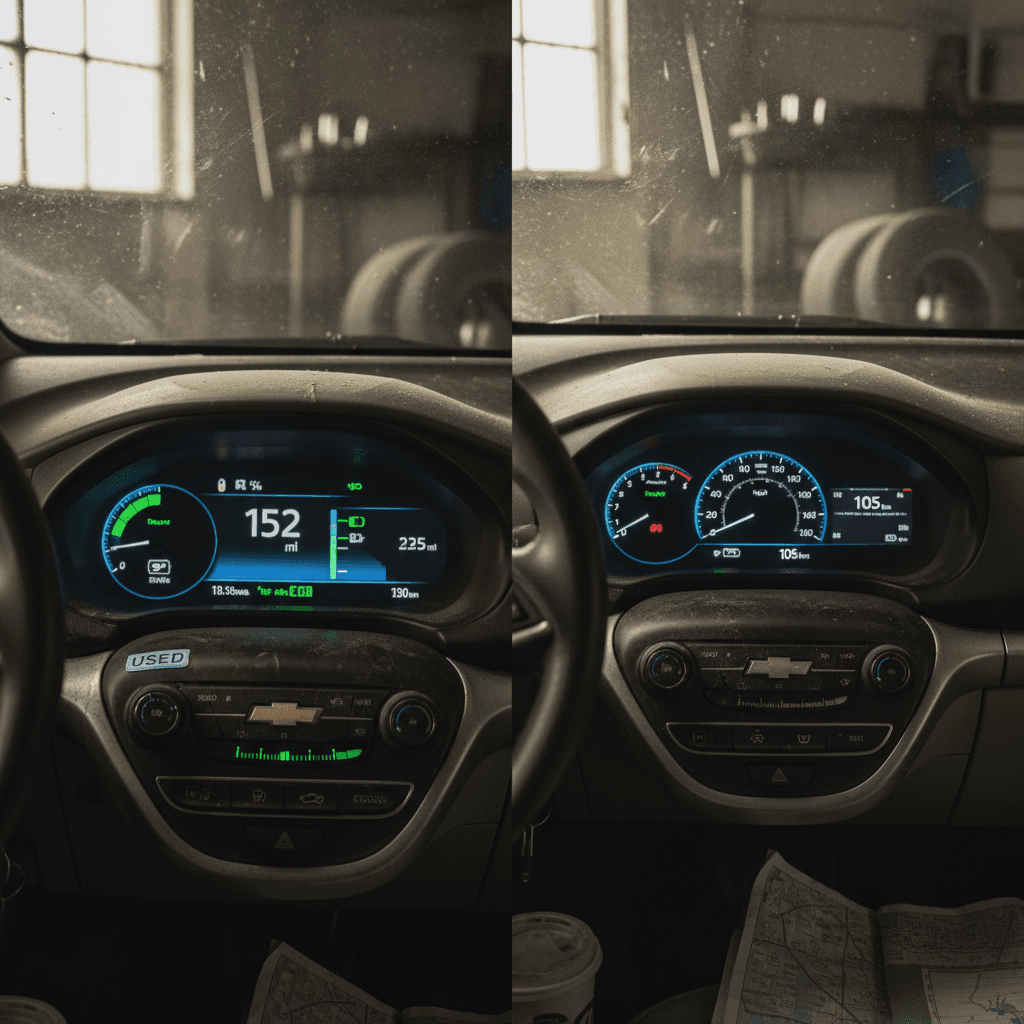
- Battery bars on the Leaf’s dash are an important clue, but they’re not the same as a detailed diagnostic.
Do not ignore battery condition on a Leaf
Whichever car you’re leaning toward, make **battery health your number‑one priority**. At Recharged, every vehicle includes a **Recharged Score battery report** that quantifies usable capacity and flags any pack or charging anomalies, especially helpful when you’re comparing a cheap Leaf to a slightly pricier but healthier Bolt.
Charging speed and road-trip ability
Charging comparison: Bolt EV vs Leaf
How they behave on Level 2 and DC fast charging matters more than you think.
Home & workplace (Level 2)
Both cars charge comfortably overnight on a 240V Level 2 station.
- Bolt EV: up to ~7.2 kW on most model years.
- Leaf: similar AC charging rates on 40 and 62 kWh cars.
For home use, they’re effectively equivalent here.
DC fast charging
- Bolt EV: CCS connector with peak rates around 50–55 kW on older cars; enough for meaningful road trips with planning.
- Leaf: CHAdeMO port, typically similar or slightly lower peak power.
- As networks shift toward CCS and NACS, CHAdeMO support is slowly shrinking in North America.
Road‑trip experience
- Bolt EV: 200+ real‑world miles and CCS access make it the better budget road‑trip EV.
- Leaf 40 kWh: More of a regional car; frequent stops and aging CHAdeMO network limit flexibility.
- Leaf 62 kWh: Better, but still constrained by CHAdeMO availability.
Think about public charging standards
Daily driving, comfort, and practicality
Interior space and practicality
- Both are upright hatchbacks with useful cargo areas.
- Bolt EV: Surprising rear headroom for its size; narrow seat cushions can feel small for larger adults.
- Leaf: Feels roomier in the back seat, with a more traditional compact‑car seating position.
- Both offer rear seats that fold for bulky items; Leaf’s cargo floor is a bit friendlier for larger loads.
Driving feel and refinement
- Bolt EV: Quicker off the line, tighter steering, and more composed at 70+ mph; feels at home on the interstate.
- Leaf: Softer ride tuning and more relaxed steering; ideal for city streets and lower speeds.
- Noise levels are similar; tires and road surface matter as much as the car.
If you split your time between **urban errands and regular freeway drives**, the **Bolt EV’s stronger acceleration and stability at speed** make it easier to live with as your primary car. If you’re mostly driving under 55 mph, the Leaf’s comfort‑first tuning is perfectly adequate, and sometimes preferable.
Ownership costs, warranties, and recalls
Battery warranty basics
Beyond tires, brakes, and routine wear items, both the Bolt EV and Leaf are relatively inexpensive to run. The major ownership‑cost swing factor is the **battery and high‑voltage system**, where warranty coverage and recall history matter.
- **Chevy Bolt EV recalls:** The battery‑fire recall was a significant event, but many affected cars now have **newer replacement packs**, which can be positive for a used buyer if documented properly.
- **Nissan Leaf concerns:** Fewer high‑profile recalls, but more long‑term talk about **battery degradation** and, on some 40 and 62 kWh packs, weak‑cell issues that can trigger rapid range loss under load or in cold weather.
- **Insurance and parts:** Leaf insurance is often a bit cheaper thanks to lower values; Bolt parts availability and service familiarity have improved as the car has become a mainstream used EV choice.
Don’t assume a recall is bad news
Which used EV fits your life? Buyer scenarios
Real‑world scenarios: Bolt EV vs Leaf
Daily commuter, 20–40 miles round‑trip
Either car can work, but a **Leaf 40 kWh** is often the best value if you live in a mild climate.
Prioritize a Leaf with **strong battery bars** and verifiable capacity, don’t buy blindly on mileage alone.
Bolt EV is the smarter pick if you sometimes stack errands and want extra buffer.
One‑car household, mixed driving
You often combine commuting, kids’ activities, and weekend trips into a single car.
Here the **Bolt EV’s 200+ mile real‑world range** becomes a meaningful safety net.
A Leaf 40 kWh can feel tight; a Leaf 62 kWh is better, but you must accept CHAdeMO limits.
Budget‑maximizer, lowest purchase price
Your top priority is getting into an EV for **the least cash outlay**.
A 2018–2020 **Leaf 40 kWh** with healthy battery bars can be a fantastic city car under $12k.
Be honest about your range needs and climate; in hot regions, consider stretching for a Bolt or newer Leaf with documented pack health.
Frequent highway or regional trips
You do regular 120–200 mile regional drives or visit family in another city.
The **Bolt EV is the clear favorite** thanks to range and CCS fast‑charging access.
A Leaf 62 kWh can sometimes work with careful planning, but a 40 kWh Leaf is usually the wrong tool for this job.
Checklist: How to shop a used Bolt or Leaf
Used Bolt EV vs Leaf under $20k: inspection checklist
1. Clarify your minimum real‑world range
Write down how many miles you actually need per day, then add a 30–50% buffer. If that number is over 120–130 miles, a **Bolt EV or Leaf 62 kWh** is a safer bet than a Leaf 40 kWh.
2. Verify battery health with data
For either car, ask for a **battery health report**, not just a screenshot of the range estimate. On Recharged vehicles, the Recharged Score includes a full battery diagnostic so you can compare cars apples‑to‑apples.
3. For Leafs, read the battery bars
On a Leaf, count the **capacity bars** to the right of the state‑of‑charge gauge. Fewer than 10 bars on a 40 kWh car usually signals noticeable degradation; pair that with a test drive that includes highway speeds.
4. Confirm recall and warranty status
On a Bolt EV, verify that any **battery recall work is completed and documented**. On both cars, confirm remaining battery‑warranty coverage by checking the in‑service date and mileage.
5. Test real‑world efficiency
During the test drive, reset the trip computer and drive a familiar loop with some highway. Compare **miles driven vs miles of range lost** to get a feel for real‑world efficiency and usable range.
6. Evaluate charging fit for your life
Confirm how and where you’ll charge most of the time. If you rely heavily on public DC fast charging, favor the **Bolt’s CCS port** and broader network support. If you charge at home and rarely road‑trip, a Leaf’s limitations matter less.
FAQ: Used Chevrolet Bolt EV vs Nissan Leaf under $20K
Frequently asked questions
Bottom line: Bolt EV vs Leaf under $20K
If you’re looking for a **single EV that can handle commuting, errands, and regular highway trips**, a used **Chevrolet Bolt EV** under $20,000 is usually the smarter long‑term choice. Its combination of range, battery cooling, and CCS fast‑charging access simply gives you more freedom, and more margin for error, than most similarly priced Leafs.
A used **Nissan Leaf**, especially a later 40 kWh or 62 kWh car with documented battery health, can still be an excellent buy if your driving is short‑range, your climate is mild, and your top priority is **lowest purchase price today** rather than maximum flexibility tomorrow.
Whichever way you lean, don’t let a low sticker price blind you to **battery condition, charging fit, and real‑world range**. Those three factors ultimately determine whether your “cheap” EV becomes a favorite daily driver or a frustrating compromise. Working with a specialist marketplace like Recharged, with **Recharged Score battery diagnostics, expert EV guidance, financing options, and nationwide delivery**, can take much of the uncertainty out of that decision and help you get into the right used Bolt EV or Nissan Leaf under $20,000 the first time.