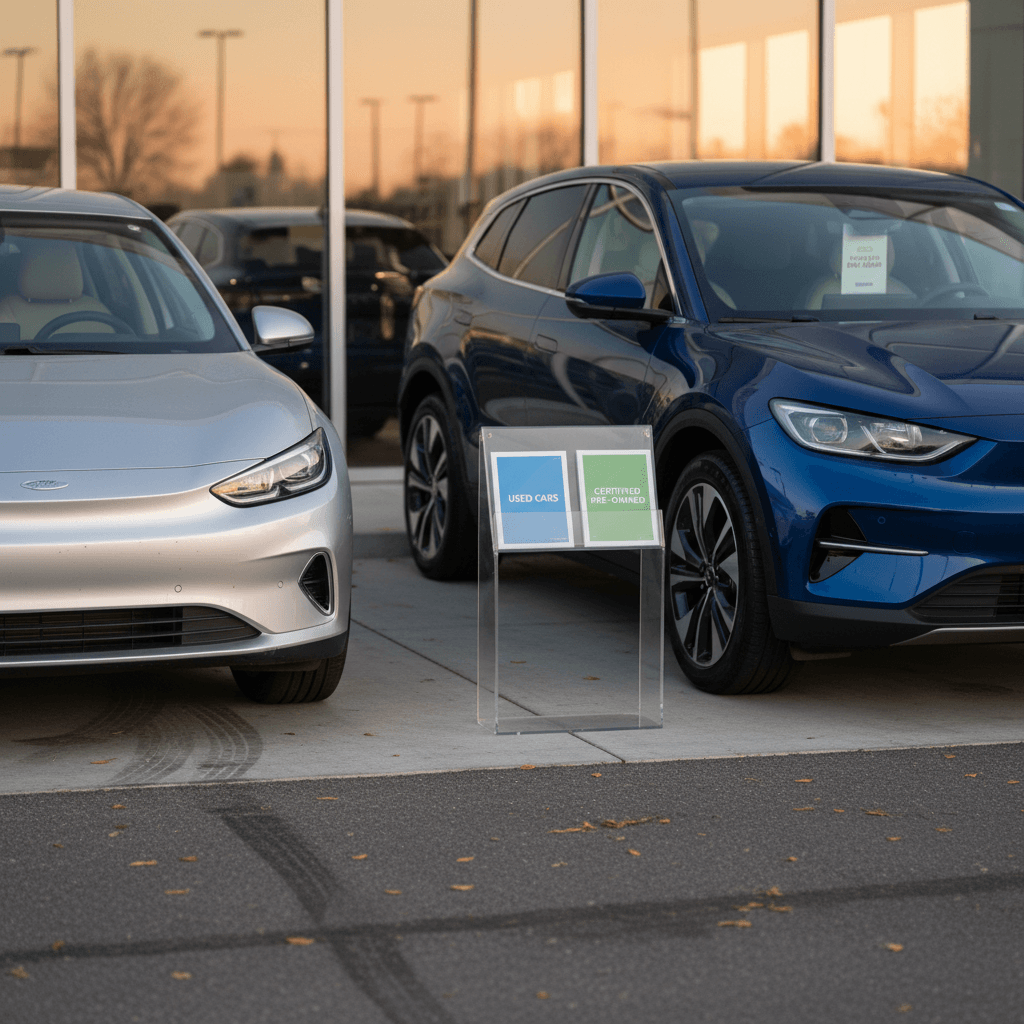
If you’ve been hunting for a used car lately, you’ve probably seen the phrase “used car CPO” pop up in listings and window stickers. It sounds reassuring, it usually costs more than a regular used car, and every brand swears their certified pre-owned program is the one you should trust. But what does CPO really get you, and when is it worth paying for, especially if you’re looking at a used EV?
Quick definition
What “used car CPO” actually means
When a listing says "used car CPO," it’s short for a certified pre-owned vehicle. All CPO cars are used, but not all used cars are certified. To earn that badge, a car generally must be under a certain age (often 5–6 model years), under a mileage cap (commonly 60,000–80,000 miles), have a clean title, and pass a multi-point inspection written by the manufacturer or the certifying dealer.
- Age limit, often under 5–6 model years
- Mileage limit, typically under 60,000–80,000 miles
- Clean history report with no branded title
- Multi-point inspection (100–200+ checks)
- Some combination of warranty and roadside assistance
There’s no single national standard for CPO. Toyota’s certified program, for example, requires cars to be under 7 model years and 85,000 miles and pass a 160‑point inspection, while Subaru caps many CPOs at 5 years and 80,000 miles. Luxury brands sometimes stretch age but add longer warranties. The key is that each brand writes its own rulebook, and you need to read it.
Manufacturer CPO vs. dealer CPO
How certified pre-owned programs work
While programs vary, most used car CPO offerings follow the same basic recipe: tighter screening, documented reconditioning, and extra coverage layered on top of the original warranty. Here’s how the process typically works behind the scenes.
CPO at a glance in 2024–2025
What a CPO inspection actually covers
It’s far more than a quick oil change and tire kick.
Mechanical systems
- Engine, transmission, and driveline checks
- Brakes, steering, suspension, and tires
- Fluid leaks, noises, and vibration under load
Safety & electronics
- Airbags, ABS, and stability control
- Headlights, ADAS cameras and radar
- Infotainment, gauges, and warning lights
Cosmetic standards
- Paint and body panels for prior repairs
- Interior wear, odor, and upholstery
- Wheel damage and glass chips or cracks
Ask for the checklist
Bumper-to-bumper style coverage
Most used car CPO programs include a limited "wrap" warranty that acts like a pared‑down bumper‑to‑bumper plan. It usually:
- Covers electronics, A/C, interior hardware, and many safety systems
- Lasts 12–24 months from your CPO purchase date
- Excludes wear items like tires, brake pads, and wiper blades
Extended powertrain protection
The bigger dollar value often sits in the powertrain warranty. Many brands stretch coverage to about 7 years or 100,000 miles from the car’s original in‑service date. That means:
- Engine, transmission, and major driveline pieces are covered
- Some luxury brands add electrical and climate systems
- Roadside assistance and trip-interruption coverage are often included
There’s one more twist: a few brands offer such generous CPO warranties that a low-mileage certified car can actually carry longer total coverage than a brand-new version. Volvo’s program, for example, can reach 7 years/100,000 miles on many components from the original purchase date, outlasting the standard new-car warranty.
Used car vs CPO: key differences
At a glance, a nicely detailed used car on a dealer’s lot can look just like its certified twin. The differences show up in the fine print, on history reports, warranty contracts, and in the price column.
Used car vs CPO: side‑by‑side comparison
How a typical certified pre-owned car stacks up against a similar non‑certified used car from the same dealer.
| Feature | Standard Used Car | Certified Pre-Owned (CPO) |
|---|---|---|
| Age & miles | Any age, any mileage | Usually ≤ 5–6 years and ≤ 60k–80k miles |
| Inspection | Basic safety check | Factory-style 100–200+ point inspection |
| Warranty | Often none or short dealer warranty | Limited bumper-to-bumper plus extended powertrain |
| Roadside assistance | Rarely included | Commonly included for warranty term |
| Price | Lower upfront | Higher upfront (often $1,000–$3,000 more) |
| Financing | Standard used rates | Often eligible for promotional rates |
| Peace of mind | Depends on your research | Higher, backed by brand standards and paperwork |
Remember: details vary by brand and dealer, but these patterns are common in 2025.
Why non-CPO can still be smart
How CPO works differently for electric vehicles
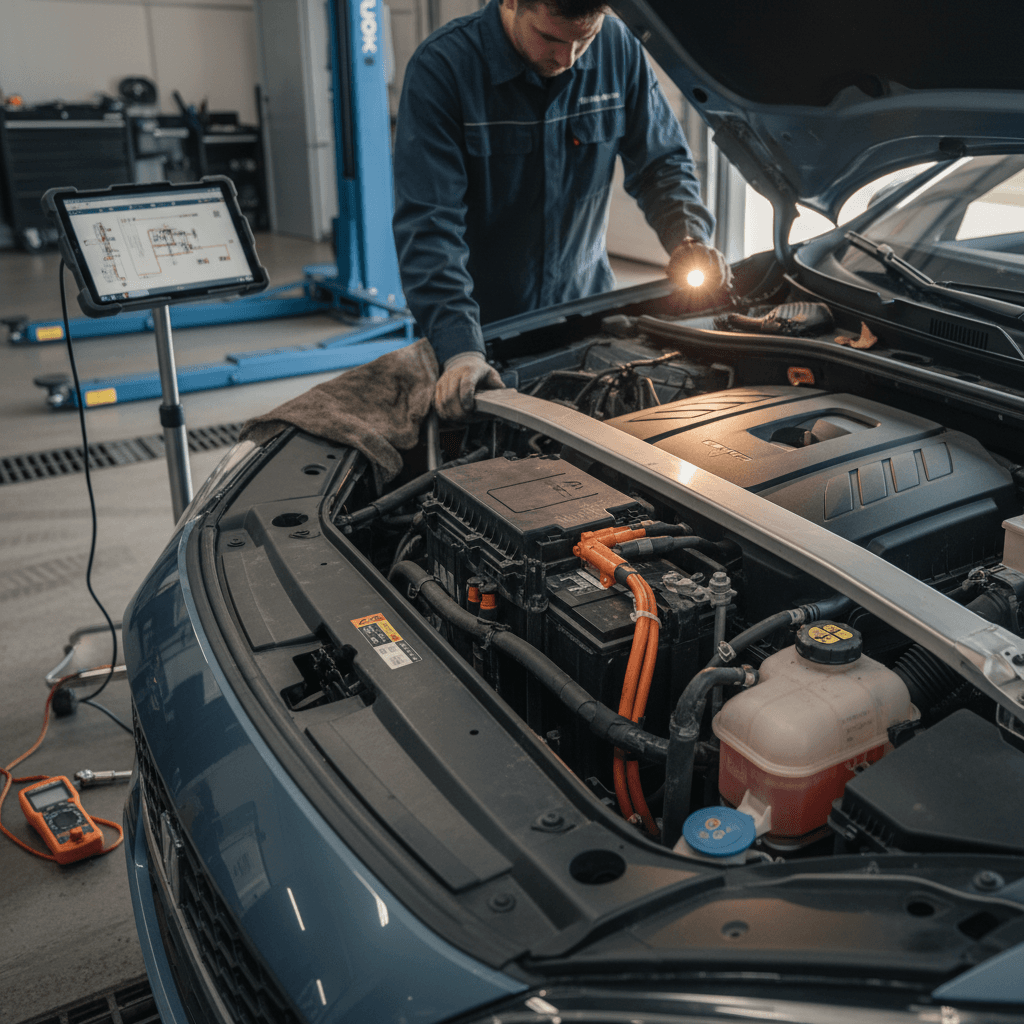
If you’re shopping for a used EV, the CPO conversation gets more interesting. In an electric car, the traction battery is the heart of the vehicle and the single most expensive component. That means the way a used car CPO program handles battery health and warranty coverage matters far more than which brand of leather is on the seats.
Gas CPO vs EV CPO: what changes
Same idea, different stakes when a battery pack is involved.
Gas or hybrid CPO
- Focus on engine, transmission, and emissions systems
- Wear items (brakes, tires) checked but rarely guaranteed
- Fuel economy changes slowly with age
EV CPO
- Battery health and DC fast‑charging history are critical
- Range and charging speed can fade as the pack ages
- OEM battery warranty (often 8 yr/100k mi) is the safety net
Most EVs sold in the U.S. carry a federally mandated 8‑year/100,000‑mile (or better) battery warranty, and many CPO programs for electrics lean on that existing coverage. Some add a minimum capacity guarantee, say, 70% remaining, while others simply confirm that the original warranty is still in force.
Battery health isn’t always obvious
This is exactly the gap Recharged tries to close with the Recharged Score battery health diagnostics: instead of just saying a used EV is “certified,” every car in our marketplace comes with a report that quantifies battery condition, expected range, and charging performance. It’s the kind of transparency EV shoppers hoped CPO programs would offer, but often still don’t.
When a used car CPO deal is worth the premium
Because CPO cars typically cost more than similar non‑certified used vehicles, sometimes by a couple thousand dollars, you want to be sure you’re paying for real value, not just a badge and a bow on the hood. Here are situations where that extra money usually makes sense.
Scenarios where CPO shines
Paying more upfront can buy you the right kind of safety net.
You hate surprise repairs
Primary family hauler
You’re financing the purchase
When non‑CPO wins instead
Checklist: shopping a used car CPO the smart way
Once you’ve decided a used car CPO might be the right lane, use this checklist to separate genuinely strong programs from glossy marketing. This applies whether you’re shopping gas, hybrid, or EV.
Used car CPO buyer’s checklist
1. Confirm who certifies the car
Is the program backed by the <strong>manufacturer</strong> or only the dealer? Manufacturer CPO usually offers clearer standards, better warranty coverage, and nationwide support.
2. Ask for the full inspection report
Review a copy of the <strong>multi‑point inspection</strong>. Look for notes about repairs completed and items marked “monitor” or “service at later mileage.” Those can become negotiation points.
3. Decode the warranty details
Clarify start and end dates, mileage limits, and what’s covered. Is the bumper‑to‑bumper coverage from the sale date, and is the powertrain counted from the original in‑service date?
4. Understand EV battery terms (if applicable)
For used EVs, ask if the CPO program guarantees a <strong>minimum battery capacity</strong>, how they measured it, and how much of the original 8‑year/100k‑mile warranty remains.
5. Compare total out‑the‑door cost
Don’t just compare monthly payments. Put CPO and non‑CPO options side by side with taxes, fees, dealer add‑ons, and estimated interest so you can see the real premium.
6. Stack the perks honestly
Roadside assistance, free maintenance, and trip‑interruption coverage all have value. Estimate what you’d pay for similar protection on your own to see if the CPO package pencils out.
7. Get an independent inspection when in doubt
Even with CPO, a trusted independent mechanic, or EV specialist, can spot issues that slipped past the checklist, especially hidden accident repairs or marginal battery health.
Common CPO pitfalls and how to avoid them
CPO generally tilts the odds in your favor, but it doesn’t make a car bulletproof. In the current market, it’s easy to overpay or misunderstand what you’re actually getting. Here are the traps to watch for.
Pitfall #1: Assuming “certified” equals “perfect”
Pitfall #2: Confusing service contracts with warranties
Pitfall #3: Paying for CPO but not getting real coverage
Pitfall #4: Skipping fine print on fees and add‑ons
Where Recharged fits in if you’re buying a used EV
If you’re leaning toward a used EV, you may find that traditional used car CPO programs don’t answer the questions you actually care about: How healthy is the battery? What range can I reasonably expect in my climate and commute? Has this car been fast‑charged to death?
That’s where Recharged takes a different path. Instead of relying on a generic CPO label, every vehicle on our platform comes with a Recharged Score Report that includes verified battery diagnostics, charging performance, and a plain‑English explanation of what those numbers mean for everyday driving.
- Transparent, data-backed battery health reports on every EV
- Fair market pricing based on real-time used EV data
- Financing options and pre‑qualification with a fully digital process
- Trade‑in, instant offer, or consignment help if you’re selling your current car
- Nationwide delivery plus an Experience Center in Richmond, VA for in‑person shoppers
In other words, we deliver the parts people like about used car CPO, extra scrutiny, clear standards, support when things get confusing, without hiding the important stuff in an acronym. You see the car, the data, the price, and your options, all up front.
Used car CPO: frequently asked questions
Used car CPO: FAQs
Bottom line: should you go CPO or standard used?
A used car CPO can be the sweet spot between brand‑new and mystery‑history used, especially if you value warranty protection, roadside assistance, and the comfort of knowing a factory checklist has already been run. But CPO isn’t a magic spell. Programs vary widely, certification doesn’t guarantee perfection, and sometimes that badge isn’t worth the price premium.
If you’re shopping a gas or hybrid vehicle, lean toward CPO when you want an extra safety net and you’ve confirmed the warranty is truly robust. If you’re buying a used EV, focus first on battery health and transparent data, whether that comes from a manufacturer CPO program or from tools like the Recharged Score. In any case, slow down, read the contracts, and make the car earn your trust before it earns your payment.