You’re shopping the used luxury EV market and two names keep popping up: the Cadillac Lyriq and the Genesis GV60. On paper, both are stylish electric SUVs with strong range and high-end cabins. But once miles, previous owners, and real-world reliability enter the picture, the “used Cadillac Lyriq vs Genesis GV60” decision looks very different from a new-car comparison.
Quick take
Why compare a used Cadillac Lyriq vs Genesis GV60?
Both models landed as statement pieces for their brands. The Lyriq is Cadillac’s first Ultium-based EV SUV, sized closer to a midsize luxury crossover with a dramatic, upscale presence. The GV60 is Genesis’ dedicated EV built on Hyundai Motor Group’s 800‑volt E-GMP platform, sharing bones with the Hyundai IONIQ 5 and Kia EV6 but wrapped in a more premium, playful package.
As used vehicles, they target the same kind of buyer: someone who wants a genuinely premium EV without spending six figures, but who also cares about range, charging speed, and long-term battery health. That’s exactly the use case Recharged was built for, every EV we list includes a Recharged Score battery health report and fair-market pricing so you’re not guessing how that first owner treated the pack.
Core spec snapshot: used Lyriq vs GV60 (typical early model years)
At a glance: who each EV is best for
Who should buy a used Lyriq vs GV60?
Match the EV to your lifestyle before you sweat the specs.
Used Cadillac Lyriq is best for…
- Space-focused drivers who want a larger, more traditional luxury SUV feel.
- Highway cruisers who value quiet, comfort, and available Super Cruise driver assist on some trims.
- Buyers in colder climates who want a bigger battery buffer for winter range loss.
- Style-first shoppers who love Cadillac’s dramatic lighting and presence in the driveway.
Used Genesis GV60 is best for…
- Enthusiasts who love quick, playful handling and hot‑hatch vibes.
- Urban and suburban drivers who prioritize compact size, easy parking, and fast DC charging.
- Tech-forward owners who care about features like Vehicle‑to‑Load (V2L) and clever interior design.
- Early‑adopter skeptics who may prefer Hyundai/Genesis’ growing EV reliability track record over a first‑out Cadillac EV.
Pricing and depreciation in the used market
Neither of these SUVs has been on sale very long, early Lyriqs and GV60s started arriving in the U.S. around the 2023 model year, so every example on the market is still relatively new. That’s good news for technology and remaining warranty, but it also means you’re staring straight at the steepest part of the depreciation curve.
Typical used price positioning (U.S. market, early model years)
Real numbers will vary by mileage, trim, options, and region, but this gives you a directional sense of where used Lyriqs and GV60s tend to land versus original MSRP.
| Model | Original price band (new) | Typical used positioning | Depreciation feel |
|---|---|---|---|
| Cadillac Lyriq | High $50Ks–$70Ks+ depending on trim | Often mid $40Ks–upper $50Ks for early used examples | Hits hard early as Cadillac’s first EV; incentives and rapid market changes accelerate drop |
| Genesis GV60 | Mostly $50Ks–$70Ks depending on battery and motor setup | Commonly low $40Ks–mid $50Ks for clean, low‑mile cars | Also depreciates quickly, but smaller size and shared platform with IONIQ 5/EV6 can reassure some buyers |
Expect wide spreads, condition and battery health matter more than a few thousand dollars on the sticker.
Where Recharged fits in
Range, battery size, and winter driving
On range and battery size, the used Cadillac Lyriq usually wins on paper. Most Lyriqs use a roughly 102 kWh battery. EPA estimates for early rear‑wheel‑drive versions land north of 320 miles, with dual‑motor all‑wheel drive trims a bit lower depending on configuration. Genesis GV60 models typically offer a smaller pack, more in the 77–84 kWh neighborhood, with EPA ranges often in the mid‑200s to low‑300s depending on motor count and wheel choice.
Cadillac Lyriq: long legs, big buffer
- Battery & range: Large pack and competitive EPA ratings give you a healthy cushion on road trips.
- Winter advantage: That extra capacity helps offset cold‑weather range loss, especially if you run all‑wheel drive and heated everything.
- Weight trade‑off: The Lyriq is heavy. It feels planted, but you’ll see that mass at the plug and in tire wear.
Genesis GV60: efficient and right‑sized
- Battery & range: Smaller pack but strong efficiency and, in some trims, excellent EPA range for the size.
- Everyday use: For daily commuting and errands, you’ll rarely touch the bottom half of the battery if you can charge at home.
- Winter reality: In truly cold climates, the smaller pack leaves you with less buffer, so preconditioning and charging access matter more.
Cold‑climate buyers take note
Charging speed and road-trip readiness
Range is one thing. How fast you can add that range back is just as important on a road trip. Here the story gets more nuanced, and the used Lyriq vs Genesis GV60 comparison starts to favor the smaller Genesis.
Charging comparison: used Cadillac Lyriq vs Genesis GV60
These are typical manufacturer‑quoted capabilities for early model years. Real‑world speeds will depend on temperature, state of charge, and charger quality.
| Feature | Used Cadillac Lyriq | Used Genesis GV60 |
|---|---|---|
| Onboard AC charging | 11.5 kW standard; 19.2 kW available on some trims (requires heavy 240 V circuit at home) | Up to 11 kW AC on most trims; sufficient for overnight home charging |
| DC fast‑charge peak | Around 190 kW peak when conditions are ideal, ~80 miles in ~10 minutes quoted | 800‑V architecture enables very fast charging; roughly 10–80% in about 18 minutes on a 350 kW unit |
| Connector standard (early U.S. cars) | CCS1 DC fast + J1772 AC, with growing access to Tesla Superchargers via NACS adapter | Initially CCS but transitioning to native NACS on newer model years, plus access to other high‑speed networks |
| Home‑charging practicality | Huge battery benefits from a 240 V Level 2 setup; 19.2 kW option is overkill for most drive patterns but great if you have the electrical panel to support it | Smaller pack means even a basic 40‑ or 48‑amp home charger can easily refill overnight, lowering installation costs |
Remember: these numbers are best‑case. Used‑EV buyers should focus on consistency and network access as much as peak speeds.
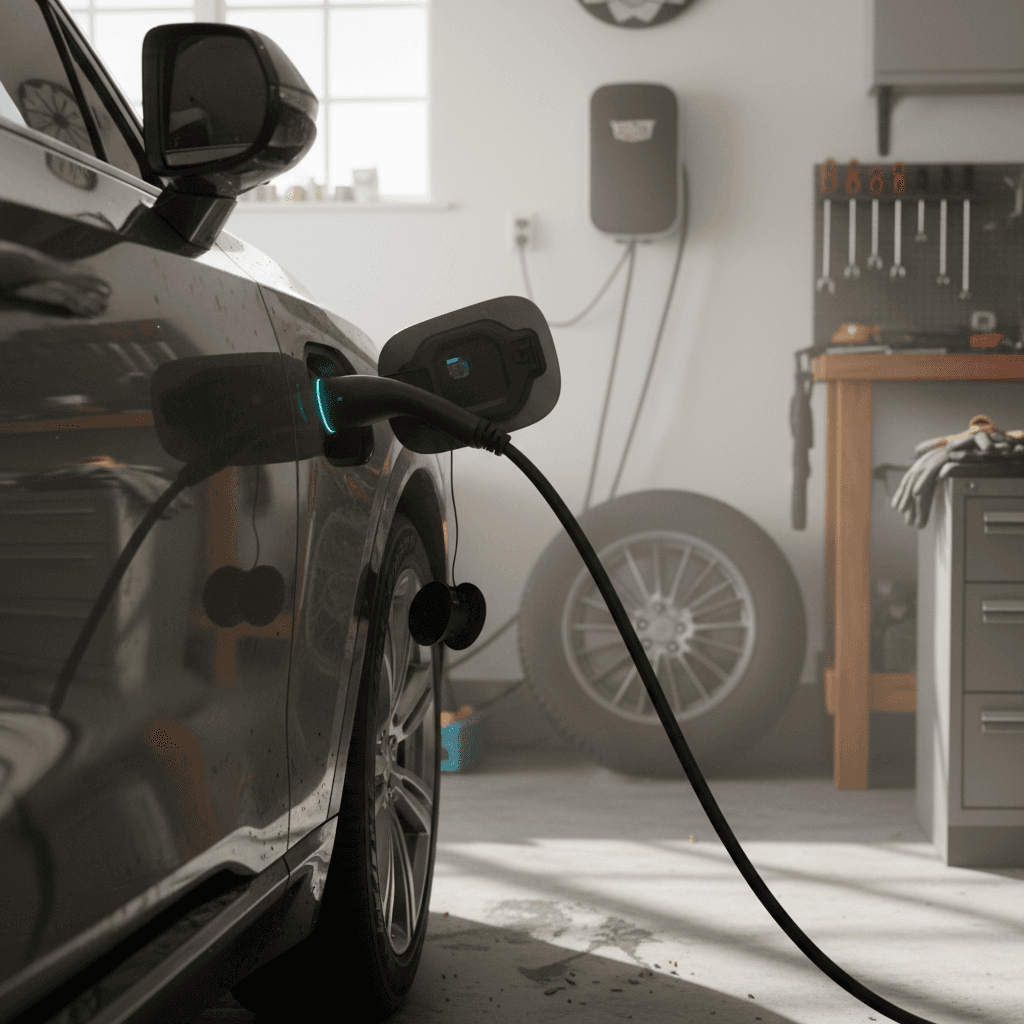
Home charging is the real game changer
Space, comfort, and in-car tech
Sit in both of these and you’ll instantly feel the philosophical split. The used Cadillac Lyriq wants to be a rolling lounge, soaked in ambient lighting and screen real estate. The Genesis GV60 aims for a more intimate, design‑centric cockpit, with clever touches like the crystal‑sphere shifter and playful trim treatments.
Comfort and tech: Lyriq vs GV60
Both feel premium, but they prioritize different experiences.
Cadillac Lyriq: lounge on wheels
- Size & packaging: Larger footprint, roomy back seat, generous cargo space. It feels like a true midsize luxury SUV.
- Cabin feel: Quiet, soft‑riding, with a sweeping display and detailed lighting. It’s made for long highway slogs.
- Tech: Big screens, high‑end audio, and available hands‑free driving features on some trims. Some owners wish the software felt more polished.
Genesis GV60: compact and clever
- Size & packaging: Shorter and more hatchback‑like, with excellent front‑seat comfort and decent rear legroom for the footprint.
- Cabin feel: Quirkier and more playful, with neat design flourishes and high material quality.
- Tech: Strong integration with the broader Hyundai/Genesis software ecosystem, plus neat extras like V2L that can power gear and small appliances.
Performance and driving feel
If you’re cross‑shopping these, you probably like driving. The good news: neither is a slug. The Cadillac leans into composed, confident acceleration with a big‑car feel, especially in dual‑motor form. The Genesis GV60, particularly in its higher‑output trims, feels downright mischievous, quick responses, strong off‑the‑line punch, and a more playful chassis.
Cadillac Lyriq: smooth authority
- Character: More grand‑touring than track‑toy. It’s quick but prefers to glide rather than pounce.
- Weight: You always feel the mass. The upside is a stable, composed ride over long distances.
- Noise & refinement: Cadillac has been tuning quiet cabins for decades; that experience shows here.
Genesis GV60: hot‑hatch attitude
- Character: Feels eager and light on its feet, especially compared with the Lyriq.
- Fun factor: Higher‑output trims can feel downright wild on a back road, more like a performance hatch than a traditional luxury SUV.
- Trade‑off: The shorter wheelbase and playful tuning mean you’ll feel more of the road, good and bad.
Who wins on fun?
Reliability, battery health, and warranty coverage
This is where used EV shoppers have to put their journalist hat on. Early owner surveys and third‑party data have raised eyebrows about the Lyriq’s initial reliability, especially around electronics and some early‑build quirks. That’s not unusual for a first‑generation, first‑platform EV from any brand, but it means you should be extra picky about history, software updates, and build date when shopping used.
- Both the Lyriq and GV60 carry long EV component warranties from their manufacturers, usually around eight years or 100,000 miles on the high‑voltage battery.
- Cadillac’s Lyriq has, in some surveys, shown more early‑life issues than the best‑in‑class EVs, particularly around electronics and accessories.
- Genesis benefits from the broader Hyundai/Genesis family’s rapidly improving EV experience; it’s not perfect, but it hasn’t drawn the same volume of public reliability criticism as the Lyriq so far.
- In either case, individual vehicle history matters more than brand averages. A well‑maintained Lyriq can be a better bet than a rough GV60, and vice versa.
Don’t skip a battery health check
Ownership costs, insurance, and incentives
Running costs for both of these EVs are generally lower than comparable gas SUVs once you’re plugged into cheap electricity. But there are still differences that might nudge you one way or the other as a used buyer.
Cost-of-ownership considerations
Think beyond the monthly payment.
Energy & tires
The Lyriq’s larger, heavier package and wide tires can nibble more at your power bill and tire budget. The GV60 is lighter and may be slightly easier on rubber, though performance trims can still eat through tires quickly if driven hard.
Insurance
Luxury EVs can carry higher insurance premiums than mainstream crossovers. The Lyriq’s higher MSRP and size may push quotes up versus a similarly‑spec’d GV60. Shop coverage on specific VINs, not just model names.
Tax credits & rebates
Some used EVs qualify for federal used‑EV tax credits and state or utility incentives, depending on price cap, income, and where you live. The details move around, so it’s worth having a Recharged specialist walk you through what your specific Lyriq or GV60 might qualify for.
How to choose: used Lyriq vs GV60
By now you’ve probably realized there’s no universal winner in the used Cadillac Lyriq vs Genesis GV60 debate. Instead of chasing bragging rights, anchor the decision in how you actually live and drive.
Pick a used Cadillac Lyriq if:
- You want a bigger, more traditional luxury SUV with real back‑seat and cargo space.
- You do a lot of highway miles and care more about quiet comfort than razor‑sharp handling.
- You live in a cold climate and want the security of a larger battery buffer for winter.
- You’re comfortable being an early adopter with a first‑generation EV, as long as you have a clean history and strong diagnostics on the specific vehicle.
Pick a used Genesis GV60 if:
- You live in a city or dense suburb and value easy parking and maneuverability.
- You’re drawn to quick, playful driving dynamics and hot‑hatch acceleration.
- You want very fast DC charging for occasional road trips but don’t need a giant battery every day.
- You like the idea of Genesis’ design‑forward cabin and features like Vehicle‑to‑Load for camping, tailgating, or powering tools.
Test-drive tip
Checklist for shopping a used Lyriq or GV60
Essential checks before you sign
1. Verify remaining battery and EV component warranty
Ask for the in‑service date so you know exactly how much of the original 8‑year/100,000‑mile (or similar) battery warranty remains. A car that went into service later can be worth a premium.
2. Get a true battery health report
Don’t settle for guesses based on the dash range estimate. A <strong>Recharged Score</strong> report digs into pack health compared to similar vehicles, so you’re not buying a future degradation problem.
3. Confirm charging hardware and habits
For a Lyriq, confirm whether it has the 11.5 kW or 19.2 kW onboard charger and whether the previous owner frequently fast‑charged. For a GV60, verify DC fast‑charging history and look for any signs of charge‑port issues.
4. Check software update history
Both models have seen important software updates. Confirm with service records or the seller that critical campaigns and recalls have been addressed, especially on early‑build Lyriqs.
5. Inspect tires, brakes, and suspension
Heavy EVs can eat through tires and suspension parts faster than you’re used to from gas cars. Uneven wear or tired shocks can hint at hard use or poor alignment.
6. Evaluate your home-charging plan
Before you buy, make sure your electrical panel can support Level 2 charging and decide how much speed you really need. Recharged can help you match the right charger to your Lyriq or GV60 and your home setup.
FAQ: used Cadillac Lyriq vs Genesis GV60
Frequently asked questions
In the end, the “used Cadillac Lyriq vs Genesis GV60” question is really about personality and priorities. The Lyriq is the bigger, calmer luxury statement with long legs and a show‑stopping cabin. The GV60 is the smaller, sharper tool that happens to be a blast to drive and incredibly quick to charge. If you bring your real daily routine, climate, and charging situation to the table, and pair that with a proper battery health report, you can’t really go wrong with either. That’s exactly where Recharged earns its keep: turning first‑generation EV guesswork into a clear, confident used‑car decision.