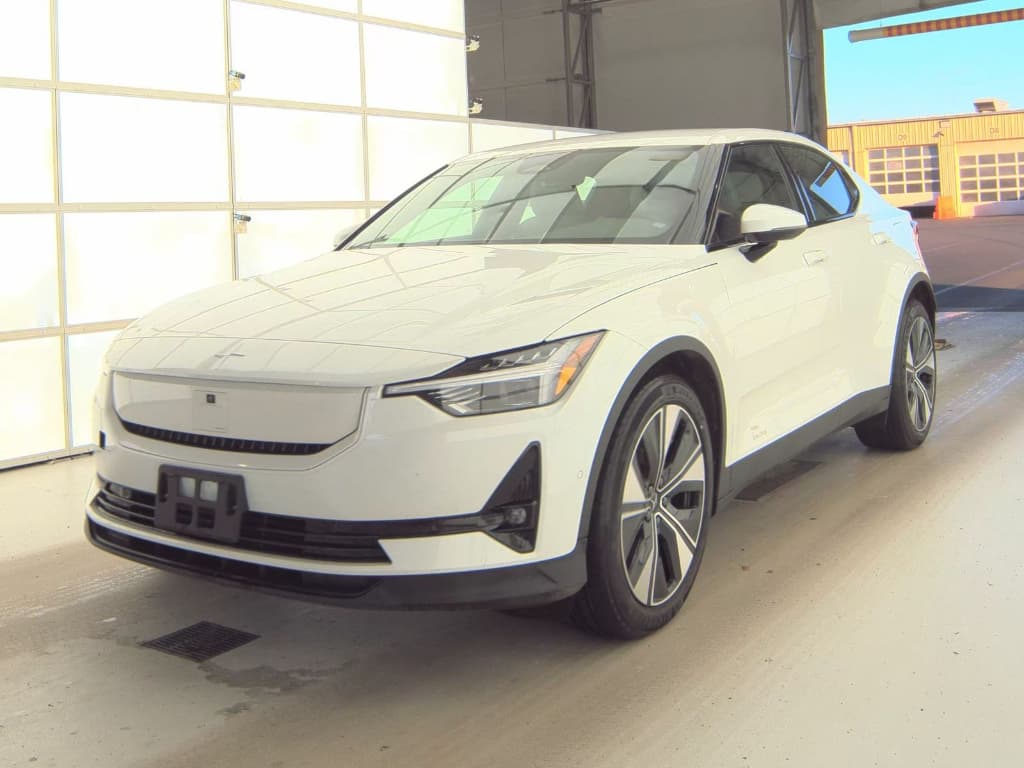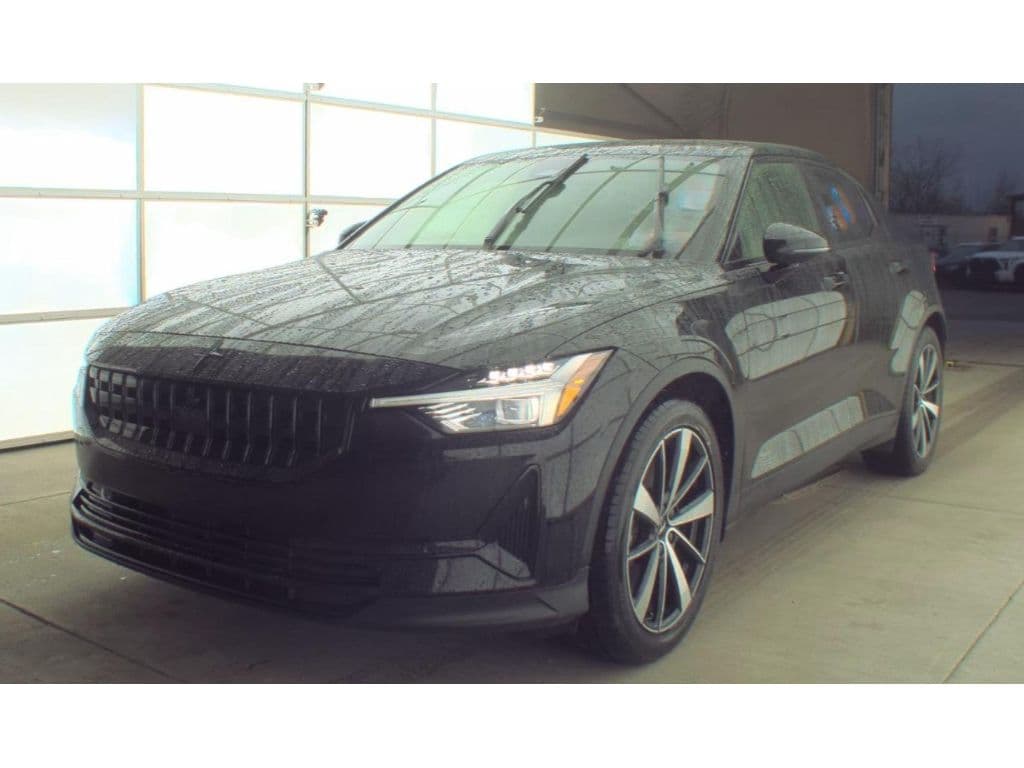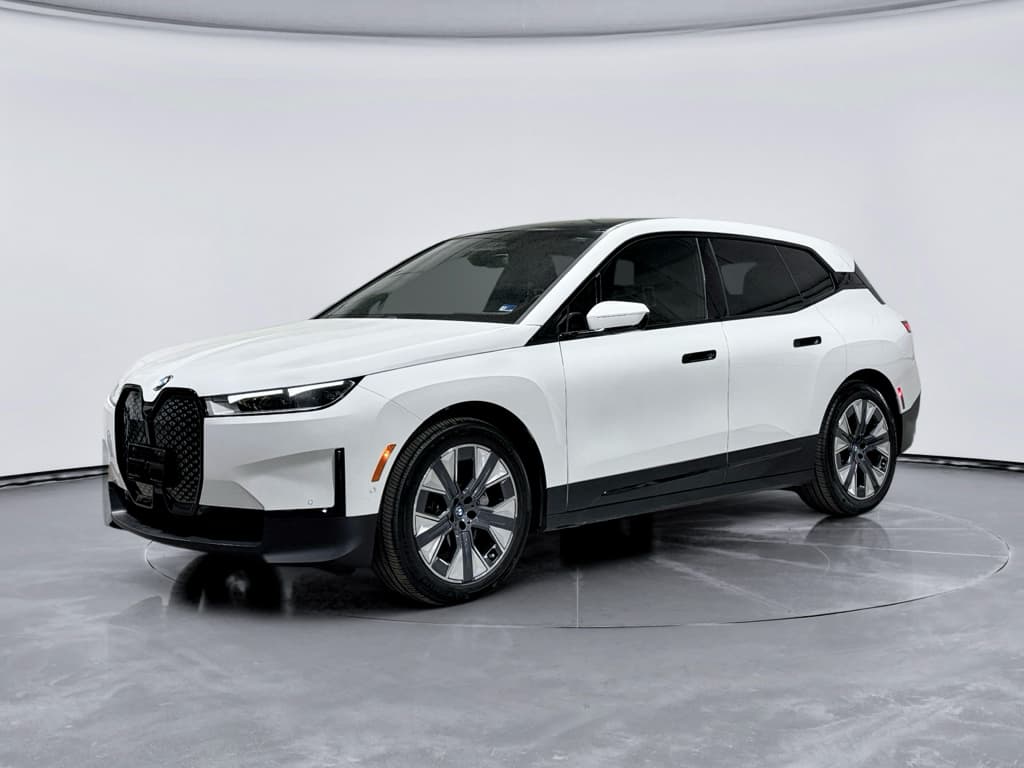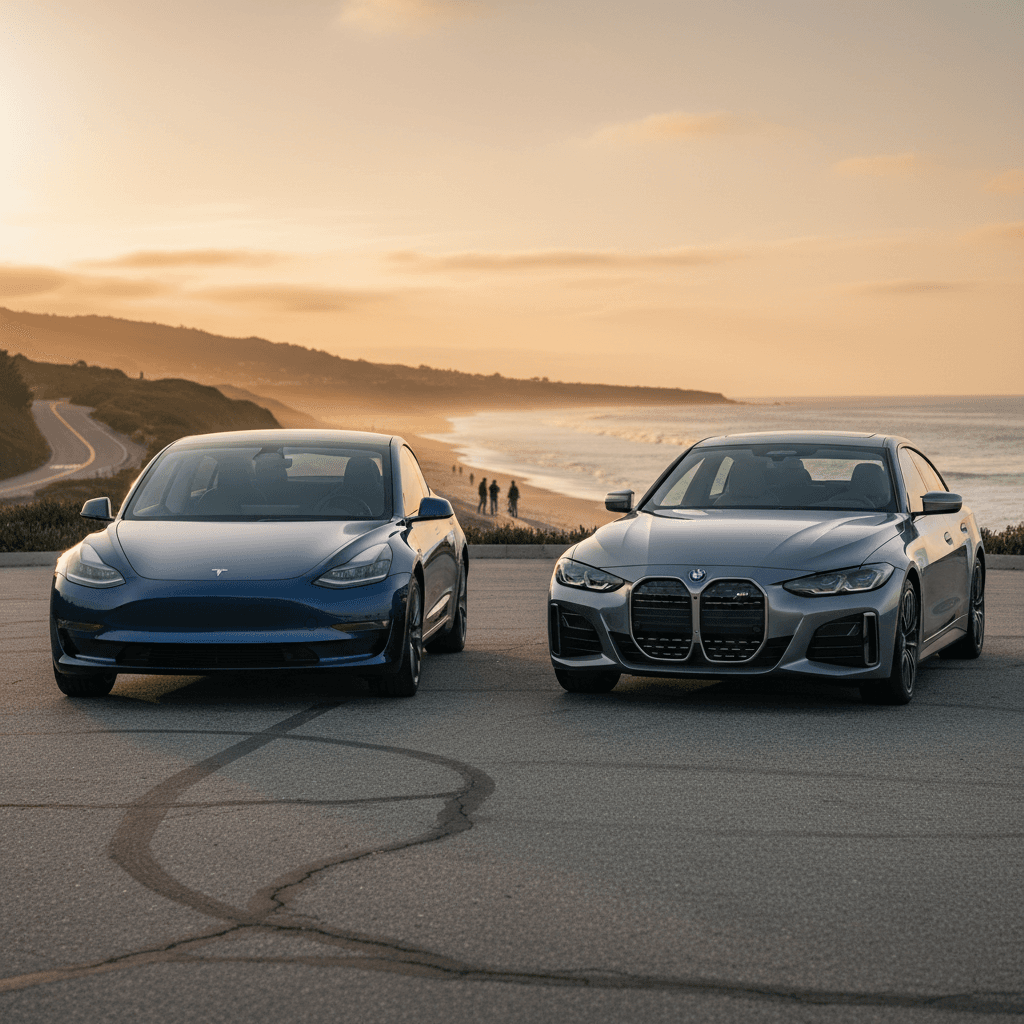
If you’re cross‑shopping a used BMW i4 vs Polestar 2, you’re in rarefied air: two of the best-looking premium electric hatchbacks on the used market, both with real highway range and serious performance. The challenge isn’t finding a good car, it’s deciding which one actually fits your life, budget, and driving style.
Who this guide is for
Overview: Used BMW i4 vs Polestar 2
Both cars play in the same space: compact premium EV fastbacks that feel more like sport sedans than crossovers. The BMW i4 is essentially an electric 4 Series Gran Coupe, while the Polestar 2 is a Scandinavian‑styled hatchback with Volvo roots. On the used market they overlap heavily on price, but they deliver a different flavor of premium EV ownership.
Why shoppers pick a used BMW i4
- Feels like a traditional BMW sport sedan with instant EV torque.
- Longer EPA range in many trims (up to around 300 miles).
- More dealership coverage and brand familiarity in the U.S.
- Quiet, refined ride and strong highway comfort.
Why shoppers pick a used Polestar 2
- Distinctive, minimalist Scandinavian design inside and out.
- Google‑built infotainment with excellent native mapping.
- Strong DC fast‑charging performance in 2023–2024 models.
- Often slightly cheaper than an equivalent i4 for similar spec.
Used‑market reality
Quick specs: how the i4 and Polestar 2 stack up
Core specs: typical U.S. trims you’ll see used
Approximate specs for common trims you’ll find on the U.S. used market. Exact numbers vary by model year, wheel size, and options.
| Model / Trim | Drive | Battery (usable) | EPA range (mi)* | 0–60 mph (sec) | Max DC fast charge | Onboard AC charger |
|---|---|---|---|---|---|---|
| BMW i4 eDrive35 | RWD | ≈66–69 kWh | ~256 | ~5.7 | up to 180 kW | 11 kW |
| BMW i4 eDrive40 | RWD | ≈81–83 kWh | up to 301 | ~5.5 | up to 200 kW | 11 kW |
| BMW i4 xDrive40 | AWD | ≈81–83 kWh | up to 307 | ~5.1 | up to 200 kW | 11 kW |
| BMW i4 M50 | AWD | ≈81–83 kWh | ~227–245 | 3.7–3.9 | up to 200 kW | 11 kW |
| Polestar 2 SR Single Motor | FWD / RWD** | 64–70 kWh | low–mid 200s | 6.9–7.4 | up to 180 kW | 11 kW |
| Polestar 2 LR Single Motor | FWD / RWD** | 75–79+ kWh | up to ~320 | 4.9–6.2 | up to 205 kW | 11 kW |
| Polestar 2 LR Dual Motor | AWD | 75–79+ kWh | mid 200s | 4.2–4.5 | up to 205 kW | 11 kW |
Think of this as a directional snapshot, not a VIN‑specific decode.
About the numbers
Used-market snapshot (U.S.)
Driving feel and performance
On paper, the BMW i4 and Polestar 2 look evenly matched. On the road, they have distinct personalities. If you grew up on German sport sedans, the i4 will feel instantly familiar. The Polestar 2 leans more toward a high‑riding hatchback with a clean, Scandinavian vibe and slightly firmer, more upright driving position.
Performance character: BMW i4 vs Polestar 2
Both are quick; how they deliver that speed is the difference.
BMW i4: classic BMW feel
- Steering & chassis: Feels like a 3/4 Series, planted, confident, and very stable at highway speeds.
- Acceleration: Even the single‑motor i4 pulls strongly; the M50 is legitimately fast, with 0–60 mph in the high‑3‑second range.
- Noise & refinement: Quiet, substantial, and slightly softer‑riding than most Polestar 2 setups.
Polestar 2: taut and tidy
- Steering & chassis: Precise and tidy, with a firmer feel, especially on Performance Pack cars with Öhlins dampers.
- Acceleration: Dual‑motor versions are brisk, roughly in line with an i4 xDrive40; single‑motor trims are still plenty quick.
- Character: Feels lighter on its feet, but less overtly luxurious than the BMW.
Performance verdict
Range, battery, and charging experience
Range and charging are where used‑EV shoppers should spend most of their attention. Battery size, efficiency, model year, and wheel choice all matter, and they can swing real‑world range by 30–50 miles either way.
Range in the real world
- BMW i4: The sweet‑spot eDrive40 and xDrive40 trims deliver EPA ranges around 300 miles with smaller wheels. In independent testing, the eDrive40 has come very close to those numbers on the highway, which is impressive for a heavy, powerful sedan.
- Polestar 2: Early cars had decent but not standout range; 2024 updates improved battery capacity and efficiency. The long‑range single‑motor can crest 300 miles on paper, but highway tests often land a bit lower than its EPA number, especially on 20‑inch wheels.
Charging speed & network experience
- Max DC rates: Later i4s can pull up to about 200 kW on DC fast chargers; 2023–2024 Polestar 2 models are in a similar 180–205 kW band.
- Real charging behavior: In practice, both can go from about 10–80% in ~30–40 minutes on a good fast charger, faster in ideal conditions, slower in cold weather.
- Navigation to chargers: The Polestar’s Google‑based system is excellent at surfacing DC chargers and integrating them into routes. BMW’s system has improved but is still less intuitive than Google‑based setups for some drivers.
Cold-weather reality check
Interior space, tech, and comfort
Here’s where personality really shows. The BMW i4 wraps you in a familiar German luxury cocoon, with a low driving position and sweeping curved display. The Polestar 2 feels airier and more minimalist, almost like a Scandinavian loft with a steering wheel.
How they feel from the driver’s seat
Same basic shape, very different ambiance.
BMW i4 cabin
- Seating position: Low, coupe‑like, with a long dash and classic BMW driving posture.
- Rear seat & cargo: Rear headroom is tight for tall adults; hatchback trunk is useful but not SUV‑large.
- Infotainment: BMW’s iDrive is powerful but menu‑heavy; later software is better but still not as dead‑simple as Google’s system in the Polestar.
Polestar 2 cabin
- Seating position: Slightly higher, with great outward visibility and a clean, squared‑off dash design.
- Rear seat & cargo: Similar footprint to the i4 with a practical hatch; rear seat is usable but not limo‑like.
- Infotainment: Runs Android Automotive with native Google Maps, Assistant, and app support, intuitive if you live in Google’s ecosystem.
Try them back‑to‑back
Ownership costs, reliability, and battery health
Neither the BMW i4 nor the Polestar 2 has been around long enough to build a 15‑year reliability track record, but we do know a few things that matter when you’re buying used, especially around depreciation, warranty coverage, and battery behavior.
Depreciation & pricing
- BMW i4: Strong brand equity keeps prices firm, especially for higher‑spec trims like the M50. You’ll often pay more up front than for a similar‑mileage Polestar 2.
- Polestar 2: Less brand recognition and earlier model‑year availability mean steeper early depreciation. That’s bad news for the first owner but great news if you’re buying used, values can be very compelling.
- Financing & support: Mainstream lenders are more familiar with BMW; Polestar can be slightly more niche, but that mostly affects new‑car shoppers rather than used buyers.
Battery, warranty, and service
- High‑voltage battery warranties: Both brands typically cover EV batteries for around 8 years / 100,000 miles from first in‑service date. On a 2–4‑year‑old car, you’ll likely have plenty of coverage left.
- Battery degradation: Real‑world owner reports show modest degradation so far on both models when properly charged and maintained.
- Service footprint: BMW’s dealer network is far larger in the U.S. Polestar relies on select Volvo dealers and service hubs; fine in metro areas, less convenient in remote regions.
Don’t guess about battery health
This is where buying through a used‑EV specialist can pay off. At Recharged, every BMW i4 or Polestar 2 in inventory comes with a Recharged Score Report that verifies battery health, checks for open recalls, benchmarks pricing against the market, and highlights any issues found during our EV‑specific inspection. That kind of transparency matters more with a high‑tech car than it did with the gas sedans of yesterday.
Which used EV fits you best?
Once you understand the broad strokes, the right choice between a used BMW i4 and a used Polestar 2 usually comes down to lifestyle and priorities. Both are excellent cars; you’re choosing the flavor of “excellent” that suits you.
Match the car to the buyer
Use these profiles as a starting point, not a hard rulebook.
Choose a used BMW i4 if…
- You drive long highway distances and value stability and refinement.
- You’re coming from a 3 Series / A4 / C‑Class and want that familiar sedan feel.
- You live near a BMW dealer and want a traditional service relationship.
- You’re OK paying a little more for the badge, chassis tuning, and cabin polish.
Choose a used Polestar 2 if…
- You love minimalist design and a “different from the usual German trio” vibe.
- You spend more time around town or on shorter trips than on cross‑country drives.
- You’re drawn to Google’s native infotainment and simple, clean interface.
- You want strong value: often more features per dollar on the used market.
When either is a great answer
Checklist: what to inspect on a used i4 or Polestar 2
Used BMW i4 & Polestar 2 buying checklist
1. Verify remaining factory warranties
Ask for the original in‑service date and current mileage. Confirm how much of the basic and high‑voltage battery warranty is left, and whether any warranty transfers require paperwork.
2. Get objective battery health data
Don’t rely on the dash guess‑o‑meter alone. A Recharged Score battery test or similar diagnostic can tell you how much usable capacity remains versus new and flag any imbalance between modules.
3. Examine wheels, tires, and brakes
Performance trims with big wheels often wear tires and brakes faster. Check for uneven tire wear, curb rash on wheels, and brake rotor condition, especially on heavier dual‑motor or M‑badge cars.
4. Test DC fast charging and onboard charging settings
If possible, plug into a DC fast charger and watch the curve from 10–60%. On Level 2, verify the car pulls the expected amperage and that scheduled charging features work as intended.
5. Inspect interior electronics and driver aids
Cycle through the infotainment system, cameras, parking sensors, adaptive cruise, lane‑keeping, and app connectivity. Software glitches are often fixable, but they’re good leverage in price negotiations.
6. Look for accident, flood, or structural damage
Pull a history report, inspect panel gaps, and check for overspray or mismatched paint. EVs hide a lot of high‑voltage hardware under the floor, any prior underbody damage deserves extra scrutiny.
7. Confirm included charging equipment
Many cars change hands missing the original mobile charger or adapters. Factor the cost of replacement gear into your offer if cables, wall‑mounts, or cargo‑area accessories are missing.
8. Take a true mixed‑route test drive
Drive highway, stop‑and‑go, and a few rough patches. Listen for wind and suspension noise, evaluate ride quality, and pay attention to how natural the regenerative braking feels to you.
FAQ: used BMW i4 vs Polestar 2
Frequently asked questions
In the end, choosing between a used BMW i4 and a used Polestar 2 is less about right and wrong and more about matching the car’s character to your life. The i4 leans toward traditional sport‑sedan luxury with strong range and highway composure; the Polestar 2 offers fresh design, excellent Google‑based tech, and often sharper pricing on the used market. If you pair the right trim with a clean history and a healthy battery, and you buy from someone who can actually prove that health, you’ll have a premium EV that should serve you well for years. When you’re ready, Recharged can help you compare real vehicles, review their Recharged Score Reports side‑by‑side, line up financing, and have your pick delivered to your driveway.