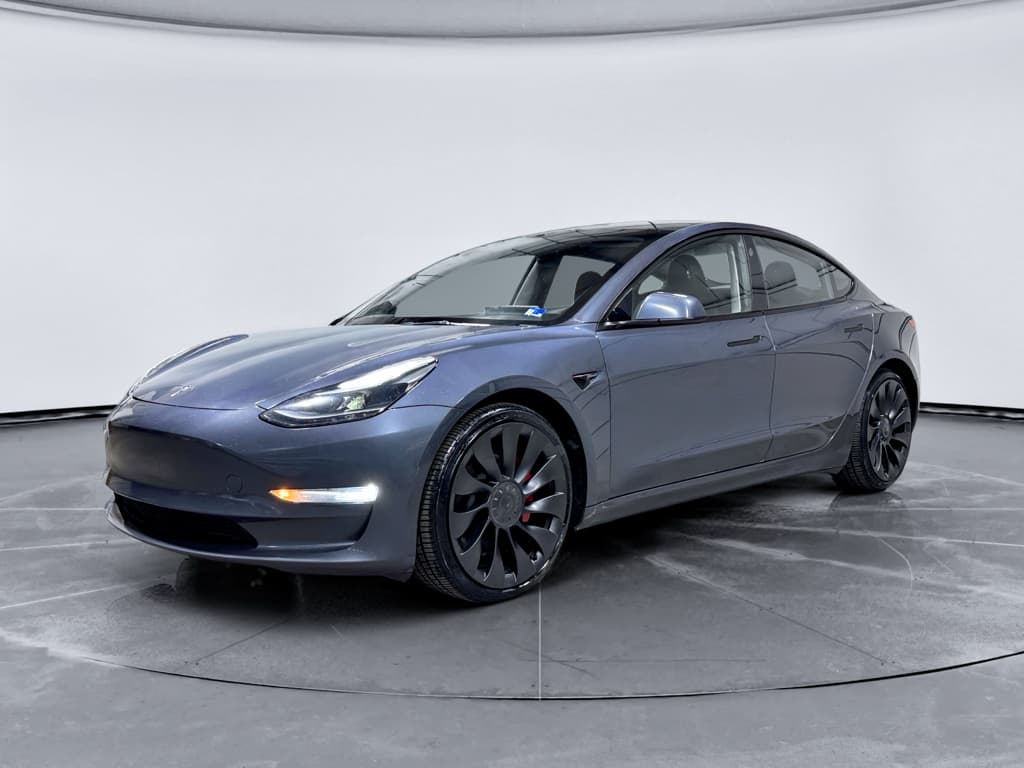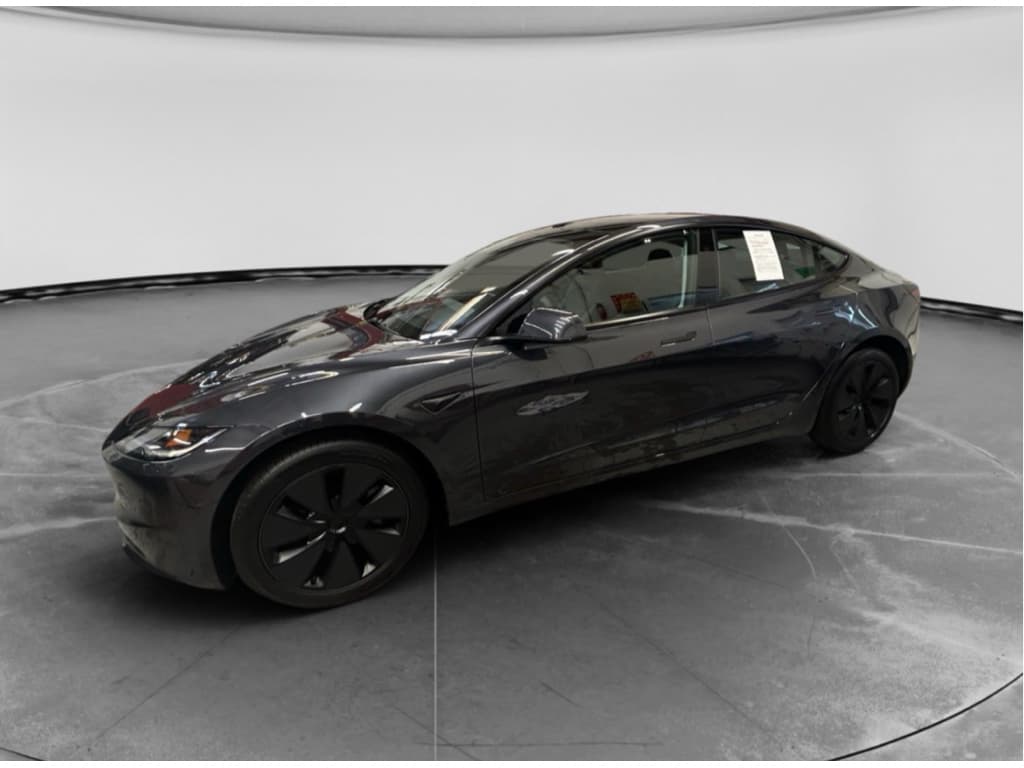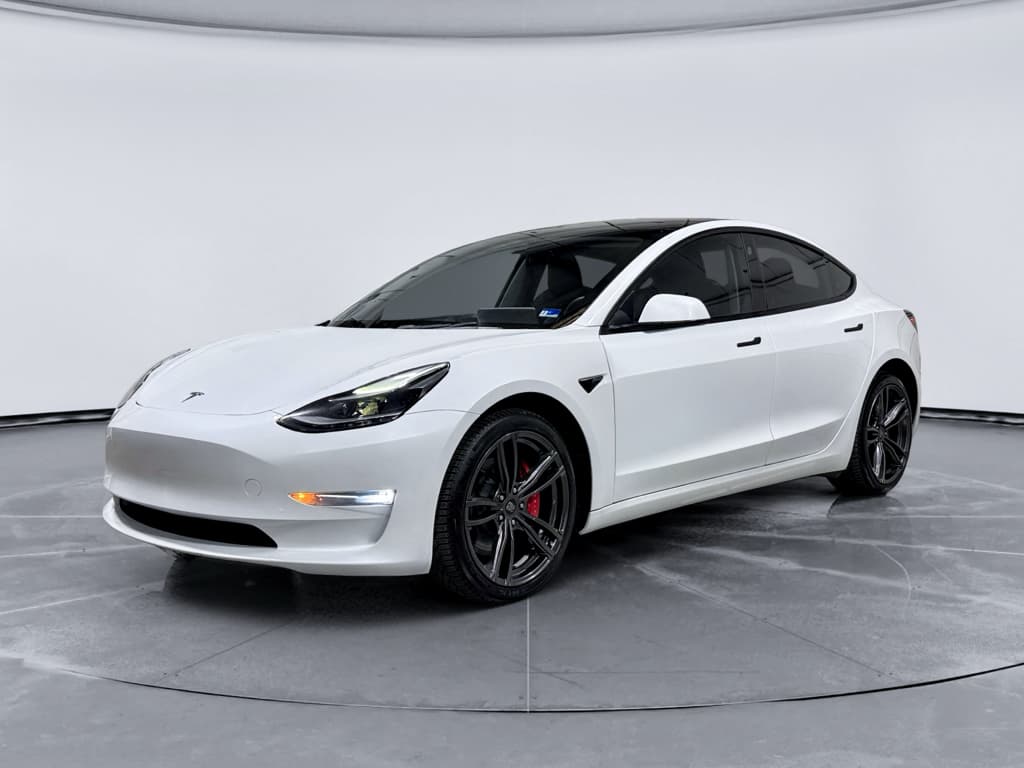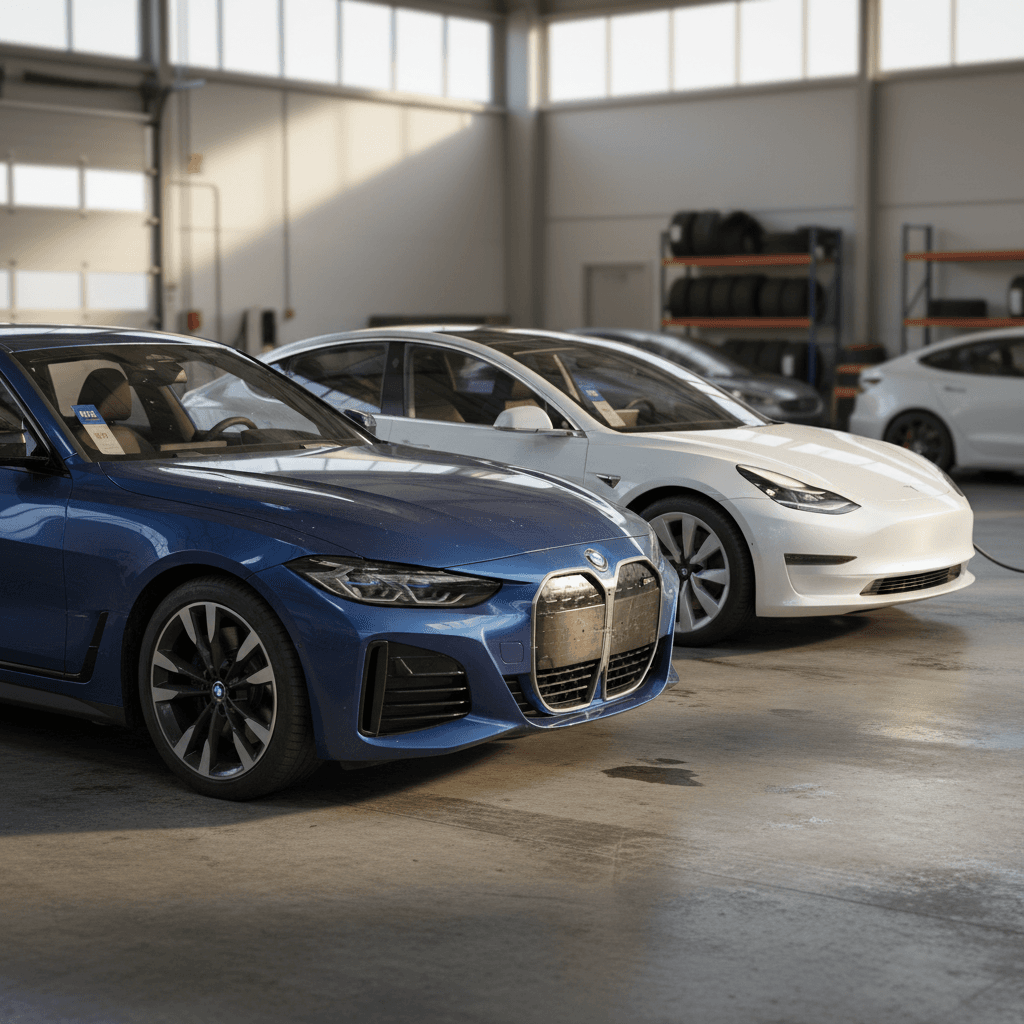
If you’re shopping for an electric sedan, the used BMW i4 vs new Tesla Model 3 dilemma is a very real one. A lightly‑used i4 can cost about the same as a brand‑new Model 3, but they deliver very different experiences in performance, range, charging access, and long‑term costs. This guide walks you through the trade‑offs so you can pick the EV that actually fits your life, not just your social feed.
Two great choices, different philosophies
Overview: Why Compare a Used BMW i4 vs New Tesla Model 3?
On paper, a new Tesla Model 3 often stickers in the low‑to‑mid $40,000s in the U.S., depending on trim and current incentives. A used BMW i4, especially a 2022–2023 eDrive40 or even M50, can now be found in a similar price band thanks to early depreciation. That puts you in an unusual spot: do you buy a factory‑fresh mainstream EV with unmatched charging access, or step into a used premium German EV that would be much more expensive new?
This article focuses on what most U.S. shoppers are realistically cross‑shopping: a 2–3‑year‑old BMW i4 (often off‑lease) versus a brand‑new Tesla Model 3 RWD or Long Range. We’ll look at price, range, charging networks, driving feel, depreciation, and how to manage battery‑health risk when you’re going used.
Key Numbers at a Glance (Typical U.S. Market Conditions)
Quick Specs and Pricing Snapshot
Used BMW i4 vs New Tesla Model 3: Core Specs
Representative trims many shoppers cross‑shop at similar transaction prices.
| Used BMW i4 (2022–2023 eDrive40) | New Tesla Model 3 RWD (2024+) | New Tesla Model 3 Long Range (2024+) | |
|---|---|---|---|
| Typical street price (US) | $32,000–$40,000 used | ~$38,000–$40,000 new | ~$45,000–$48,000 new |
| Original MSRP | ≈$58,000+ with options | ≈$39,000+ | ≈$46,000+ |
| EPA range | ≈282–301 miles | ≈270–280 miles | ≈330–360 miles |
| Drivetrain | RWD (dual‑motor M50 available) | RWD | Dual‑motor AWD |
| 0–60 mph | ~5.5 s (eDrive40), ~3.7 s (M50) | ~5.8–6.0 s | ≈4.2 s |
| DC fast‑charge peak | Up to ~200 kW | 170–180 kW class | 170–250+ kW depending on pack |
| Charging network | CCS public networks | Tesla Supercharger + others via adapters | Tesla Supercharger + others via adapters |
Exact numbers vary by model year, wheel size, and software updates, but this table captures the broad picture.
Always compare specific cars, not brochure numbers
Purchase Price, Incentives and Depreciation
Let’s start with the part that usually drives this comparison: money out of pocket. A new Tesla Model 3 is cheaper than a new BMW i4, but a used i4 has already absorbed a big depreciation hit. That’s why you’re likely looking at them in the same monthly‑payment neighborhood.
What you’ll usually pay for a used BMW i4
In the U.S., 2022–2023 BMW i4 eDrive40s and even some M50s are now commonly listed in the $30,000–$40,000 range, depending on mileage, packages, and condition. New, these cars often stickered in the upper $50,000s or more with options.
That rapid first‑owner depreciation is your opportunity. You’re essentially getting a near‑flagship BMW EV for well under new‑car money.
What you’ll usually pay for a new Tesla Model 3
For 2024+ cars, the Model 3 RWD typically starts around the high $30,000s before taxes and fees, while the Long Range moves you into the mid‑$40,000s. Tesla often layers on financing or lease offers, and at times certain trims have qualified for federal or state incentives while the imported i4 has not.
If you’re financing, those incentives plus Tesla’s lower starting price can make a new Model 3 payment look surprisingly close to a used i4 payment.
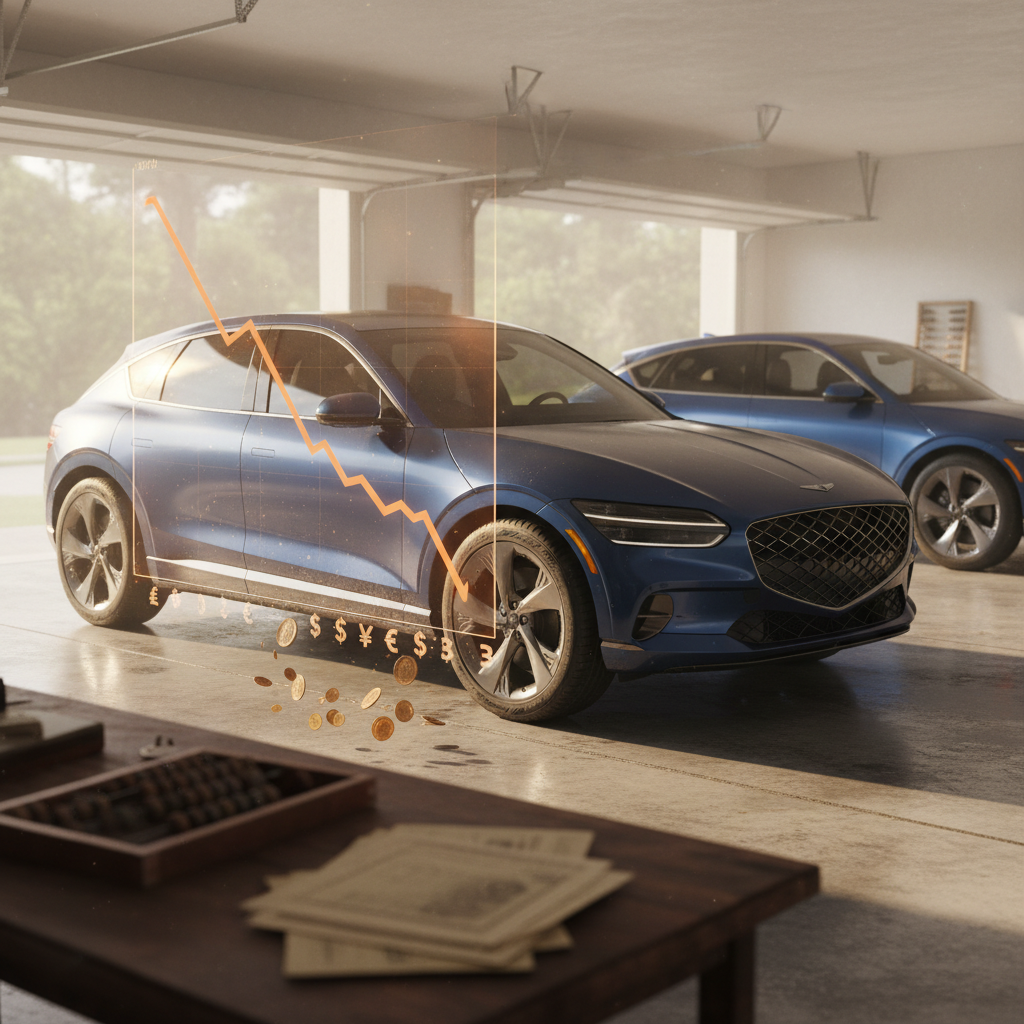
Depreciation: BMW falls faster early
Price & Incentive Questions to Ask Yourself
1. Am I paying for luxury or software?
The i4’s price reflects BMW’s luxury materials and brand cachet; the Model 3’s value leans on software features, Supercharger access, and efficiency. Decide which you’ll actually notice day to day.
2. Do I qualify for EV incentives today?
Some new Teslas have qualified for federal or state incentives, dramatically changing the math versus a used, imported BMW i4 that may not be eligible as a purchase (only via certain leases).
3. How long will I keep the car?
If you plan to keep the car 7–10 years, first‑owner depreciation matters less. If you might sell in 3–4 years, you want the combination of lower entry price and slower ongoing depreciation.
Range, Charging Speed and Road‑Trip Ability
Both the used BMW i4 and new Tesla Model 3 have enough range for typical American commuting and weekend trips. Where things diverge is on how easy it is to road‑trip and how much time you spend thinking about charging infrastructure.
Range and Charging: How They Really Compare
EPA numbers are just the starting point, charging access and consistency matter just as much.
Real‑world range
BMW i4: Most rear‑drive i4s land around 260–300 EPA miles depending on trim and wheels. That’s plenty for daily use, though heavy highway driving and winter temps will knock that down.
Model 3: The latest Long Range Model 3 stretches into the 330–360‑mile band, while the RWD trim sits a bit below the i4. If you frequently do 200+ mile stints, that extra buffer is meaningful.
DC fast‑charging behavior
BMW i4: Peaks around 180–200 kW and charges from ~10–80% in the half‑hour neighborhood on a healthy 150–350 kW CCS station. Real‑world speeds depend heavily on the quality of the third‑party network you’re using.
Model 3: Tesla’s charging curve is very well‑tuned to its own Superchargers, with consistent high power in the early part of the session.
Charging network access
BMW i4: Uses the CCS standard in the U.S., so you’re relying on networks like Electrify America, EVgo, and others. Coverage has improved, but reliability is still inconsistent in some regions.
Model 3: The big advantage is seamless access to Tesla’s Supercharger network, plus growing compatibility with other networks through adapters. For most U.S. road‑trippers, that’s still the least‑friction solution.
If you road‑trip a lot, weight charging more heavily
Driving Experience: Luxury Feel vs Tech Minimalism
This is where these two EVs stop being spreadsheet entries and start feeling very different in the real world. A used BMW i4 and a new Tesla Model 3 can match each other on 0–60 times and range, but the character behind those numbers is night and day.
Behind the wheel of a BMW i4
- Traditional sport‑sedan posture: Long hood, low seating, and steering feel that will be familiar to anyone coming from a 3 Series.
- Richer materials: More upholstery choices, textured surfaces, and a cockpit that feels built around the driver.
- Quieter, heavier feel: The i4 is typically heavier than a Model 3, which some drivers perceive as more planted and refined at highway speed.
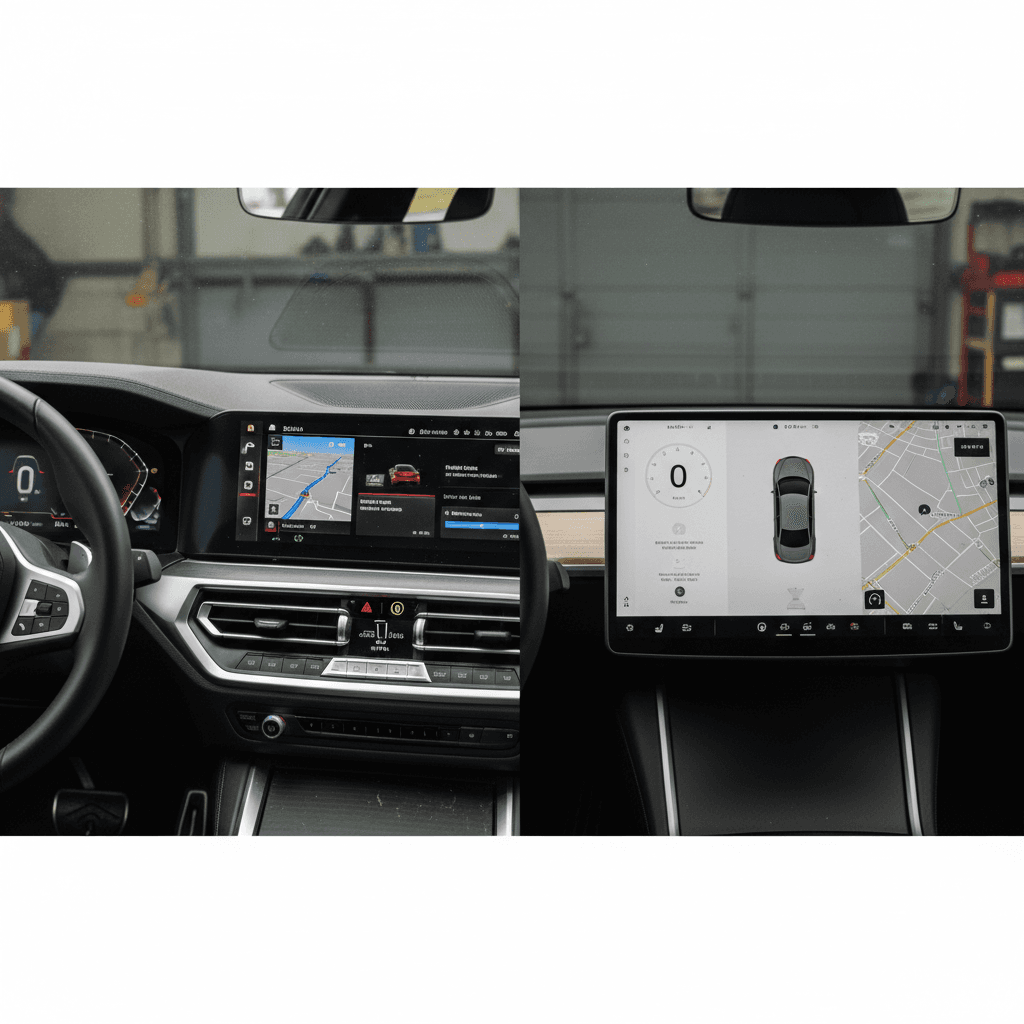
- iDrive interface: You get BMW’s large curved display, physical controls for key functions, and a more conventional approach to menus.
Behind the wheel of a Tesla Model 3
- Minimalist cabin: A single central touchscreen runs almost everything. If you like physical buttons, this may be a culture shock.
- Snappy steering and efficiency: The Model 3 tends to feel lighter on its feet, with quick responses and excellent energy efficiency.
- Software‑first experience: Frequent over‑the‑air updates bring new features, UI changes, and tweaks to driving modes.
- Autopilot and driver assists: Tesla’s driver‑assist suite is tightly integrated, though branding can sometimes oversell what the system can safely do.
"If you’re coming out of a German sport sedan, the i4 feels like the least disruptive way to go electric. If you’re coming from tech gadgets and smartphones, the Model 3 will feel more like home."
Ownership Costs: Insurance, Maintenance and Resale
When you’re cross‑shopping a used BMW i4 vs a new Tesla Model 3, thinking beyond the purchase price is critical. Insurance, maintenance, software costs, and future resale will shape what you really pay per mile.
Cost Factors Beyond the Sticker Price
These are the line items many shoppers overlook in their EV spreadsheets.
Insurance
BMW i4: As a luxury badge with higher original MSRP, the i4 can be more expensive to insure, especially in performance M50 form.
Model 3: Insurance costs vary by state, but the Model 3’s strong crash ratings and simpler trims can sometimes work in your favor, though repair costs and parts availability can push premiums up in some markets.
Maintenance & repairs
Both cars benefit from EV simplicity (no oil changes, fewer moving parts), but:
- BMW: Dealership labor rates and parts tend to be higher, and you may be on the hook for out‑of‑warranty items sooner with an older car.
- Tesla: Fewer traditional wear items, but collision repairs and out‑of‑warranty components can be pricey too.
Future resale value
Used i4: The good news is that the steepest depreciation hit has already been taken. Future losses from here may be more modest if you bought at the right price.
New Model 3: Historically strong resale, but future values will depend on how quickly new competitors, incentives, and charging standards evolve.
Watch the fine print on software and options
Battery Health Risks When Buying a Used BMW i4
The big psychological hurdle when comparing a used BMW i4 vs a new Tesla Model 3 is battery health. A new Model 3 gives you a fresh pack and full factory warranty. A used i4 might be two or three years into its life with unknown fast‑charging habits and thermal histories. The good news: modern packs are holding up better than early EV skeptics predicted, but you still want data, not guesses.
How to Evaluate a Used BMW i4’s Battery
1. Check remaining factory battery warranty
BMW typically warranties the high‑voltage battery for a set number of years and miles from the in‑service date. Confirm how much time and mileage you have left; this can dramatically reduce risk.
2. Review fast‑charging and mileage history
Heavy DC fast‑charging and extremely high annual mileage can accelerate degradation. Ask for service records, charging habits, and any road‑trip usage patterns if buying from a private seller.
3. Look at real‑world range, not just a percent number
Battery state‑of‑health (SOH) estimates are useful, but the real question is how many miles of range you get at common charge levels. Take a test drive and compare projected range at 80–90% charge to original EPA figures.
4. Get third‑party diagnostics if you can
A detailed battery health report can surface cell imbalances or unusual degradation early, saving you from expensive surprises and giving you leverage in price negotiations.
How Recharged de‑risks used EV batteries
Which Should You Choose? Real‑World Buyer Scenarios
Once you get past the specs, this decision comes down to who you are as a driver and how you plan to use the car. Here are a few common profiles and which way they tend to lean.
Used BMW i4 vs New Tesla Model 3: Who Fits What?
The Highway Commuter & Road‑Tripper
Drives 60–120 miles most days, with occasional 300–500‑mile weekends.
Values minimal charging stress and predictable fast‑charging stops.
Likely winner: Tesla Model 3 Long Range for efficiency, range buffer, and Supercharger access.
The Luxury‑Oriented Daily Driver
Mostly urban/suburban driving, 40–70 miles per day.
Cares about cabin feel, sound insulation, seats, and brand image.
Likely winner: Used BMW i4 eDrive40 or M50 for the upscale interior and classic BMW dynamics at a used‑car price.
The Payment‑Sensitive New‑Car Buyer
Wants a new car experience, latest safety tech, and full warranty coverage.
Prioritizes predictable monthly payments and access to new‑car financing deals.
Likely winner: New Tesla Model 3 RWD, especially if incentives or low‑APR offers bring it close to used i4 money.
The Value Hunter Who Keeps Cars Forever
Plans to own the car 7–10 years or more.
Wants to buy after the steepest depreciation hit but before maintenance spikes.
Likely winner: Either can work, a carefully‑vetted used i4 with strong battery health or a Model 3 bought at a good price and driven into the ground. Here, inspection quality matters more than badge.
Don’t just compare trims, compare specific cars
How Recharged Helps You Shop Used EVs With Confidence
If you’re leaning toward the used BMW i4 side of this equation, or even a used Model 3, your biggest questions are usually about battery health, fair pricing, and hassle. That’s exactly the problem Recharged was built to solve.
Why Shop Your Used EV Through Recharged
Battery clarity, fair value, and EV‑specialist support from start to finish.
Recharged Score battery diagnostics
Every vehicle on Recharged comes with a Recharged Score Report that includes verified battery‑health data, so you aren’t guessing about hidden degradation when you compare a used i4 to a new Model 3.
Fair pricing & flexible options
Recharged benchmarks pricing against the market and offers financing, trade‑in, instant offer, or consignment options. That makes it easier to line up a used i4 payment against new‑car offers from Tesla or local dealers.
EV‑specialist guidance & delivery
From explaining CCS vs NACS charging to planning your first road‑trip stops, Recharged’s EV specialists walk you through the ownership realities, then handle digital paperwork and nationwide delivery, or invite you to the Richmond, VA Experience Center if you prefer to see cars in person.
Ready to find your next EV?
Browse VehiclesFAQ: Used BMW i4 vs New Tesla Model 3
Frequently Asked Questions
The choice between a used BMW i4 and a new Tesla Model 3 is really a choice between two visions of what an EV should be: a refined, familiar luxury sport sedan that happens to be electric, or a software‑centric, minimalist device built around charging infrastructure and efficiency. If you ground the decision in your real driving patterns, charging options, and tolerance for used‑car risk, and pair that with solid battery‑health data, you’ll end up with an EV that feels like it was built for you, not for someone else’s priorities.