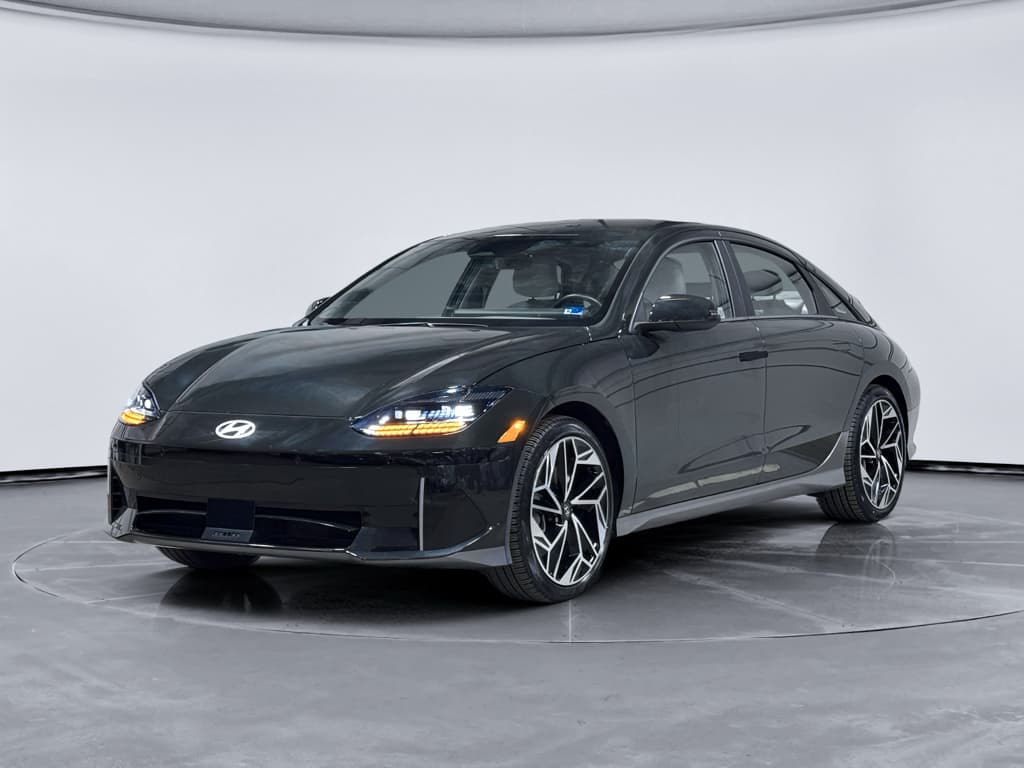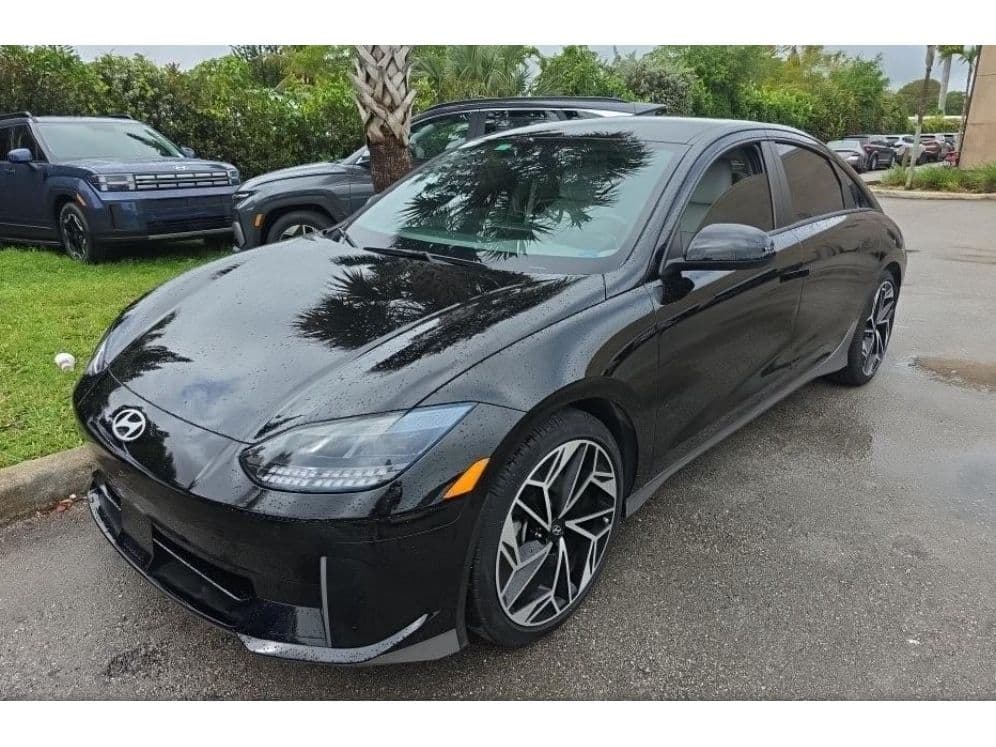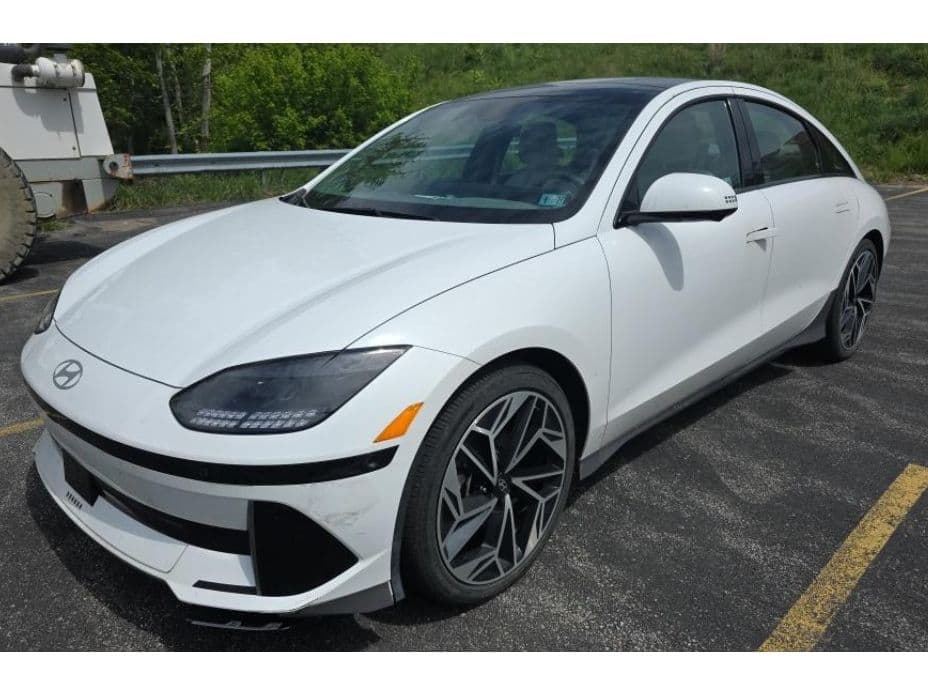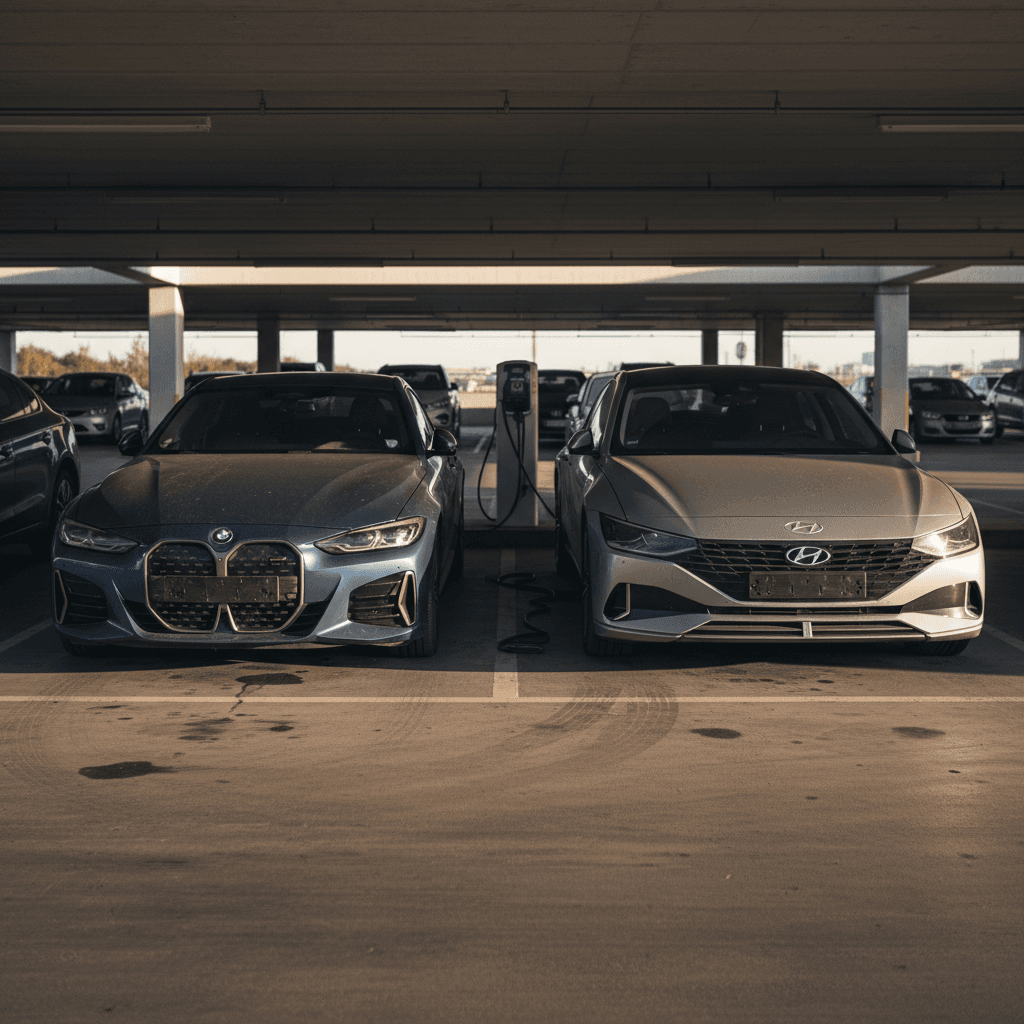
If you’re shopping the **used EV sedan** market in 2026, the **BMW i4** and **Hyundai Ioniq 6** are two of the most compelling options. Both offer real-world 250–300+ mile range, DC fast charging, and modern driver-assistance tech, but they deliver very different ownership experiences when you buy them used.
Model years you’ll actually see used in 2026
Used BMW i4 vs Hyundai Ioniq 6 in 2026: Who Is This Guide For?
This guide is for U.S. shoppers comparing a **used BMW i4 vs a used Hyundai Ioniq 6** in 2026 and trying to answer one basic question: *Which one will fit my daily life, budget, and long‑term ownership expectations better?* We’ll focus on what matters most **once these cars have a few years and miles on them**, battery health, charging behavior, comfort, reliability, and total cost of ownership.
Is this BMW i4 vs Ioniq 6 comparison for you?
Three common buyer profiles we see at Recharged
High‑mileage commuters
First‑time EV owners
Value hunters
BMW i4 vs Ioniq 6 at a Glance: Quick Winner Summary
Category winners for used shoppers in 2026
Bottom‑line verdict (short version)
Core Specs & Range: How the i4 and Ioniq 6 Stack Up
Because you’ll be shopping across multiple model years and trims, it helps to zoom out to the **most common configurations** you’ll see used on U.S. lots and marketplaces in 2026. Below is a simplified view meant for shoppers, not engineers.
Used BMW i4 vs Hyundai Ioniq 6: Key Specs (Typical U.S. Trims)
Approximate EPA ranges and power figures for the trims you’re most likely to find used in 2026.
| Model / Trim (typical used) | Drivetrain | EPA range (mi, approx.) | Power (hp, approx.) | 0–60 mph (approx.) |
|---|---|---|---|---|
| BMW i4 eDrive35 (2023–2025) | RWD | 250–276 | ~282 | ~5.8 s |
| BMW i4 eDrive40 (2022–2025) | RWD | 282–301 | ~335 | ~5.4 s |
| BMW i4 xDrive40 (2024–2025) | AWD | ~295–307 | ~396 | ~4.9 s |
| BMW i4 M50 (2022–2025) | AWD | 245–269 | ~536 | ~3.7 s |
| Hyundai Ioniq 6 SE Standard Range (RWD) | RWD | ~240 | ~149 | ~8.0 s |
| Hyundai Ioniq 6 SE Long Range (RWD) | RWD | ~305–361 | ~225 | ~7.0 s |
| Hyundai Ioniq 6 SEL / Limited Long Range (AWD) | AWD | ~270–316 | ~320 | ~5.0 s |
Always verify exact specs for the specific VIN you’re considering, ratings can vary by wheel size, equipment, and model year.
Real‑world range vs EPA numbers
Where the BMW i4 shines
- Strong performance across the board, even in single‑motor trims.
- Liftback design adds practicality for families and road‑trippers.
- Multiple trims (eDrive35, eDrive40, xDrive40, M50) make it easier to find a spec that fits your budget and speed tolerance.
Where the Ioniq 6 shines
- Standout efficiency: especially SE Long Range RWD, which competes with or beats Tesla Model 3 on real‑world miles per kWh.
- Streamlined sedan body helps highway range and wind noise.
- Simple trim walk (SE/SEL/Limited, standard vs Long Range, RWD vs AWD) keeps choices manageable.
Charging & Road-Trip Ability for a Used BMW i4 vs Ioniq 6
On paper, **both cars DC fast‑charge well**, but Hyundai’s E‑GMP platform (shared with the Ioniq 5 and Kia EV6) gives the Ioniq 6 a technical edge. In the real world, the charging network you use, temperature, and how often the previous owner fast‑charged the car all matter just as much.
Charging differences that matter when the car is used
Think beyond peak kW numbers and look at the full ownership picture.
DC fast charging
- BMW i4: Up to ~200 kW on some trims. Real‑world tests show competitive 10–80% times, but charging curves vary by model year and software.
- Ioniq 6: 800‑V architecture allows very fast 10–80% sessions in ideal conditions, often under 20 minutes when new.
Home & workplace charging
- Both use **standard J1772/CCS** on earlier cars; some later build years will ship with or support **NACS access** via adapters.
- For overnight charging, either will work well on a **240 V Level 2** circuit. The Ioniq 6’s efficiency can mean slightly fewer kWh burned each night for the same commute.
Used‑car risk: fast‑charge history
For **frequent road‑trippers**, the Ioniq 6’s combination of **better efficiency and a strong charging curve** can trim minutes off each stop. The BMW i4 counters with **denser non‑Tesla CCS infrastructure in some regions** and, in many states, improving access to **NACS‑equipped fast chargers** through adapters and network partnerships. Either car can handle cross‑country duty; the edge goes to the Ioniq 6 if you prioritize time‑to‑80% above all else.
Comfort, Interior & Tech: German Luxury vs Korean Efficiency
BMW i4: Familiar luxury, sporty edge
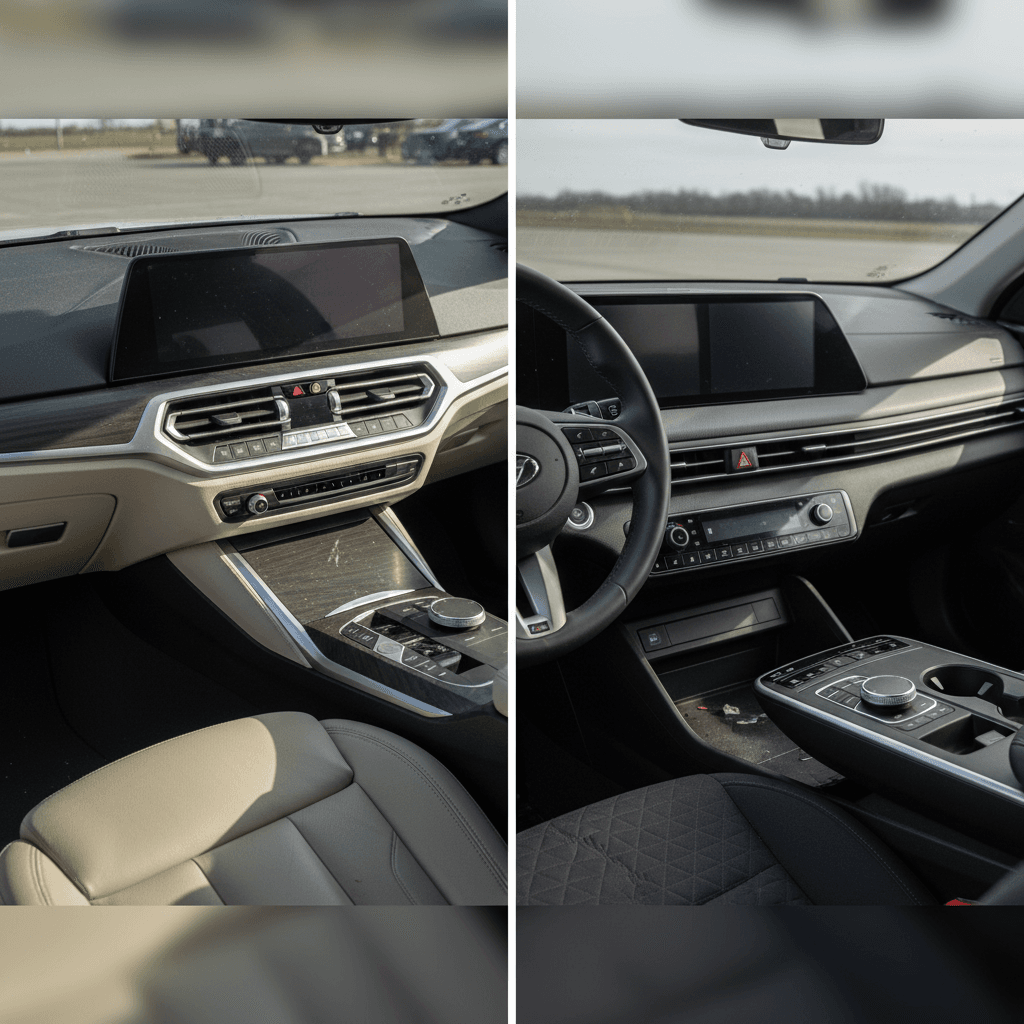
- Cabin layout borrows heavily from the 4 Series Gran Coupé, with **higher‑end materials** and a more traditional luxury vibe.
- Seats are **firm and supportive**, especially in M Sport and M50 trims, and the driving position will feel right at home to BMW loyalists.
- Later‑build cars get updated **iDrive 8/8.5 software**, which improves menu structure and voice control versus early 2022 models.
- Liftback design and folding rear seats make cargo loading easy for strollers, bikes, and home‑improvement runs.
Hyundai Ioniq 6: Design‑forward, lounge‑like feel
- Minimalist, **EV‑first interior** with pixel lighting details, flat floor, and generous rear‑seat space for a mid‑size sedan footprint.
- SE/SEL/Limited trims vary in seat upholstery and features; Limited cars often feel surprisingly premium for their original price point.
- Hyundai’s infotainment stack is **intuitive** and pairs well with wireless/corded Apple CarPlay and Android Auto, though graphics aren’t as posh as BMW’s.
- Trunk opening is more conventional sedan‑style; space is good but not as flexible as the BMW’s hatch.
Noise, ride quality and daily comfort
Reliability, Battery Health & Warranty Coverage
Used EV buyers in 2026 care less about 0–60 times and more about **how these cars age**. Early data and owner surveys for both models are encouraging, but there are important differences in warranty coverage and known issues.
Reliability picture: BMW i4 vs Hyundai Ioniq 6
What we’re seeing so far from owner data and service histories.
BMW i4 reliability & battery health
- Independent surveys rate the 2024 i4 **better than average to much better than average** for reliability, with strong scores for the electric drivetrain.
- Most issues reported so far cluster around **charging hardware, software glitches, and body trim** rather than core battery failures.
- BMW’s high‑voltage battery warranty (typically 8 years/100,000 miles in the U.S.) will still cover many 2022–2023 cars well into the 2030s.
Hyundai Ioniq 6 reliability & battery health
- As a newer model, long‑term data is still building, but early owner reports and third‑party reviews suggest **solid mechanical reliability**.
- A recall has addressed **charge‑port door issues** on some early Ioniq 6 builds; most owners simply had parts replaced at no cost.
- Hyundai’s well‑known **10‑year/100,000‑mile powertrain and battery coverage for original owners** can be a huge confidence booster; coverage for second owners varies by state and program, so read the fine print.
Don’t assume a healthy pack, verify it
Both cars benefit from **liquid‑cooled, modern battery designs**, and neither has a widespread reputation for catastrophic pack failures as of early 2026. The bigger differences come from **how previous owners used and charged the car**, local climate, and whether recalls and software updates were kept current.
Ownership Costs, Depreciation & Value in 2026
On the used market, the BMW i4 and Hyundai Ioniq 6 occupy overlapping price bands but **depreciate differently**. The BMW carries a luxury badge and often higher original MSRPs; the Hyundai leans on value, efficiency and warranty coverage.
Used BMW i4 cost dynamics
- Higher original price means **steeper dollar depreciation**, but i4s can hold value well in markets where BMW loyalty runs deep.
- Out‑of‑warranty repairs at BMW dealers can be costly; high‑voltage components are usually covered longer, but **suspension, body and infotainment work** can add up.
- Insurance premiums may be higher than for the Ioniq 6, especially on **M50** models.
Used Hyundai Ioniq 6 cost dynamics
- Strong efficiency reduces **electricity cost per mile** compared with many EVs, including some i4 trims.
- Hyundai’s long warranties can translate into **lower perceived risk** for second owners, especially if portions transfer.
- Depreciation can be steeper in percentage terms, which is bad for first owners but often **great for used‑car buyers** hunting a deal.
Leaning on Recharged for total cost clarity
Which Used EV Fits You Best in 2026?
Match your priorities to the right used EV
Choose a used BMW i4 if…
You care about **driving feel and handling** as much as efficiency.
You want a **liftback body style** with easier cargo loading and more flexible space.
You’re comfortable with potentially higher service and insurance costs in exchange for a more premium badge.
You’re eyeing **xDrive40 or M50** trims for all‑weather traction and strong acceleration.
You regularly drive on twisty or hilly roads where chassis tuning and steering feel matter.
Choose a used Hyundai Ioniq 6 if…
You want **maximum range per kWh** and the lowest fuel cost per mile.
You do a lot of DC fast‑charging and value the **800‑V E‑GMP platform’s** quick 10–80% times.
You’re value‑focused and like the idea of buying a **nearly new EV at a discount** from original MSRP.
You prefer a **calm, lounge‑like cabin** with intuitive controls over traditional luxury cues.
Warranty coverage and **low long‑term risk** are more important than badge prestige.
If you’re still torn…
Buyer Checklist for Used BMW i4 and Hyundai Ioniq 6
9 essential checks before you buy used
1. Verify battery state of health
Ask for **scan‑based battery‑health data**, not just the dash‑displayed range estimate. A Recharged Score Report gives you a clear, comparable view of usable capacity across different cars.
2. Review DC fast‑charging history
Look for clues in **service records and owner interviews**. A car that lived on a fast‑charging network isn’t automatically bad, but you’ll want rock‑solid battery data before paying top dollar.
3. Check for open recalls and software updates
Both the i4 and Ioniq 6 have had **software refinements and isolated hardware campaigns**. Confirm that all recalls are closed and the car is on the latest recommended software version.
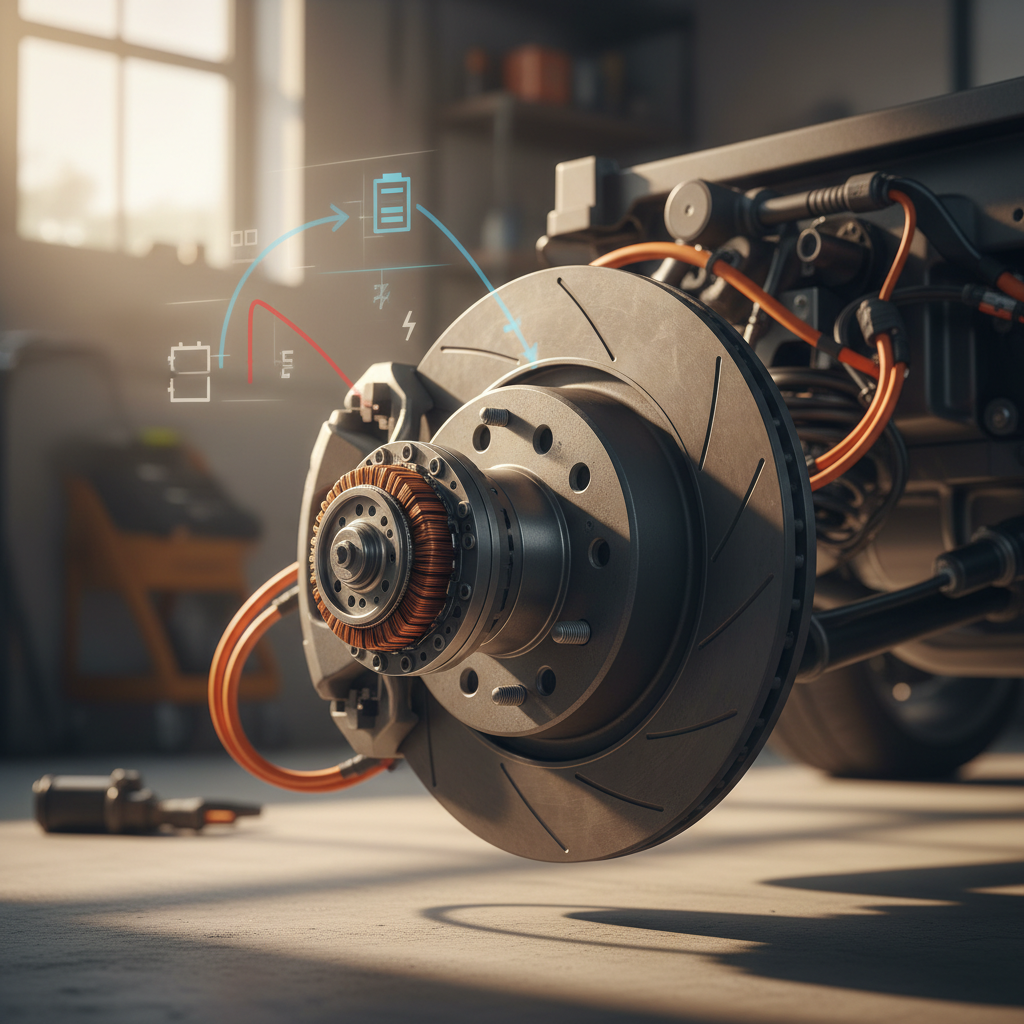
4. Inspect tires, brakes and suspension
Heavier EVs are tough on consumables. Check for **uneven tire wear, noisy wheel bearings, and worn bushings or dampers**, especially on sporty i4 M50s with larger wheels.
5. Test all driver‑assist features
On your test drive, deliberately test **adaptive cruise control, lane‑centering, parking sensors and cameras**. Calibration issues or camera faults can be costly out of warranty.
6. Evaluate charging behavior in real time
If possible, plug into a **Level 2 and a DC fast charger** during your inspection. Watch how quickly the car ramps up, how stable the connection is, and whether any errors pop up.
7. Confirm remaining warranty coverage
Ask the seller (and verify with BMW or Hyundai) how much **bumper‑to‑bumper and high‑voltage battery** coverage remains, and whether it transfers fully to you as a second owner.
8. Look for water intrusion or body repairs
Inspect trunk wells, under‑floor storage, and charge‑port areas for signs of **water leaks or poorly repaired accident damage**. On EVs, body issues can quickly become electrical issues.
9. Stress‑test infotainment and connectivity
Pair your phone, run **CarPlay/Android Auto**, stream audio, and toggle navigation routes. Both cars rely heavily on software; you don’t want to inherit someone else’s glitchy head unit.
FAQ: Used BMW i4 vs Hyundai Ioniq 6
Frequently asked questions about used BMW i4 vs Hyundai Ioniq 6
Both the **used BMW i4** and **used Hyundai Ioniq 6** are serious EVs that can anchor your garage for years if you buy carefully. The i4 skews toward enthusiasts and luxury‑leaning shoppers; the Ioniq 6 rewards data‑driven buyers who value efficiency, fast charging and long warranties. In 2026, the best move is to compare real‑world examples side‑by‑side, with **battery health, service history and total cost of ownership** all in the same frame. That’s exactly what Recharged was built to do.