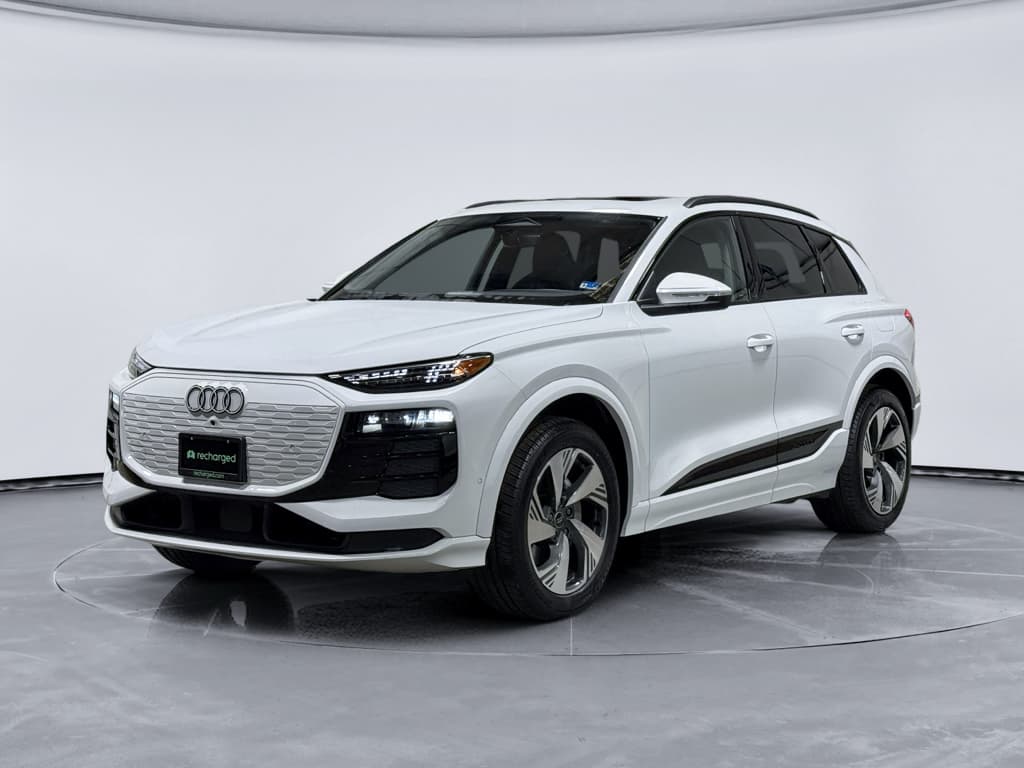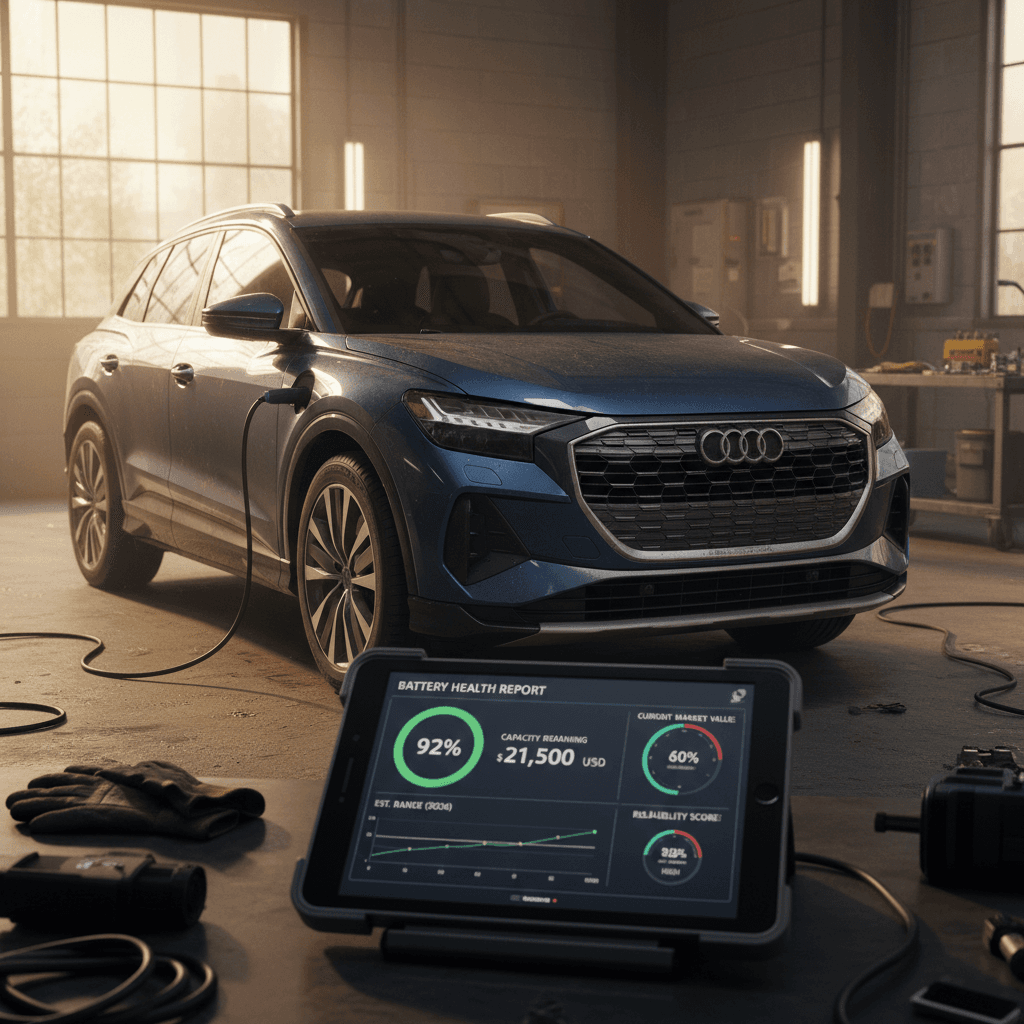
If you want a compact luxury EV SUV without new‑car pricing, a used Audi Q4 e-tron jumps to the top of the list in 2026. It shares a platform with the VW ID.4 but feels more upscale, and early depreciation means you can often buy one for the price of a well‑equipped mainstream crossover. This 2026 used Audi Q4 e-tron buying guide walks you through pricing, range, reliability, trims, incentives, and exactly what to inspect before you sign anything.
At a glance
Why the Audi Q4 e-tron makes sense used in 2026
Why shoppers like it
- Premium feel vs. VW ID.4 and many mainstream EVs
- Comfortable ride and quiet cabin, especially on the highway
- Competitive range and fast charging for daily use
- Standard safety tech and solid crash protection
- Normal controls and driving manners if you’re coming from a gas Audi
Trade‑offs to know
- Not the quickest‑charging EV in the class
- Some owners report software bugs and occasional electrical gremlins
- Out of warranty, repair costs are pure Audi luxury pricing
- Range drops noticeably in cold climates and at high speeds
Recharged tip
Quick specs and what changed by model year
Audi Q4 e-tron core specs (U.S. models)
Audi Q4 e-tron model‑year snapshot (used market 2026)
High‑level changes that matter when you’re cross‑shopping used Q4 e-tron years in 2026.
| Model year | Key highlights for used buyers | What to watch |
|---|---|---|
| 2022 | First U.S. model year. Early software, slightly lower DC fast‑charge performance on some builds, narrower trim lineup. | More reports of software glitches; confirm all recall and software updates are done. |
| 2023 | More widespread availability, incremental software updates, broader trim and option mix. | Check for HVAC issues and infotainment quirks; verify service history. |
| 2024 | Charging improvements and continued software refinement; still on the same basic hardware. Many off‑lease units hit the market in 2026. | Recalls around charging electronics and electrical faults, make sure they’re addressed. |
| 2025 | Tweaked powertrain calibration and range figures; DC fast‑charging up to ~175 kW widely available; some new driver‑assist and tech options. | Too new to have long‑term data, but pay close attention to software behavior and early wear items. |
| 2026 (early used) | Mostly lease turn‑ins and demos later in the year; latest software and charging hardware, but smallest discounts vs. new. | Limited price advantage; weigh carefully against remaining new‑car incentives. |
Always confirm exact features on the specific VIN; Audi packaging and names can vary.
Platform note
Price check: what used Audi Q4 e-trons cost in 2026
By 2026, the first wave of Q4 e-tron leases (mostly 2022–2023 models) is well into the used market. National pricing guides and Recharged’s own market data show used values stabilizing after the big EV price corrections of 2022–2023. A typical 3‑ to 4‑year‑old Q4 usually costs less than a comparable new luxury SUV, but still carries a premium over mainstream EVs.
Typical used Audi Q4 e-tron price ranges in early 2026 (U.S.)
Illustrative ranges based on national guidebooks and dealer/marketplace listings for clean, average‑mileage vehicles. Your local market may vary.
| Model year | Approx. mileage in 2026 | Typical dealer/marketplace asking range | Where deals usually cluster |
|---|---|---|---|
| 2022 | 25,000–45,000 miles | $28,000–$35,000 | High‑mile or base trims can dip into the high‑$20Ks; low‑mile 50/55 quattro closer to mid‑$30Ks. |
| 2023 | 15,000–35,000 miles | $32,000–$40,000 | Sweet spot for value; many well‑equipped Premium Plus and Sportback models show up here. |
| 2024 | 5,000–25,000 miles | $38,000–$47,000 | Often CPO and off‑loan. New‑car incentives and APR deals can narrow the used vs. new gap. |
| 2025 | Under 20,000 miles | $42,000–$52,000 | Still near‑new pricing, with big variation by options and remaining incentives on leftover new stock. |
Use this as a ballpark, not a quote. Condition, miles, options, and region all move the needle.
How Recharged can help on price
Range, battery, and charging: what to expect
Most U.S. Audi Q4 e-tron models use a roughly 77 kWh usable battery pack. Depending on whether you choose a single‑motor rear‑drive or dual‑motor quattro and whether it’s a squareback SUV or Sportback, EPA range typically lands from the high‑250s up to the high‑280s in miles for 2024–2025 models. Real‑world highway range is lower, plan on about 70–80% of the window‑sticker number at 70–75 mph, less in winter.
Battery & charging: what matters on a used Q4 e-tron
Focus less on brochure specs and more on how the previous owner treated the car.
Battery health
Most modern EV packs, including the Q4 e-tron’s, age slowly if they’re not abused. What hurts is repeated DC fast‑charging to 100%, long stretches parked at 0–5% or 100%, and extreme heat.
On Recharged vehicles, a Recharged Score battery health test gives you a quantified view of usable capacity vs. original, so you’re not guessing.
DC fast charging
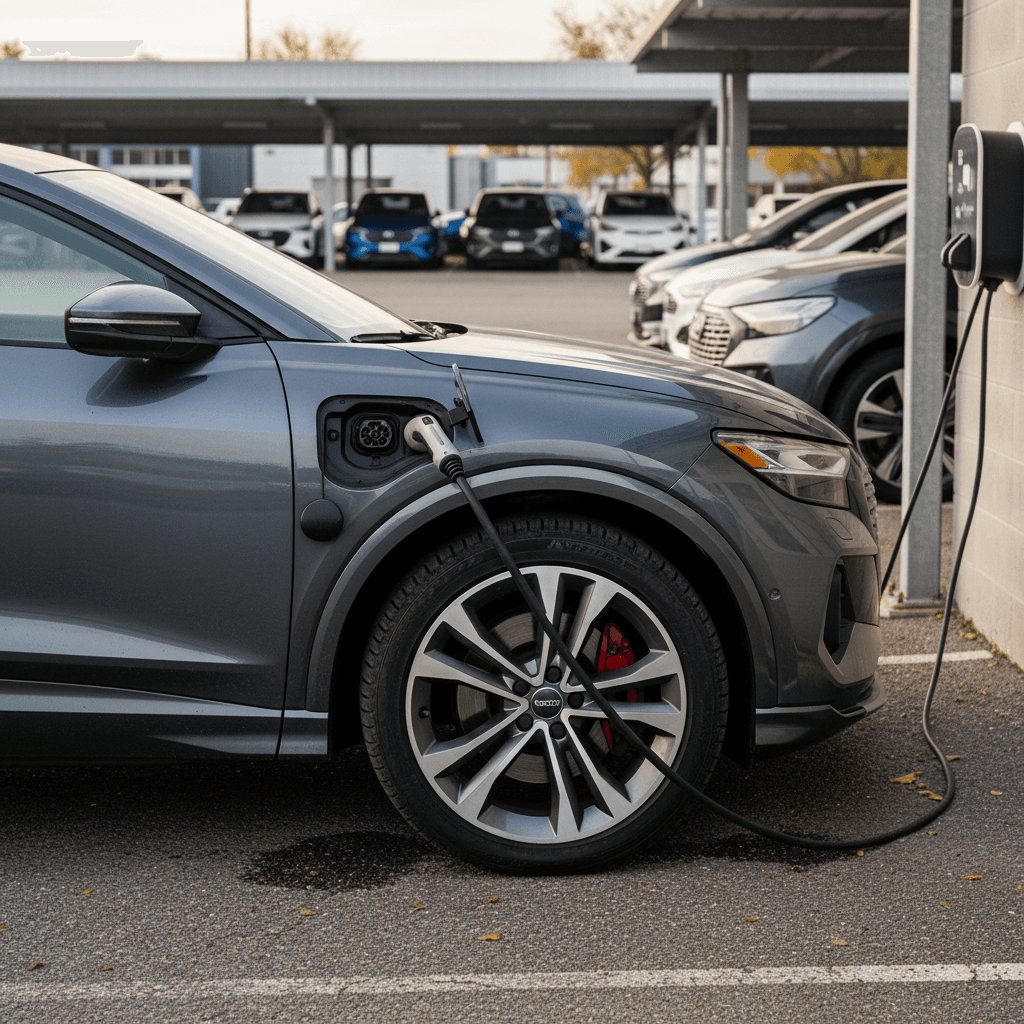
Later Q4s can peak around roughly 175 kW on a compatible DC fast charger. That’s enough to go from low state of charge to roughly 80% in about half an hour under ideal conditions.
On a used car, look for consistent charging behavior and avoid cars that repeatedly failed to fast‑charge, this can hint at hardware faults.
Home charging
The Q4 e-tron supports Level 2 home charging, typically at 9–11 kW depending on onboard charger configuration. That translates to roughly 25–35 miles of range added per hour.
Budget for a 240‑volt home charger if you don’t already have one; it’s where you’ll do almost all your charging.
Cold‑weather reality check
Known issues, recalls, and reliability
The Q4 e-tron hasn’t been a disaster, but it also isn’t a bulletproof Toyota. Owner reports paint a mixed picture: plenty of 2022–2024 Q4s run tens of thousands of miles with nothing beyond routine service, while others get sidelined by charging electronics faults, software bugs, or HVAC problems. Going in with your eyes open, and with a good pre‑purchase inspection, matters.
Common Audi Q4 e-tron issues to ask about
Patterns seen across owner forums, complaint databases, and Recharged’s own inspection data.
| Issue | Typical symptoms | Why it matters | What to do before you buy |
|---|---|---|---|
| On‑board charger / DC‑DC converter faults | Warning messages, sudden loss of drive power, 12‑volt battery warnings, car refusing to ready up. | Some model years have recalls for charging electronics that can lead to stalling or no‑start conditions. | Run a VIN recall check, verify recall completion, and scan for stored faults during inspection. |
| Software & infotainment bugs | Frozen screens, lost favorites, random warning chimes, or features disappearing until a restart. | Annoying more than dangerous, but repeated bugs can sour ownership and hide more serious issues. | Confirm the car has current software, test all major functions on the test drive, and note recurring glitches. |
| HVAC / A/C performance | Weak cooling, warm air, or recurring refrigerant top‑offs, sometimes within the first 2–3 years. | Unresolved leaks can be expensive out of warranty and directly affect comfort and defogging. | Run the A/C and heat at multiple settings; check service records for repeated A/C work. |
| 12‑volt battery problems | Random warning lights, intermittent no‑start, or systems shutting down unexpectedly. | A weak 12‑volt battery can mimic larger electrical faults and leave you stranded. | Ask when the 12‑volt battery was last replaced; on older Q4s, a proactive replacement can be cheap insurance. |
| Charging port / cable issues | Charger won’t latch, intermittent connection, or repeated failed charging sessions at multiple stations. | Most often minor hardware or debris issues, but they’re frustrating if not fixed properly. | Test both AC and DC charging if possible and inspect the charge port for damage or corrosion. |
Not every Q4 will have these problems, but they’re worth screening for on any used example.
Why a structured inspection matters
Ready to find your next EV?
Browse VehiclesTrim guide: 40, 45, 50, 55 and Sportback vs SUV
Audi’s Q4 trim naming can be confusing at first glance. In the U.S., the numbers (40, 45, 50, 55) generally track with power and driven wheels, while separate trim levels like Premium, Premium Plus, and Prestige layer on features. You’ll also see two body styles: the regular SUV and the swoopier Sportback.
Audi Q4 e-tron trims, simplified for used buyers
Names shift slightly by year, but these buckets stay fairly consistent.
40 & 45 (single‑motor)
- Rear‑wheel drive, lower power, generally the best range.
- Perfect if you prioritize efficiency and price over acceleration.
- Often come in Premium or Premium Plus with cloth or leatherette seating, smaller wheels.
If you live in a mild climate and don’t need AWD, these are strong value plays.
50 & 55 quattro (dual‑motor)
- Dual‑motor all‑wheel drive and stronger acceleration.
- Range typically a bit lower than single‑motor versions.
- More likely to carry options like head‑up display, upgraded audio, and bigger wheels.
Prioritize these if you want all‑weather traction or a more athletic feel.
Standard SUV body
- More upright roofline with better rear headroom.
- Boxier cargo area that’s easier to load.
- Generally the better choice for families or frequent cargo duty.
Sportback
- Sleeker, coupe‑like roofline and more dramatic styling.
- Very slightly better aero; range differences are modest.
- Rear headroom and cargo opening are a bit tighter.
Trim sweet spot
Inspection checklist for a used Q4 e-tron
Step‑by‑step inspection checklist
1. Run the VIN for recalls and campaigns
Before you fall in love, check the VIN for open recalls, especially those tied to the on‑board charger, DC‑DC converter, or high‑voltage components. Any reputable seller should be willing to provide a screenshot or print‑out.
2. Review service and software history
Look for documented annual services and software updates. Gaps don’t always mean trouble, but late or missed high‑voltage checks and long overdue software can be red flags on a complex EV.
3. Check battery health, not just range estimate
The in‑car range guess is easily skewed by recent driving. A proper battery health report, like the <strong>Recharged Score</strong>, measures actual usable capacity vs. original, giving you a clear sense of long‑term life.
4. Test AC and DC charging
If possible, plug into a Level 2 station and a DC fast charger during your test drive. Watch for connection errors, repeated retries, or unusually slow charging compared with other EVs on the same station.
5. Scan for warning lights and stored codes
Even if the dash looks clean, many EV issues quietly log fault codes. A pre‑purchase scan with EV‑capable diagnostic tools can reveal intermittent problems that haven’t fully surfaced yet.
6. Drive it like you’ll actually use it
Include highway speeds, stop‑and‑go, and some rough pavement. Listen for suspension clunks, feel for steering vibrations, and note any strange noises from the motors or power electronics under load.
Don’t skip the paperwork
Ownership costs, insurance, and depreciation
On the cost side, the Q4 e-tron looks a lot like other compact luxury SUVs with a twist: you save heavily on fuel and some maintenance items, but you’re still paying Audi money for parts and labor if something big fails out of warranty.
What it costs to run a used Q4 e-tron
Think in terms of fuel, maintenance, and long‑term value.
Energy vs. fuel
Electricity is usually cheaper than gas on a per‑mile basis, especially if you can charge at home overnight. Public DC fast‑charging, however, can erase much of that savings if you rely on it heavily.
Maintenance profile
No oil changes, fewer moving parts, and no traditional transmission help, but you still have brakes, tires, suspension, HVAC, and cooling systems to maintain. Plan on tire wear being heavier if you drive aggressively or choose big‑wheel trims.
Depreciation & resale
By 2026, the steepest part of the Q4’s depreciation curve is behind the earliest model years. That makes 3‑ to 4‑year‑old examples attractive if you plan to keep the car for another 4–6 years.
Leverage depreciation, don’t fear it
Incentives and tax rules for used EVs in 2026
Federal EV policy shifted again in 2025. Most notably, the federal used EV tax credit for dealer purchases ended for vehicles bought after September 30, 2025. That means in 2026 you should not expect a federal used‑EV credit to offset your Q4 e-tron purchase, even from a dealer. New‑EV credits are a different story and depend on battery sourcing and final assembly rules.
- Some states and utilities still offer rebates or bill credits for buying a used EV or installing home charging equipment.
- Local sales‑tax breaks or HOV lane perks may apply depending on where you live.
- Rules change often, always verify current incentives with your state energy office or utility before you buy.
State and local perks still matter
Should you buy from a dealer, marketplace, or private seller?
Franchise or independent dealers
- Pros: CPO options, financing, trade‑ins, sometimes extended EV warranties.
- Cons: Higher asking prices, complex fees, variable EV expertise.
- Best for: Buyers who value structure and prefer everything in one place.
Online marketplaces like Recharged
- Pros: EV‑focused inventory, transparent battery reports, nationwide delivery, digital paperwork.
- Cons: Limited ability to “kick the tires” unless there’s a local hub.
- Best for: Shoppers comfortable doing most of the process online.
Private sellers
- Pros: Potentially lower prices, more room to negotiate extras.
- Cons: No dealer protection, you handle payoff, paperwork, and inspection.
- Best for: Experienced buyers who will invest in a third‑party EV inspection.
What Recharged adds to the equation
FAQ: used Audi Q4 e-tron buying questions
Frequently asked questions about buying a used Audi Q4 e-tron in 2026
Bottom line: is a used Audi Q4 e-tron right for you?
If you’re shopping the 2026 used‑EV market for a compact luxury SUV, the Audi Q4 e-tron belongs on your short list. It delivers a comfortable, quiet drive, a premium cabin, and enough real‑world range for most commutes and weekend trips, without the sticker shock of a brand‑new luxury EV. The trade‑offs are familiar for any modern premium vehicle: you need to take software, electrical, and HVAC issues seriously, and you shouldn’t assume repairs will be cheap once warranties expire.
The safest path is clear: focus on 2022–2024 Q4 e-tron examples with documented service, completed recalls, and a verified battery health report. Whether you shop locally or through an EV‑focused marketplace like Recharged, taking the time to inspect, test‑drive, and run the numbers will help you land a Q4 that feels like a smart long‑term buy, not a science experiment.