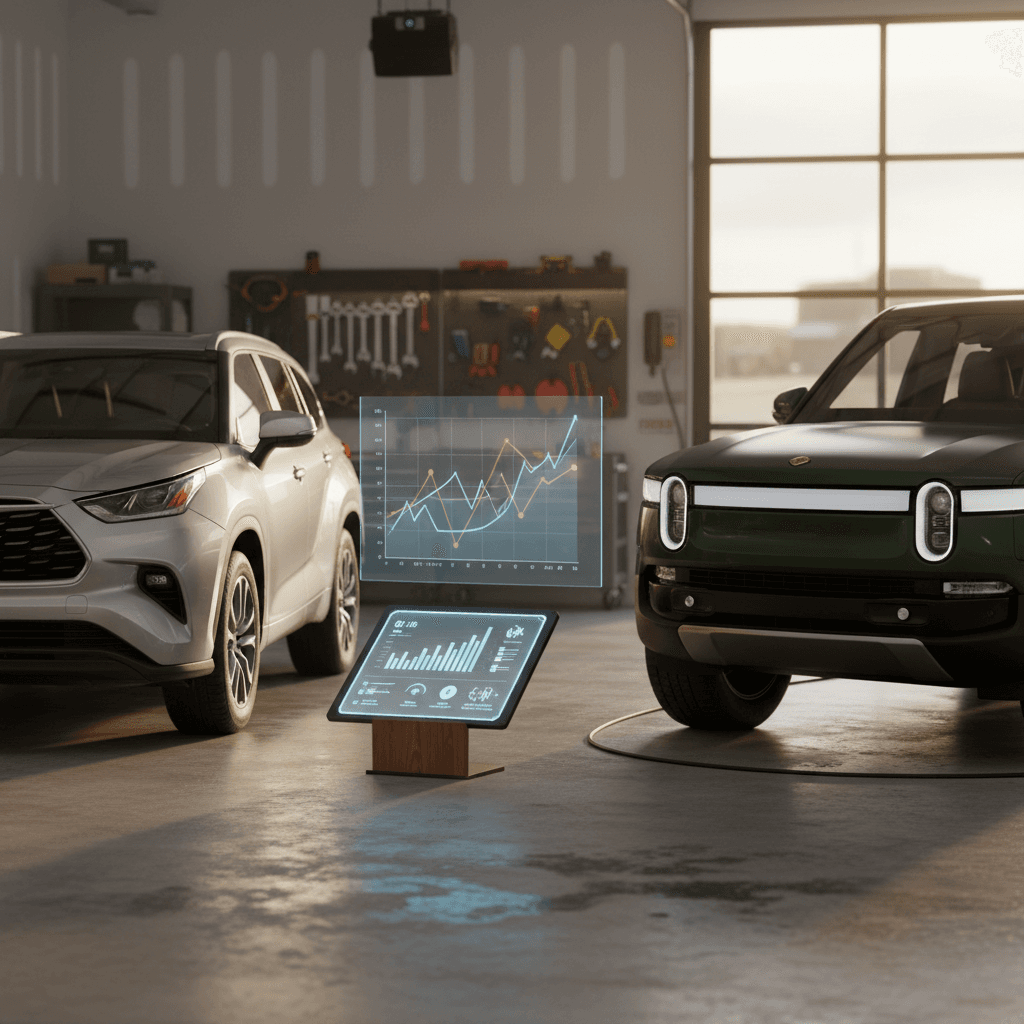
If you’re cross‑shopping a Toyota Highlander against a Rivian R1S, you’re probably not just asking, “Which one do I like more?” You’re asking a much colder question: Which one actually costs more to own over 5–10 years? This guide walks through Toyota Highlander vs Rivian R1S total cost of ownership (TCO) in plain English, with realistic, U.S.‑based numbers and a few places where emotion sneaks back in.
Context: different classes, same shopper
Who this Highlander vs R1S cost comparison is for
- You’re deciding between keeping a paid‑off or nearly paid‑off Highlander and jumping into an R1S lease or purchase.
- You’re a two‑car household debating: one practical gas SUV (Highlander) vs one pricier EV SUV (R1S).
- You care about long‑term cost of ownership more than monthly payment alone.
- You’re wondering if a used R1S from a marketplace like Recharged could make EV ownership pencil out compared with a new gas Highlander.
Quick take: Highlander vs R1S total cost of ownership
5‑year ownership snapshot (typical U.S. driver)
In plain terms: the Highlander usually wins on pure dollars, especially if you stretch out to 10 years. The R1S wins on fuel/maintenance and experience, but can still cost more overall because of its higher price, higher insurance, and luxury‑EV depreciation. The exception? A well‑priced, used R1S can start looking surprisingly competitive, especially if you value zero tailpipe emissions and performance.
Key assumptions: mileage, trims, and time horizon
To keep this grounded, we’ll compare representative, popular configurations instead of edge cases. You can mentally adjust up or down for your specific build.
What we’re actually comparing
Representative 2024–2025 models and assumptions used in this TCO comparison.
| Item | Toyota Highlander (gas) | Rivian R1S (EV) |
|---|---|---|
| Version used | 2024 Highlander XLE AWD (gas V6/4‑cyl) | 2024 Rivian R1S Dual Motor AWD |
| Purchase price (new, typical street) | ≈$45,000 out‑the‑door | ≈$80,000 out‑the‑door |
| Annual mileage | 15,000 miles | 15,000 miles |
| Time horizons | 5 years & 10 years | 5 years & 10 years |
| Fuel/energy prices | $3.50/gal regular gas | $0.15/kWh home charging; $0.35/kWh DC fast charging (blended) |
| Tax incentives | No federal EV credit (gas) | Assume $3,750–$7,500 potential federal + state where eligible |
| Driving mix | 60% city, 40% highway | Same mix for both vehicles |
If your trim level or annual mileage is wildly different, the direction of the math stays the same, but the totals move up or down.
Actual numbers will vary
Purchase price and incentives
Sticker shock: where the gap starts
One is a mainstream family hauler. The other is a luxury EV.
Toyota Highlander pricing
Most shoppers land in the mid trims with AWD. In 2025 dollars, that means:
- MSRP: roughly $40,000–$47,000 depending on trim and options.
- Out‑the‑door: around $45,000 once you add taxes and typical fees.
- Discounts: modest dealer discounts or rebates are common, but not huge.
Rivian R1S pricing
The R1S sits firmly in luxury territory:
- MSRP: often $75,000–$90,000+ depending on motor and battery.
- Out‑the‑door: real‑world buyers commonly end up near $80,000 for well‑equipped builds.
- Incentives: some buyers qualify for federal/state EV tax credits or lease incentives, which can effectively chop $3,750–$7,500 off the net cost.
Even after EV incentives, you’re typically looking at a $20,000–$30,000 higher upfront price for a new R1S vs a comparable new Highlander. That price gap is what the R1S has to earn back through lower running costs and resale value.
Fuel vs electricity: what energy really costs
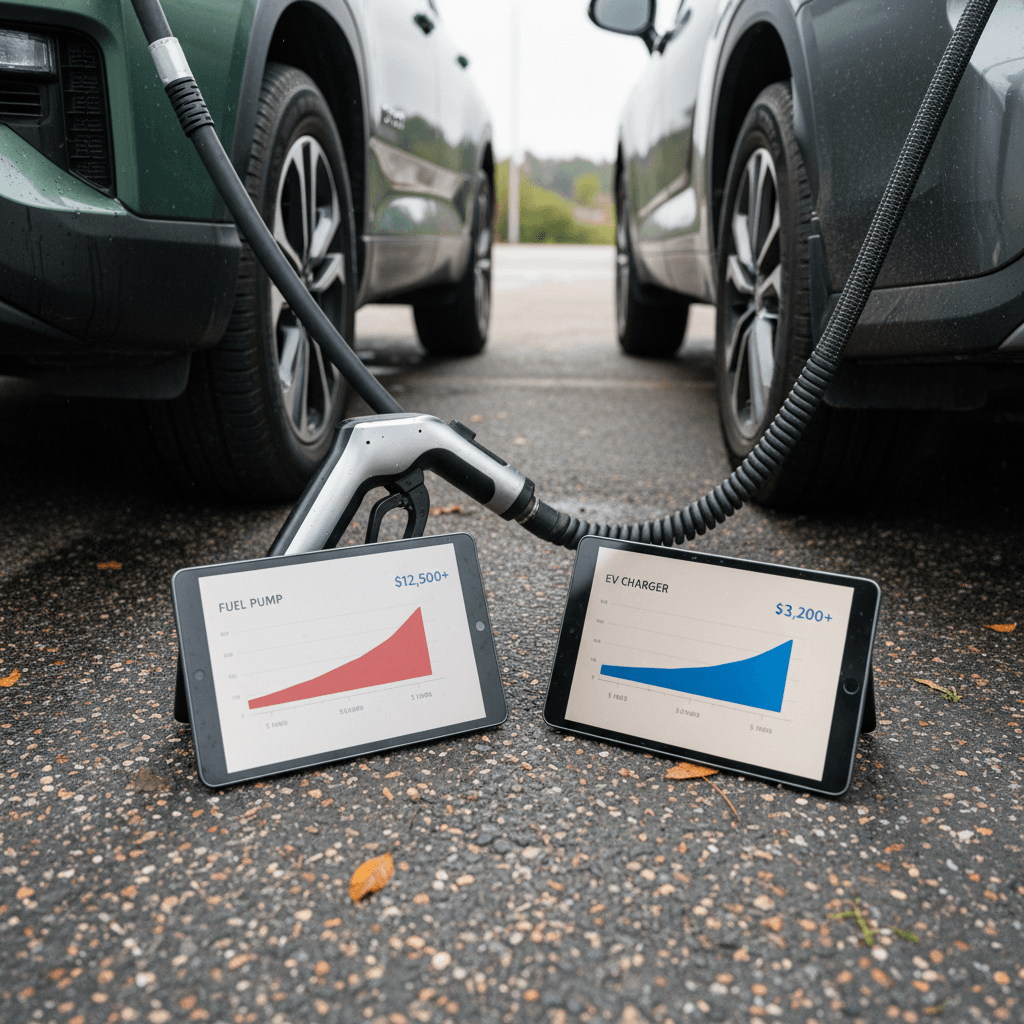
Gasoline for a Toyota Highlander
The Highlander’s real‑world fuel economy depends on whether you choose gas only or hybrid. To keep it simple, let’s assume a popular gas AWD model that averages about 24 mpg combined.
- Annual miles: 15,000
- Gallons per year: 15,000 ÷ 24 ≈ 625 gallons
- Gas price: $3.50/gal (national ballpark)
- Annual fuel cost: ≈ $2,190
- 5‑year fuel cost: ≈ $10,950
- 10‑year fuel cost: ≈ $21,900 (assuming flat prices, which is generous)
If you step up to the Highlander Hybrid and see closer to 35 mpg, those numbers drop significantly, but so does the price gap to an R1S.
Electricity for a Rivian R1S
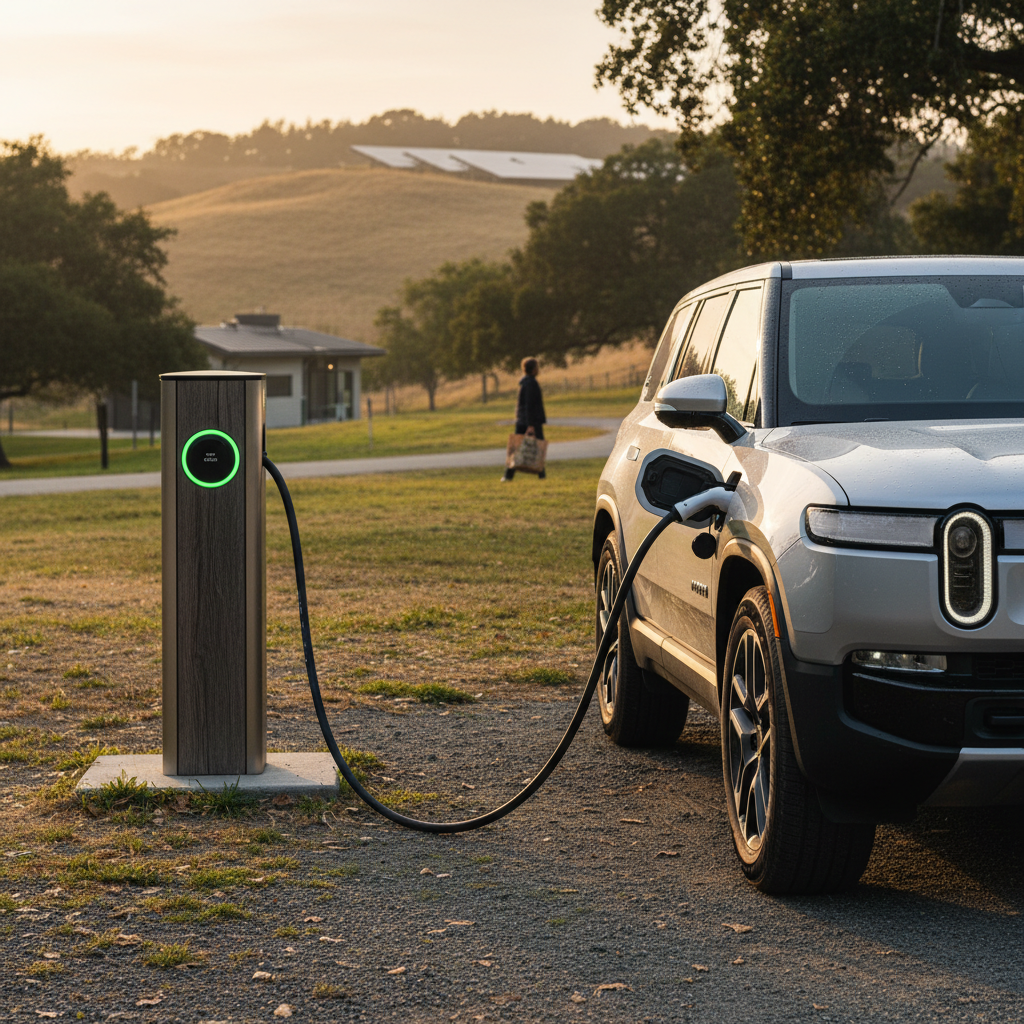
The R1S is a big, heavy, high‑performance SUV. Real‑world efficiency often lands around 2.0–2.4 miles per kWh, depending on wheels, climate, and how much fun you’re having with the throttle.
- Annual miles: 15,000
- Energy per year: at 2.2 mi/kWh ⇒ ≈ 6,820 kWh
- Home charging: $0.15/kWh (many U.S. markets)
- Public DC fast charging: $0.30–$0.45/kWh; we’ll blend and assume an effective $0.18–$0.20/kWh overall.
- Annual electricity cost: ≈ $1,250–$1,400
- 5‑year energy cost: ≈ $6,250–$7,000
- 10‑year energy cost: ≈ $12,500–$14,000
In other words, electricity typically saves you about $800–$1,000 per year vs a gas Highlander at today’s prices, and even more if gas spikes.
Where the R1S clearly wins
Maintenance and repairs: gas simplicity vs EV simplicity
Toyota built its reputation on low maintenance costs, and the Highlander is no exception. But EVs have fewer moving parts, no engine oil, and no complex transmissions, so the Rivian R1S has some built‑in advantages, even if parts and labor are more expensive when something does go wrong.
Typical annual maintenance costs
Assuming routine service only, no accidents or major failures.
Toyota Highlander maintenance
- Owner‑reported and third‑party data put routine Highlander maintenance at roughly $400–$650 per year in the first decade.
- That covers oil changes, filters, fluid changes, tire rotations, and the occasional brake work.
- Over 5 years: think $2,000–$3,000 in routine care.
- Over 10 years: $5,000–$7,000, with more suspension, brake, and cooling‑system items showing up after year 7.
Rivian R1S maintenance
- No engine oil, no spark plugs, no exhaust system, and far less brake wear thanks to strong regenerative braking.
- Routine items are mostly tires, cabin filters, brake fluid, and basic inspections.
- Most estimates peg routine maintenance in the $300–$500 per year range early on, though out‑of‑warranty repairs can be pricey.
- Over 5 years: expect maybe $1,500–$2,500 in ordinary maintenance.
- Over 10 years: budget closer to $4,000–$6,000, leaving room for some EV‑specific repairs.
Don’t forget tires
Insurance, registration, and taxes
Insurance costs
Insurance is one of the quiet places where the Highlander usually wins by a mile.
- Highlander: a typical family policy might land around $1,400–$1,800 per year in many states for full coverage, depending heavily on your driving record and location.
- Rivian R1S: owners frequently report quotes in the $2,500–$3,500 per year range, and some specialty or OEM policies run even higher.
That’s easily a $800–$1,500 per year delta in the Highlander’s favor, $4,000–$7,500 over 5 years.
Taxes and registration
Here the gap is simpler to explain:
- Many states tie registration fees and property taxes directly to vehicle value and weight.
- A $45,000 Highlander simply costs less to tax and register than an $80,000 luxury EV.
- Expect the R1S to run a few hundred dollars more per year in many jurisdictions, especially early in its life when its assessed value is highest.
Some states offset this with EV‑specific perks, like HOV‑lane access or reduced registration fees, but those are highly local.
Depreciation and resale value
Depreciation is where big SUVs quietly eat your wallet, and the story is mixed. The Highlander is a resale rock star in the gas world. The R1S has held value better than many luxury EVs, but it still sheds more absolute dollars because it starts higher.
Estimated depreciation over 5 years
Rounded numbers based on recent pricing tools, resale data, and EV market behavior through early 2026.
| Vehicle | Approx. 5‑year depreciation % | Dollar loss from new | Estimated resale value at year 5 |
|---|---|---|---|
| Toyota Highlander (gas) | ≈45% | ≈$20,000 | ≈$25,000 |
| Toyota Highlander (hybrid) | ≈40% | ≈$20,000–$22,000 | ≈$28,000–$30,000 |
| Rivian R1S | ≈50–55% | ≈$40,000–$44,000 | ≈$36,000–$40,000 |
Your numbers will vary by trim, mileage, color, and market conditions, but this gives you scale.
Why the R1S drops more in dollars
5‑year cost comparison: Highlander vs R1S
Let’s pull the major pieces together over a 5‑year, 75,000‑mile window. These are deliberately simplified, round‑number estimates, but they illustrate the shape of the decision.
Estimated 5‑year total cost of ownership (new)
Includes depreciation, fuel/energy, routine maintenance, and insurance. Excludes financing costs and state‑specific taxes/fees.
| Category (5 years) | Toyota Highlander (gas) | Rivian R1S (EV) |
|---|---|---|
| Depreciation | ≈$20,000 | ≈$40,000–$44,000 |
| Fuel / Electricity | ≈$11,000 | ≈$6,500 |
| Routine maintenance | ≈$2,500 | ≈$2,000 |
| Insurance | ≈$8,000 (≈$1,600/yr) | ≈$13,000 (≈$2,600/yr) |
| Estimated incentives | None (gas) | –$3,750 to –$7,500 (tax credits/lease) |
| Approx. 5‑year TCO | ≈$41,500 | ≈$54,000–$58,000 (after incentives) |
Think of these as order‑of‑magnitude comparisons, not penny‑perfect line items.
At 5 years, Highlander is usually cheaper
10‑year ownership: how the story changes
Stretch the timeline to 10 years and the EV advantage on energy and maintenance has more time to work, but you’re also staring down long‑term battery and tech uncertainty on the R1S side.
Highlander at 10 years
- Depreciation: a well‑kept Highlander may lose ~60–65% of its original value, taking your $45,000 SUV down to the mid‑teens. That’s roughly $28,000–$30,000 in depreciation.
- Fuel: ≈$22,000 in gasoline at 24 mpg and $3.50/gal.
- Maintenance: creeping toward $6,000–$7,000 as wear‑and‑tear items stack up.
- Insurance: typically drifts down as the vehicle ages; figure $14,000–$16,000 over a decade for many drivers.
Total ballpark 10‑year cost to own: $70,000–$75,000, not counting financing or unusual repairs.
Rivian R1S at 10 years
- Depreciation: projections suggest many luxury EVs end up around 50% of original MSRP or less after 8–10 years. That’s potentially $40,000–$50,000 gone from an $80,000 truck‑based SUV.
- Energy: ≈$13,000–$14,000 in electricity, assuming mostly home charging.
- Maintenance: routine care likely stays lower than the Highlander, but out‑of‑warranty EV repairs (suspension, electronics, battery‑adjacent hardware) can be expensive. Budget $6,000–$8,000 over the decade.
- Insurance: maybe $22,000–$26,000 over 10 years if rates stay well above the Highlander’s.
Total 10‑year cost to own: easily $85,000–$95,000, even giving the R1S every break on energy costs and incentives.
When the Rivian R1S makes financial sense
Scenarios where the R1S is the smart splurge
You’re allowed to buy with your heart, as long as you understand the math.
You drive a lot
You can charge cheaply at home
You value experience as part of “cost”
Shop the payment and the payoff
How buying used changes the math
Everything above has assumed you’re buying new. Shift to the used market and the story gets more interesting, especially for the Rivian.
Used Highlander vs used R1S: what changes?
1. Highlander: slow, steady, predictable
A 3–5‑year‑old Highlander has already taken the steepest part of its depreciation hit. You can often buy one in the low‑to‑mid‑$30,000s and still expect another 5–10 years of relatively fuss‑free service with modest annual losses in value.
2. R1S: steeper early depreciation, more upside for buyers
Early‑run R1S models have already dropped tens of thousands of dollars from original MSRP. That hurts the first owner, and can be a gift for the second. A used R1S priced in the $50,000s can deliver the same experience as an $80,000 new truck with a lot of depreciation already baked in.
3. Battery health becomes central for EVs
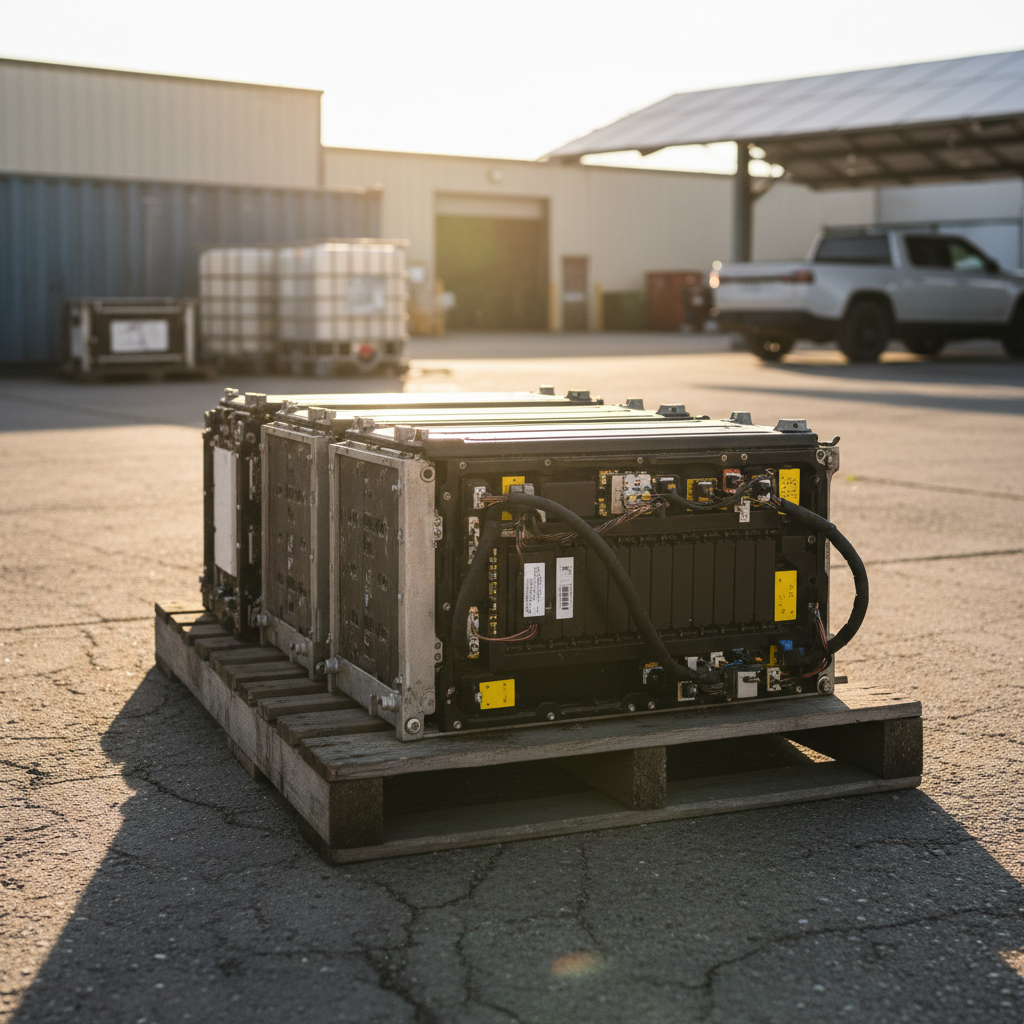
Unlike a used Highlander, a used R1S lives or dies on <strong>battery health</strong>. A strong pack means range, performance, and resale; a weak one can wreck the value proposition.
4. Financing can narrow the gap
Financing a used R1S and a used Highlander at similar price points makes the monthly math far closer, then fuel vs electricity and maintenance start to matter more in your favor with the EV.
Where Recharged slots in
How Recharged helps you shop TCO, not just sticker price
Total cost of ownership is hard to see when you’re staring at scattered listings and glossy marketing pages. That’s where a curated used‑EV marketplace designed around transparency can genuinely tilt the playing field back in your favor.
What you get when you shop an R1S on Recharged
Built to make EV ownership feel as straightforward as buying a Highlander from a trusted dealer.
Recharged Score battery report
Fair‑market pricing and financing
Trade‑in, instant offers, and delivery
Ready to find your next EV?
Browse VehiclesFAQ: Toyota Highlander vs Rivian R1S ownership costs
Frequently asked questions
Bottom line: which should you buy?
If you want the financially conservative answer, it’s the Toyota Highlander, especially a Hybrid. It asks less upfront, costs less to insure, holds its value beautifully, and has a decade‑plus track record of quietly getting families where they need to go. On pure total cost of ownership, it’s hard to beat.
If you want the emotional and environmental answer, it’s the Rivian R1S, ideally bought used, with verified battery health, at a price where someone else has already taken the sharpest depreciation hit. In that scenario, you get breathtaking performance, zero tailpipe emissions, and a richer driving experience, while pulling the TCO much closer to Highlander territory.
The smart move is to run the numbers for your situation: your mileage, your energy prices, your insurance quotes, and whether you’re shopping new or used. If a used R1S is on your radar, browsing Recharged for vehicles with a full Recharged Score report can turn this from a wild card into a well‑informed choice, so you know exactly what you’re trading when you trade the pump for the plug.