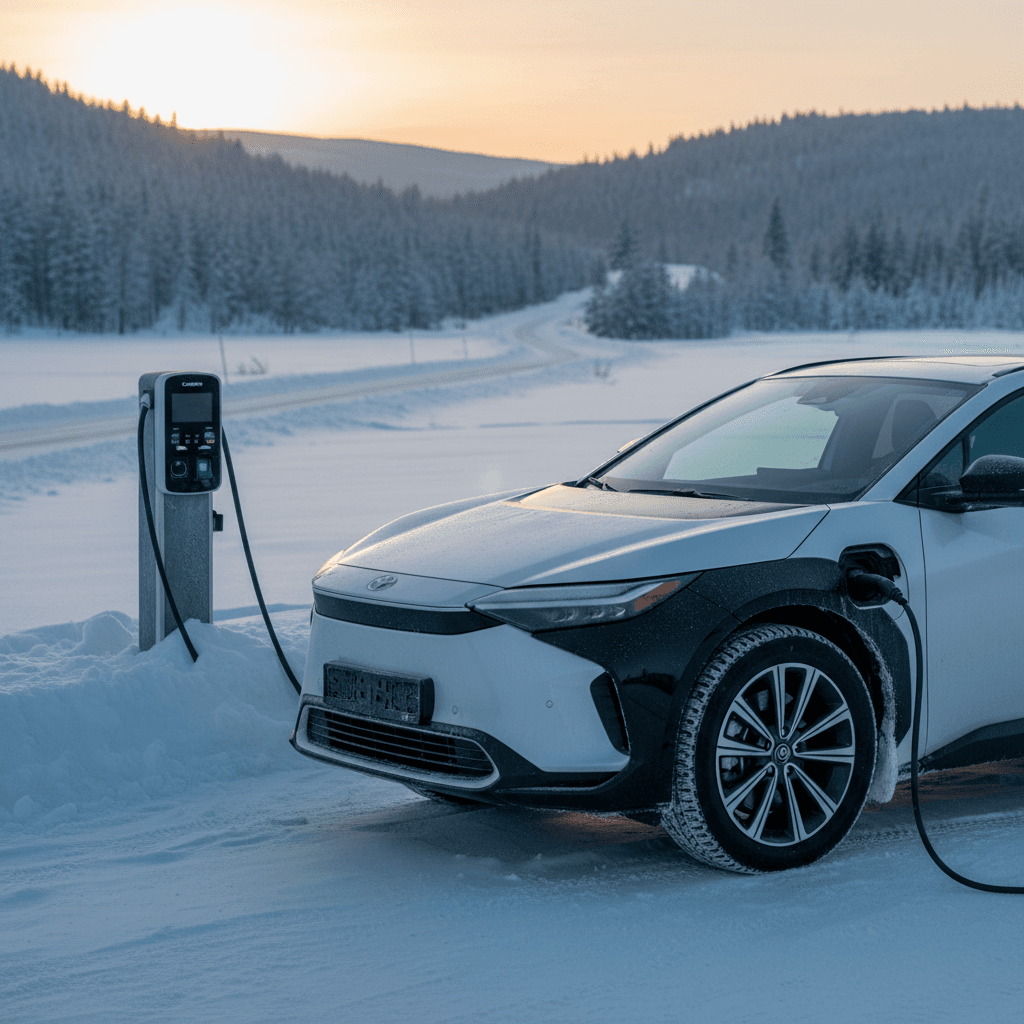
If you’re shopping for – or already driving – a Toyota bZ4X, you’ve probably heard the chatter: big winter range loss, nervous owners, and confusing numbers. The phrase “Toyota bZ4X winter range loss percentage” shows up again and again because this EV sits on the higher end of cold‑weather range drop compared with many rivals. The good news is that once you understand what’s really happening, you can plan around it and still use the bZ4X confidently in serious winter weather.
Short answer
Toyota bZ4X winter range loss at a glance
Toyota bZ4X winter range loss in one view
Those numbers come from a mix of structured winter tests and thousands of real‑owner reports. The bZ4X is not alone here – every EV loses range in cold weather – but Toyotas’s first modern EV tends to land more in the 30%‑plus loss club than the 15–20% group you see with the very best cold‑weather performers.
What tests say about bZ4X winter range loss percentage
Let’s start with controlled tests, because they give you a clean benchmark before we layer on messy real‑world driving.
- A large Canadian winter test of multiple EVs found the Toyota bZ4X delivered about 37% less range in frigid temperatures than its posted government rating – one of the bigger losses in the group.
- A separate European winter comparison measured the bZ4X at roughly a 32% range reduction versus its WLTP rating in cold conditions.
- General EV cold‑weather testing by auto publications and clubs usually sees the bZ4X lose around one‑third of its rated range when driven at realistic highway speeds in sub‑freezing weather.
Lab tests understate the worst case
What bZ4X owners report in real winter conditions
Dig into owner forums and you see a familiar pattern. People who went into the bZ4X with realistic expectations tend to say, “Yup, it’s a 30–40% hit in real winter, and I planned around that.” Drivers who believed they’d keep something close to the EPA rating are often shocked at how quickly the range estimate falls once the temperature drops and the heater goes on.
Real‑world owner reports: bZ4X in winter
Anecdotes aren’t science, but the patterns line up with formal tests.
Mild winter (around 32°F)
Typical report: Summer highway range near 230–240 miles on an AWD bZ4X drops to about 180–190 miles with temps just under freezing and normal heat use – roughly a 20–25% hit.
Normal winter (10–25°F)
Typical report: Drivers who see ~400 km (~250 mi) in summer talk about 230–260 km (140–160 mi) at –5 to –10°C. That’s usually 35–45% down from warm‑weather bests.
Deep freeze (below 10°F)
Typical report: At –20 to –30°C (–4 to –22°F), especially on short trips, owners describe roughly half their summer range – a 45–50% loss – if they keep the cabin warm.
What we see at Recharged
Why the Toyota bZ4X loses so much range in winter
Cold weather hurts every EV, but the bZ4X stacks a few specific traits that make its winter range loss percentage feel especially noticeable.
1. Cabin heat is thirsty
The bZ4X uses an electric heat pump, but when it’s truly cold the system often has to lean on more energy‑hungry supplemental heating to keep glass clear and the cabin warm. That’s a steady 1–4 kW load on top of what you need to move the car, especially at start‑up.
On short drives, most of your energy is going into heat, not miles.
2. Conservative thermal management
Toyota is famously conservative with batteries. Early bZ4X models, especially, were tuned to protect the pack and avoid rapid DC charging in very cold weather. That means the battery may stay colder longer, which reduces efficiency and can limit fast‑charge speeds.
Software updates and later model years have improved this, but the bZ4X still isn’t a cold‑weather charging hero.
3. Highway speed plus cold is a double hit
Aero drag rises quickly with speed, and so does heat loss from the cabin. Cruise at 75–80 mph in 20°F weather and you’re stacking two range killers: cold chemistry and wind resistance. That’s why you see bigger percentage losses on fast interstate runs than on steady, gentle commuting at 55–65 mph.
4. Short trips never warm the pack
If you mainly run 5–10 mile errands from a cold soak, the battery barely has time to warm up. The cabin heater repeatedly runs full tilt, while the pack stays cold and inefficient. Owners often report their worst‑case 40–50% losses in exactly this scenario, even if their longer winter trips look far better.
Don’t confuse winter loss with battery damage
Realistic Toyota bZ4X winter range estimates
So what does all of this add up to in miles and percentages you can plan around? Let’s work from the EPA‑rated figures most U.S. drivers see on window stickers and translate them into realistic winter numbers.
Approximate bZ4X winter range vs. EPA rating
Estimates assume a healthy battery, steady driving, and normal heater use. Individual results will vary.
| Model & drive type | EPA rated range (mi) | Mild winter (~32°F) | Cold winter (10–25°F) | Deep cold (<10°F) |
|---|---|---|---|---|
| FWD (typical EPA ~252 mi) | ~252 mi | ~190–200 mi (20–25% loss) | ~155–175 mi (30–35% loss) | ~125–145 mi (40–50% loss) |
| AWD (typical EPA ~228 mi) | ~228 mi | ~170–180 mi (20–25% loss) | ~140–155 mi (30–35% loss) | ~115–135 mi (40–50% loss) |
Use these as planning tools, not promises. Think of them as conservative targets for trip planning in different conditions.
How to read this table
How your driving habits swing winter range up or down
Two bZ4X drivers can leave the same house on the same 20°F morning and wind up with wildly different winter range loss percentages. The difference often comes down to how – and where – they drive.
Habits that hurt vs. help bZ4X winter range
You can’t change the weather, but you can absolutely change how hard it hits your range.
Habits that increase winter range loss
- Driving 75–80 mph for long stretches
- Leaving climate on full blast and high fan all trip
- Lots of short 3–10 mile errands from a cold soak
- Parking outside overnight in deep cold
- Skipping preconditioning while plugged in
Habits that reduce winter range loss
- Keeping highway speeds closer to 60–70 mph
- Using seat and steering‑wheel heaters and slightly lower cabin temps
- Combining errands into one longer drive
- Parking in a garage or sheltered spot
- Pre‑heating cabin and battery while the car is plugged in
Think in percentages, not promises
10 ways to cut Toyota bZ4X winter range loss
Winter driving playbook for bZ4X owners
1. Precondition while plugged in
Use the Toyota app or in‑car settings to warm the cabin and battery while you’re still on Level 2 power at home or work. That keeps more of the high‑voltage battery energy for driving instead of thawing everything out.
2. Use seat and wheel heaters first
Seat and steering‑wheel heaters sip power compared with blasting hot air. Keep cabin temperature a couple of degrees lower than you would in a gas car, and let the contact heat do the comfort work.
3. Combine trips when it’s really cold
In a bZ4X, short, cold‑start trips are range killers. Whenever possible, run several errands in one loop so the pack and cabin stay warm and you’re not repeatedly paying the energy penalty of heat‑up from frozen.
4. Give the car a garage (or at least a wind break)
Even an unheated garage can keep the car noticeably warmer than the open driveway. If you have to park outside, look for a spot shielded from wind, which also reduces windshield icing and defrost demand.
5. Ease off the fastest lane
You don’t have to crawl, but dropping from 78 mph to 68 mph on the freeway can trim consumption by a surprising amount, especially in cold dense air. Over a long drive, that’s the difference between stopping once and twice.
6. Use Eco modes when they help
Eco drive and Eco climate modes in the bZ4X soften throttle response and rein in climate output. They won’t work miracles, but they can shave a meaningful chunk off heater draw on moderate winter days.
7. Don’t chase 100% on DC fast charging in the cold
On road trips, aim to arrive at chargers with <strong>10–20%</strong> state of charge and leave in the 60–80% range. Forcing the car to 90–100% in cold weather is slow and gives you little usable extra range in the real world.
8. Watch your real‑world efficiency
Keep an eye on your consumption readout (kWh/100 mi or mi/kWh). Over a few weeks of winter commuting, you’ll see a stable pattern. Use that instead of the guess‑o‑meter alone when planning days near the edge of your range.
9. Keep tires properly inflated
Cold air drops tire pressures. Under‑inflated tires increase rolling resistance and sap range. Check pressures regularly as the seasons change and set them to Toyota’s recommended values when the tires are cold.
10. Update software when available
Toyota has already shipped software updates that tweak battery management, HVAC behavior, and range estimation. Keeping your bZ4X up to date helps ensure you benefit from the latest cold‑weather refinements.
Planning commutes and road trips in winter with a bZ4X
Once you accept that your bZ4X may give you only 60–75% of its EPA range on a rough winter day, trip planning becomes a lot less stressful. You work backward from the worst case, add a buffer, and then build your charging routine around that number.
Daily commuting example
Say you have an 80‑mile round‑trip commute in a cold‑climate state, driving a 228‑mile‑rated AWD bZ4X.
- Assume a 35% winter loss, leaving you with ~148 miles at 100% charge.
- Even if you keep the battery between 20% and 90%, that’s still roughly 100–110 reliable miles on a typical freezing morning.
- Conclusion: that commute is very doable, especially if you can plug in at home every night, and even nicer if you have Level 2 at work.
Weekend road‑trip example
Now imagine a 220‑mile winter trip each way, mostly highway, in the same car.
- At a 35% loss, effective winter range is about 150 miles.
- You should plan for at least one DC fast‑charge stop each way, arriving around 10–20% and leaving around 70–80%.
- On especially cold or windy days, or if the route is sparse, it’s smart to plan two shorter charging stops so you’re never running the pack down to fumes.
Watch for sparse charging corridors
Buying a used Toyota bZ4X if you live with real winters
If you’re considering a used bZ4X and you know winter will be part of your story, the key is separating two questions: Is this particular car’s battery healthy? and Does the bZ4X’s winter behavior fit my life? A strong “yes” to the first doesn’t change the fundamental physics of the second, but it does make your planning much more predictable.
Cold‑climate checklist for a used bZ4X
Ask the right questions before you sign the paperwork.
1. Get objective battery health data
2. Ask about winter usage
3. Map your real charging options
How Recharged can help
Ready to find your next EV?
Browse VehiclesFrequently asked questions about bZ4X winter range loss
Toyota bZ4X winter range loss: FAQ
Key takeaways: living happily with a bZ4X in winter
The Toyota bZ4X can be a genuinely pleasant winter car, quiet, planted, and always warm, if you walk into ownership with clear eyes about its winter range loss percentage. Between controlled tests and thousands of owner miles, the pattern is consistent: expect to keep roughly 60–75% of your EPA range on a normal freezing day, and a bit less in deep cold or on short, heater‑heavy trips.
If that still covers your commute and the trips you care about, you’re in good shape. Use the tools the car gives you (preconditioning, Eco modes, real‑time efficiency data), adjust a few driving habits, and plan your winter days around conservative numbers rather than the window sticker. And if you’re shopping used, consider working with a retailer like Recharged that pairs every bZ4X with a verified Recharged Score Report and EV‑savvy guidance, so you know both how healthy the battery is and how it will really behave when the temperature drops.