If you’re considering a Ford F‑150 Lightning, the most important decision you’ll make isn’t color or trim, it’s **Standard vs Extended Range**. That single choice changes your truck’s battery size, range, towing confidence, charging behavior, and how the truck is valued on the used market. This guide breaks down the differences in plain language so you can pick the battery that actually fits how you drive, tow, and charge.
Quick context: model years matter
Why the F-150 Lightning Standard vs Extended Range Choice Matters
On paper, the Extended Range battery sounds like the obvious win: more miles, more power, more capability. But in the real world, it’s not that simple. The **Standard Range pack is lighter, cheaper, and often enough** for many drivers who mostly commute, run errands, and tow only occasionally. The right answer depends on your typical day, not the maximum road trip you take once a year.
Who each F-150 Lightning battery is best for
Match the pack to your daily reality, not just the brochure
Standard Range: Everyday drivers
- Mostly city and suburban driving
- Rarely tow heavy trailers long distances
- Can charge at home most nights
- Want lower purchase price and payment
Extended Range: Frequent haulers
- Regular towing or heavy payloads
- Longer highway trips in mixed weather
- Want more buffer for winter and hills
- Plan to keep the truck a long time
Used shoppers: It depends
- Compare price gap vs your real needs
- Factor in battery health, not just miles
- Look at charging access at home and work
- Use tools like the Recharged Score to compare trucks confidently
How to think about it
Battery and range: standard vs extended at a glance
Let’s start with the core numbers Ford publishes for the first‑generation F‑150 Lightning. Exact EPA ratings vary by trim and wheel/tire package, but these are the **typical figures** most buyers will see for 2023–2025 trucks:
F‑150 Lightning Standard vs Extended Range key specs
Approximate specs for mainstream 2023–2025 F‑150 Lightning configurations (U.S. market). Always verify against the specific VIN and window sticker.
| Spec | Standard Range Battery | Extended Range Battery |
|---|---|---|
| Usable battery energy | ~98 kWh | ~131 kWh |
| Typical EPA range (no trailer) | ~230–240 miles | ~300–320 miles (trim‑dependent) |
| Horsepower | ~452 hp | Up to ~580 hp (trim‑dependent) |
| Torque | 775 lb‑ft | 775 lb‑ft |
| Max DC fast‑charge power | Up to ~150–155 kW | Up to ~150–155 kW |
| Typical 15–80% DC fast charge | ~32–40 minutes | ~38–45 minutes |
| Typical 15–100% home Level 2 (48A) | ~10 hours | ~13 hours |
Specs can vary slightly by trim (Pro, XLT/Flash, Lariat, Platinum) and wheel/tire combo.
Headline differences that actually affect ownership
Watch out for trim confusion
Real-world range, towing, and payload differences
On a pleasant 70°F day, lightly loaded and driven at moderate speeds, both F‑150 Lightning batteries can hit their EPA range numbers. But that’s not how trucks are used most of the time, and that’s where Extended Range really starts to separate itself.
Daily driving, no trailer
- Standard Range: For a 30–60 mile daily commute with errands, you’ll typically end the day with plenty of buffer, especially if you can plug in at home most nights.
- Extended Range: Gives you a much larger buffer for unexpected detours, weather swings, and days when you forget to plug in.
- Takeaway: If you’re rarely driving more than ~120 miles in a day, Standard Range usually feels completely normal and low‑stress.
Towing and heavy hauling
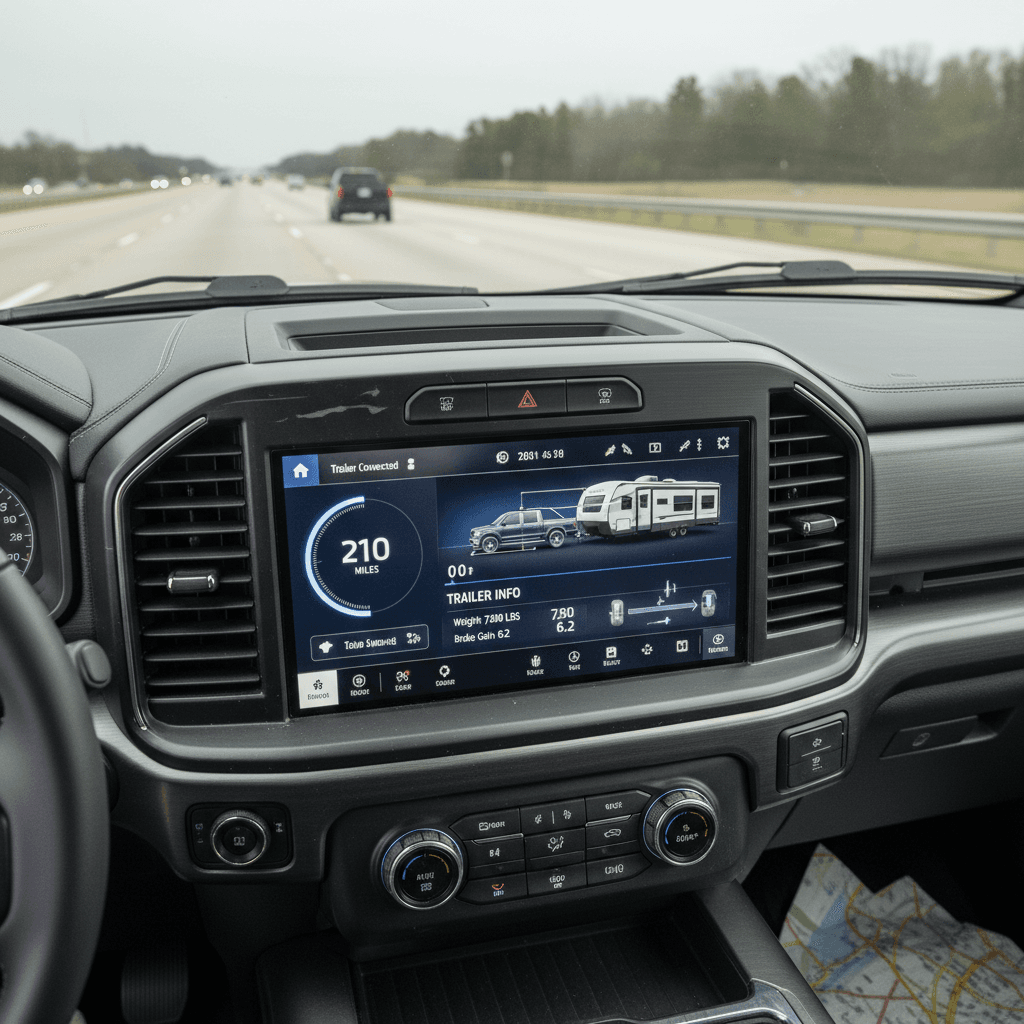
- Both packs can see **40–60% range loss** with big trailers at highway speeds, depending on weight, aero drag, hills, and weather.
- Standard Range: That 230–240 mile EPA range can shrink to well under 120 miles when towing something tall and heavy.
- Extended Range: Starting from 300–320 miles gives you a lot more practical **between‑charge towing distance** and flexibility to skip a marginal charger.
- Takeaway: If you tow frequently or on longer routes, Extended Range isn’t about luxury, it’s about logistics.
Towing reality check
Payload is also worth a quick look. The lighter Standard Range trucks can actually show **higher payload ratings** than some heavy Extended Range trims. If you’re more worried about how much you can stack in the bed than how far you can go between charges, a carefully‑chosen Standard Range configuration can be a smart play.
Charging speed and home setup: will bigger feel slower?
Both F‑150 Lightning batteries are capable of similar **peak DC fast‑charging power** and share the same basic AC charging hardware on most trims. What changes is how long it takes to move a larger pack between the same state‑of‑charge percentage points.
Typical Ford F‑150 Lightning charging times by battery
Approximate charging times for 2024–2025 F‑150 Lightning on common equipment.
| Charging scenario | Standard Range (98 kWh) | Extended Range (131 kWh) |
|---|---|---|
| DC fast, 15–80% on a 150 kW+ charger | ~32–40 minutes | ~38–45 minutes |
| Home Level 2, 48A (Ford Connected Charge Station) 15–100% | ~10 hours | ~13 hours |
| 120V Level 1 (household outlet) 0–100% | ~40–45 hours | ~55–60 hours |
Real‑world times vary with temperature, charger quality, and how full the battery already is.
Same plug, more energy to move
Home charging questions to answer before choosing a battery
1. How often can you charge overnight?
If your truck can be plugged into a 240V Level 2 charger most nights, the longer 13‑hour full charge on Extended Range is a non‑issue, it just refills while you sleep.
2. Do you have reliable public fast chargers nearby?
If your area has limited or unreliable DC fast charging, Extended Range can give you more room to skip bad stations or stretch between good ones.
3. Can your panel support higher‑amp home charging?
Extended Range shines when paired with solid home charging (40–48A or more). If you’re stuck with Level 1 or very slow Level 2, Standard Range may be less frustrating day‑to‑day.
4. Will you share the charger with other EVs?
A bigger battery plus shared charging can mean longer waits. In multi‑EV households, it’s worth thinking about scheduling so the Lightning can take the lion’s share of overnight power.
Performance: does the extended pack actually feel different?
One under‑appreciated part of the Standard vs Extended Range decision is how the truck actually feels from behind the wheel. Because Ford ties certain power outputs to the larger battery, Extended Range can be meaningfully quicker, even though both trucks share the same basic dual‑motor AWD layout.
How Standard vs Extended Range feels on the road
The differences are real, but not always decisive
Standard Range driving feel
- ~452 hp and 775 lb‑ft is already **wildly quick** for a full‑size pickup.
- Instant torque makes city and suburban driving effortless.
- Lighter battery can make the truck feel slightly more nimble and responsive over bumps.
- Still more than enough power for merging, passing, and most towing situations.
Extended Range driving feel
- Up to ~580 hp on many trims makes the truck downright fast.
- Stronger mid‑range pull, especially noticeable when loaded.
- Extra weight adds some planted, luxury‑truck feel, but can soften responses a touch.
- Often paired with more upscale trims, so the whole experience feels more premium.
The truth is that even the "base" F‑150 Lightning feels quicker than most people expect. Extended Range turns it from a quick truck into something that can embarrass sports cars between stoplights, but that’s not a must‑have for everyone.
Cost, pricing, and used-market value
When these trucks were new, moving from a Standard Range to a similar Extended Range Lightning often meant an **$8,000–$12,000 MSRP jump**, depending on trim and options. On the used market, that price gap can shrink, or sometimes stay surprisingly large, based on local demand and how many ER trucks were originally sold in your area.
How the price gap plays out used
- In some markets, Extended Range still commands a strong premium because buyers have heard the message: more range is better.
- In others, especially where daily driving distances are short, Standard Range trucks can represent **excellent value** with only modest real‑world compromises.
- Higher‑trim ER trucks (Lariat, Platinum) layer on luxury features that further inflate used prices beyond the battery itself.
Total cost of ownership considerations
- Energy cost per mile is similar; Extended Range is a bit heavier but also has a bit more usable efficiency window.
- Insurance and registration rarely care which pack you have.
- Resale value may favor Extended Range over time, but that needs to be weighed against the **higher initial purchase price or monthly payment**.
- If you plan to keep the truck 8–10+ years, the extra capability of Extended Range can amortize nicely. If you’ll flip it in 2–3 years, Standard Range value is worth a hard look.
Where Recharged fits in
Which F-150 Lightning battery fits your life?
Instead of thinking in abstract miles of range, anchor your decision in **specific weekly habits**. Here are a few realistic scenarios and which side of the Standard vs Extended Range divide they tend to fall on.
Real-world use cases: Standard vs Extended Range
Suburban commuter with weekend projects
Daily driving: 20–50 miles of mixed city/highway, with occasional weekend hardware‑store runs.
Home charging: 240V Level 2 overnight in a garage or driveway.
Towing: Small open trailer or occasional utility haul, mostly under 50 miles each way.
Best fit: <strong>Standard Range</strong> offers plenty of capability and keeps costs down.
Contractor or small business owner
Daily driving: 60–120 miles visiting multiple job sites, sometimes with tools and materials loaded.
Home/yard charging: Likely overnight Level 2 charging; daytime public charging might be inconvenient.
Towing: Utility trailers, equipment, or supply loads several times a week.
Best fit: <strong>Extended Range</strong> for buffer under load, fewer mid‑day charging stops, and higher tow ratings.
Family road‑tripper
Daily driving: 40–70 miles, but multiple 200–400 mile trips per year, sometimes with bikes or a small camper.
Charging: Level 2 at home plus reliance on highway DC fast charging when traveling.
Towing: Light trailers or hitch racks that add aero drag and weight.
Best fit: <strong>Extended Range</strong> makes routing simpler and reduces time watching chargers instead of enjoying the trip.
City driver with limited home charging
Daily driving: 20–40 miles, mostly short trips in dense traffic.
Charging: Maybe shared Level 2 in an apartment garage or frequent public fast charging.
Towing: Rare or never.
Best fit: Depends. If you can reliably use a shared Level 2 spot several nights a week, <strong>Standard Range</strong> is often enough. If charging is less predictable, <strong>Extended Range</strong> gives more buffer between sessions.
Think in one-week chunks
Shopping used: how to compare Lightning batteries smartly
The used F‑150 Lightning market is where the Standard vs Extended Range question really comes into focus. Inventory is mixed, original buyers ordered wildly different option packages, and the cheapest listing is rarely the best value once you factor in battery health, range, and equipment.
Smart steps when comparing Standard vs Extended Range used Lightnings
1. Confirm battery size, don’t guess
Look for the original window sticker or a trusted listing that explicitly calls out 98 kWh (Standard Range) or 131 kWh (Extended Range). On a Recharged listing, this is clearly documented in the specs and Recharged Score Report.
2. Look at real battery health, not just miles
A low‑mileage truck that lived on DC fast chargers can have more wear than you’d think. Tools like the **Recharged Score battery health diagnostics** give you an apples‑to‑apples comparison between trucks, regardless of odometer reading.
3. Evaluate your local charging reality
If your region has sparse or unreliable fast charging, the extra buffer of Extended Range is worth more. If you have rock‑solid home Level 2 and dense charging networks nearby, a well‑priced Standard Range may be smarter.
4. Compare total package, not just the pack
Sometimes a Standard Range truck comes with better tires, a tonneau cover, or work‑ready accessories that matter more than the last 70 miles of range. Other times, an Extended Range truck bundles key features you’d pay to add later anyway.
5. Run the payment vs benefit math
If Extended Range adds, say, $60–$120 to your monthly payment on a used truck, ask yourself how often you’ll really use that extra capability. For frequent towers and road‑trippers, it’s a no‑brainer. For short‑haul commuters, that money might be better spent elsewhere.
6. Consider future buyers
If you know you’ll resell in a few years, Extended Range may be easier to move in many markets. But if you’re buying at a steep discount today and plan to keep the truck into its battery warranty years, a solid Standard Range truck can be a value play.
How Recharged simplifies the decision
Ford F-150 Lightning Standard vs Extended Range FAQ
Frequently asked questions
Bottom line: how to choose with confidence
Choosing between the Ford F‑150 Lightning Standard vs Extended Range isn’t about bragging rights, it’s about aligning a powerful, capable electric truck with your **actual daily life**. If you tow often, travel long distances, or deal with patchy charging infrastructure, Extended Range is usually worth the premium. If your driving is predictable, charging is easy, and you’d rather keep payments lower, a healthy Standard Range Lightning can be a fantastic, sensible buy.
Whichever way you’re leaning, the key is to make the decision based on verified battery health, real‑world range needs, and total ownership cost, not just numbers on a spec sheet. That’s exactly what Recharged is built for: transparent used EV listings, expert guidance, and Recharged Score Reports that turn the Standard vs Extended Range question into a clear, confident choice.