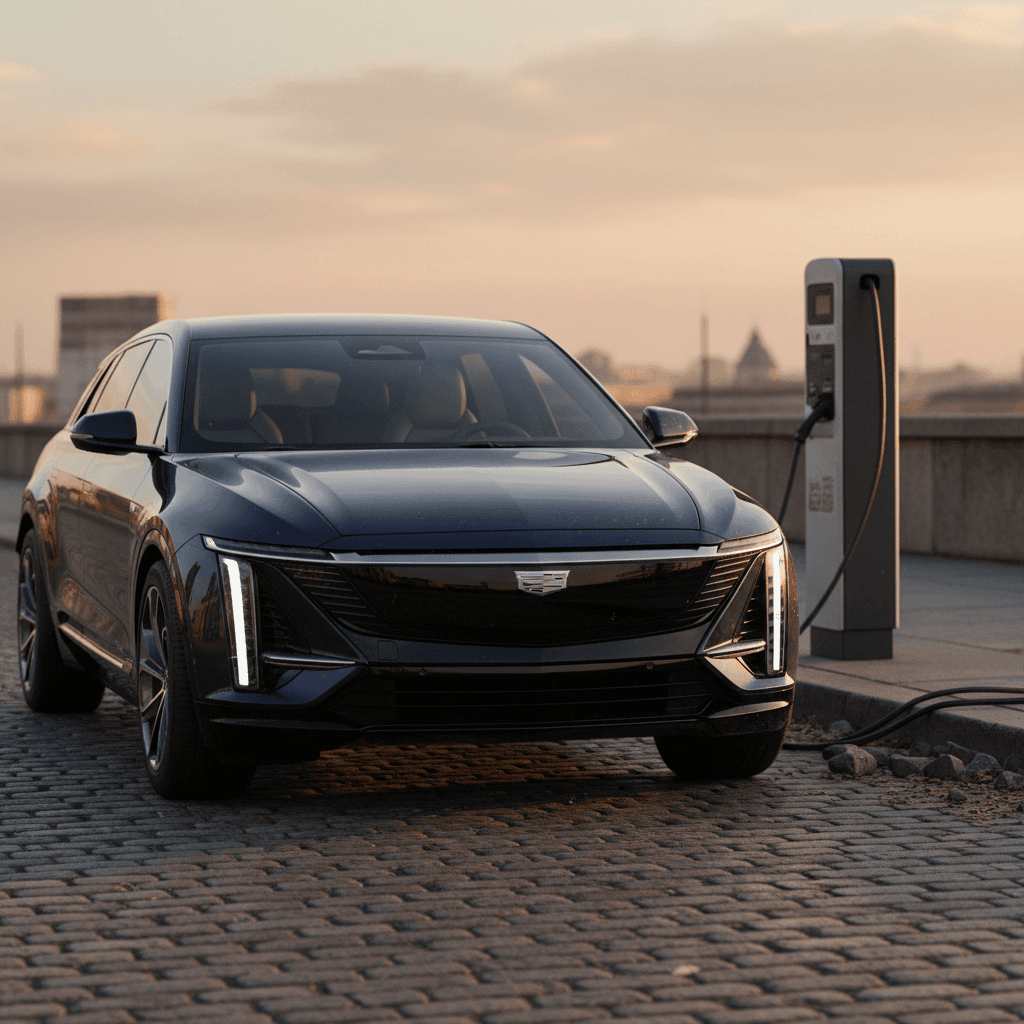
If you’re cross-shopping the Cadillac Lyriq vs Genesis GV60, you’re already looking in the right neighborhood: both are genuine luxury EVs with serious design flair, strong performance, and real long-distance capability. But they take very different approaches, one is a sleek American midsize SUV aimed at comfort and range, the other a compact Korean crossover that leans into tech and driving fun.
Two Luxury EVs, Two Different Missions
Cadillac Lyriq vs Genesis GV60: Who Are These EVs For?
The Cadillac Lyriq rides on GM’s Ultium platform and slots as a midsize, two-row luxury SUV. It emphasizes a quiet ride, roomy back seat, and strong highway range, an electric alternative to traditional luxury crossovers from brands like BMW, Mercedes-Benz, and Lexus. Single‑motor rear‑wheel drive and dual‑motor all‑wheel drive versions are available, with up to an EPA‑estimated 326 miles of range and a 102 kWh battery pack.
The Genesis GV60 is built on the E‑GMP platform shared with the Hyundai Ioniq 5 and Kia EV6. It’s a compact luxury crossover with a shorter footprint and a strong tech story: 800‑volt fast‑charging architecture, clever features like facial recognition and a crystal sphere shifter, and performance‑oriented dual‑motor trims. Newer models can achieve up to an estimated 306 miles of range from an 84 kWh battery and add a NACS port for direct Tesla Supercharger access.
Quick Match: Which EV Suits You?
Use this as a starting point before you dive into the details.
Cadillac Lyriq is ideal if…
- You want more interior space and a true midsize footprint.
- Highway comfort and a quiet cabin matter more than sharp handling.
- You value a longer EPA range and a large 102 kWh battery.
- You like a traditional American luxury feel with a dramatic design.
Genesis GV60 is ideal if…
- You live in a city or suburb and prefer a smaller, easier-to-park EV.
- You care about ultra-fast DC charging and advanced tech features.
- You like a sporty driving feel with available high-output dual motors.
- You want built-in NACS access (on newer models) for Tesla Superchargers.
Cadillac Lyriq vs Genesis GV60: Specs at a Glance
Key Specs Comparison: Lyriq vs GV60
Approximate U.S.-market specs for commonly cross-shopped configurations. Exact numbers vary by model year and trim, so always confirm for the specific vehicle you’re considering.
| Spec | Cadillac Lyriq (RWD / AWD) | Genesis GV60 (Single / Dual Motor) |
|---|---|---|
| Battery capacity | 102 kWh (Ultium) | ~77–84 kWh (E-GMP, trim dependent) |
| EPA-est. range | Up to ~326 mi RWD; ~303–319 mi AWD | Up to ~306 mi on latest long-range trims; many trims in the 235–294 mi band |
| Power | Approx. 340 hp RWD / 500+ hp AWD | Approx. 225–320 hp single/standard dual; up to ~429–483 hp on Performance trims with Boost |
| Drivetrain | RWD or AWD | RWD or AWD (performance-focused on upper trims) |
| DC fast charging | Up to ~190 kW peak (CCS1; NACS via adapter) | Up to ~240 kW peak (800V architecture; newer models add native NACS port) |
| Length / class | ≈196.7 in, midsize SUV | Significantly shorter, compact SUV |
| Tow rating | Up to 3,500 lbs (when equipped) | Not rated as a serious tow vehicle in most trims |
| Seating | 5 passengers, more rear legroom | 5 passengers, tighter rear seat and cargo |
Midsize Lyriq vs compact GV60: the numbers tell part of the story.
Model-Year Details Matter
Range, Battery and Charging: Lyriq vs GV60
Range and charging behavior are where these two luxury EVs differ most clearly. The Cadillac Lyriq leans on a big battery and solid but not class-leading fast‑charging. The Genesis GV60 uses a smaller pack but pairs it with ultra‑fast DC charging thanks to its 800‑volt architecture.
Cadillac Lyriq: Big Battery, Strong Range
- Battery: 102 kWh Ultium pack.
- Range: Cadillac lists up to about 326 miles on single‑motor RWD trims and just over 300 miles on many AWD versions.
- Charging: DC fast charging up to around 190 kW. Level 2 AC charging is 11.5 kW standard with an available 19.2 kW onboard charger for faster home or workplace charging.
- Real-world use: On long highway trips, owners often see somewhat lower real‑world range than the best EPA number, but the Lyriq is still one of the stronger performers in its class for pack size and distance between stops.
Genesis GV60: Smaller Pack, Quicker Pit Stops
- Battery: Early U.S. GV60 models use a ~77.4 kWh pack; newer 2026‑model information points to an upgraded 84 kWh long‑range battery on some trims.
- Range: Depending on drivetrain and model year, you’ll typically see EPA‑style estimates from the mid‑230s up to about 306 miles on the latest long‑range rear‑drive configuration.
- Charging: 800‑volt DC architecture enables up to about 240 kW peak on a 350 kW charger, with claims of 10–80% in roughly 18 minutes under ideal conditions.
- Real-world use: The GV60 can make very short fast‑charge stops on road trips, which partially offsets its smaller pack compared with the Lyriq.
Home Charging Considerations
Range and Charging Snapshot
Comfort, Space and Everyday Practicality
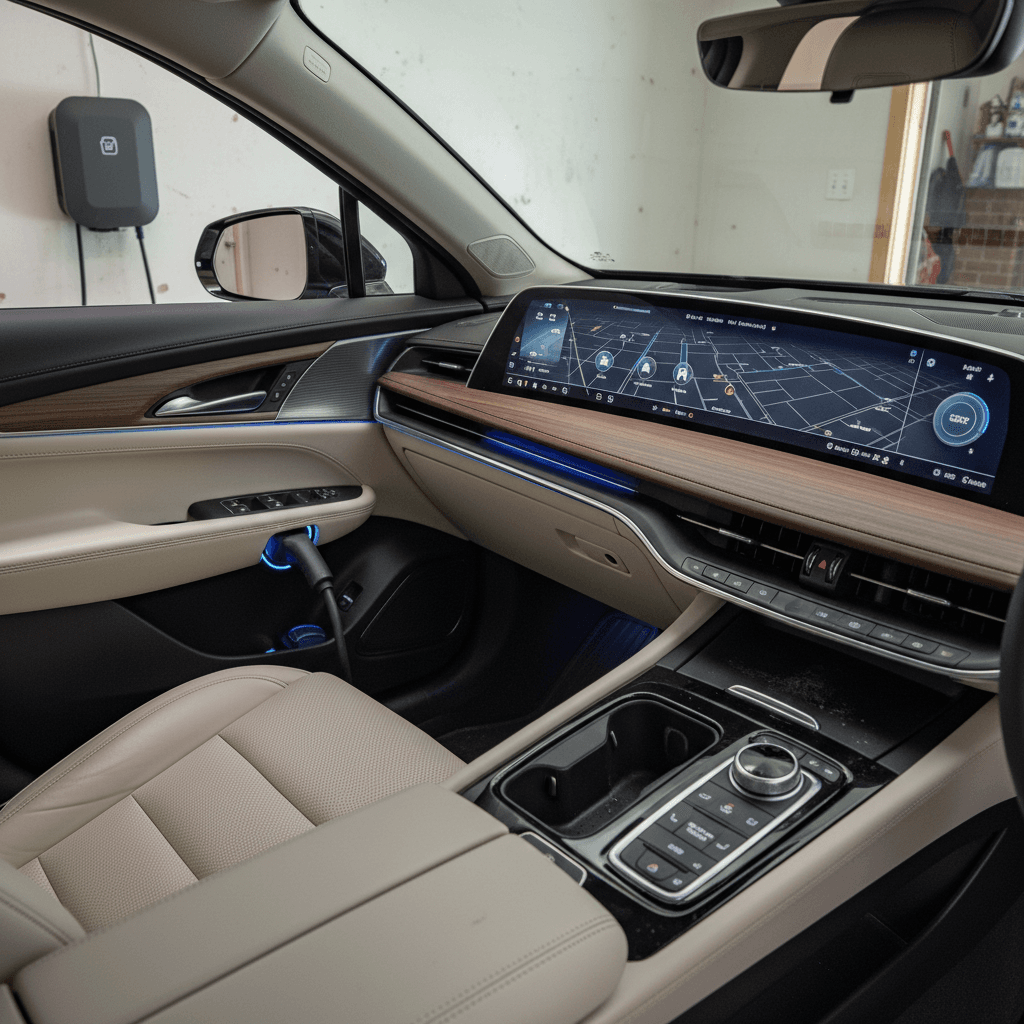
On day‑to‑day comfort, these EVs feel very different from behind the wheel and from the back seat. The Lyriq has the footprint of a midsize SUV; the GV60 feels closer to an upscale hatchback or compact crossover. That has real consequences for rear‑seat room, cargo capacity, and ride quality.
Space and Comfort Comparison
Both are comfortable, but in different ways.
Cabin Space
Lyriq: Generous rear legroom and a wide cabin make it a better choice for families or frequent adult passengers.
GV60: Adequate for two adults and kids, but taller passengers will notice its more compact dimensions, especially behind tall drivers.
Cargo and Flexibility
Lyriq: Larger cargo hold and a longer load floor when the rear seats are folded. Better suited if you routinely haul luggage, golf bags, or bulky gear.
GV60: Useful everyday space with split‑folding seats, but ultimately less volume. Think urban errands and weekend trips, not moving day.
Ride and Refinement
Lyriq: Prioritizes a quiet, settled ride. Excellent noise isolation and a long wheelbase give it a relaxed, premium character.
GV60: Slightly firmer and more playful. Still refined, but you feel more of the road, by design.
Performance and Driving Feel
Electric torque makes both the Lyriq and GV60 feel quick in everyday traffic, but their personalities diverge once you push harder. The Lyriq is tuned as a relaxed cruiser; the GV60 is more eager and playful, especially in its higher‑output trims.
Cadillac Lyriq: Smooth and Composed
- Power: Common configurations deliver around 340 hp in rear‑drive form and just over 500 hp with dual motors.
- 0–60 mph: Estimates range from about 6.0 seconds (RWD) to under 5 seconds (AWD).
- Feel: Steering is light, body motions are well‑controlled, and the cabin stays impressively quiet. This is a car that shrinks long highway drives.
- Best for: Drivers who want a serene, upscale experience with plenty of passing power rather than a sport‑SUV vibe.
Genesis GV60: Sporty and Engaging
- Power: Depending on trim, GV60s span from roughly the mid‑200‑hp range to nearly 500 hp in high‑output dual‑motor versions with a Boost mode.
- 0–60 mph: Performance variants can dip into the low‑4‑second range, giving you genuine sports‑car thrust.
- Feel: The GV60 changes direction eagerly, with firmer tuning and a more playful character. It still rides comfortably but clearly wants to be driven.
- Best for: Enthusiasts or anyone who wants their luxury EV to feel lively on a twisty road.
Performance Takeaway
Tech, Safety and Driver Assistance
Both EVs are packed with cutting‑edge tech, but they express it differently. Cadillac leans into a massive curved display and advanced driver assistance, while Genesis emphasizes design flourishes, biometric access, and ultra‑fast charging tech.
Technology and Safety Highlights
You’ll get plenty of screens and sensors either way, but the details matter.
Cadillac Lyriq Tech Highlights
- 33-inch curved display that spans the instrument cluster and infotainment.
- Google built-in, wireless Apple CarPlay and Android Auto on many model years.
- Available Super Cruise hands‑free driving system on mapped highways, bundled with robust active‑safety features.
- Available 19‑speaker AKG audio, ambient lighting, and advanced noise cancellation for a cocoon‑like cabin.
Genesis GV60 Tech Highlights
- Striking interior design with a crystal sphere shifter that flips to reveal the drive selector.
- Available facial recognition and fingerprint authentication for keyless access and start.
- Full suite of driver aids, including lane‑centering assist, adaptive cruise, 360° cameras, and advanced parking features on higher trims.
- Newest models add a NACS charging port, unlocking direct Tesla Supercharger access without an adapter.
Connectivity Caveats
Pricing, Incentives and Used-EV Value
Sticker prices are only part of the story for these EVs, especially as 2023–2025 examples begin to filter into the used market in larger numbers. The Lyriq typically sits slightly higher on original MSRP when comparably equipped, but incentives, dealer discounts and used‑market depreciation can shuffle the deck.
Price and Value Snapshot (U.S.)
Approximate positioning based on recent model years and market observations. Always confirm current pricing and offers in your area.
| Aspect | Cadillac Lyriq | Genesis GV60 |
|---|---|---|
| Typical new MSRP window | Roughly high-$50Ks to low-$70Ks depending on trim and options | Often mid-$50Ks to around $70K for high-output trims |
| Lease and purchase incentives | Varies by region and year; GM has offered strong lease programs and tax-credit passthroughs on some trims | Genesis and Hyundai Motor Group frequently use aggressive lease or finance offers to build EV volume |
| Used-market appeal | Larger size and luxury badge help demand; early depreciation can make 2–3-year-old Lyriqs compelling buys | Lower name recognition but strong reviews; fast-charging and sporty character attract enthusiasts and tech-focused buyers |
| Tax credits (new) | Eligibility depends on final-assembly location and current federal rules; dealer passthrough leases can help even if you don’t qualify directly | GV60 has often relied more on lease-structured incentives than on direct federal tax-credit eligibility |
| Tax credits (used) | Many used Lyriqs will qualify for the federal used EV credit if price and income caps are met | Likewise, used GV60s under the price cap may qualify for the used EV credit when bought from a dealer |
Both models depreciate faster than comparable gas SUVs, which is good news if you’re shopping used.
Why Used EVs Are a Sweet Spot
Checklist: Shopping a Used Lyriq or GV60
1. Verify battery health, not just mileage
Two EVs with the same odometer reading can have very different battery health depending on charging habits and climate. Look for data on usable capacity and degradation, not just range estimates on the dash.
2. Confirm charging hardware and port type
Is the car CCS‑only, CCS with a NACS adapter, or native NACS? Make sure it aligns with the charging network you’ll rely on most near home and along your regular routes.
3. Check for software and map updates
Navigation, driver‑assist performance, and charging-station data all depend on current software. Confirm the vehicle is up to date and that over‑the‑air updates are enabled where supported.
4. Inspect for curb rash and suspension wear
Luxury EVs are heavy and often ride on big wheels. Check tires, wheels, and suspension components carefully, especially on performance‑oriented GV60 trims.
5. Understand remaining warranties
Both brands offer multi‑year bumper‑to‑bumper and 8‑year/100,000‑mile‑style battery warranties. Confirm in‑service date and coverage that will pass to you.
Which One Fits Your Life Better?
Specs aside, the right choice between the Cadillac Lyriq vs Genesis GV60 usually comes down to how and where you drive. Here’s a simple way to think about it.
Choose the Cadillac Lyriq if…
- You regularly drive long highway distances and value fewer charging stops.
- You want more rear-seat and cargo space for family use, clients, or road trips.
- A quiet, upscale ride matters more than razor-sharp handling.
- You’re drawn to American luxury styling with a dramatic light signature and bold grille treatment.
- You plan to install a robust home charger and can benefit from the Lyriq’s available 19.2 kW onboard AC charging.
Choose the Genesis GV60 if…
- You live in a city or dense suburb where easy parking and maneuverability matter.
- You’re excited about fast DC charging and the latest tech touches like facial recognition and ultra‑quick Boost modes.
- You want an EV that feels playful and sporty to drive rather than purely comfort‑oriented.
- You expect to rely heavily on public DC fast charging and like the idea of native NACS access on newer models.
- You value distinctive design and a cabin that looks and feels different from traditional luxury rivals.
Test-Drive Both, Back-to-Back
How Recharged Helps You Shop Lyriq and GV60 With Confidence
Luxury EVs represent a major purchase, and the used market can feel opaque, especially when you’re trying to judge battery health and fair pricing. That’s exactly the problem Recharged was built to solve.
Why Consider a Used Lyriq or GV60 Through Recharged?
Transparency, battery clarity, and EV‑specialist support from click to delivery.
Recharged Score battery health report
Fair, data-backed pricing
End-to-end EV guidance
Flexible financing options
Nationwide delivery and trade-ins
EV-focused peace of mind
Ready to find your next EV?
Browse VehiclesFrequently Asked Questions: Cadillac Lyriq vs Genesis GV60
Your Lyriq vs GV60 Questions Answered
Both the Cadillac Lyriq and Genesis GV60 prove that today’s luxury EVs can be stylish, quick, and genuinely easy to live with. The Lyriq plays the role of electric grand tourer with long legs and a hushed ride; the GV60 brings compact agility and cutting‑edge tech. The best choice is the one that fits your range needs, parking reality, and taste in driving feel, and that checks out on battery health, charging compatibility, and price. When you’re ready to turn comparison into ownership, Recharged can help you find, evaluate, and finance the right Lyriq or GV60 with far more transparency than a traditional dealership.