If you’re looking at a Toyota bZ4X, you’ve probably heard mixed reviews about its charging. This guide walks through **Toyota bZ4X charging speed tests**, what we know from real‑world DC fast charging, and what that means for daily driving and road trips, especially if you’re cross‑shopping used EVs.
Why charging speed matters
Toyota bZ4X charging overview
The bZ4X launched in the U.S. for the 2023 model year as Toyota’s first dedicated EV. Early cars had promising specs on paper, up to 150 kW DC fast charging for front‑wheel‑drive (FWD) models, with all‑wheel‑drive (AWD) versions capped lower, but real‑world performance drew criticism for being slower than rivals and for tapering early on longer sessions.
Toyota bZ4X headline charging numbers (U.S. models)
Model year and drivetrain matter
Battery sizes and official charging specs
Under the floor, the bZ4X uses a 355‑volt pack with different capacities depending on drivetrain. Early North American models used roughly **71–72.8 kWh** packs; later updates introduced slightly different capacities, but the charging experience is broadly similar from the driver’s seat.
Toyota bZ4X battery and charging specs by drivetrain (U.S. 2023–2025)
Key battery and charging specs for common U.S. bZ4X configurations. Values are manufacturer or widely reported figures; real‑world results vary.
| Model | Battery (gross) | Drive | Max DC fast charge | On‑board Level 2 charger | Toyota est. DC fast charge 10–80% |
|---|---|---|---|---|---|
| XLE / Limited FWD | ≈71.4 kWh | FWD | Up to 150 kW | ~6.6–7.6 kW AC | ≈30 minutes in ideal conditions |
| XLE / Limited AWD | ≈72.8 kWh (CATL pack) | AWD | Up to 100–150 kW (model‑year dependent) | ~6.6–7.6 kW AC | ≈60 minutes on early AWD; improved with later updates |
| Updated bZ (2026+) FWD, small pack | ≈57.7 kWh | FWD | Up to 150 kW | Up to ~11 kW AC (non‑U.S. and later trims) | High peak speed, shorter overall time |
| Updated bZ (2026+) FWD/AWD, large pack | ≈73–75 kWh | FWD or AWD | Up to 150 kW | Up to ~11 kW AC (market dependent) | Around 25–30 minutes 10–80% under ideal conditions |
Always confirm exact specs for the model year and trim you’re considering, especially on the used market.
About the 2026 “bZ” rename
Real‑world DC fast charging speed tests
On paper, “150 kW max” sounds competitive with Hyundai, Kia, and Tesla. In practice, bZ4X charging tests show a more modest picture: the car can hit those peaks briefly, but it doesn’t hold them long, and AWD versions have historically been slower.
Typical DC fast charging test results for bZ4X
Approximate real‑world numbers from independent tests and owner logs in mild weather, starting near 10% state of charge (SoC).
FWD bZ4X (71 kWh pack)
- Peak observed: ~130–150 kW between ~10–35% SoC
- Average 10–80% power: typically in the 70–80 kW range
- 10–80% time: about 30–35 minutes in good conditions
- Best use case: 10–60% “short hops” on trips for best speed
AWD bZ4X (CATL 72.8 kWh pack)
- Peak observed: often closer to 80–100 kW on early software
- Average 10–80% power: commonly 50–60 kW across the session
- 10–80% time: about 45–60 minutes, especially on early cars
- Criticism: multiple back‑to‑back fast charges could be slower
Cold‑weather charging can be much slower
Toyota bZ4X charging curve explained
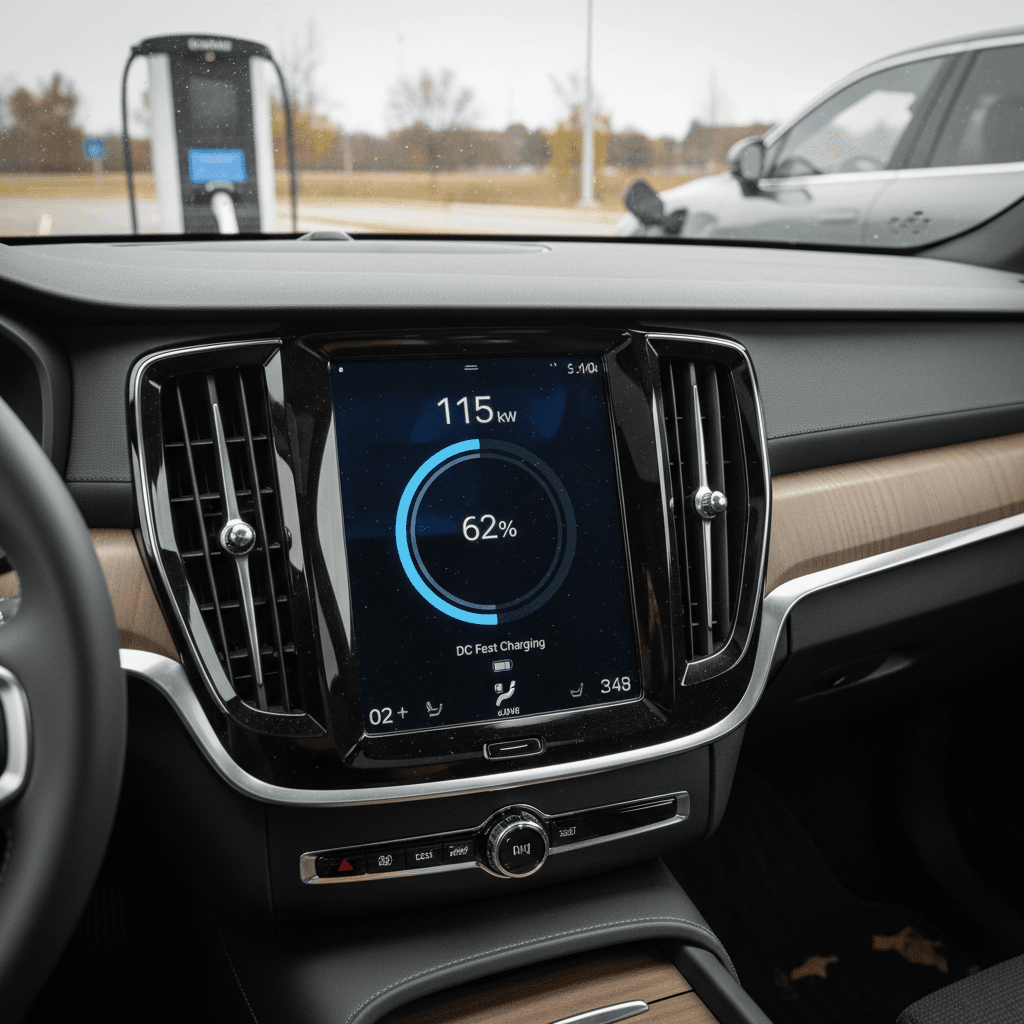
When reviewers run a **Toyota bZ4X charging speed test**, they’re usually looking at the entire charging curve, not just the headline peak. Understanding that curve helps you plan stops and avoid wasting time above 80%.
1. From 10–40%: the quick phase
On a warm battery and high‑power DC charger, a FWD bZ4X can briefly reach close to its 150 kW claim, but it usually lives in the 120–140 kW band for that early part of the session. This is when you add miles the fastest.
- Ideal for short top‑ups on road trips
- Plan your arrival around 10–20% SoC when possible
2. From 40–80%: the taper phase
Above roughly 40–50%, the bZ4X starts to taper. Power often slides down into the 70–90 kW range by 60%, then further toward ~50 kW near 80%.
- Still usable for longer legs, but time per kWh rises
- Best strategy: unplug near 70–80% and get back on the road
Beyond 80%, charging slows sharply. That’s by design to protect battery life, but on the bZ4X the slowdown is pronounced enough that staying plugged in to 90–100% rarely makes sense on a DC fast charger unless you truly need every mile.
Road‑trip rule of thumb
Home and Level 2 charging expectations
Most of your charging will probably happen at home. Here, the bZ4X behaves like a typical compact EV: the limiting factor is its **on‑board AC charger**, which has been in the 6.6–7.6 kW range on U.S. models, not the absolute fastest in class but fine for overnight charging.
What to expect from Level 2 charging
1. Time from low to full
Using a 240‑volt Level 2 charger delivering 32–40 amps, expect roughly 9–11 hours to go from a low‑battery warning to 100% on early FWD models, less if you only charge to 80–90% for daily use.
2. Miles added per hour
Real‑world owners often see <strong>20–30 miles of range per hour</strong> of Level 2 charging, depending on trim and driving efficiency. That’s easily enough to refill a typical American commute overnight.
3. Outlet and wiring
A bZ4X can use a standard J1772 connector on a properly wired 240‑volt circuit (commonly 40 or 50 amps). Always consult a licensed electrician before installing or upgrading a circuit.
4. Apartment / condo realities
If you don’t have home charging, look for workplace chargers or reliable public Level 2 stations nearby. A bZ4X can comfortably live on 1–2 good Level 2 sessions per week for many drivers.
Don’t overspend on an AC charger your car can’t use
How bZ4X charging compares with rivals
If you’re running **charging speed tests** because you’re cross‑shopping Hyundai, Kia, Tesla, or VW, it’s important to understand that the bZ4X plays in the middle of the pack. It isn’t painfully slow like some first‑generation EVs, but it also doesn’t match the standouts for ultra‑fast DC charging.
DC fast charging comparison: bZ4X vs similar compact EVs
Approximate real‑world 10–80% DC fast charging times and peak power in good conditions.
| Model | Battery (approx. gross) | Peak DC power | Typical 10–80% time | Charging character |
|---|---|---|---|---|
| Toyota bZ4X FWD | ≈71 kWh | Up to ~150 kW | ~30–35 minutes | Respectable peak but early taper; solid but not class‑leading |
| Toyota bZ4X AWD (early) | ≈73 kWh | Often ~80–100 kW | ~45–60 minutes | More conservative curve; can feel slow on trips |
| Hyundai Ioniq 5 (800V) | ≈77 kWh | Up to 230–240 kW | ~18–20 minutes | Very fast; strong high‑power plateau |
| VW ID.4 | ≈82 kWh | Up to ~170 kW | ~30 minutes | Similar window but somewhat stronger mid‑range |
| Tesla Model Y Long Range | ≈75–80 kWh | Up to 250 kW | ~25–28 minutes | High peak, decent taper, very strong network |
Times are approximate and depend on temperature, charger quality, and software updates.
Where the bZ4X still shines
Charging tips for bZ4X road trips
On a road trip, a little planning goes a long way. Because the bZ4X doesn’t hold its peak charge rate for long, you’ll want to think more like a pilot than a passenger: plan your legs, know your alternates, and don’t be afraid to stop earlier if the next station looks questionable.
Four practical ways to make bZ4X fast charging feel faster
These tips are based on what we see owners doing in the real world.
Use multiple apps
Aim for 10–60%
Pre‑warm the battery
Favor reliable sites
Think network, not just charger speed
What charging performance means if you’re buying used
If you’re considering a used Toyota bZ4X, you’re not just buying a body style and options list, you’re buying a specific battery, software package, and charging behavior. Understanding that up front can save you frustration later.
Questions to ask about a used bZ4X
- Model year and drivetrain: FWD vs AWD and early vs later build dates can tell you a lot about the pack and charging behavior.
- Fast‑charging history: Has the car mostly been DC fast‑charged or Level 2 charged at home? Moderate DC use is fine; heavy abuse can accelerate wear.
- Software updates: Has the dealer applied the latest firmware? Updates can subtly improve thermal management and charging behavior.
How Recharged helps de‑risk used EV charging
Every used EV we sell includes a Recharged Score and a detailed battery‑health and charging overview, so you’re not guessing how the previous owner treated the pack.
- Independent battery diagnostics to verify usable capacity
- Transparent charging performance notes based on our tests
- Expert EV specialists who can explain what to expect on trips
If you’re comparing a bZ4X to other used EVs, our team can walk you through how each model actually charges on the road, not just what the brochure claims.
Shop confidently, even if charging specs confuse you
Ready to find your next EV?
Browse VehiclesToyota bZ4X charging speed: FAQ
Frequently asked questions about Toyota bZ4X charging speed
Key takeaways on bZ4X charging speed
- The Toyota bZ4X can briefly hit its advertised 150 kW peak on FWD models, but real‑world averages are more modest, especially on early AWD versions.
- Plan around the 10–60% or 10–70% window on DC fast chargers; charging above 80% is significantly slower and often not worth the extra time on trips.
- At home, a properly installed Level 2 charger easily refills a bZ4X overnight, adding about 20–30 miles of range per hour depending on your driving efficiency.
- Compared with the very fastest EVs, the bZ4X charges more slowly, but with some planning it’s perfectly workable for a few long road trips a year.
- If you’re shopping used, pay close attention to model year, drivetrain, and battery‑health data so you know exactly what charging behavior to expect.
If charging speed is at the top of your priority list, you should absolutely compare the bZ4X’s real‑world performance to Hyundai, Kia, Tesla, and VW. But if you mainly charge at home and only stretch the car’s legs a few times a year, the bZ4X’s charging curve is something you work with, not something that has to be a deal‑breaker. And if you’d like a clearer picture of how a particular used bZ4X or other EV will charge in your driveway and on your favorite road trip, Recharged’s battery‑health reports and EV specialists are here to walk you through it, step by step.