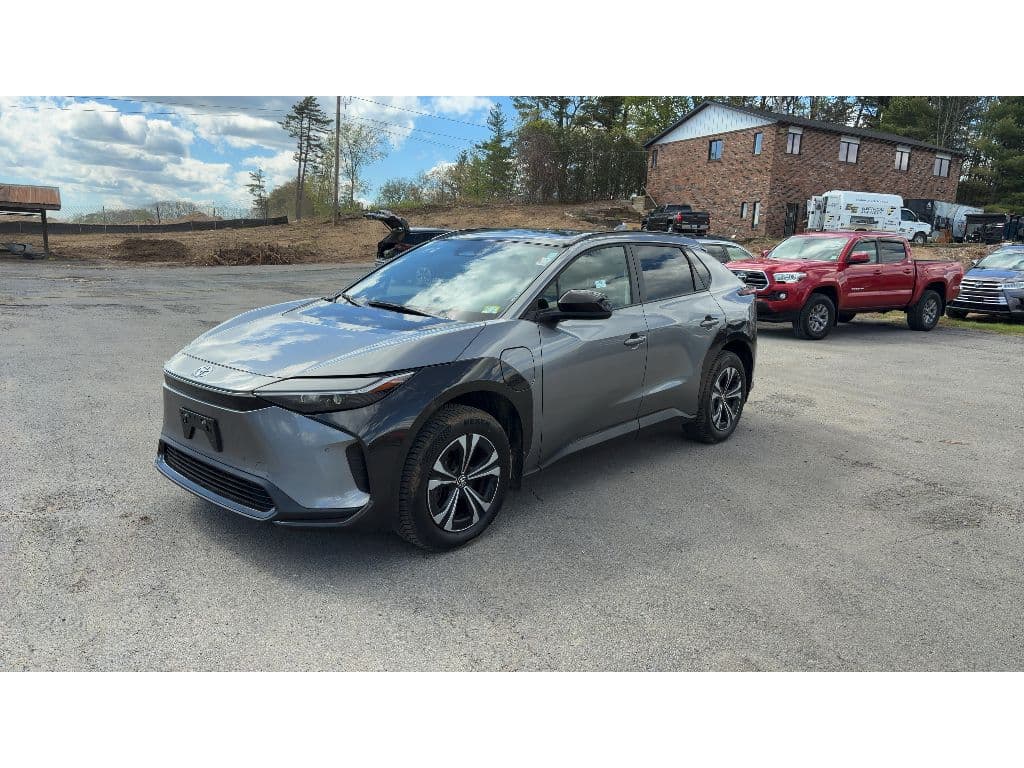
If you’re looking at a Toyota bZ4X, or its refreshed sibling now simply called the bZ, the single most important long‑term question is the battery. The Toyota bZ4X battery warranty details tell you how long Toyota will stand behind the pack, how much capacity loss is acceptable, and what happens if things go wrong. Understanding that fine print is especially critical if you’re considering a used bZ4X.
Key Takeaway
Toyota bZ4X Battery Warranty: Quick Overview
Toyota bZ4X Factory Warranty Snapshot
Those numbers are broadly similar to most mainstream EVs sold in the U.S. today. Where Toyota is more conservative is in openly advertising capacity guarantees in North America; the company is more explicit in Europe, where it promotes a 70% capacity retention target up to 8–10 years when paired with annual battery health checks. For U.S. buyers, the underlying hardware is the same, it’s the documentation and programs that differ.
Core Toyota bZ4X Warranty Coverage at a Glance
2023–2025 Toyota bZ4X U.S. Warranty Coverage
These are the standard factory warranty terms for U.S.‑market bZ4X models. Always confirm with the Warranty & Maintenance Guide for your specific model year.
| Coverage Type | Term (Time) | Term (Mileage) | What It Generally Covers |
|---|---|---|---|
| Basic (bumper‑to‑bumper) | 3 years | 36,000 miles | Most components other than normal wear items; electrical, interior, many electronics. |
| Powertrain | 5 years | 60,000 miles | Electric drive motor, reduction gear, related internal components. |
| EV Drive Components (incl. traction battery) | 8 years | 100,000 miles | High‑voltage traction battery, inverter with converter, EV transaxle and related components. |
| Corrosion perforation | 5 years | Unlimited miles | Rust‑through of sheet metal from the inside out. |
| Roadside assistance | 3 years | Unlimited miles | Towing, jump‑starts, lockout help, and basic roadside support. |
| ToyotaCare maintenance | 2 years | 25,000 miles | Factory‑recommended maintenance services at specified intervals. |
Mileage limits are from the in‑service date (first time the vehicle was sold or leased new).
Model-Year Nuance
EV Drive Components & Battery Warranty Explained
Toyota wraps the bZ4X’s major electric hardware into one Electric Vehicle Drive Components Warranty. This is separate from the basic and powertrain warranties and is where your traction battery coverage really lives.
- Traction (high‑voltage) battery pack – the main lithium‑ion pack under the floor that powers the car.
- Inverter with converter – converts the battery’s DC power to AC for the motors, and manages charging.
- EV transaxle / e‑Axle – the integrated motor, reduction gear, and differential assembly driving the wheels.
- Associated high‑voltage cabling and connectors – typically covered when failure is due to defects in material or workmanship.
If any of these components fail due to a manufacturing defect within 8 years or 100,000 miles, Toyota will typically repair or replace them at no cost, subject to the usual warranty conditions. In practice, that means a pack that outright dies, a cell failure that triggers persistent warning lights, or a defective inverter module is squarely in‑bounds for a claim.
Real‑World Example
Capacity Guarantees & Real-World Degradation
Every lithium‑ion battery loses some capacity over time, it’s chemistry, not conspiracy. The key question is whether Toyota will replace the bZ4X pack if it degrades “too much” while still under warranty.
Toyota’s formal promise
In Europe, Toyota explicitly states that the bZ4X pack is engineered to retain at least 70% of its usable capacity up to 8–10 years, depending on participation in an annual battery health check program. In the U.S., the language is less explicit, but dealers and internal documents still generally work with a similar 70% benchmark when evaluating abnormal degradation.
What owners are actually seeing
Owner reports so far suggest relatively modest degradation: many bZ4X drivers report single‑digit percentage loss over the first 40,000–60,000 miles when charged reasonably (not DC fast charging every day, avoiding long periods at 100%). The bZ4X is tuned conservatively, which sacrifices some range and charging speed in exchange for battery longevity.
How capacity claims usually work
What the bZ4X Battery Warranty Does NOT Cover
The EV Drive Components Warranty is not a blank check for anything that happens to a battery. Like every manufacturer, Toyota carves out a long list of exclusions. Understanding those up front will save you a lot of frustration later.
Common Exclusions in the bZ4X Battery Warranty
These patterns show up in most Toyota Warranty & Maintenance Guides, even if wording varies slightly by year.
Normal degradation
Gradual range loss over time is generally considered normal wear. The warranty targets abnormal degradation, typically when capacity falls well below internal expectations during the 8 yr / 100k mi window.
Damage or abuse
Physical damage (crash, road debris, flooding beyond rated depth), improper towing, or modifications to the high‑voltage system are not covered.
Charging misuse
Using non‑approved charging equipment, repeated attempts to charge through clearly faulty outlets, or ignoring warnings about charging issues can undermine coverage.
Improper repair
Repairs or tampering by non‑authorized shops on the high‑voltage system can void coverage for affected components.
Extreme conditions
Performance losses strictly due to extreme hot/cold climates or storage conditions, without an actual defect, are usually treated as operating environment, not warrantable faults.
12V vs HV confusion
Many reported “battery problems” on modern EVs actually come from the small 12‑volt auxiliary battery, not the main pack. The 12V battery is a wear item and covered differently (often just under basic warranty).
Watch the 12‑Volt Battery
Your Responsibilities to Keep Battery Coverage Intact
Warranty language always sounds like a promise, but it’s a contract, with obligations on your side too. Toyota can deny claims if it believes the battery was abused or if required maintenance was ignored. A few habits go a long way toward keeping your bZ4X covered.
Owner Checklist: Protecting Your bZ4X Battery Warranty
Follow Toyota’s maintenance schedule
Even though EVs have fewer service items than gas cars, Toyota still specifies inspections and software updates. Keep digital or paper records of all services, especially high‑voltage system checks.
Use approved charging equipment
Prefer reputable Level 2 chargers and follow Toyota’s recommendations. If you live in a home with older wiring, have an electrician verify outlets and circuits before regular charging.
Avoid obvious abuse patterns
Daily 0–100% fast charges, frequent operation in extreme heat with the battery at high state of charge, or persistent overheating warnings can all work against you if there’s ever a borderline claim.
Document range loss clearly
If you suspect abnormal degradation, log mileage, trip energy use, and weather, and capture photos of range estimates at consistent states of charge. The more objective your data, the stronger your case.
Keep software up to date
Toyota pushes over‑the‑air improvements to thermal management and charging behavior. Installing updates can both protect the pack and demonstrate that you’ve operated the car as intended.
Good News for Typical Drivers
How Battery Warranty Works on a Used Toyota bZ4X
From a used‑EV shopper’s perspective, the bZ4X battery warranty is both simple and unforgiving: it’s time‑ and mileage‑based from the original in‑service date. There’s no reset just because you’re the second (or third) owner.
- A 2023 bZ4X first sold on March 1, 2023 has EV drive coverage until March 1, 2031 or 100,000 miles, whichever comes first, no matter how many times it changes hands.
- If you buy that car used in 2027 with 50,000 miles, you’ll still have roughly 4 years / 50,000 miles of battery warranty left, assuming no prior exclusions.
- Once the car passes either 8 years or 100,000 miles, the high‑voltage pack is out of factory warranty. At that point you’re relying on battery health, not coverage, to protect your range and resale value.
Where Recharged Fits In
Warranty Coverage vs Actual Battery Health
It’s tempting to treat warranty as a proxy for battery condition, “plenty of warranty left, so the pack must be fine.” In practice, those are related but distinct concepts.
What warranty tells you
- The maximum window during which Toyota will fix defects for free.
- How conservative the automaker feels about long‑term durability.
- Whether a catastrophic failure in year 5 is your problem or Toyota’s.
What warranty doesn’t tell you
- The pack’s current state of health (SOH) in real percentage terms.
- How previous owners treated the battery (fast charging, storage habits, climate).
- Whether range loss is trending gently or accelerating.
That’s why independent battery diagnostics matter. Tools that read pack SOH and look at cell‑level balance give you a far clearer picture than warranty dates alone. This is built into the Recharged Score: we test EVs under consistent conditions, quantify battery health, and pair that with pricing data so you’re not overpaying for a car whose warranty clock is generous but whose pack is already tired.
How Toyota’s bZ4X Battery Warranty Compares
On paper, the bZ4X’s battery coverage lands squarely in the industry mainstream. The nuances come down to capacity guarantees and the way Toyota trades headline specs for longevity.
Battery Warranty Comparison: bZ4X vs Key Rivals (U.S.)
High‑level comparison of factory battery warranty terms for popular compact EV crossovers.
| Model | Battery Warranty Term | Capacity Guarantee (Typical) | Notable Traits |
|---|---|---|---|
| Toyota bZ4X | 8 yrs / 100,000 mi | 70% often used as internal benchmark | Conservative tuning, modest fast‑charging speeds, strong track record for Toyota reliability. |
| Subaru Solterra | 8 yrs / 100,000 mi | ~70% | Shares platform with bZ4X; similar underlying hardware and warranty structure. |
| VW ID.4 | 8 yrs / 100,000 mi | 70% of original capacity | Faster DC charging than early bZ4X; more aggressive thermal management. |
| Hyundai Ioniq 5 | 10 yrs / 100,000 mi | 70% of original capacity | Longer time coverage; very fast charging but more complex thermal systems. |
| Chevy Equinox EV (projected) | 8 yrs / 100,000 mi | ~70% | GM aligns with common U.S. standard for BEVs. |
Always verify specifics in the latest warranty guides; some numbers vary by year and region.
Where Toyota Stands Out
Toyota bZ4X Battery Warranty FAQs
Frequently Asked Questions About the bZ4X Battery Warranty
Bottom Line: Is the bZ4X Battery Warranty Enough?
For most drivers, the Toyota bZ4X battery warranty hits the right balance: 8 years or 100,000 miles of coverage on the traction pack and EV drive components, backed by a company that tends to under‑promise and over‑engineer. You don’t get the longest term on the market, and you won’t see eye‑popping fast‑charge figures on the spec sheet, but you do get a pack that’s designed to live a long, boringly reliable life.
If you’re shopping new, focus on how the warranty aligns with your expected mileage and ownership horizon. If you’re shopping used, don’t just ask, “How much warranty is left?”, ask, “How healthy is this specific battery?” That’s where data‑driven tools like the Recharged Score matter: they connect the dots between factory coverage, measured battery health, and fair market pricing so you can buy a bZ4X with eyes wide open.