If you’re looking for tips for selling a Volkswagen ID.4, you’re already ahead of most used-car sellers. The ID.4 is a modern EV with software, fast charging, and an 8‑year/100,000‑mile battery warranty, none of which show up in a basic “book value.” To get top dollar in 2026, you need to sell the battery, the tech, and the total ownership story, not just a VIN and a mileage number.
Good news for ID.4 sellers
Why selling your Volkswagen ID.4 feels different from a gas SUV
Buyers worry about the battery
With an ID.4, the first questions aren’t just about mileage or number of owners. Serious buyers want to know:
- How healthy is the high‑voltage battery?
- How much warranty is left (8 years / 100,000 miles for the pack in the U.S.)?
- How does it charge on DC fast charging and at home?
The market moves faster
EV values are more sensitive to:
- New model-year price cuts and incentives
- Changes in tax credits and used EV incentives
- Software updates that add (or fix) features
That volatility can hurt you if you wing it, or help you if you prepare.
Think like an EV shopper
1. Understand what your used ID.4 is actually worth
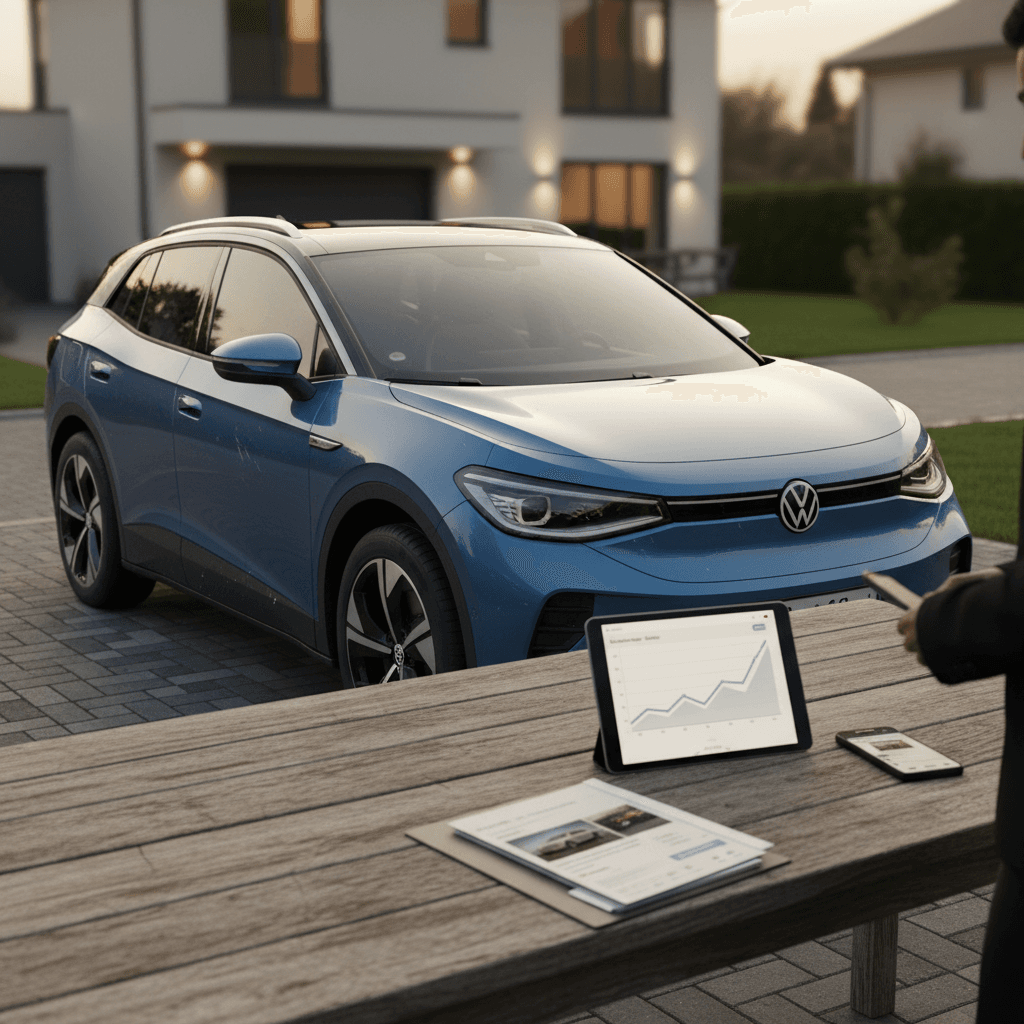
Before you fix a scratch or pay for detailing, you need a realistic range for your ID.4’s value. The ID.4 has depreciated faster than some gasoline SUVs but roughly in line with many mass‑market EVs. Independent models show roughly 60–62% of its original price gone after five years for typical U.S. use. That sounds scary until you remember most of that hit happens in the first three years. As a seller today, you’re setting a price in a market where early buyers already absorbed the steepest curve.
Quick pricing checklist for your Volkswagen ID.4
Confirm trim, options, and drivetrain
Many buyers don’t know the difference between <strong>Standard, Pro, Pro S, AWD Pro</strong>, and special trims. Note your exact trim, battery size, and whether it’s AWD, these can move value thousands of dollars.
Check mainstream pricing guides, but don’t stop there
Use tools like KBB, Edmunds, and CarEdge for a starting point, then compare to actual listings in your region. Look at <strong>asking prices and days-on-market</strong> for similar ID.4s, not just algorithm estimates.
Account for mileage and condition honestly
ID.4s with lower miles and clean cosmetics still command a premium, but don’t try to price like a showroom car if your bumper is scuffed and the interior shows heavy wear.
Adjust for tech & incentives
If new ID.4s in your area are heavily discounted or qualify for attractive tax credits, you’ll need to price your used one to reflect that gap. Savvy buyers will be running that math.
Don’t anchor only on your payoff amount
2. Time your ID.4 sale around demand and warranty coverage
You can’t control the macro market, but you can sell in a window that makes your Volkswagen ID.4 most attractive. Seasonality matters for SUVs, and warranty remaining is a huge psychological lever for used EV buyers.
Smart timing moves for selling your Volkswagen ID.4
Use the calendar and warranty clock to your advantage
Lean into spring & early summer
Family EV crossovers like the ID.4 see the most interest when people are planning road trips and moving houses or jobs. Listing in late March through July often means more eyeballs and faster responses than mid‑winter.
Sell with at least 2–3 years of battery warranty left
Volkswagen’s high‑voltage battery warranty is 8 years / 100,000 miles (whichever comes first) on U.S. models. Buyers love seeing plenty of runway left; list that clearly in your ad and aim to sell well before you’re close to either limit.
Watch new‑car incentives
If VW or dealers are blowing out new ID.4s with cash on the hood or lease specials, used prices will feel pressure. In those periods, prioritize a fast, clean sale over squeezing every last dollar on price.
Planning a replacement EV?
3. Get your ID.4’s battery health documented
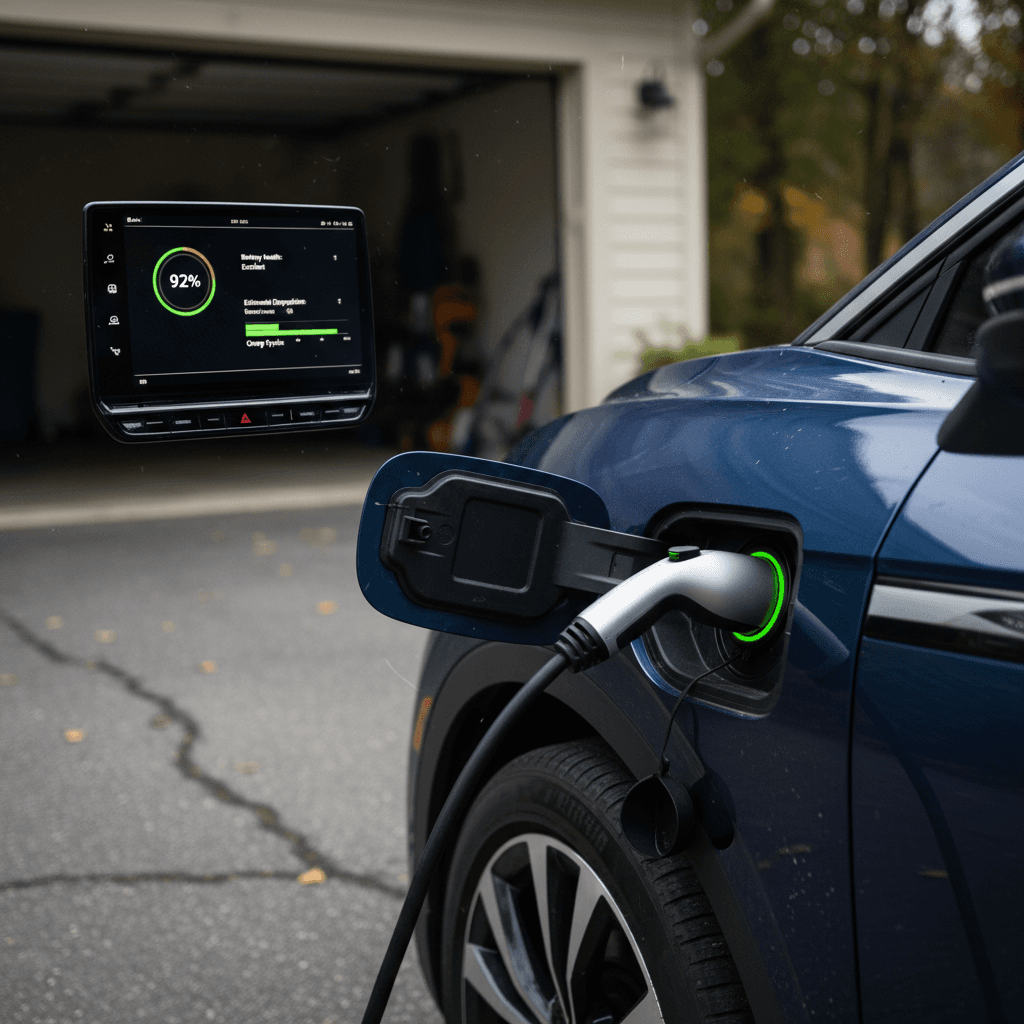
For EVs, battery health is the new compression test. Most modern packs, including the ID.4’s, age more slowly than early EV skeptics predicted, but buyers don’t want to take your word for it. A simple, credible battery report is one of the easiest ways to justify strong pricing and shorten time on market.
Why battery health documentation helps your VW ID.4 sell
How Recharged helps here
Ready to find your next EV?
Browse Vehicles- Check for any dashboard warnings, charging issues, or obvious range loss before you list the car. If something feels off, diagnose it first.
- Gather screenshots or photos of typical range at 100% and at your usual daily charge level. Note temperature conditions to give buyers context.
- If you’re selling privately, consider a third‑party EV battery health check or marketplace that can document state‑of‑health (SOH) for you. Buyers love independent metrics.
4. Service records and recalls build buyer confidence
The ID.4’s mechanical maintenance needs are lighter than a gasoline SUV, but software updates, TSBs, and occasional component issues matter a lot to savvy buyers. Organized paperwork proves you’ve cared for the car and stayed current on fixes.
Documents to gather before you list your Volkswagen ID.4
Dealer service history
Print or export a record of <strong>all scheduled services</strong>, warranty repairs, and software updates. If you used multiple dealers, gather everything into a single PDF or folder.
Recall and campaign repairs
If your ID.4 had any recalls or service campaigns, keep the letters and repair invoices. Buyers want to know these have been completed, especially on early 2021–2022 builds.
Charging and home‑install paperwork
If you installed a home Level 2 charger, keep invoices and permits. While you’ll usually keep the charger, it signals you took charging seriously and often correlates with good battery care.
Tire, brake, and glass receipts
Simple items like a recent set of tires or a glass replacement add up to real value, especially if you can prove they were done with quality parts.
Make a digital “buyer packet”
5. Fix the small stuff and detail like a pro
Used‑car shoppers absolutely judge books by their covers, and EV shoppers are especially wary of cars that look neglected. The good news: with the ID.4, a handful of inexpensive touch‑ups can dramatically change how buyers perceive value.
High‑ROI prep moves before selling your ID.4
Small investments that can add big perceived value
Deep interior clean
Remove personal items, wipe fingerprints off the big center screen, clean dust from the piano‑black surfaces, and shampoo mats. Pay extra attention to the light interior trims, which show dirt easily.
Paint & wheel touch‑ups
Have minor scratches, curb rash, and door dings addressed by a mobile detailer or body shop if prices are reasonable. Buyers mentally subtract far more than the repair actually costs.
Fresh 12V battery (if needed)
If your 12‑volt battery is original and the car is several years old, consider proactive replacement. Random warning lights or no‑start scenarios spook buyers during test drives.
Don’t overspend on bodywork
6. Photograph your Volkswagen ID.4 so it stands out online
In a sea of dark dealership photos and cluttered driveways, a well‑shot ID.4 looks like a safer bet before a buyer ever reads your description. You don’t need pro gear, just a phone, patience, and the right checklist.
- Shoot in the early morning or late afternoon so the lighting is soft and even.
- Park your ID.4 somewhere clean and neutral, no trash cans, no people in frame, no cluttered garage.
- Capture all four corners, straight-on front and rear, both sides, and close‑ups of wheels and lights.
- Show the interior from both front doors, the rear seats, cargo area, and infotainment screen powered on.
- Photograph the odometer, VIN plate, tire tread, and any flaws you’re disclosing.
- Include at least one photo of the charging port and included charging cables.
Portrait vs landscape?
7. Write an honest, EV-focused listing description
Your description should do more than restate the VIN decode. You’re answering the questions an EV‑curious shopper has in their head: What’s the real‑world range? How has it been charged? Is the software up to date? Why is this ID.4 a safer bet than another listing down the street?
Key items to include in your ID.4 listing
- Exact trim, battery size, drivetrain (e.g., 2023 Volkswagen ID.4 Pro S AWD, 82 kWh pack).
- Current mileage and approximate typical range in your climate.
- Charging history (e.g., mostly home Level 2 vs. heavy DC fast‑charging).
- Remaining high‑voltage battery warranty and basic new‑car warranty status.
- Service, recall, and software‑update history in plain language.
- Any aftermarket accessories (all‑weather mats, roof bars, tint, etc.).
Sample description snippet
“Selling our 2022 ID.4 Pro S RWD, 82 kWh battery, Clean Title, 41,200 miles. Mostly charged at home on Level 2, with occasional fast‑charging on road trips. Still within VW’s 8‑year/100,000‑mile battery warranty. Software updated at VW dealer in late 2025; no open recalls. New tires at 35k miles, non‑smoking household. Includes original Level 1 charger and a 40‑amp portable Level 2 unit.”
Never hide known issues
8. Choose how to sell: private sale, trade-in, or EV marketplace
There’s no single “right” way to sell a Volkswagen ID.4. You’re trading off price, effort, and risk. EVs add a twist: not every dealer or private buyer really understands them, which can skew offers in both directions.
Ways to sell your Volkswagen ID.4: pros and cons
Compare private sale, dealer trade‑in, and using an EV‑focused marketplace like Recharged when you sell your ID.4.
| Method | Typical Price | Time & Effort | Pros for ID.4 Sellers | Cons for ID.4 Sellers |
|---|---|---|---|---|
| Dealer trade‑in | Lowest | Very low | Fast, simple; can roll negative equity into next deal; no strangers at your house. | Many dealers discount EVs heavily if they don’t understand battery health or local demand. |
| Private sale | Highest (if done right) | High | You control price and narrative; great if you can answer EV questions confidently. | Requires screening strangers, managing test drives, and handling paperwork yourself. |
| EV-focused marketplace (e.g., Recharged) | Mid‑to‑high | Medium | Specialists understand ID.4 battery, software, and pricing; can offer instant offer, trade‑in, or consignment; nationwide buyer reach. | You share a slice of the upside in exchange for marketing, logistics, and expert support. |
The best route depends on whether you value maximum dollars, least hassle, or EV‑specialist support.
Where Recharged fits in
9. Screen buyers and offer test drives safely
Most ID.4 shoppers are serious, but you still need a basic safety and sanity process. EV‑curious buyers may also want more guidance on how the car drives and charges than a typical used‑SUV shopper.
Safe, smooth test drives in your Volkswagen ID.4
Pre‑qualify via message or call
Ask how they plan to pay, whether they’ve driven EVs before, and what they’re looking for. Flaky buyers usually reveal themselves quickly.
Meet in a public place
Whenever possible, meet in a <strong>public, well‑lit area</strong> with security cameras, like a bank or large shopping center. Bring a friend if you can.
Control the keys
Ride along on all test drives; keep your phone and any important docs with you. Hand over the key only once you’re in the passenger seat.
Highlight EV basics on the drive
Show one‑pedal behavior (if configured), regenerative braking, lane‑keep, and adaptive cruise. Let them experience DC fast charging only if a station is very close and you have time.
Verify license and insurance
10. Negotiate like someone who understands EV value
Negotiating on an EV is different from haggling over a 10‑year‑old gas crossover. Many buyers don’t understand how depreciation, battery health, or tax incentives really work, so they may throw out low offers based on half‑remembered headlines. Your job is to calmly anchor the conversation in facts.
- Start with a slightly ambitious but defensible asking price based on your research and prep work, then decide in advance what your real minimum is.
- Use your battery report, service records, and clean photos as justification for your price. Don’t just say it’s worth more, show why.
- Be ready to explain that modern EV batteries, including the ID.4’s, are typically aging at only a few percent of capacity per year, not “half the range in five years.”
- If a buyer compares your ID.4 to a new one with incentives, walk through the math: what they actually save buying used, plus lower risk from a car that’s already been through early recalls and software bugs.
- If you’re working with an EV‑savvy buyer, let the data speak and move quickly to price; if they clearly don’t understand EVs at all, be prepared to either educate or politely move on.
Don’t negotiate against yourself
11. Don’t forget paperwork, charging gear, and handover
The last step in selling your Volkswagen ID.4 is making handover painless. A clean, complete package reassures the buyer and reduces the odds of after‑sale drama.
Final handover checklist for your Volkswagen ID.4
Title, bill of sale, and lien release
Make sure the title is ready to transfer (or your lender is prepared to release it), complete a simple bill of sale, and provide any payoff letter or lien release the buyer’s DMV will require.
Both keys and manuals
ID.4 key fobs are expensive. Include <strong>all keys, manuals, and wheel‑lock keys</strong>. Missing keys are a common point of negotiation, or buyer frustration after the fact.
Charging cables and adapters
Include the OEM Level 1 cable and any portable Level 2 or adapters you agreed on. Photograph serial numbers and condition before handover so there’s no confusion later.
Account and app handoff
Log out of your Volkswagen account in the car and in the app, clear personal data from navigation and infotainment, and walk the buyer through adding the car to their own account.
FAQ: Selling a Volkswagen ID.4
Common questions about selling a VW ID.4
Bottom line: how to get the most for your Volkswagen ID.4
Selling a Volkswagen ID.4 in 2026 isn’t about memorizing every depreciation chart, it’s about understanding what modern EV buyers fear and what they value. If you price from real market data, time your sale around warranty and demand, document battery health, and present a clean, well‑photographed car with an honest, EV‑focused story, you’re already ahead of most sellers. Decide whether you want to be hands‑on (private sale) or leverage specialists (trade‑in or an EV‑focused marketplace like Recharged), and align your strategy accordingly.
Do those things, and your ID.4 stops being “just another used EV” and becomes the safe, transparent choice serious buyers are looking for, which is exactly how you turn a complex market into a smooth, well‑priced sale.