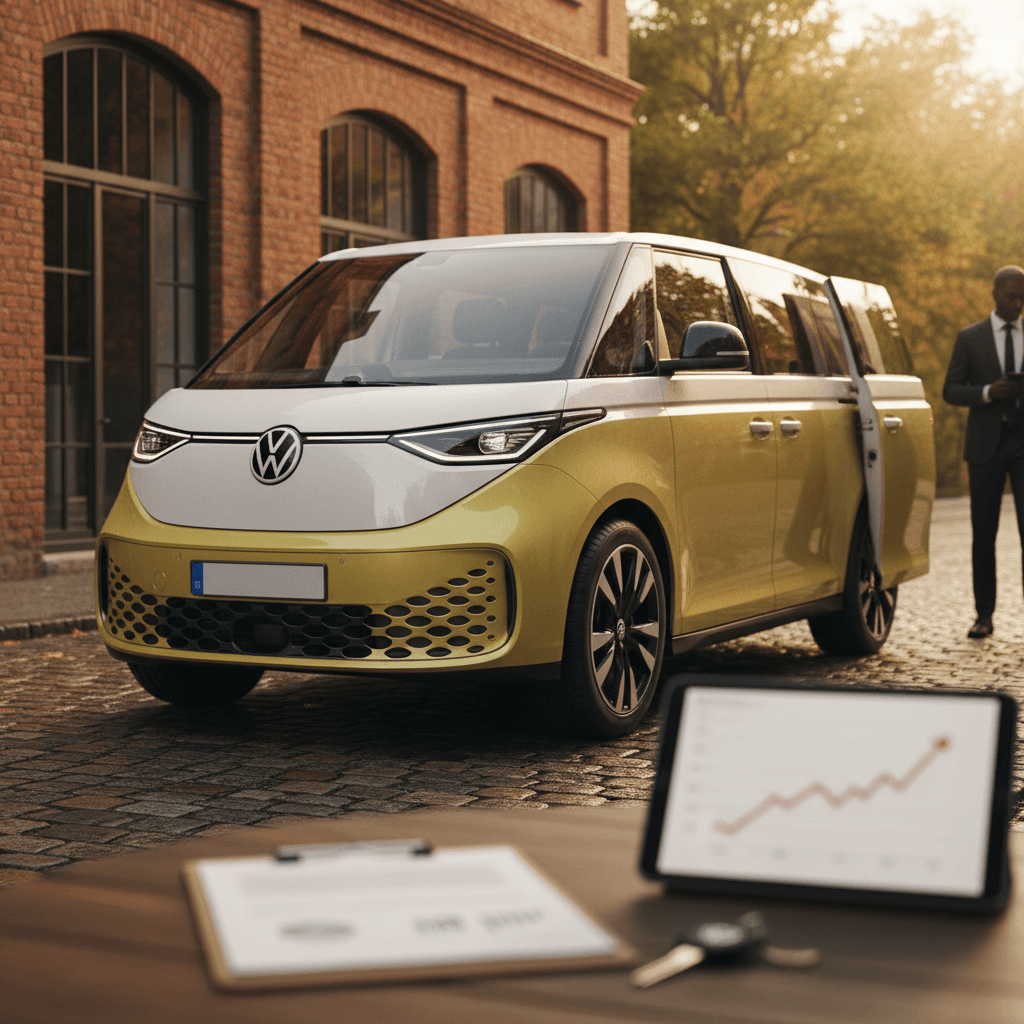
If you’re exploring tips for selling a Volkswagen ID. Buzz, you’re already ahead of the curve. The Buzz is a niche, high‑priced EV van in a softening electric‑vehicle market, which means the difference between an average sale and a great one usually comes down to preparation, how you price it, prove the battery’s health, present it online, and pick the right selling channel.
Context: A Cool Van in a Tough EV Market
Why Selling a Volkswagen ID. Buzz Is Unique Right Now
High MSRP, Fast Early Depreciation
New 2025 ID. Buzz vans launched with sticker prices starting around $61,500 and stretching into the low‑$70,000s for top trims. In today’s EV market, that pricing has forced big incentives and, in many cases, a quick drop in resale values, especially for nearly new vans with only a few thousand miles.
Real Enthusiast Demand
On the other side of the ledger, the Buzz has something most people‑movers don’t: emotional pull. Retro styling, three‑row seating, a usable 231–234‑mile EPA range, and decent practicality mean shoppers are still hunting for good used examples, particularly well‑spec’d 1st Edition and Pro S Plus 4MOTION models.
Why This Matters for You
Tip 1: Set a Realistic Asking Price
Start by understanding where late‑model ID. Buzzes actually transact today, not just what sellers are asking. Given sticker prices often north of $60,000, many nearly new vans with just a few hundred or few thousand miles are already listed well below MSRP, and dealer trade ranges in the mid‑$40,000s to mid‑$50,000s are common for 2025 examples. That’s your baseline, not the original window sticker.
Rough Pricing Benchmarks for a Used VW ID. Buzz
These are directional examples for U.S. retail and trade‑in pricing when the broader EV market is soft. Your local market, mileage, and condition can move numbers up or down.
| Scenario | Mileage/Condition | Typical Dealer Trade Range | Typical Private‑Party Ask |
|---|---|---|---|
| Nearly new 2025 Buzz Pro S | < 5,000 miles, like new | Mid‑$40,000s to low‑$50,000s | Low‑ to mid‑$50,000s |
| 2025 Buzz Pro S Plus 4MOTION | 5,000–15,000 miles, clean | High‑$40,000s to mid‑$50,000s | Mid‑$50,000s to low‑$60,000s |
| Heavier‑use family van | 20,000+ miles, cosmetic wear | Low‑ to mid‑$40,000s | High‑$40,000s to low‑$50,000s |
Use current listings and offers to fine‑tune; think of this table as a starting framework, not a quote.
Pricing Checklist for Your ID. Buzz
1. Check real sale prices, not just asks
Look at recently SOLD prices on used‑vehicle platforms and local dealer trade‑in offers. Ask your bank or credit union what values they’re using for loans on ID. Buzz vans.
2. Adjust for trim, color, and options
Higher‑spec Pro S Plus and 1st Edition vans, two‑tone paints, tow packages, and premium wheels can justify a higher ask, especially if supply is thin in your region.
3. Be honest about condition
Curb rash, kids’ wear on the interior, and DIY accessories matter. Price in a way that reflects realistic reconditioning a buyer or dealer will have to do.
4. Leave room to negotiate
Most buyers expect a small discount. List slightly above your walk‑away number so you can say yes to a reasonable offer without feeling like you gave away the farm.
Use Multiple Data Points
Tip 2: Time Your Sale Carefully
Timing matters with any vehicle, but especially with a high‑priced EV van that’s still new to the U.S. market. Volkswagen has already announced a pause for the 2026 U.S. model year and a refreshed ID. Buzz expected for 2027. That gap can create a sweet spot for used vans, shoppers who don’t want to wait may pay more for clean used inventory, but an updated model with similar range and better tech could pressure values again once it arrives.
- Selling before a next‑gen announcement or obvious refresh usually protects your resale value.
- Listing in late spring through early fall often attracts road‑trip and camping‑season shoppers.
- If your warranty or free maintenance benefits are close to expiring, consider selling beforehand and using that remaining coverage as a selling point.
Tip 3: Get Your ID. Buzz Battery Health Documented
For EV shoppers, the high‑voltage battery is the whole ballgame. On U.S. ID. Buzz models, Volkswagen backs the main pack for 8 years or 100,000 miles, promising at least 70% of original usable capacity in that window, alongside a 4‑year/50,000‑mile new‑vehicle warranty. Buyers want proof your van’s pack is healthy, and they’ll pay more if you can provide it.
Ways to Prove Battery Health on an ID. Buzz
Turn a common buyer fear into a selling advantage.
Service or Diagnostic Reports
Ask a VW dealer or EV‑specialist shop to pull a battery health or capacity report. Even if it’s just a state‑of‑health percentage, include it in your listing.
Charging & Range Records
Document recent real‑world highway and mixed‑driving range at typical states of charge. Honest notes, "~200 miles at 70 mph with A/C", build trust.
Warranty Documentation
Show that the high‑voltage battery warranty is still in force. Keep copies of any battery‑related service history to show issues were handled correctly.
How Recharged Helps Here
Ready to find your next EV?
Browse VehiclesTip 4: Fix the Little Things Before Listing
On a niche, high‑style EV like the ID. Buzz, small cosmetic flaws stick out. Buyers are already processing the big numbers, price, range, tech, so visible dings, scuffed wheels, and grimy interior plastics can become easy excuses to lowball you. Cleaning up the basics often delivers a better return than another price cut.
Easy Pre‑Sale Refresh Items That Pay Off
Address obvious cosmetic damage
Touch up curb‑rashed wheels, fix small windshield chips before they spread, and get minor dents assessed. You don’t need perfection, just eliminate the most visible flaws.
Deep‑clean the interior
Shampoo mats, clean the large glass areas, and wipe down the two‑tone plastics that define the Buzz cabin. Remove personal items, kids’ seats, and pet hair.
Update software and resolve warning lights
Make sure the infotainment, driver‑assist systems, and app connectivity are updated. No warning lights should be showing on the dash when a buyer starts the van.
Replace inexpensive wear items
Cabin air filter, wiper blades, and low‑tread tires are common bargaining chips. Replacing them ahead of time can justify a firmer price during negotiations.
Tip 5: Highlight the Right Features and Options
Not all ID. Buzz shoppers want the same thing. Some care about all‑wheel drive and towing. Others care about road‑trip comfort, two‑tone paint, or the family‑friendly cabin. Your job is to spotlight the options your van has, and not assume buyers know the trim‑level differences.
Features That Move the Needle for ID. Buzz Buyers
Translate option codes into real‑world value.
Trim & Drivetrain
- Pro S vs. Pro S Plus: Note extra driver‑assist tech, upgraded audio, or interior materials.
- 4MOTION AWD: Call out improved traction for snow, camping, or mountain driving.
Colors & Styling
- Two‑tone exterior schemes and distinctive colors (like bright greens and yellows) are a big part of the Buzz’s appeal, feature them prominently.
- Mention wheel size and design; many shoppers care about the stance.
Interior Layout & Comfort
- Tell buyers if you have a three‑seat bench or captain’s chairs in the second row.
- Highlight adjustable tables, USB‑C ports, panoramic roof, and other family‑friendly touches.
Charging & Tech
- List DC fast‑charging capability, home charging habits, and any included Level 2 charger.
- Note driver‑assist features like adaptive cruise, lane‑keep, and parking aids that your trim includes.
Tip 6: Stage and Photograph Your ID. Buzz Like a Pro
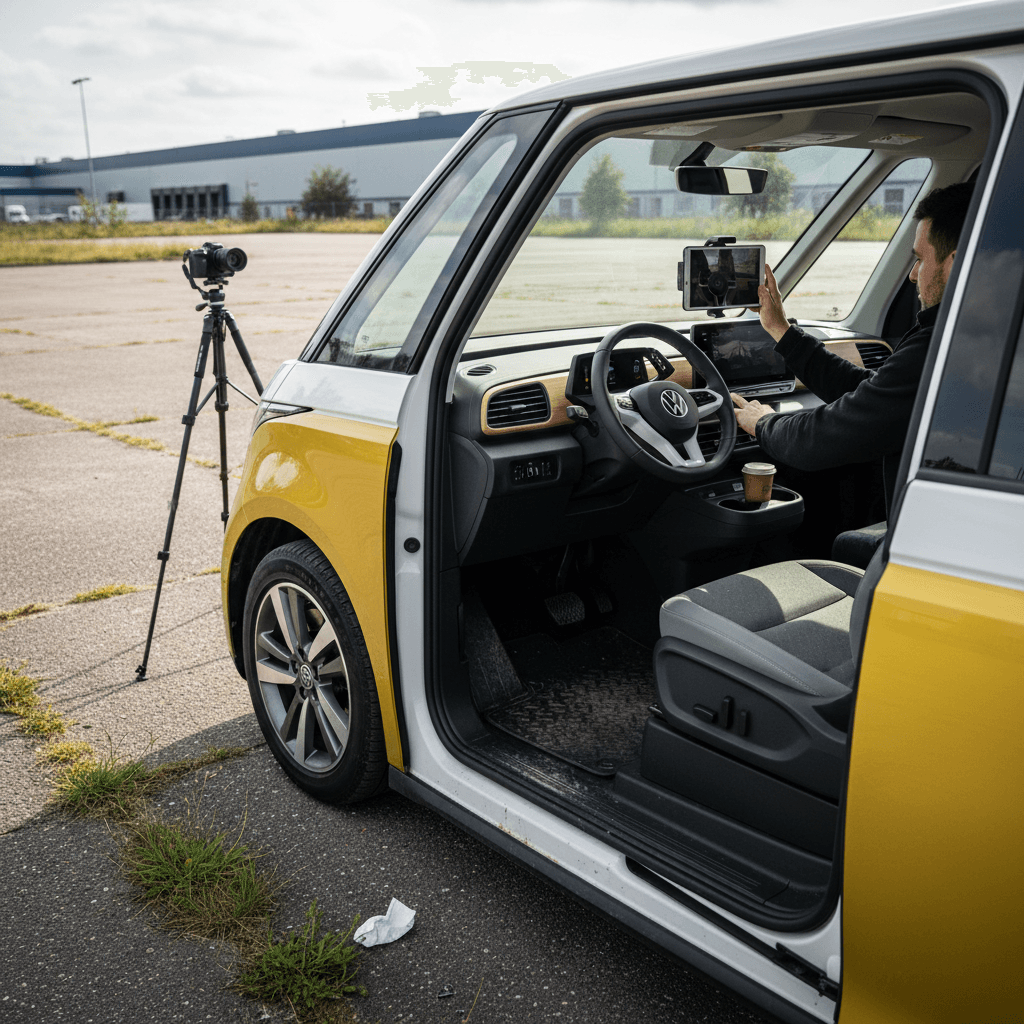
The Buzz’s design is one of your biggest selling tools, so your photos need to show it off. Most private listings use a handful of dim driveway shots. That’s your chance to stand out. Clear, well‑lit, high‑resolution photos that show the van from every angle give buyers confidence and reduce time‑wasting questions.
Photo Shot List for a Strong ID. Buzz Listing
1. Exterior walk‑around
Shoot all four corners, straight‑on front and rear, and both sides. Include close‑ups of wheels, lights, and any blemishes you’re disclosing.
2. Interior overview
Capture the dashboard, front seats, second and third rows, and cargo area with seats up and folded. Make sure the cabin is clean and de‑cluttered.
3. Feature details
Show the infotainment screens powered on, climate controls, panoramic roof, captain’s chairs or bench seat, and any added accessories like cargo organizers.
4. Proof & paperwork
Photograph the odometer, VIN plate, key fobs, charging cables, and any service records or battery health reports you’re willing to share.
Think Like a Remote Buyer
Tip 7: Write a Compelling, Honest Listing
Once your numbers and photos are dialed in, the listing copy ties everything together. You’re not just selling a vehicle, you’re selling a story: why this specific ID. Buzz, at this price, in this condition, is a smart buy right now.
- Open with the basics: year, trim, drivetrain (RWD or 4MOTION), mileage, and key options.
- Mention the remaining factory battery and bumper‑to‑bumper warranty, and explicitly state the in‑service date if you know it.
- Describe how you’ve used the van (family hauler, road‑trips, light commuting) to give context to the mileage.
- Be transparent about any accidents, repairs, or cosmetic issues, and note what’s already been fixed.
- Include a concise bullet list of selling points: two‑tone paint, winter tires, included Level 2 charger, roof racks, etc.
Don’t Oversell Range
Tip 8: Decide Where to Sell, Dealer Trade-In vs. Private vs. Marketplace
How you sell your ID. Buzz can matter as much as how you price it. You’re balancing convenience, speed, and risk against the final check you take home. In a volatile EV market, some sellers prioritize a fast, guaranteed outcome over squeezing out every last dollar.
Traditional Dealer Trade‑In
- Pros: Fast, simple, good if you’re buying another vehicle immediately.
- Cons: Often the lowest dollar amount; some dealers are still cautious about used EV inventory.
Private‑Party Sale
- Pros: Usually yields the highest price if you’re willing to handle listings, questions, and test drives.
- Cons: Takes more time, requires screening buyers, and involves handling payment and title transfer yourself.
Marketplace or EV Specialist (Like Recharged)
- Pros: EV‑focused audience, battery health verification, digital paperwork, and optional nationwide delivery can attract out‑of‑state buyers.
- Cons: You’ll pay a fee or accept a market‑based offer in exchange for a more hands‑off process.
Where Recharged Fits In
Tip 9: Screen Buyers and Manage Test Drives Safely
When you sell privately, you’re not just evaluating offers, you’re evaluating people. The ID. Buzz is a family vehicle, and you should treat your time and safety as non‑negotiable. A few basic rules weed out tire‑kickers and protect you from scams.
Safe Test‑Drive Practices
Verify identity before meeting
Ask for a photo of a valid driver’s license before scheduling a test drive. Meet only in busy, well‑lit public places, ideally near a bank or your local DMV.
Control the keys and route
You should ride along on every test drive. Set a pre‑planned loop that includes city and highway speeds so buyers can evaluate the EV experience without disappearing for an hour.
Set expectations on charging
If the battery is at a lower state of charge, explain that upfront. Offer a quick DC fast‑charge stop if needed so buyers can experience charging firsthand.
Be firm about payment methods
Avoid personal checks and complicated payment promises. Bank‑to‑bank wire transfers or verified cashier’s checks handled at the issuing bank are safer options.
Tip 10: Prepare Your Paperwork and Charging Accessories
Nothing kills deal momentum like scrambling for a title or hunting for a missing charging cable while the buyer waits. Organizing everything in advance makes you look professional and reduces last‑minute renegotiation attempts.
- State title (or payoff info if you still owe on the loan), registration, and a valid ID.
- Printed or digital service records, including any warranty work and recall campaigns.
- Battery‑related diagnostics or reports, plus the original warranty booklet if you have it.
- All keys, key cards, and any app transfer/reset instructions for the new owner.
- Included charging equipment: factory Level 1 or Level 2 cable, wall‑mount unit (if it’s staying), and any adapters. Note clearly what is, and isn’t, included.
Don’t Forget Account and App Clean‑Up
Tip 11: Know When to Walk Away, and When to Reprice
EV prices can move quickly, and the ID. Buzz is no exception. You’re not failing if you don’t get your dream number on day one. What matters is recognizing when a buyer’s offer is unrealistic, or when your own expectations need adjustment.
Should You Reprice or Walk Away?
Use simple rules to stay objective.
When to Hold Your Price
- Multiple shoppers are messaging you within the first week.
- Your photos and listing are strong, and similar vans nearby are priced close to yours.
- Offers are within a few thousand dollars of your target.
When to Reprice or Change Strategy
- Little or no interest after 2–3 weeks despite good photos.
- New‑vehicle incentives or price cuts have widened the gap with your asking price.
- Most serious offers cluster 5–10% below your number.
Watch the New‑Vehicle Incentives
FAQ: Selling a Volkswagen ID. Buzz
Common Questions About Selling an ID. Buzz
Bottom Line: How to Sell Your ID. Buzz with Confidence
Selling a Volkswagen ID. Buzz isn’t like selling any other minivan. You’re working in a young, sometimes volatile EV market with a vehicle that inspires real enthusiasm, but also serious questions about price and battery life. If you ground your expectations in current data, prove battery health, clean up the van, present it well online, and choose the right channel to sell through, you can turn that complexity into leverage instead of stress.
If you’d rather not navigate all of this alone, Recharged is built specifically for used EVs like the ID. Buzz. From verified Recharged Score battery diagnostics to fair market pricing support, financing for buyers, trade‑ins, and even nationwide delivery, you get an expert partner from listing to final hand‑off. However you decide to sell, going in prepared is the best way to protect your time, your safety, and your bottom line.