You used to have exactly two choices if you wanted a three-row electric SUV: compromise or wait. Either you crammed kids into a token third row, or you stuck with gas. That’s changing fast. Today’s three row electric SUV options finally feel like real family vehicles, space, range, and comfort included, rather than science projects with jump seats.
The short version
Why three-row electric SUVs are finally taking off
Three-row electric SUVs by the numbers
Automakers dragged their feet on big three-row EVs for two reasons: batteries were expensive, and three-row buyers are unforgiving. If you’re carting kids, dogs, and hockey bags, you don’t have patience for a 210‑mile range and a tiny cargo well. Now we’re finally seeing 100+ kWh packs, 800‑volt architectures, and decent charging networks, which makes a 3-row EV a credible minivan replacement instead of a lifestyle accessory.
Think in use cases, not just specs
Current three-row electric SUV options
Here’s a high-level look at today’s major three-row electric SUV players in North America. This list focuses on fully electric models with a genuine third row; plug‑in hybrids and two-row crossovers are out.
Key three-row electric SUV families
From mainstream family haulers to six-figure status symbols
Mainstream family EVs
- Kia EV9 – The closest thing to an electric Palisade or Telluride; standard three-row, smart packaging, and strong value.
- Tesla Model Y (optional 3rd row) – Compact 5+2 with a tiny third row suited to kids.
- Mercedes-Benz EQB (optional 3rd row) – Similar story: small luxury SUV with an occasional third row for smaller passengers.
Premium & luxury three-rows
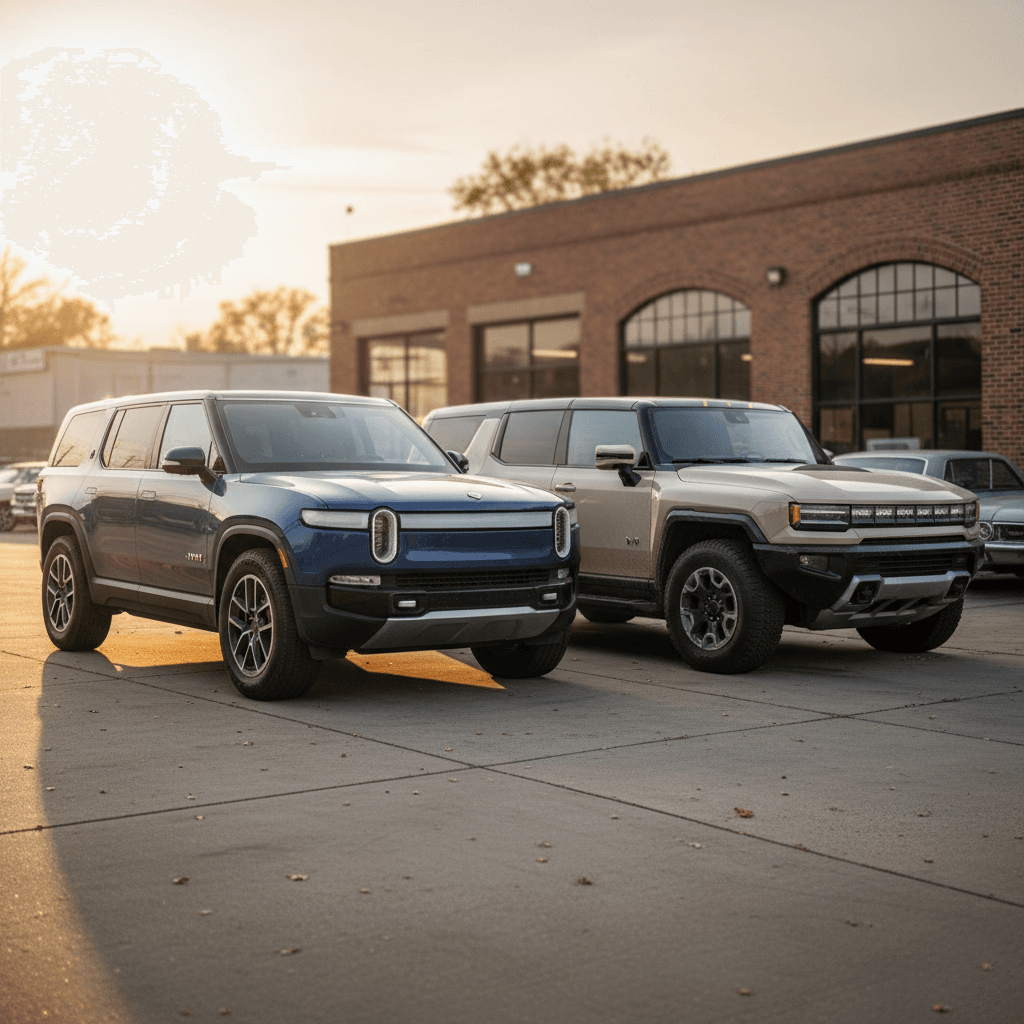
- Rivian R1S – Adventure-first electric SUV with standard three-row seating and serious off-road hardware.
- Volvo EX90 – Safety-obsessed Scandinavian flagship with seven seats and a tech-heavy cabin.
- Cadillac Vistiq – A "mini Escalade" EV with three rows and brisk performance.
Flagship full-size EVs
- Cadillac Escalade IQ – The full yacht: up to eight seats, huge battery, and massive presence.
- Volkswagen ID. Buzz – Retro-inspired three-row electric van, more people-mover than SUV but cross-shopped by big families.
- Hyundai Ioniq 9 – Hyundai’s new three-row flagship EV, sized between EV9 and Escalade, launching for the 2026 model year.
Watch regional availability
Compare the top three-row electric SUVs
Specs don’t tell the whole story, but they do help narrow the field. Below is a simplified snapshot of how the headline three-row EVs stack up on the things families care about most: price, range, and seating.
Three-row electric SUV comparison at a glance
Representative figures for popular trims; always check the exact configuration you’re considering.
| Model | Seats | Approx. starting price (new) | Approx. max EPA range | Personality |
|---|---|---|---|---|
| Kia EV9 | 6–7 | Low–mid $50,000s | Up to ~300 miles | Family-focused all-rounder, excellent packaging and value. |
| Rivian R1S | 7 | Mid–high $70,000s | Up to ~400 miles | Adventure SUV with real off-road chops and strong performance. |
| Volvo EX90 | 7 | Low $80,000s | Around 300+ miles | Nordic luxury and safety tech, calm highway cruiser. |
| Cadillac Vistiq | 6–7 | High $70,000s | Around 300 miles | Stylish, quick luxury three-row smaller than Escalade IQ. |
| Cadillac Escalade IQ | 7–8 | $120,000+ | Up to ~465 miles | Full-size statement piece with enormous battery and room. |
| Volkswagen ID. Buzz | 6–7 | Low $60,000s | Roughly mid‑200‑mile range | Electric minibus vibe; more lifestyle van than SUV. |
| Tesla Model Y (3rd row) | 7 | Low $50,000s with 3rd row | Around 300 miles | Compact 5+2; efficient but tight third row and cargo space. |
| Mercedes-Benz EQB (3rd row) | 7 | Mid $50,000s with 3rd row | Low–mid 200‑mile range | Small luxury crossover; third row is for kids only. |
| Hyundai Ioniq 9 | 6–7 | TBA (likely mid–high $60,000s) | TBA (targeting ~300+ miles) | Hyundai’s big three-row EV flagship, sized between EV9 and Escalade. |
Pricing is approximate base MSRP for 2025–2026 model years and excludes incentives, taxes, and fees.
Where these numbers get fuzzy
Third-row space: is it actually usable?
Every brand with a short-wheelbase crossover and a marketing department has tried the 5+2 trick. Two seats appear out of nowhere in the cargo area, and technically, it’s a third row. The key question is: can adults sit there for more than ten minutes without staging a mutiny?
Family-friendly third rows
- Kia EV9: With roughly 30–32 inches of third-row legroom depending on configuration, the EV9’s rearmost seats feel like a real place for humans, not a penalty box. Kids will be fine back there all day; adults can survive a road trip rotation.
- Rivian R1S: Clever packaging yields around 33 inches of third-row legroom and a more upright seating position than you’d expect. It’s not a Suburban, but four adults and three teens can make it to the ski house without a family summit.
- Volvo EX90: The EX90’s third row is adult-capable for shorter stints and perfectly comfortable for kids, though taller passengers may find headroom tight.
- Cadillac Escalade IQ: This is the closest thing to a rolling great room. The third row is generous enough for grown‑ups, especially in the extended-length version.
"Occasional use" third rows
- Tesla Model Y: Clever engineering shoehorns a 7-seat layout into a compact SUV, but third-row legroom is extremely limited. Think: small kids, booster seats, or that one friend who always calls shotgun anyway.
- Mercedes-Benz EQB: Similar story. You technically get three rows, but the rearmost is best for children or very short hops. Cargo room also takes a major hit when all three rows are in use.
- Volkswagen ID. Buzz: Space is decent, but this is more about flexible seating than palatial legroom. It’s nearly ideal for urban families shuttling several kids in and out rather than hauling tall adults cross-country.
- Hyundai Ioniq 9: Early specs point to a third row broadly similar to EV9 and EX90, fine for adults in moderation and totally acceptable for kids.
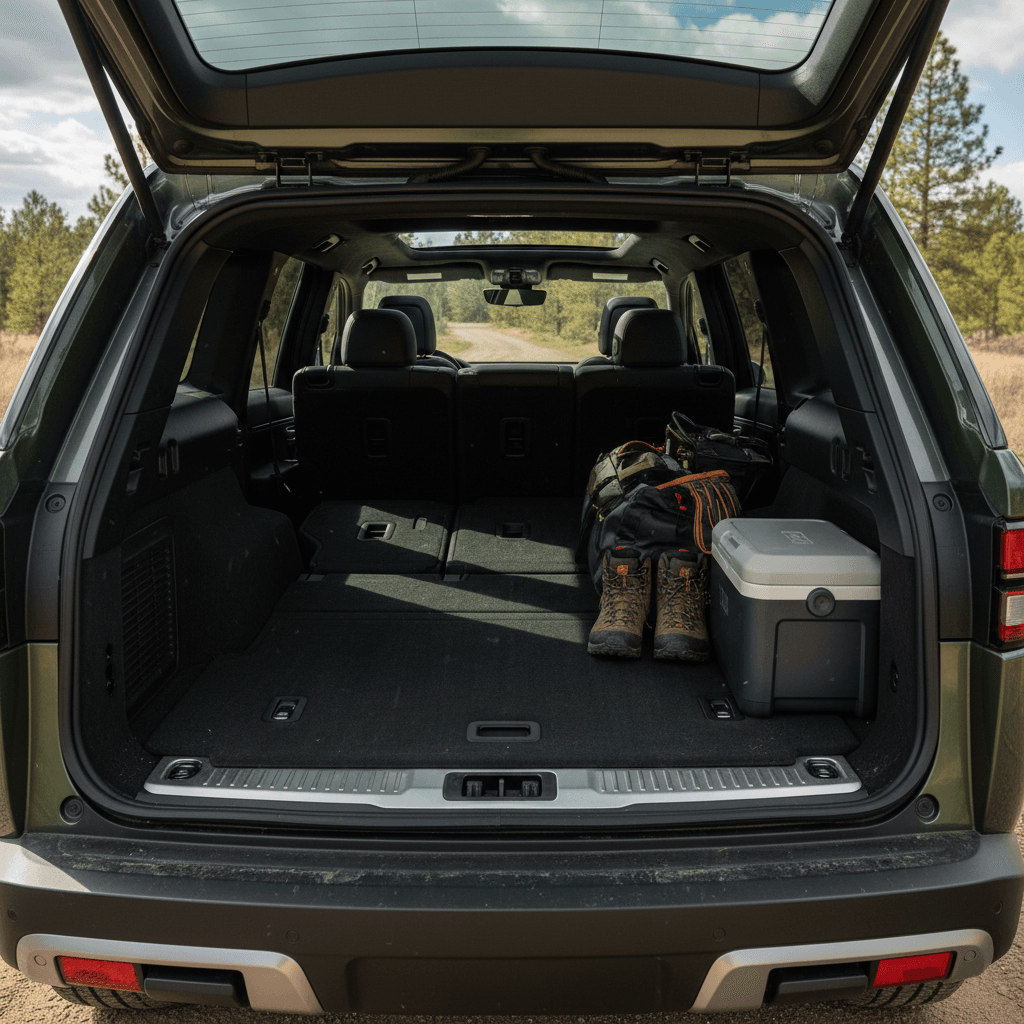
Bring the actual kids
Range, charging, and road-trip readiness
Three-row buyers think in miles and minutes: How far can we go, and how long will it take to get going again? The good news is that most large EV SUVs now clear the 250‑mile psychological bar. The great news is that a few blow past 400 miles if you spec them right.
How today’s big EV SUVs handle distance
From efficient commuters to long‑legged interstate cruisers
Everyday range sweet spot
For most families, 250–320 miles of rated range is the sweet spot. That covers school runs, commuting, and weekend trips with plenty of buffer. EV9, EX90, Vistiq, and ID. Buzz comfortably live in this zone.
Long-haul kings
Rivian R1S and Cadillac Escalade IQ offer big-battery configurations that stretch into the 350–465‑mile territory. These rigs are for people who think nothing of crossing three states before lunch.
Charging speed realities
Most of these EVs fast‑charge from 10–80% in roughly 25–35 minutes under ideal conditions. 800‑volt architectures (EV9, Escalade IQ) can do even better on high-power DC chargers, but real‑world times depend on temperature, station health, and how low you’re willing to run the pack.
Cold-weather penalty is real
Road‑trip readiness isn’t just range. It’s also how gracefully the vehicle works with the charging networks you’ll actually use. Kia, Hyundai, Volvo, GM, and others are adopting the NACS connector or bundling adapters so you can use large portions of the Tesla Supercharger network, in addition to CCS public chargers. That’s a big deal if your family vacations involve long stretches of rural highway.
Pricing: new vs. used three-row electric SUVs
Sticker shock is part of the territory. Three-row EVs sit at the top of their respective lineups, and the batteries alone would buy you a very nice compact car. But there’s daylight opening up between new and used pricing, and that’s where things get interesting.
What three-row electric SUVs cost in the real world
Approximate price ranges as of early 2026; used pricing assumes clean titles and average mileage.
| Model group | Typical new MSRP window | Early used pricing trends | What that buys you |
|---|---|---|---|
| Mainstream three-rows (EV9, ID. Buzz, Ioniq 9) | Roughly $55,000–$70,000 | Low–mid $40,000s (early EV9), smaller discounts on brand‑new launches | Well-equipped family haulers with modern safety tech and usable third rows. |
| Premium adventure & luxury (R1S, EX90, Vistiq) | ~$75,000–$90,000+ | High $50,000s–$70,000s depending on mileage and spec | High-output powertrains, upscale cabins, and more brand theater. |
| Flagships (Escalade IQ) | $120,000–$140,000+ | Too new for deep discounts; expect modest savings at first | Maximum space, maximum range, and maximum image, priced accordingly. |
| Compact 5+2s (Model Y, EQB) | Around $50,000–$60,000 with third row | $35,000–$45,000 depending on year and battery | Smaller footprint, lighter towing/cargo ratings, tighter third rows. |
Always verify current incentives and used values in your local market.
Tax credits & incentives
How to choose the right three-row EV
Choosing a three-row EV is a little like choosing a house. You start with bedrooms, then you discover that what really matters is the way the kitchen opens to the living room. Here, that “floor plan” is a mix of packaging, range, charging, and how much luxury you actually value.
Seven questions to answer before you buy
1. Who lives in the third row most of the time?
If it’s small kids a few years away from high school, a Model Y or EQB might work. If you’re hauling teens, tall adults, or grandparents regularly, focus on EV9, R1S, EX90, or Escalade IQ.
2. How often do you truly road-trip?
If you do long highway days multiple times a year, prioritize range and fast-charging performance. If most miles are in-town, you may be better served by a slightly smaller battery and lower price.
3. Do you tow or carry heavy cargo?
Many three-row EVs offer respectable tow ratings, but range drops significantly when you pull a trailer or stack the roof rack. If you tow often, look hard at Rivian R1S and Escalade IQ and oversize your range expectations.
4. Is driveway charging easy?
A three-row EV really shines when it wakes up every morning with 80% charge. If home charging will be complicated, you may want to emphasize range and charging-network access even more.
5. How much tech do you actually want?
From Volvo’s sensor suite to Cadillac’s screens and Rivian’s adventure UI, you can go as futuristic as you like. Just remember: more tech also means more complexity, learning curves, and potential repair costs outside warranty.
6. What’s your true budget ceiling?
Be honest about monthly payment comfort, not just dream configurations. That will clarify whether you’re in EV9 territory, aiming at R1S/EX90, or flirting with Escalade IQ money.
7. Would a nearly-new used EV make more sense?
Early off-lease EV9s and R1Ss can deliver 90% of the experience for a meaningful discount. A proper battery-health check becomes crucial here, which is exactly what Recharged’s <strong>Recharged Score</strong> is built to deliver.
Rule of thumb
Shopping used three-row EVs with Recharged
Big EVs are expensive when new, which makes the used market especially appealing. The flip side is that you’re inheriting someone else’s charging habits, software updates, and road‑trip history. That’s where objective battery data suddenly matters more than chrome and leather.
How Recharged helps with used three-row EVs
Take the guesswork out of big‑ticket used EV purchases
Battery health you can see
Fair, transparent pricing
Trade-ins & delivery made easy
Because the three-row EV field is still relatively small, inventory can be thin in any one zip code. A national digital marketplace like Recharged widens your search dramatically, without forcing you to fly across the country with a cashier’s check and a leap of faith.
Frequently asked questions about three-row electric SUVs
Three-row EV SUV FAQ
The bottom line on three-row electric SUV options
Three-row electric SUVs have finally grown up. You no longer need to choose between a cramped science experiment and a 6,000‑pound gas goliath. From the pragmatic Kia EV9 to the adventure-first Rivian R1S and the opulent Cadillac Escalade IQ, there’s now a spectrum of choices for families who want space without the tailpipe.
Your job is to be brutally honest about how you’ll use that third row, how far you actually drive, and how much luxury you’re truly willing to pay for. Once you’ve answered those questions, the right vehicle usually reveals itself quickly.
And if you decide a nearly new EV makes more sense than a factory-fresh one, platforms like Recharged exist precisely to make that leap less risky. With verified battery-health reports, fair pricing, financing, and nationwide delivery, you can shop three-row electric SUVs the same way you’ll use them: confidently, with everyone you care about along for the ride.