If you’re shopping for a 2023 Mercedes EQS, you’ve probably seen the impressive EPA range numbers. But what do real **2023 Mercedes EQS range tests** actually show once you leave the brochure behind and get out on the highway? The short version: the EQS is one of the rare EVs that can genuinely *beat* its EPA rating in the right conditions, but the details matter, especially if you’re looking at a used EQS.
Why this range test matters
Overview: 2023 Mercedes EQS range at a glance
2023 Mercedes EQS range snapshot
Every 2023 EQS sedan uses a large ~108 kWh battery (107.8 kWh usable). Official EPA ratings put the **EQS 450+ sedan at about 350 miles** and the **EQS 580 at around 340 miles** on a full charge, depending on wheel size and trim. Real‑world testing from outlets like Edmunds and Car and Driver has shown that the EQS can match or even beat these numbers in mild weather and moderate speeds, which is unusual in today’s EV market.
Shopping tip for EQS range
EPA ratings vs real-world EQS range tests
2023 EQS: EPA range vs published test results
How official figures compare to well‑known independent range tests.
| Model (2023) | Drivetrain | EPA rated range | Notable test result | Test notes |
|---|---|---|---|---|
| EQS 450+ sedan | RWD | ≈350 miles | ~422 miles (Edmunds EV Range Test) | Mild temps, mixed driving; beat EPA by a significant margin |
| EQS 580 4Matic sedan | AWD | ≈340 miles | ~350 miles @ 75 mph (Car and Driver) | Highway‑only loop; essentially matched EPA rating |
| EQS 450+ SUV (for context) | RWD SUV | ≈305 miles | ~292 miles (MotorTrend road‑trip range) | Higher, heavier SUV body; still strong for its class |
Real‑world results will vary with temperature, speed, and terrain, but these tests give a solid baseline.
Two things stand out when you line these numbers up. First, the **EQS 450+ sedan is unusually efficient** for a large luxury EV. Edmunds drove one over 400 miles (around 422 miles on their EV range loop) on a single charge, well past the EPA sticker. Second, even the more powerful **EQS 580 4Matic sedan can hit roughly its EPA figure** in sustained highway driving, which is where many EVs fall short by 10–20%.
Don’t expect 400+ miles every day
How highway range tests for the EQS are run
Independent media tests
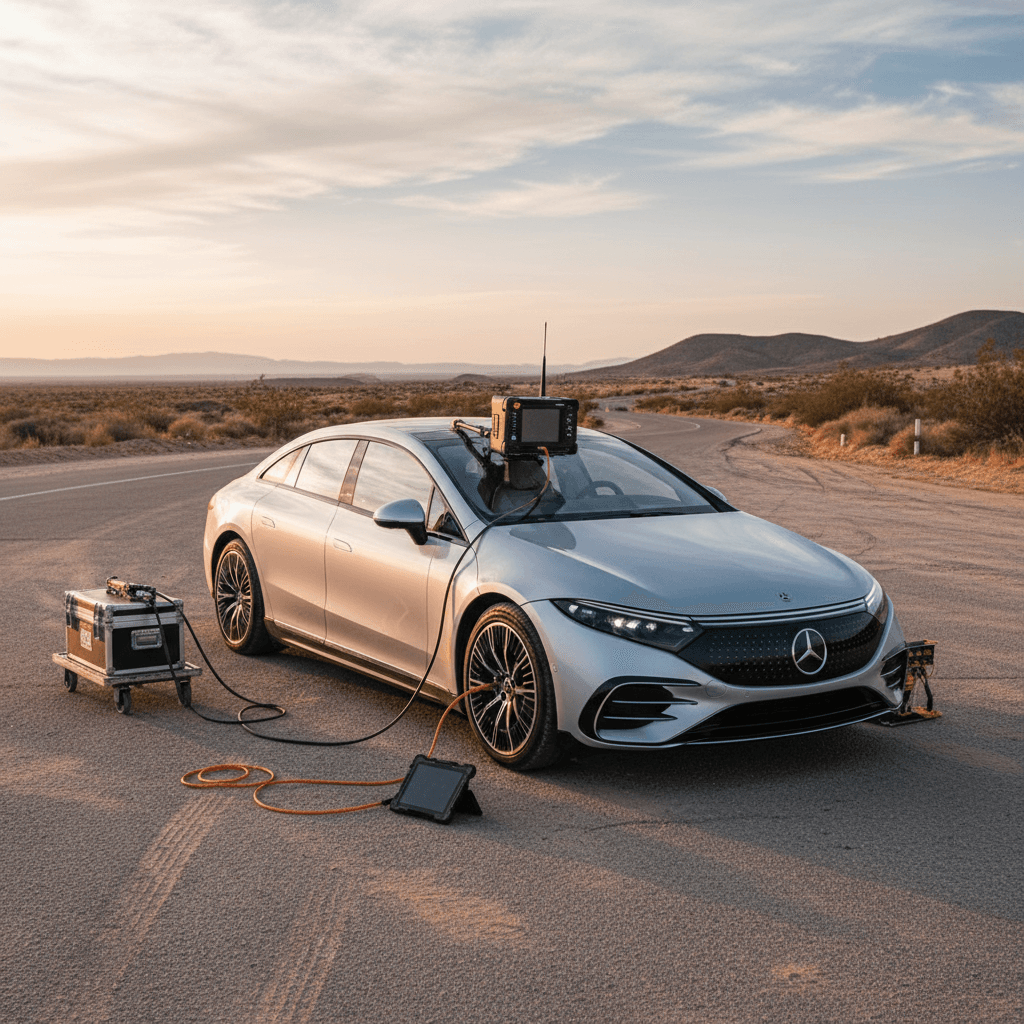
Outlets like Edmunds, Car and Driver, and MotorTrend each use their own repeatable protocols:
- Fixed highway speed (typically 70–75 mph) on a loop.
- Moderate temperatures when possible, usually 60–75°F.
- Normal HVAC use set to a realistic comfort temperature.
- Run from 100% down near 0% to capture total usable capacity.
The result isn’t a lab number; it’s a controlled real‑world scenario that’s directly comparable from one EV to another.
What that means for you
Your EQS likely won’t duplicate a magazine’s exact result, because:
- Traffic, elevation change, and weather are rarely ideal.
- Most owners don’t start at 100% or arrive home near empty.
- Shorter trips with frequent stops exaggerate accessory and HVAC loads.
Think of these range tests as upper‑bound, best‑case scenarios. For planning, it’s wise to assume 10–20% less than the best published numbers, especially in winter or at U.S. interstate speeds.
2023 EQS 450+ range test results
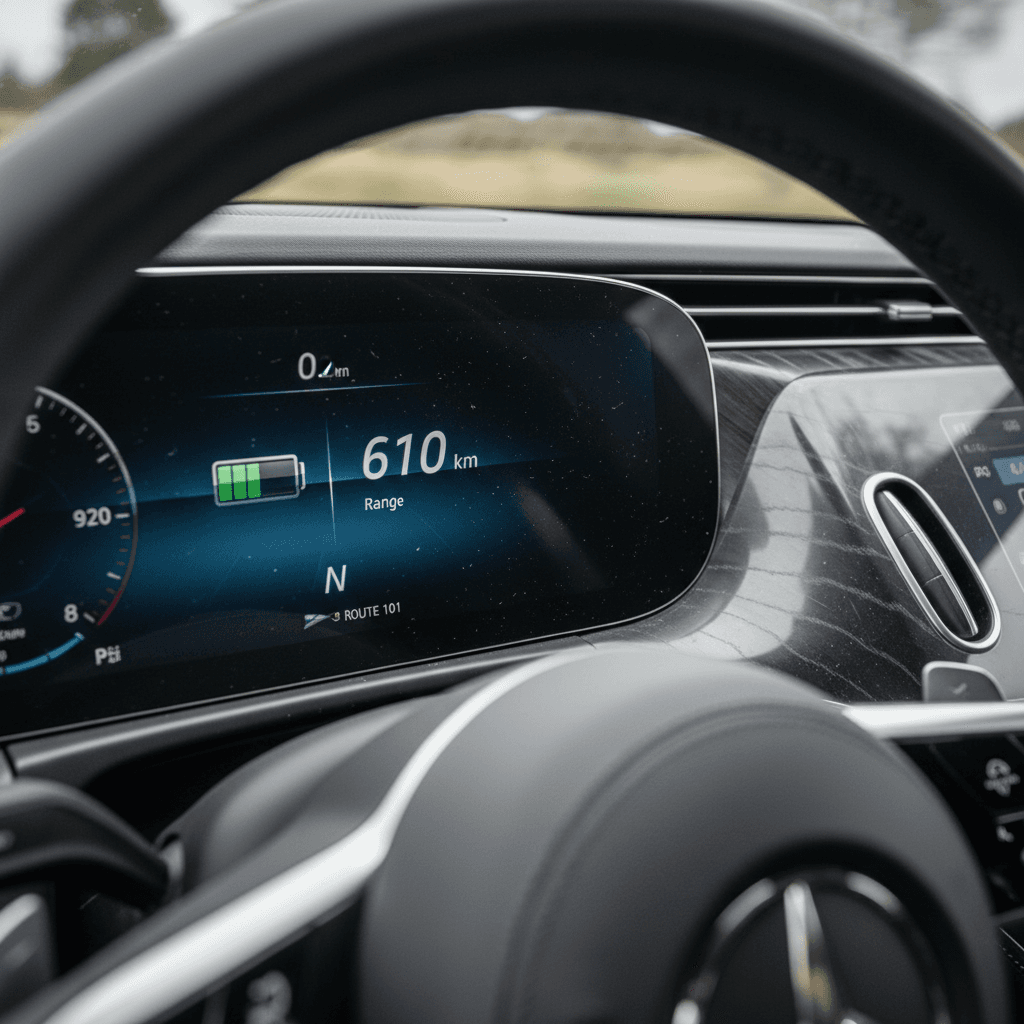
The **EQS 450+** is the single‑motor, rear‑wheel‑drive version of the sedan, and it’s the one that puts up the headline numbers in virtually every **2023 Mercedes EQS range test**. With its 107.8 kWh usable battery and slippery aero profile, it’s genuinely one of the most efficient full‑size EVs on sale.
Why the EQS 450+ is a range standout
This is the trim to prioritize if maximum distance per charge matters most.
Ultra‑slippery aerodynamics
The EQS sedan was engineered for low drag, and it shows. Its teardrop shape and smooth underbody help it hold highway efficiency where taller rivals struggle.
Big, efficient battery
The ~108 kWh pack isn’t just large; it also uses its capacity well. Test cycles show better‑than‑EPA consumption around 29–33 kWh/100 miles in gentle driving.
RWD, not AWD
With a single rear motor, the 450+ avoids the extra weight and losses of a front motor. You sacrifice some straight‑line punch but gain real‑world range.
What owners actually see
EQS 580 and 4Matic: what range can you expect?
Step up to the **EQS 580 4Matic** or other dual‑motor 4Matic variants and you’re trading a bit of range for a lot more power and all‑weather traction. The EPA figure slips only slightly, from about 350 miles to roughly 340, but real‑world testing paints a more nuanced picture.
- In steady 70–75 mph highway testing, Car and Driver recorded roughly **350 miles of range** from an EQS 580 sedan, very close to the EPA figure for that trim.
- Around town or in mixed use, you’re more likely to see **280–320 miles between charges**, depending on how often you tap into the extra power.
- In cold weather or at 80+ mph, it’s reasonable to budget for **20–30% less** than the window‑sticker range on any EQS, especially dual‑motor versions.
AWD and winter range
Sedan vs SUV: which EQS goes farther?
Confusingly, Mercedes uses the **EQS badge on both a sleek sedan and a taller SUV**. Underneath, they share the same battery tech and general platform, but they behave differently in range tests.
EQS sedan vs EQS SUV: range comparison
2023 model year vehicles with similar battery sizes but different body styles.
| Model (2023) | Body style | EPA rated range | Independent test result | Range takeaway |
|---|---|---|---|---|
| EQS 450+ sedan | Low sedan | ≈350 miles | ~422 miles (Edmunds mixed loop) | One of the longest‑range luxury EVs available |
| EQS 580 sedan | Low sedan | ≈340 miles | ~350 miles @ 75 mph (Car and Driver) | Highway range closely tracks EPA figure |
| EQS 450+ SUV | Taller SUV | ≈305 miles | ~292 miles (MotorTrend trip) | More frontal area and weight trim range, but still competitive for a big SUV |
For the longest possible range, stick with the sedan, especially the 450+.
Quick rule of thumb
Real-world factors that shrink (or stretch) EQS range
What actually moves the needle on EQS range
The EQS is efficient, but physics still wins.
Temperature
Cold weather thickens battery chemistry and increases cabin‑heating demand. Expect noticeably lower range near or below freezing, especially on short trips.
Speed & aerodynamics
The EQS is aero‑optimized, but drag still rises with speed. Jumping from 65 to 80 mph can knock a meaningful chunk off your highway range in any EV.
Elevation & terrain
Climbing long grades eats energy quickly; you’ll get some back on the way down through regen, but not all. Mountainous routes always hurt net range compared to flat ground.
5 ways to get the best range from a 2023 EQS
1. Use Eco or Comfort drive modes
The sportiest modes sharpen throttle response and can keep both motors more active. For distance driving, Eco or Comfort are your friends.
2. Precondition while plugged in
Use the Mercedes Me app or in‑car scheduling so the cabin and battery are warmed or cooled on grid power before you unplug, especially in winter.
3. Favor smaller wheels and efficient tires
If you have a choice, 19–20 inch wheels with EV‑rated tires typically beat larger, more aggressive setups on range and ride comfort.
4. Moderate your cruising speed
There’s nothing glamorous about sitting at 65–70 mph, but in an EQS it can be the difference between two and three hours between charges.
5. Travel light when you can
Roof boxes, bike racks, and a fully loaded cargo area all add weight and drag. If you’re chasing maximum range, streamline your loadout.
Beware of the HVAC tax
Managing EQS range on long trips
If you’re planning genuine road‑trip duty in a 2023 EQS, the goal isn’t to squeeze out a record‑setting number, it’s to hit a comfortable rhythm of **drive, fast‑charge, repeat**. Here’s how to think about that pattern in an EQS specifically.
Typical EQS road‑trip cadence
- Start around 90–100% if you’re leaving home or a hotel overnight.
- Drive 170–220 miles at U.S. interstate speeds before your first fast‑charge.
- Charge from roughly 10–20% up to 70–80%, the fastest part of the curve, often in 25–35 minutes on a strong DC fast charger.
- Repeat that cycle, timing meal and restroom breaks to match charging stops.
The EQS’s strong efficiency means those 170–220‑mile legs feel less stressful than in many rival EVs, even if you’re not chasing maximum range.
Charging network realities
Unlike a Tesla Model S, the 2023 EQS relies on **CCS public charging networks** rather than the Supercharger network. Coverage has improved, but:
- Plan around high‑reliability sites and redundancy where possible.
- Expect the occasional detour or slower‑than‑advertised station.
- Check recent user check‑ins in apps like PlugShare before committing to a site.
If you’re considering a used EQS for regular cross‑country travel, it’s worth mapping your usual routes up front to make sure you’re comfortable with the charging options.
Leverage smart route planning
Range and battery health if you're buying a used EQS
One of the biggest questions in the used‑EV market is how much range you lose as the battery ages. The EQS uses a large pack with conservative thermal management, which tends to help long‑term health. Industry data across modern EVs suggests **roughly 1–2% capacity loss per year** in typical use, though real‑world results vary based on climate and charging habits.
What to look for in a used 2023 EQS
You’re buying the battery as much as the badge.
Documented charging history
Frequent DC fast‑charging from 0–100% in hot climates is harder on any pack. Occasional fast‑charging is fine; a steady diet of it is not.
Battery health report
Whenever possible, get a quantitative battery health reading rather than relying on a simple dashboard guess. That’s exactly what Recharged’s Score Report is designed to surface.
Real‑world test drive
Reset a trip meter and do a long mixed loop. Compare state‑of‑charge drop to miles driven; it’s a quick gut check against the claimed range.
How Recharged helps de‑risk a used EQS
Ready to find your next EV?
Browse Vehicles2023 Mercedes EQS range test FAQ
Common questions about 2023 EQS range
Key takeaways from 2023 Mercedes EQS range tests
Independent **2023 Mercedes EQS range tests** all tell a consistent story: this is one of the few big luxury EVs that can genuinely live up to its EPA sticker, and in some trims, surpass it, if you drive it thoughtfully. The EQS 450+ sedan is the efficiency hero, the dual‑motor 580 trims hold their own on the highway, and even the EQS SUV stays competitive despite its bulk.
That doesn’t mean range anxiety disappears. Cold weather, fast interstate cruising, and messy charging infrastructure can still conspire against you, especially on unfamiliar routes. But if you understand how the EQS behaves in real‑world testing and plan your charging around realistic numbers rather than the most optimistic cases, it’s a remarkably capable long‑distance tool.
If you’re looking at a **used 2023 EQS**, the big unknown isn’t the EPA rating, it’s what the battery and range look like today. That’s exactly where Recharged can help, with verified battery diagnostics, transparent pricing, and EV‑specialist guidance from first click to delivery. In a market where numbers on paper can be misleading, a clear, tested view of real‑world range is your best protection.