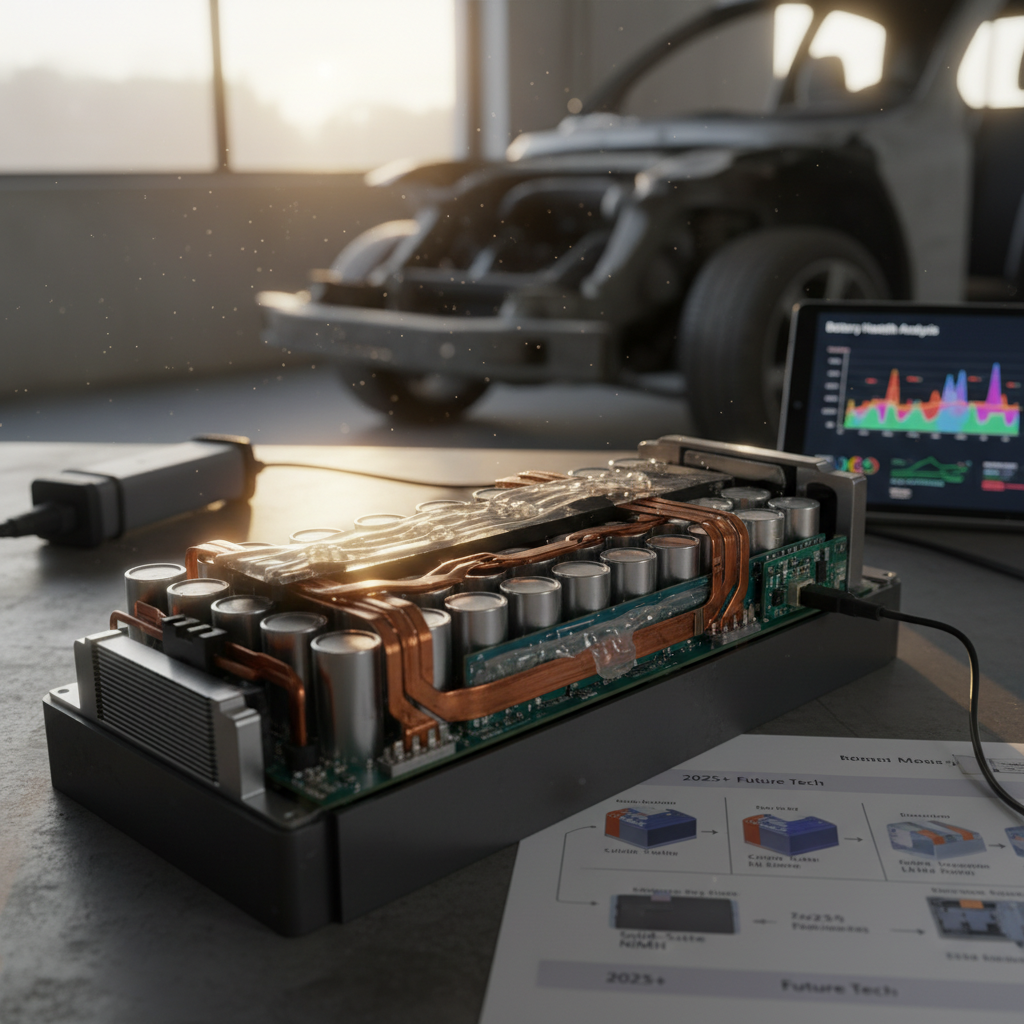
If you’re shopping for a used electric vehicle, you’ve probably bumped into ads for third-party EV warranty providers promising “peace of mind” and “battery protection.” Some are genuinely useful. Others are expensive insurance policies you’ll never use. The key is understanding what’s already covered on an EV, what these plans really add, and whether they make financial sense for how you drive.
Quick definition
Why third-party EV warranties exist
Traditional extended warranties have been around for decades, but EVs created a new problem: the most expensive component, the high-voltage battery, sits at the center of every repair-cost conversation. A replacement traction battery can easily run into the five figures, and independent shops with high-voltage expertise are still relatively rare. Many legacy warranty companies were slow to cover EVs, which opened the door for EV‑specific third-party providers to step in.
EV battery coverage: what you’re starting with
How EV warranties work today
Before you look at third-party EV warranty providers, you need to know what you already have. New electric vehicles in the U.S. come with multiple layers of factory-backed protection:
- Bumper-to-bumper warranty – Typically 3–4 years or 36,000–50,000 miles, covering most non-wear items and electronics.
- Powertrain or electric drive warranty – Often 5–8 years, covering motors, inverters, and related components.
- High-voltage battery warranty – Federally mandated minimum of 8 years/100,000 miles on the propulsion battery, with some brands (Hyundai, Kia, Mercedes, others) stretching to 10 years or higher mileage limits.
- Corrosion and emissions warranties – These still apply, though EVs have fewer emissions-related components.
Battery degradation vs. battery failure
Because those factory warranties are relatively generous, especially on the battery, a third-party EV warranty is most relevant when one or more OEM coverages are close to expiring or you’re buying a used EV where part of the original protection has already timed out or been used heavily.
What third-party EV warranty providers actually cover
Coverage varies widely, but most third-party EV warranty providers sell plans that look familiar if you’ve shopped traditional extended warranties. The big difference is how they handle high-voltage components and the traction battery.
Typical coverage from third-party EV warranties
Always read the sample contract; marketing bullets can be misleading.
Major EV systems
- Electric drive motor(s)
- Inverter and power electronics
- Onboard charger
- Thermal management systems
- High-voltage cabling
Charging & electronics
- Onboard charge port hardware
- DC fast‑charge interfaces
- Control modules & sensors
- Infotainment & driver displays
Battery & extras
- Traction battery failure coverage
- Battery capacity loss protection (rare)
- Roadside assistance & towing
- Rental cars or rideshare credit
Common exclusions to watch for
Major types of third-party EV warranty providers
1. Traditional warranty companies adding EV riders
Many well-known extended warranty brands now add EV coverage tiers or riders. These often start with hybrid coverage, motors, inverters, high-voltage AC compressors, and are gradually expanding to full battery-electric vehicles.
Upside: Established claims infrastructure, broad national repair networks, and familiar contract language.
Downside: They may still exclude the traction battery or treat EVs as surcharged, higher-risk vehicles, driving up premiums.
2. EV‑only or EV‑focused providers
Newer companies have built plans just for EVs, sometimes with separate options for full-vehicle coverage versus battery‑only coverage. Because their business model assumes high‑voltage systems, they’re often more precise and transparent about what they do (and don’t) cover.
Upside: Better alignment with EV tech, clearer language around battery coverage, and perks like EV‑savvy support.
Downside: Less long‑term track record and fewer years of claims history compared with legacy providers.
Examples of third-party EV warranty providers
Provider lineups change quickly, and availability can vary by state. Rather than endorse any specific company, it’s more useful to understand a few representative models you’re likely to see when you research third-party EV warranty providers.
Illustrative third-party EV warranty provider models
These examples are for educational purposes only. Always confirm current coverage, pricing, and eligibility directly with the provider before you buy.
| Provider type | Example positioning | Typical focus | Notable limitations |
|---|---|---|---|
| EV‑focused full‑vehicle coverage | Nationwide EV protection plan marketed to Tesla, Rivian, Lucid and other BEVs | Comprehensive mechanical & electrical coverage, with options that may include battery and drive unit on newer, lower‑mileage EVs | Battery coverage may end at a certain age/mileage; external charging cables and cosmetic items usually excluded. |
| Battery‑only protection plan | Standalone EV battery shield product | Pays up to a fixed dollar amount if the traction battery fails or capacity falls below a threshold within term limits | Payout caps may not cover a full pack replacement; degradation thresholds and diagnostic proof requirements can be strict. |
| Traditional warranty with EV add‑on | Legacy warranty brand that added a hybrid/EV rider | Extends coverage on drive motors, inverters, and other high‑voltage components; may bundle roadside assistance | May exclude the main battery or only offer battery coverage on select makes/models; deductibles and claim limits can be complex. |
Coverage details and eligibility can change rapidly; use this as a starting checklist, not a final decision guide.
How to use provider lists wisely
What third-party EV warranties cost
Pricing depends on vehicle age and mileage, coverage level, term length, and your location, but third-party EV warranty providers generally sit in the same ballpark as traditional extended warranties, sometimes higher because of battery risk.
Typical cost ranges for third-party EV warranties
These are directional figures to help you sanity‑check quotes, not firm offers.
Monthly payment plans
- ~$70–$140/month for broad EV coverage
- Battery‑only plans often start around a few dozen dollars per month
- Deductibles commonly $100–$500 per claim
Upfront lump‑sum
- $1,000–$3,000 for 3–5 years of coverage
- Higher for luxury EVs or long terms
- Discounts if purchased at vehicle sale
What drives pricing
- Your EV is older or high‑mileage
- The plan includes traction battery coverage
- Labor and parts rates are high in your area
Compare to what you’re insuring
Pros and cons of third-party EV warranties
Advantages
- Budget predictability: Spreads potential big repair costs into a manageable monthly or upfront amount.
- Gap coverage after OEM warranty: Can extend protection on motors, inverters, and electronics once the factory warranty expires.
- Extra perks: Roadside assistance, towing to an EV‑capable shop, rental car or rideshare credits can soften the blow when a failure happens.
- Resale appeal: A transferable plan can make a higher‑mileage used EV easier to sell and more attractive to risk‑averse buyers.
Drawbacks
- Cost vs. likelihood: Many owners never use enough covered repairs to “earn back” what they spent on the plan.
- Fine‑print surprises: Clauses around pre‑existing conditions, battery degradation, or maintenance requirements can lead to denied claims.
- Provider quality varies: Not all companies handle claims with the same speed or fairness; some heavily market online but have weak support.
- Opportunity cost: Money spent on a warranty could instead sit in a dedicated “EV repair fund” you control.
How to evaluate a third-party EV warranty
7-step checklist before you sign a third-party EV warranty
1. Clarify what you actually need to cover
Are you worried about the <strong>high-voltage battery</strong>, complex electronics, or just general peace of mind? If the factory battery warranty still has many years left, focus your evaluation on components that are no longer fully protected.
2. Get a full sample contract, not just a brochure
Reputable third-party EV warranty providers will share the <strong>entire contract</strong> before you buy. Read the definitions section, coverage chart, and exclusions carefully, especially for high-voltage components and battery capacity loss.
3. Check eligibility and payout caps
Look for age and mileage limits, maximum aggregate payout, and specific dollar caps on items like the battery pack. A plan that only pays a fraction of a real-world battery replacement may not be worth the premium.
4. Understand the claims process
Ask how repairs are authorized, which shops you can use, whether they pay the shop directly, and how long typical approvals take. EVs often need specialized service centers; make sure the plan works with those facilities.
5. Look at deductibles and overlapping coverage
High deductibles can eat into any benefit. Also make sure you’re not paying to insure components that are <strong>still under OEM warranty</strong> during most of the contract term.
6. Research financial strength and reputation
Search for reviews that mention EVs specifically, not just gas cars. Check how long the company has been in business, who backs the contracts, and how they handled claims during past economic downturns.
7. Run the math against a self-insurance fund
Take the quote amount (say $120/month) and imagine putting that into a dedicated savings account instead. After three or four claim‑free years, would you rather have a sizable cash cushion, or a policy you never used?
Maintenance and modification clauses
Used EVs and third-party warranties: smart protection or wasted money?
For used EV buyers, the decision around third-party EV warranty providers is especially nuanced. You’re often dealing with partial factory coverage, an unknown history, and concerns about long-term battery health. That’s where hard data, not just marketing, matters.

At Recharged, every used EV comes with a Recharged Score battery health report that measures real-world pack condition, not just odometer mileage. That gives you a much clearer sense of how much risk you’re actually taking before you consider any extra warranty product.
When a third-party EV warranty is more likely to be useful
Situations where extra coverage can be rational, not just emotional.
You’re buying an older, higher‑mile EV
You drive hard miles or in harsh climates
When you might skip it
Where Recharged fits in (and how we help)
Recharged is built around a simple idea: used EV ownership should be transparent and predictable. That starts with the car itself, not a warranty brochure.
- Every vehicle we sell includes a Recharged Score Report with verified battery health, so you can see how the pack is really performing before you commit.
- Our pricing is aligned with the vehicle’s true condition and remaining factory coverage, helping you avoid overpaying for risk that isn’t there.
- If you want extra protection, our EV‑specialist team can walk you through whether a third-party EV warranty actually makes sense for that specific car, or whether you’re better off keeping your money.
- We offer financing, trade‑in, and digital paperwork end‑to‑end, so if you do choose a protection plan, it can often be rolled into your monthly payment without surprises.
Talk to an EV‑specialist, not just a salesperson
FAQ: Third-party EV warranty providers
Frequently asked questions about third-party EV warranties
Bottom line: When a third-party EV warranty makes sense
Third-party EV warranty providers aren’t magic shields, and they’re not scams by default either. They’re insurance products. For the right owner, on the right vehicle, at the right price, a well‑designed EV or battery protection plan can smooth out the financial shock of an expensive repair. For many others, though, the smarter move is to buy a used EV with documented battery health, understand the remaining factory coverage, and bank the savings in a repair fund.
If you’re evaluating a specific plan, slow down, get the full contract, and run it through the checklist in this guide. And if you’re still not sure, a Recharged EV specialist can help you look at your chosen vehicle’s Recharged Score, remaining OEM warranties, and real‑world repair data so you can decide, confidently, whether extra coverage earns its keep or just adds to your payment.