If you’ve been holding out for a Tesla van in 2025, whether as a family hauler or a work vehicle, you’re not alone. Tesla fans and fleet buyers have been asking about a van or minivan for years. The reality in late 2025, though, is simple: Tesla still does not sell a van, and there’s no firm, public timeline for one.
Quick reality check
Does a Tesla van actually exist in 2025?
No. In 2025 there is no production Tesla van you can order, no minivan, no cargo van, no people‑mover. What keeps this topic alive are a few things: Elon Musk has talked repeatedly about a “high passenger‑density” vehicle, analysts expect Tesla to eventually tackle commercial and shuttle use cases, and the broader EV market is clearly moving into vans and people movers.
That gap between expectations and reality is why searches for terms like “Tesla van 2025” have exploded. People want to know whether they should keep waiting for Tesla or buy one of the electric vans already on the market.
What we know about the rumored Tesla van
Tesla van: what’s signal vs. noise?
Here’s what’s actually on record today:
- Tesla has a next‑generation vehicle platform under development, aimed at lower‑cost vehicles and robotaxis. A driverless version called Cybercab was unveiled in 2024, targeting production around 2026.
- Musk has talked in the past about a high passenger‑density vehicle for cities, basically a shuttle or minibus that could be part of a robotaxi fleet, rather than a classic family minivan.
- Back in earlier earnings calls and interviews, Musk occasionally mentioned a van as “on the roadmap”, but without dates or concrete specs. Those comments haven’t turned into an actual product program yet, at least not one that Tesla is willing to discuss publicly.
- Tesla’s focus in 2025 is clearly on robotaxis and cheaper Model Y variants, not expanding into new body styles like vans.
How to read Tesla product hints
Why a Tesla van is unlikely to launch in 2025
Given Tesla’s current priorities and track record, a 2025 Tesla van launch would be extremely unlikely. Here’s why.
Four reasons you shouldn’t plan on a Tesla van in 2025
The business case just doesn’t line up this year
1. Factory bandwidth is already spoken for
Tesla’s existing plants are busy with Model 3/Y, Cybertruck, and upcoming lower‑cost variants. A van is a new body style that would require fresh tooling, crash testing, and validation.
2. Robotaxi is the strategic priority
2025 has been the year Tesla leaned hard into robotaxis and full self‑driving trials in Austin, Phoenix, and other markets. That’s where engineering and leadership attention is going.
3. Van programs are capital intensive
Launching a van means new crash structures, packaging for tall bodies, and heavy commercial‑duty testing. It’s one of the more complex vehicle types to execute well.
4. No regulatory filings or teaser campaigns
When a new vehicle is truly close, you usually see leaks, regulatory filings, or at least teasers. For a Tesla van, we haven’t seen any of that by late 2025.
Be wary of “leaked” Tesla van images
How a Tesla van could look: passenger vs. cargo
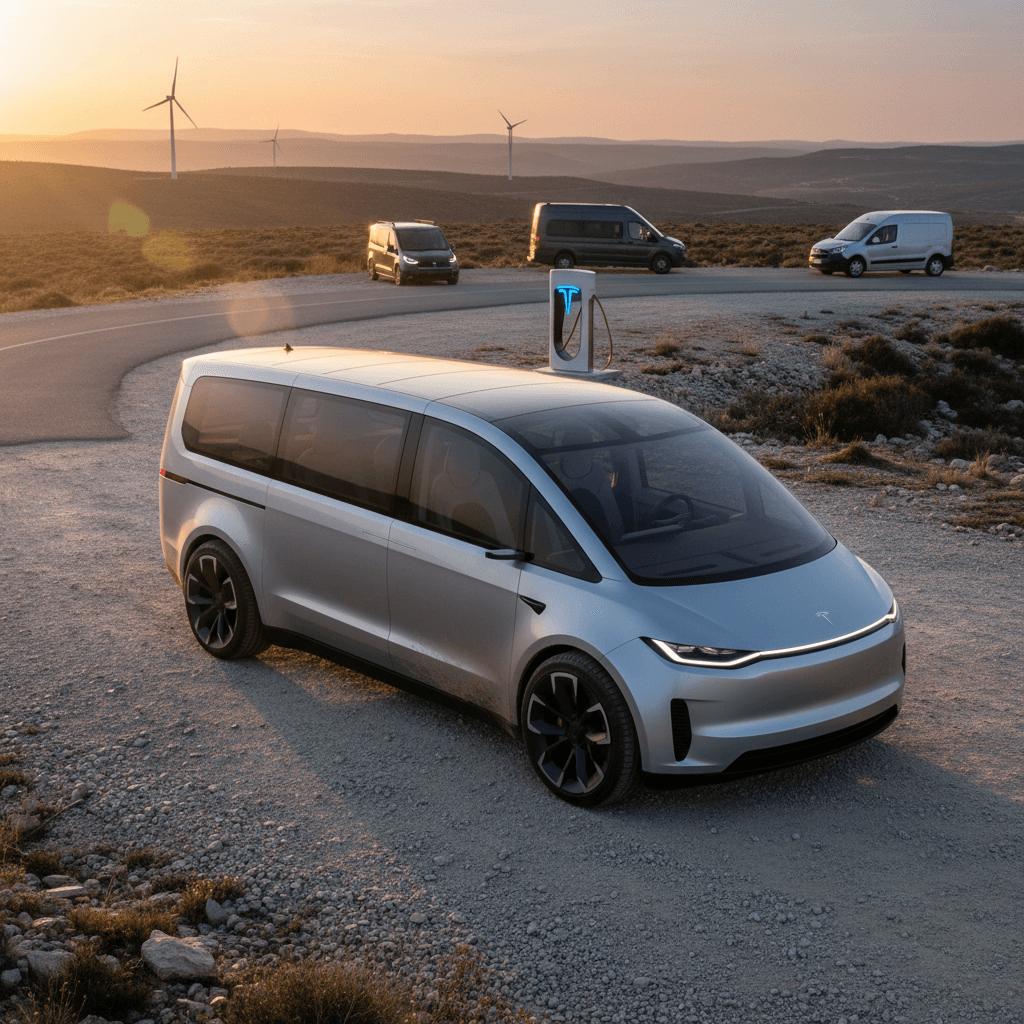
Even if there’s no Tesla van you can buy today, it’s still useful to think about what a plausible Tesla van would look like, for families, shuttle services, and commercial fleets. Realistically, Tesla would face two very different use cases: a passenger‑focused van and a cargo or delivery van.
Passenger or “minivan” style Tesla
- Seating: 6–8 seats, likely with flexible second and third rows similar to today’s three‑row crossovers.
- Form factor: Think lower, more aerodynamic than a traditional van, closer to a tall Model Y than a boxy shuttle.
- Target buyer: Larger families, airport shuttle operators, premium ride‑hail services.
- Battery and range: Likely similar packs to Model Y, tuned for efficiency rather than 0–60 bragging rights.
Cargo or delivery Tesla van
- Interior: Flat load floor, configurable shelving, and telematics for fleets.
- Range focus: Optimized for urban delivery cycles rather than long‑distance travel.
- Competition: Vehicles like Chevrolet’s BrightDrop electric van, Ford E‑Transit, and emerging Chinese logistics vans.
- Business case: Tightly linked to Tesla’s autonomy strategy, robotaxi vans doing last‑mile delivery or airport shuttles.

Tesla robotaxis vs. a traditional Tesla van
One reason you hear less about a conventional Tesla van in 2025 is that Tesla has gone all‑in on robotaxis. The Cybercab concept unveiled in 2024 is effectively a purpose‑built autonomous shuttle: sliding doors, roomy back seat, and a cabin designed for riders rather than drivers.
From Tesla’s perspective, it may make more sense to push that robotaxi platform into higher passenger‑density configurations rather than develop a separate, driver‑focused van. In other words, the “Tesla van” may show up first as a self‑driving shuttle in a fleet, not something you can park in your driveway.
Robotaxi first, private van later
Electric van alternatives you can buy right now
While the Tesla van remains hypothetical, the rest of the market hasn’t waited. If you need the space and utility of a van in 2025, there are several battery‑electric options already on the road, some passenger‑focused, some commercial.
Key electric van options in 2025
What to consider instead of a non‑existent Tesla van
Volkswagen ID. Buzz
A modern electric reinterpretation of the classic Microbus. US sales started for the 2025 model year with a long‑wheelbase, three‑row layout.
- Family‑friendly interior
- Retro styling, modern tech
- Good for road trips and carpools
Chevrolet BrightDrop (Zevo)
Electric cargo vans built on GM’s Ultium platform, now sold under the Chevrolet BrightDrop name in the US.
- Large cargo volume
- Fleet‑oriented telematics
- Ideal for urban delivery operators
Ford E‑Transit
Ford’s electric version of the popular Transit van. Widely used for commercial fleets, with multiple roof heights and lengths.
- Strong dealer and upfitter network
- Plenty of body styles
- Best fit if you’re already in a Transit
Good news for buyers
Should you wait for a Tesla van or buy something else?
Whether you should wait for a Tesla van comes down to how urgent your needs are and what exactly you’re hoping Tesla will do differently. A van is a tool: if you need that tool now, there’s real opportunity cost in waiting for a product with no firm timeline.
Questions to decide: wait for Tesla or move now?
1. How critical is the extra space today?
If your current vehicle is already limiting your business, family life, or accessibility needs, waiting years for a hypothetical van is a risky bet.
2. Are you counting on Tesla‑specific features?
If your must‑haves are things like Autopilot, Tesla’s charging network, or the big center screen, remember that many of those advantages are shrinking as other automakers catch up and NACS spreads.
3. Are incentives or tax rules changing near-term?
Federal and state EV incentives can phase in and out. If you qualify for significant credits this year, locking in a known van may beat waiting for a Tesla that might miss the window.
4. What’s your tolerance for first‑generation risk?
When Tesla eventually does build a van, early builds will carry all the usual first‑gen risks: software quirks, hardware changes, and shifting pricing.
5. Could a used electric SUV or van bridge the gap?
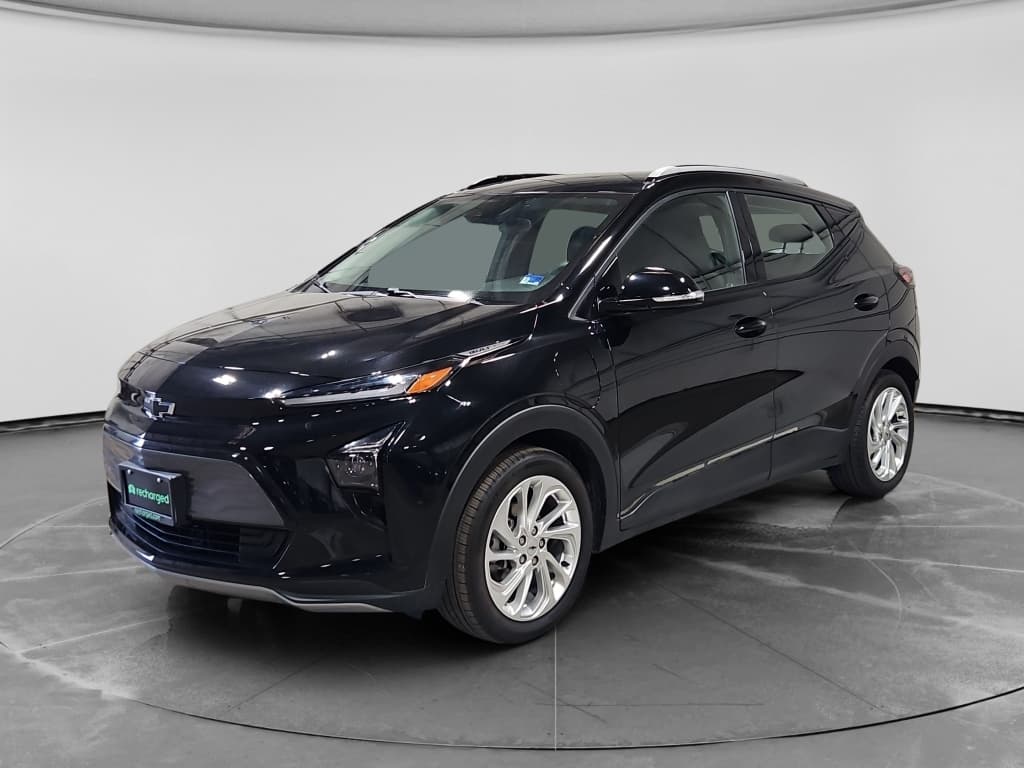
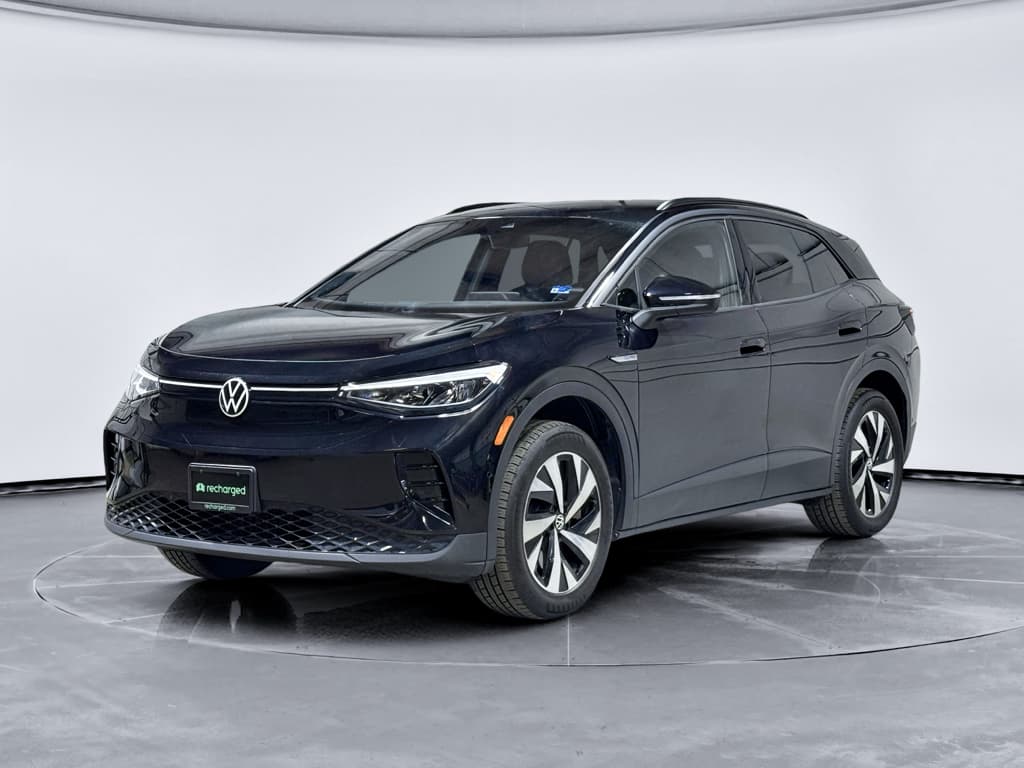
Instead of waiting for the perfect Tesla van, you might pick up a used ID.4, Model Y, or electric van as a stopgap, with less depreciation risk and more flexibility.
Don’t build a business plan on a rumor
How used EV vans fit into the picture
One under‑appreciated angle in the Tesla van conversation is the used EV van and people‑mover market. Every quarter, more ID. Buzzes, E‑Transits, BrightDrops and electric crossovers enter the secondary market. That’s where you can often find the best blend of price, range and utility, without waiting on Tesla’s roadmap.
This is also where a platform like Recharged can make life easier. Instead of hunting blind on generic classifieds, you get battery health data, fair‑market pricing, and specialists who understand how a work van’s duty cycle, DC fast‑charging patterns, and climate exposure affect real‑world range and longevity.
Why a used EV van or large EV can be smarter than waiting
Especially if you need Tesla‑like tech and range today
Verified battery health
EVs live or die by their batteries. A Recharged Score report shows you how a specific van or SUV’s pack is aging, so you’re not guessing about range.
Transparent total cost of ownership
When you compare a used EV van against your current gas vehicle, you’ll see savings in fuel, maintenance, and sometimes insurance, as well as depreciation that’s already baked in.
Financing & trade‑in options
Recharged can help you finance a used EV, trade in your current vehicle, or even get an instant offer, so you’re not stuck waiting on a vehicle that doesn’t exist yet.
Room to pivot later
If Tesla does launch a great van in a few years, you’re in a better position trading out of a well‑chosen used EV than out of an aging gas van you kept too long.
FAQ: Tesla van 2025
Frequently asked questions about the Tesla van
Bottom line on the Tesla van
The idea of a Tesla van in 2025 is compelling: all of Tesla’s software and efficiency advantages, scaled up to carry more people or more cargo. But as of today, it’s just that, an idea. Tesla’s real‑world focus is on robotaxis, lower‑cost crossovers, and squeezing more performance out of its existing factories, not on launching a new body style that only exists in speculation and fan renderings.
If you need van‑like utility soon, the smart move is to shop the electric vans and large EVs you can actually test‑drive today, especially in the used market where pricing is more realistic and battery health can be verified. That way you’re not gambling your family plans, or your business model, on a product that might not arrive until the second half of the decade.
Next step: explore real EV options
Ready to find your next EV?
Browse Vehicles