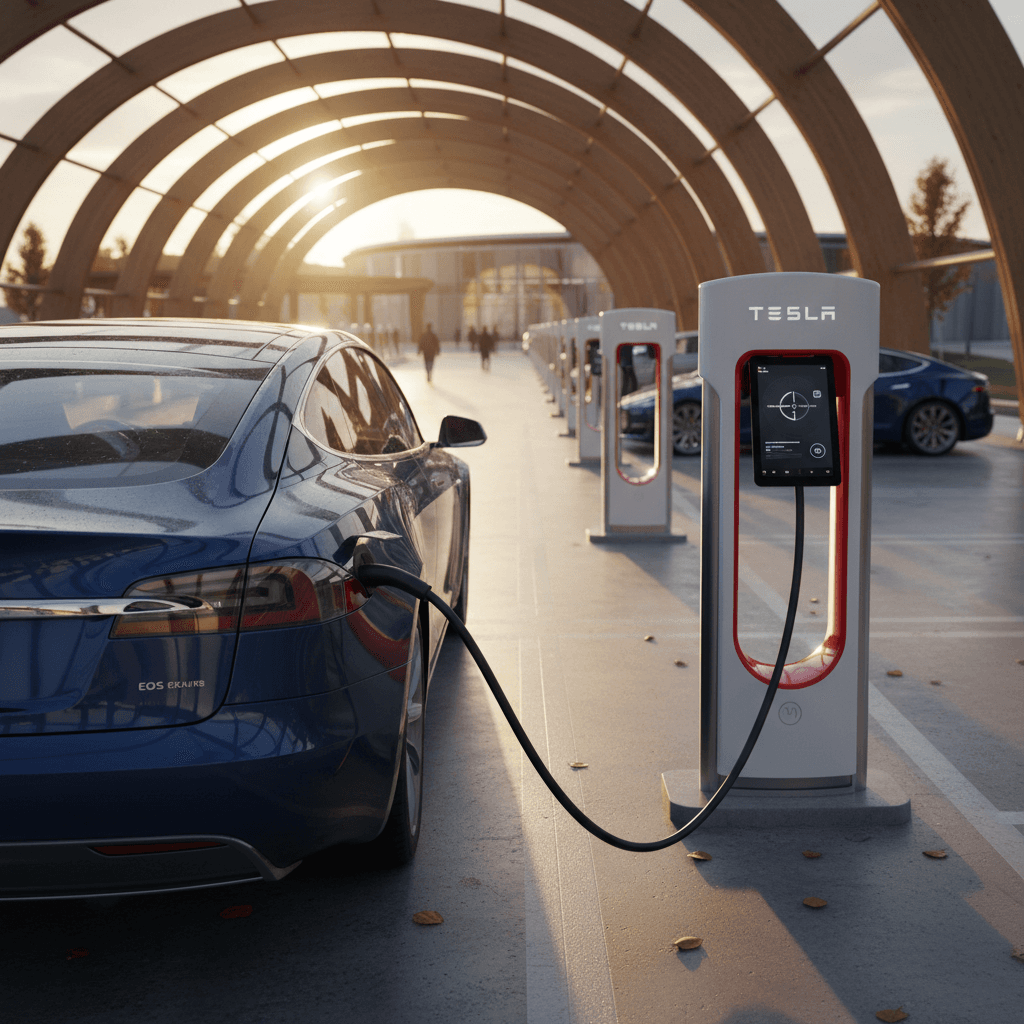
If you rely on public fast charging, it’s natural to wonder whether a Tesla Supercharger subscription plan can cut your costs. Tesla’s network is dense, fast, and increasingly open to non‑Tesla EVs, but the mix of per‑kWh pricing, memberships, and automaker partnerships can be confusing. This guide walks you through how Supercharger pricing works in 2026, what “membership” actually means, and when a plan is worth it for your driving pattern.
Quick reality check
How Tesla Supercharger pricing works today
Before you compare any Supercharger subscription or membership, it helps to understand the base pricing model. Tesla’s fast chargers bill you either by the amount of energy delivered (per kilowatt‑hour, or kWh) or, in a few states where regulations require it, by the minute in power tiers. The exact rate is set station by station and can vary by time of day, just like gas prices vary by station and region.
Supercharger cost snapshot (typical US ranges)
Those ranges are illustrative; you’ll see the exact price for a Supercharger in the Tesla app or on your Tesla’s screen before you start a session. If you drive a non‑Tesla EV, you’ll see the price in the Tesla app after you select your vehicle and the specific stall.
Per‑kWh vs. per‑minute billing
Does Tesla offer a Supercharger subscription plan?
When drivers say “Tesla Supercharger subscription plan,” they’re usually thinking of an unlimited monthly charging pass, something like a cell‑phone plan for electrons. Today, that specific product doesn’t exist in North America. Instead, Tesla uses two main levers:
- Pay‑per‑use pricing for energy at each Supercharger
- Discounted “member” pricing for some users or programs, especially in Europe and for non‑Tesla EVs
- Partnerships where an automaker bundles access or discounts into its own charging program (Ford, GM, VW, etc.)
In Europe, Tesla offers a true Supercharger Membership for non‑Tesla EVs: you pay a monthly or annual fee and get a lower per‑kWh rate at participating stations. In the US, the picture is a little different. Non‑Tesla access is expanding through the North American Charging Standard (NACS), and many drivers will see Supercharger discounts through their automaker’s own subscription rather than through Tesla directly.
Think of it as "membership pricing," not unlimited charging
Supercharger membership vs. pay‑per‑use for non‑Tesla EVs
If you drive a Ford, GM, Volvo, Volkswagen, or another brand that’s adopting NACS, you’ll access Superchargers using a NACS adapter (for now) and your automaker’s app or in‑car navigation. In practice, you may see two pricing buckets at many Tesla sites:
Two ways to pay at Superchargers
How it usually looks for non‑Tesla drivers
Standard (no membership) pricing
You pay the posted Supercharger rate as a "guest" or standard user.
- Higher per‑kWh price
- No monthly fee
- Best if you only fast‑charge occasionally
Member or partner pricing
You join a Tesla or automaker membership that unlocks lower rates.
- Monthly or annual fee plus energy use
- Lower per‑kWh price at Superchargers
- Pays off if you road‑trip or fast‑charge regularly
In Europe, Tesla’s own membership fee was lowered in 2024 to roughly the cost of a few fast‑charge sessions per month, making it attractive for regular users. In North America, similar math will apply once more non‑Tesla‑focused memberships and bundles arrive: if the fee saves you more on energy than it costs, it’s worth it.
Watch for OEM‑branded plans
How much does Supercharging cost in practice?
For planning purposes, it helps to translate per‑kWh pricing into something more concrete. At many US Superchargers, you’ll see energy prices around $0.35–$0.55 per kWh. Home electricity for many US households still lands closer to $0.15–$0.20 per kWh, especially if you can use off‑peak rates, so road‑trip energy often costs about twice as much as home charging.
Typical charging cost comparison (late 2025–early 2026)
Approximate ranges for a mid‑size EV with a ~75 kWh pack
| Where you charge | Typical energy price | Approx. cost for 75 kWh | Rough cost per mile* |
|---|---|---|---|
| Home Level 2 (off‑peak) | $0.15–$0.20/kWh | $11–$15 | $0.04–$0.06 |
| Public Level 2 | $0.20–$0.35/kWh | $15–$26 | $0.06–$0.09 |
| Tesla Supercharger DC fast | $0.35–$0.55/kWh | $26–$41 | $0.09–$0.14 |
Actual prices vary by location, utility, and time of day, always check your app before plugging in.
*Assumes roughly 3–4 miles per kWh in mixed driving. A more efficient EV will land at the low end of those per‑mile numbers; a large, boxy SUV at highway speeds will be higher.
Fast charging is for road trips, not daily use
Idle fees and other charges to watch
Tesla’s business model assumes Superchargers are for charging, not parking. To keep stalls turning over, the company uses idle fees when your car is full but still plugged in and the site is at least partly occupied. In the US, those fees have historically run around $0.50 per minute when the station is at least half full and $1.00 per minute when it’s completely full.
- There’s usually a short grace period, if you unplug and move within a few minutes of reaching 100%, the fee is often waived.
- Idle fees are on top of whatever you paid for energy. Think of them as a parking ticket for blocking the pump.
- All users can be charged idle fees: Tesla owners, non‑Tesla EVs, members, and non‑members alike.
Why idle fees matter more than a subscription
When a Supercharger membership makes sense
Whether you’re looking at a Tesla‑run membership (in Europe) or an automaker bundle that discounts Supercharger use in North America, the decision is the same: compare the monthly or annual fee versus how much energy you realistically buy on road trips.
Questions to ask before paying for a plan
1. How often do you DC fast‑charge?
If you only hit a Supercharger a few times a year, standard pay‑per‑use pricing is almost always cheaper. Memberships are designed for frequent road‑trippers or apartment dwellers who lean on public fast charging.
2. How much cheaper is member pricing?
Look at the gap between standard and member per‑kWh rates at your usual sites. A difference of $0.10–$0.15 per kWh adds up quickly if you’re buying hundreds of kWh each month.
3. What’s the actual fee?
Put the monthly or annual cost in plain dollars per year. Then estimate how many kWh or sessions you’d need for the savings to cancel out that fee, and see if your real‑world pattern matches.
4. Does it cover other networks?
Some OEM plans bundle multiple networks, Tesla plus others, under one subscription. That can change the math in your favor if you drive cross‑country or in regions with mixed infrastructure.
5. Can you cancel easily?
Road‑trip season is not year‑round. If a membership is month‑to‑month, you might sign up only for heavy‑travel months and drop it when you’re charging mostly at home.
6. Do you have reliable home or workplace charging?
If you can plug in every night, your Supercharger use is likely limited to long trips. In that case, focus on planning efficient routes rather than chasing small per‑kWh discounts.
A simple rule of thumb
How to activate and use a Supercharger plan
The activation steps depend on whether you drive a Tesla or a non‑Tesla EV, and whether your discount comes from Tesla or your automaker. The good news is that once you’re enrolled, actually using the network is surprisingly simple.
Tesla owners
- Sign in: Use your Tesla account in the Tesla app or on the web.
- Payment method: Add a credit card under charging and Supercharging settings.
- Enable membership (where offered): In regions with Supercharger Membership, opt in from the app and confirm the monthly or annual fee.
- Plug‑and‑charge: Navigate to a Supercharger. Once you plug in, the session starts automatically and member pricing applies.
Non‑Tesla EV drivers
- Get a NACS adapter: Most 2021–2025 non‑Tesla EVs need a NACS adapter to use Superchargers. Some automakers have offered these free or at a discount during rollout.
- Use your automaker’s or Tesla’s app: Depending on your brand, you’ll start sessions either through the Tesla app or your automaker’s app that links to your Tesla account.
- Enroll in any available membership: If there’s a Supercharger or multi‑network membership, you’ll see enrollment options in your app.
- Start the session: Select the stall in your app, plug in, and charging will begin. Pricing details, including any member discount, are shown before you confirm.
Plan your stops, then pick the price
Tesla Supercharger subscription plan: pros and cons
Is a Supercharger membership right for you?
Key advantages and tradeoffs
Potential benefits
- Lower per‑kWh rates at participating Superchargers.
- Simpler budgeting if you road‑trip often and know you’ll use the network heavily.
- Bundled savings when a membership covers multiple fast‑charging networks.
- App convenience: one account, one card, many chargers.
Potential drawbacks
- Monthly/annual fee that you pay even in low‑usage months.
- No true unlimited plan, you still pay for each kWh.
- Terms can change, including pricing or which stations qualify.
- Home charging is still cheaper for most drivers, with or without a plan.
How this fits into your overall EV charging strategy
A Supercharger membership, where available, is just one piece of your charging playbook. For most owners, the cheapest and least stressful strategy is still to charge slowly where you live or work, and to use DC fast charging primarily for road trips or occasional long days.
Smart charging strategies by driver type
Home‑charging owners
Install or use an existing Level 2 charger in your garage or driveway.
Use utility off‑peak or EV‑specific rates if available.
Save Supercharger use for road trips or rare long days.
Skip memberships unless you routinely do long highway drives.
Apartment & condo drivers
Maximize workplace, community, or nearby Level 2 charging where you can leave the car for hours.
Expect to rely more on DC fast charging, including Superchargers, especially on weekends.
Run the numbers on any Supercharger or multi‑network membership, heavy users are the ones who actually benefit.
Consider a used EV with strong fast‑charging performance and battery health, verified by tools like the <strong>Recharged Score Report</strong>.
Frequent road‑trippers
Plan routes around reliable fast‑charging corridors, not just one brand’s network.
Estimate your annual road‑trip kWh and compare that to membership fees and discounts.
Prioritize EVs with efficient highway range and robust fast‑charging curves to minimize time and cost on trips.
If you’re shopping used, look closely at charging history and battery diagnostics so you’re not buying a road‑trip car with a tired pack.
Where Recharged fits in
The bottom line: there isn’t a single "Tesla Supercharger subscription plan" that works like a Netflix account for charging. Instead, you’ll see a mix of per‑kWh pricing, optional memberships, and automaker bundles that can trim your costs, if you use them enough. Start by mapping your real charging habits, then treat Supercharger memberships as a tactical tool, not a default. Get your home or workplace charging squared away first, and if you’re shopping for a used EV, lean on transparent battery‑health tools like the Recharged Score so the vehicle you pick can take full advantage of whatever fast‑charging option you choose.