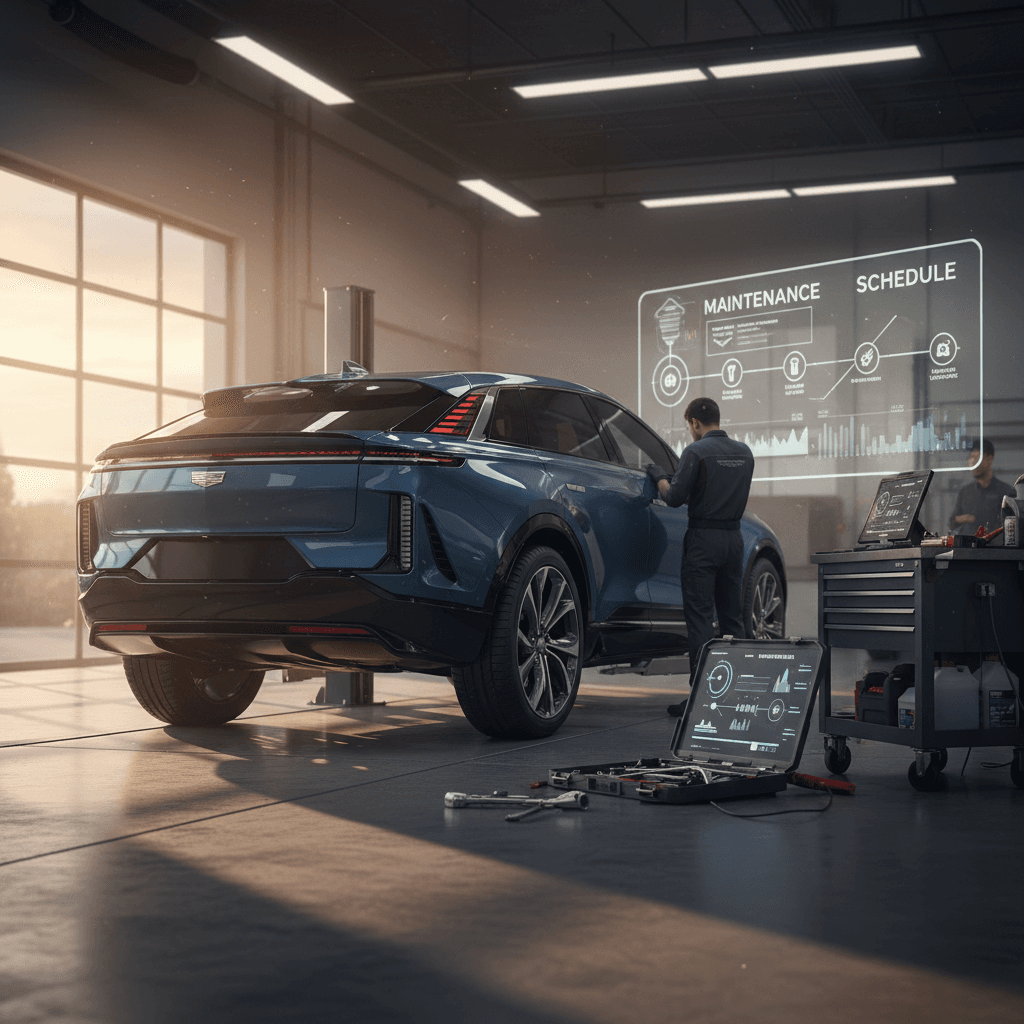
The Cadillac Lyriq maintenance schedule looks almost shockingly simple if you’re coming from a gas SUV. No engine oil, spark plugs, or timing belts. But that doesn’t mean you can skip maintenance altogether. To keep your Lyriq safe, efficient, and under warranty, you still need a plan for tires, brakes, fluids, and software over the next 5–10 years.
EVs have fewer parts, not zero maintenance
Why Cadillac Lyriq maintenance still matters (even without oil changes)
Cadillac markets the Lyriq as a low‑maintenance luxury EV, and they’re right in broad strokes. The high‑voltage battery and electric motors are largely self-contained, and the car handles many updates over-the-air. Yet the Lyriq is also a ~5,600 lb SUV riding on performance tires, with complex suspension, brakes, and climate systems. If you ignore the maintenance schedule, you’re gambling with safety, comfort, and long‑term value.
- Your tires and brakes are doing more work than in a comparable gas crossover because of the Lyriq’s weight and instant torque.
- Fluids like brake fluid and battery coolant age over time, even if you don’t drive much.
- Skipping inspections means you’re more likely to miss warranty‑time repairs that would have been free if caught early.
Use the car’s reminders, but keep a written plan
Cadillac Lyriq maintenance schedule at a glance
Cadillac Lyriq service snapshot
The exact wording of the maintenance schedule in your Lyriq owner’s manual will vary slightly by region, but across markets, the pattern is consistent: frequent tire and brake inspections, infrequent fluid replacements, and periodic software and safety checks. In Europe Cadillac quotes 2 years or 24,000 km for scheduled service visits, while Australia and New Zealand specify 12,000 km or 12 months, whichever comes first.
High-level Cadillac Lyriq maintenance schedule
A simplified view combining mileage-based and time-based Lyriq service items. Always confirm details in your owner’s manual for your model year and market.
| Interval | What’s typically done | Why it matters |
|---|---|---|
| Every 7,500 mi (12,000 km) | Tire rotation, tread and pressure check, basic multi‑point inspection | Balances wear on heavy EV tires and catches issues early |
| Every 15,000–22,500 mi | Brake inspection, cabin air filter, charging connector check | Keeps braking feel consistent and air quality high |
| Every 60,000 mi | Battery coolant condition check; replace if required | Maintains battery temperature control and longevity |
| Every 5 years | Brake fluid replacement | Prevents moisture‑related corrosion and soft pedal feel |
| Every 7 years | A/C desiccant replacement | Protects the climate system from moisture damage |
| Around 150,000 mi | Battery/thermal system coolant replacement | Long‑term protection for pack, power electronics, and drive units |
Use this as a planning guide; your local Cadillac dealer’s system will reference the official schedule for your VIN.
Always defer to your owner’s manual
Mileage-based Cadillac Lyriq service intervals
Let’s break the Cadillac Lyriq maintenance schedule down into concrete mileage milestones. These are the intervals most U.S. owners will see on dealer service menus and in reminders. If you use kilometers, think roughly 12,000 km for each 7,500‑mile step.
Core mileage intervals for the Cadillac Lyriq
What usually happens at each stop in the schedule
Every 7,500 miles
Typical items:
- Tire rotation and wheel torque check
- Tire wear and pressure inspection
- Visual brake check
- Basic multi‑point inspection, software and recall check
On many Lyriqs, the first 7,500‑mile service is complimentary within a set time window, so it’s worth taking advantage of it even if your mileage is low.
Every 15,000–22,500 miles
Typical items:
- Repeat 7,500‑mile checks
- More detailed brake system inspection
- Cabin air filter replacement (often around 22,500 mi)
- Charging port and cable inspection
Cabin filters clog faster in dusty or urban environments; if you have allergies, you may want them changed earlier.
Around 60,000 miles
Typical items:
- High‑voltage battery coolant inspection
- Cooling system hoses and fittings check
- Suspension and steering inspection
Some dealers may recommend a proactive coolant service here; check the manual and ask them to explain the why and the cost before approving.
Beyond 70,000 miles
Typical items:
- Possible electric drive unit fluid change in severe service (frequent towing, hard city use, extreme heat)
- Shock/strut and bushing inspection
- More frequent tire inspections as tread depth drops
In normal use the Lyriq doesn’t need frequent gearbox fluid changes, but there is a provision for severe duty in the GM documentation.
Think in tire sets, not just miles
Time-based services if you don’t drive much
What if you only put 5,000–6,000 miles a year on your Lyriq? You still have a maintenance schedule, it's just driven more by calendar time than the odometer. Fluids absorb moisture, rubber ages, and software evolves whether you drive or not.
Key time-based maintenance items for the Lyriq
1. Annual safety and multi‑point inspection
Even with low mileage, have a Cadillac Certified Service center check tires, brakes, steering, lighting, and underbody. Many markets, like ANZ, already assume a 12‑month cadence for this kind of visit.
2. Brake fluid every 5 years
Brake fluid slowly absorbs moisture, which can corrode components and soften pedal feel. Swapping it around the 5‑year mark is cheap insurance and part of GM’s broader EV guidance.
3. A/C system desiccant around year 7
The desiccant helps keep moisture out of the air‑conditioning system. Replacing it roughly every 7 years keeps your climate system efficient and reduces the risk of expensive compressor repairs later.
4. Battery and charging system health review
Ask the dealer to review battery diagnostics and charging history during periodic visits. Early detection of unusual cell behavior or charging errors is valuable while you’re inside the 8‑year battery warranty window.
Don’t skip service just because the car feels fine
What Cadillac service centers actually do on a Lyriq
Many new EV owners are surprised by how "uneventful" a Lyriq service visit feels compared with a traditional oil change appointment. That’s mostly a good thing, but it helps to know what’s on the checklist so you can tell if you’re getting real value.
Common Lyriq service items
- Tire rotation and balancing to manage wear and road noise.
- Brake inspection, including pad thickness, rotor condition, and parking brake operation.
- Software updates and module programming that may require dealer tools.
- HV battery and charging system diagnostics using GM’s internal tools.
- Cabin air filter or wiper blade replacement.
Less frequent but important items
- Coolant service for the battery and thermal system at the mileage/age specified in the manual.
- Brake fluid flush every few years.
- Suspension and alignment checks after big potholes, curb hits, or noticeable pull.
- Drive unit fluid change in severe duty scenarios as defined by GM (heavy towing, extreme heat, stop‑and‑go city use).
Certified EV techs are worth it for big items
Cadillac Lyriq maintenance costs over 5–10 years
Because the Lyriq skips dozens of internal‑combustion parts, its maintenance costs look different rather than universally lower. You’re trading engine work for a mix of EV‑specific items and higher tire expenses. Third‑party ownership cost tools show Lyriq maintenance in the first three years staying relatively modest, then climbing later as tires, coolant, and out‑of‑warranty repairs enter the picture.
Illustrative 5‑year Cadillac Lyriq maintenance cost profile
Approximate maintenance spend over 5 years based on typical U.S. driving (15,000 miles/year) and current dealer pricing for EV services.
| Year | Likely major items | Typical spend range* |
|---|---|---|
| Year 1 | Tire rotation, inspections, maybe cabin filter | $200–$350 |
| Year 2 | Tires inspected, another rotation, minor wear items | $200–$400 |
| Year 3 | First tire set on aggressive driving; filters, inspection | $600–$1,200 |
| Year 4 | Brake fluid, rotations, possible alignment | $300–$600 |
| Year 5 | Battery coolant check/service, second set of tires for high‑mileage drivers | $800–$1,500+ |
Actual costs will vary; this is intended to show the shape of spending more than precise dollar amounts.
Total cost of ownership vs. gas SUVs
What you can DIY vs. what to leave to the dealer
One under‑appreciated perk of EV ownership is how much of the routine stuff you can safely handle yourself without crawling under a hot engine. That said, the Lyriq carries high‑voltage hardware and a lot of weight, so there are also clear lines you shouldn’t cross in a home garage.
DIY-friendly vs. dealer-only Cadillac Lyriq maintenance
Use this as a sanity check before you break out the jack stands.
Reasonable DIY items
- Washer fluid top‑ups and wiper blade replacement.
- Cabin air filter replacement if you’re comfortable removing trim panels.
- Tire pressure checks and visual tread inspections.
- Cleaning the charging port and rubber seals with appropriate products.
If you’re meticulous and have the right equipment, you might also handle seasonal wheel swaps on a lift‑rated jack and stands.
Best left to professionals
- Tire rotations if you don’t have the correct lift points and equipment; the Lyriq is heavy.
- High‑voltage battery, inverter, or drive‑unit work of any kind.
- Coolant and brake fluid service without EV‑safe procedures and tools.
- Software and control module updates that require GM’s diagnostic systems.
When in doubt, assume anything touching orange high‑voltage cabling should go to a certified shop.
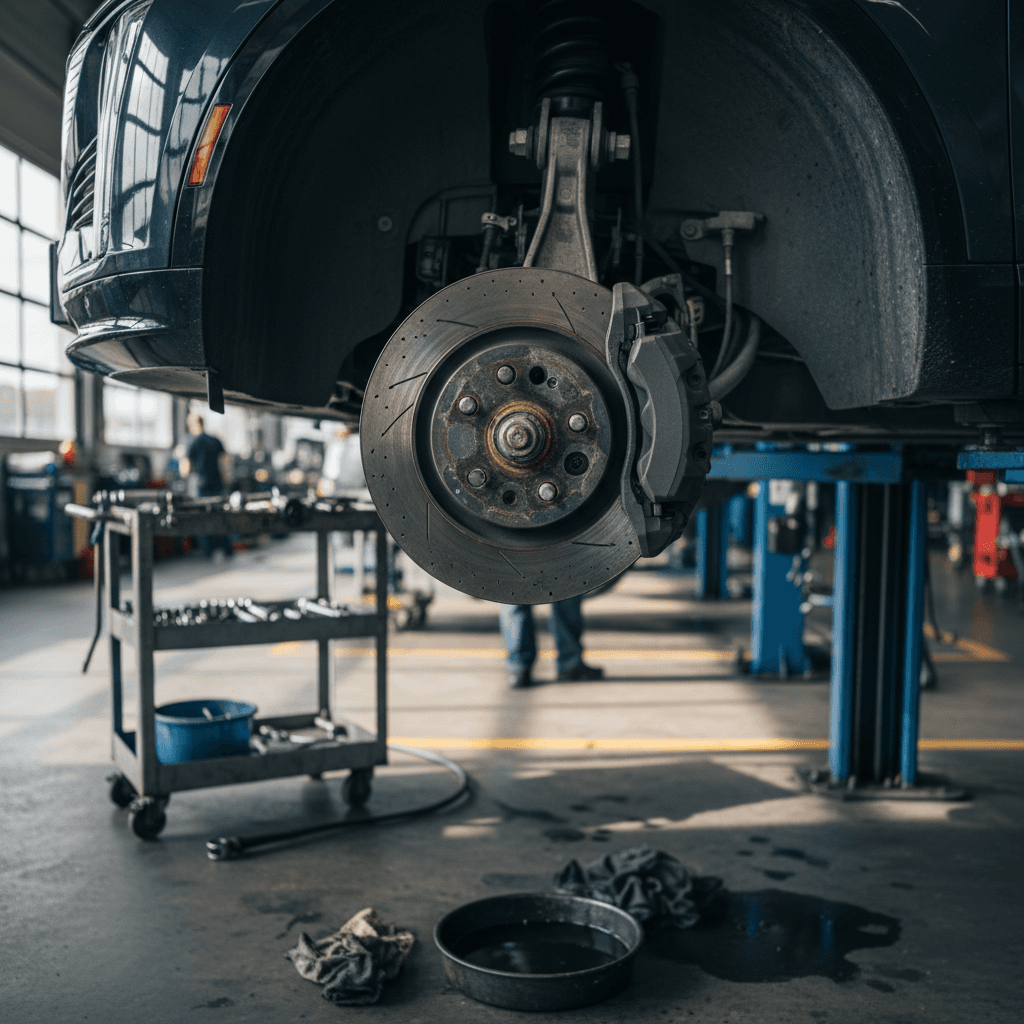
Be careful with jacks and lifts
Extra maintenance checks for a used Cadillac Lyriq
If you’re shopping for a used Lyriq, or already bought one on the secondary market, the maintenance schedule doesn’t change, but your starting point does. You’re inheriting someone else’s habits, for better or worse. This is where a structured inspection and history check really pay off.
Used Cadillac Lyriq maintenance checklist
1. Verify service history
Ask for digital or printed records showing at least tire rotations, brake inspections, and any coolant or brake fluid services. Gaps aren’t a deal‑breaker, but they’re a negotiation point and a reason to plan some catch‑up maintenance.
2. Inspect tires and brakes closely
Uneven tire wear, inner‑edge cord showing, or lip‑worn brake rotors can indicate alignment problems or hard driving. Budget for a fresh set of EV‑rated tires if tread is under 4/32".
3. Check for software and campaign updates
Make sure the Lyriq is current on recalls and service campaigns. Many EV improvements arrive as software; an up‑to‑date car isn’t just safer, it may charge faster or use less energy.
4. Ask about charging habits
Frequent DC fast charging at 100% and regular storage at very high or low states of charge can stress any EV battery over time. A balanced mix of home Level 2 charging and moderate DC use is ideal.
5. Plan a baseline service visit
For peace of mind, schedule a comprehensive inspection with a Cadillac Certified Service center or EV‑specialist shop soon after purchase. Ask them to pay special attention to the battery health report, thermal system, and underbody.
How Recharged helps with used Lyriq maintenance
Ready to find your next EV?
Browse VehiclesCadillac Lyriq maintenance schedule FAQ
Frequently asked questions about Cadillac Lyriq maintenance
Key takeaways: building a simple Lyriq maintenance plan
The core of the Cadillac Lyriq maintenance schedule is refreshingly simple: rotate the tires every 7,500 miles or so, see a service center at least once a year, and take fluids like brake fluid and battery coolant seriously even though they change infrequently. Do that, and you’ll put yourself on the right side of safety, performance, and long‑term value.
- Use 7,500‑mile tire rotations as your basic rhythm, with a full inspection at each visit.
- Treat 5 years as a reminder to ask about brake fluid and the state of your cooling and climate systems.
- If you’re buying used, plan a catch‑up service and get a clear picture of battery health and software status.
- Choose EV‑savvy service providers, Cadillac Certified Service centers or specialists, whenever work touches high‑voltage systems.
If you’re considering a used Lyriq, or you already own one and want more clarity about its long‑term health, platforms like Recharged can help. Every vehicle we sell includes a Recharged Score battery‑health report, transparent pricing, and EV‑specialist support so your maintenance plan is built on real data, not guesswork.