You don’t start Googling “Tesla motor replacement cost” because everything is fine. Maybe you heard a new whine on acceleration, maybe a friend’s Model S needed a drive unit, or you’re wondering if buying a used Tesla is a ticking time bomb. Let’s pull back the service-bay curtain and talk about what Tesla motor failures actually cost in 2025, and how to keep that bill from landing in your lap.
Quick terminology check
How much is a Tesla motor replacement in 2025?
Real‑world Tesla drive unit replacement cost range
For a modern Tesla, a full motor/drive unit replacement out of warranty typically runs: - Model 3 / Model Y: about $7,500–$11,000 at a Tesla Service Center, sometimes less at independent EV specialists. - Model S / Model X: commonly $12,000–$20,000 depending on generation, configuration, and labor rates. Those numbers assume you’re replacing the entire drive unit with a Tesla-supplied assembly. Independent EV shops can come in lower by repairing the existing unit or installing a refurbished one, sometimes dropping the bill into the $5,000–$8,000 range for 3/Y owners.
The big asterisk: warranty
Tesla motor vs drive unit: what you’re actually replacing
The electric motor itself
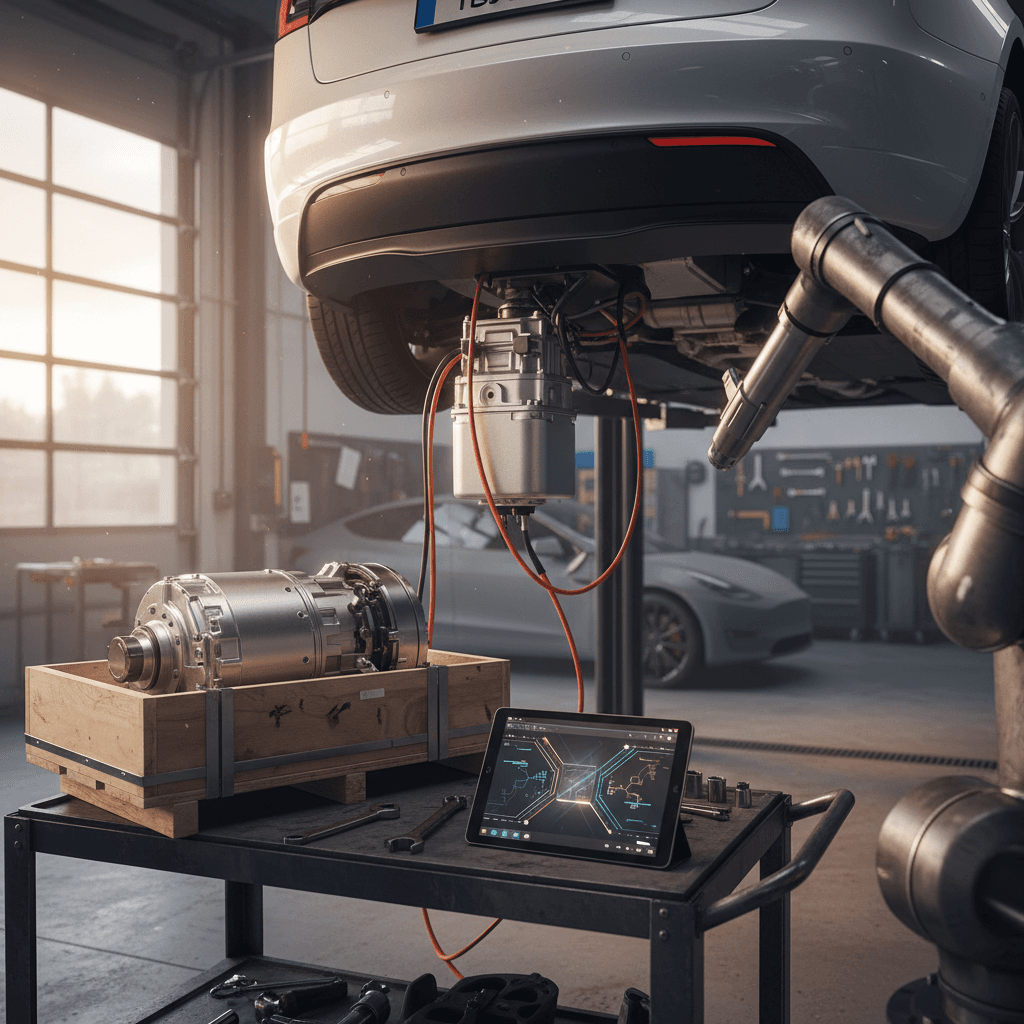
Inside the drive unit is a compact AC motor, rotor, stator, bearings, coolant passages. On its own, the motor is not crazy expensive by EV standards. The problem is access: it’s deeply integrated with the gearbox and inverter, so Tesla rarely swaps “just the motor” at retail.
The complete drive unit assembly
What you usually pay for is the entire drive unit: motor, reduction gearset, differential, inverter, housing, sensors, and fluids. It’s shipped as one piece, bolted in, programmed, and road‑tested. That keeps service time predictable, but makes the line item on your invoice intimidating.
Independent EV shops sometimes go deeper, rebuilding the existing unit with new bearings, seals, or an inverter board. That’s where you start seeing $3,000–$5,000 repair tickets instead of five-figure replacements, but it’s specialized work, and not every market has a shop that will touch it.
Tesla motor replacement cost by model
Estimated 2025 Tesla drive unit replacement costs by model
These are ballpark out‑of‑warranty prices for a full drive unit swap. Real quotes vary with labor rates, parts availability, and whether you use Tesla or an independent EV specialist.
| Model | Typical out-of-warranty cost (Tesla Service Center) | Independent specialist range | Notes |
|---|---|---|---|
| Model 3 (RWD / Dual Motor) | $7,500–$10,900 | $5,000–$8,000 | Smaller, newer units; lots of used and refurbished stock in circulation. |
| Model Y (Long Range / Performance) | $5,000–$10,000 | $5,000–$8,500 | Shares architecture with Model 3; costs similar for most failures. |
| Model S (2012–2016) | $12,000–$18,000 | $7,000–$12,000 | Early cars had more drive unit issues; many are now out of warranty. |
| Model S (2017+) | $12,000–$20,000 | $8,000–$14,000 | Later units generally more reliable, but parts and labor remain expensive. |
| Model X (all years) | $12,000–$20,000 | $8,000–$14,000 | Heavy vehicle, dual‑motor by default; front or rear unit failure can be costly. |
| Performance / Plaid variants | $15,000–$22,000+ | $10,000–$18,000 | Higher‑output tri‑motor setups carry a premium for parts and labor. |
Use these numbers as planning tools, not guaranteed repair quotes.
These are estimates, not promises
Labor, parts, and why quotes vary so much
When you see wildly different stories online about Tesla motor replacement cost, you’re usually seeing three things mixed together: different labor rates, different parts strategies, and different failure modes.
- Labor rates: Tesla Service Centers generally bill around premium‑brand labor rates, while independent shops can be lower, but may take longer on diagnosis.
- New vs refurbished parts: A brand‑new Tesla drive unit will cost more than a properly rebuilt or salvaged one, even if the warranty terms are similar.
- Scope of work: A clean swap on a healthy car is one thing. Corrosion, coolant intrusion, or accident damage can add thousands in additional work.
- Programming and calibration: After installation, the car needs software pairing, test drives, and sometimes alignment. That’s baked into most quotes.
Motor vs. battery costs
Warranty coverage when a Tesla motor fails
How Tesla covers motors and drive units
Most owners never pay full price because the Battery & Drive Unit warranty does the heavy lifting.
Battery & Drive Unit warranty
Bumper‑to‑bumper vs. drive unit
Used & CPO coverage
How to check if your Tesla motor is still under warranty
1. Look up your car’s exact warranty terms
Open the Tesla app or online account and pull the warranty section for your VIN. Compare the in‑service date and odometer with the Battery & Drive Unit coverage (often 8 years / 100k–150k miles).
2. Confirm whether you’re the first owner
Early Model S/X cars, and some used purchases directly from Tesla, had different coverage add‑ons. Knowing the ownership history helps decode which version you have.
3. Schedule a diagnostic, not a replacement
If you suspect a drive unit issue, book service for <strong>diagnosis</strong>. If Tesla confirms a covered failure, they’ll quote a $0 replacement; if it’s borderline, you can compare that repair path with an independent shop before authorizing work.
Good news for most owners
Repair vs replace: can you fix a Tesla motor?
Tesla’s default solution is to replace the entire drive unit. Independent EV specialists, however, often take a more surgical approach. Whether your car can be repaired instead of fully “re‑motored” comes down to what’s actually wrong inside the unit.
Common drive unit issues and typical fixes
Not every noise equals a $15,000 bill.
Bearing noise or light gear whine
Inverter or electronics failure
Coolant intrusion & corrosion
Lack of fluid service
Ask for the options menu
Signs your Tesla motor or drive unit is failing
- A rising whine or howl that scales with road speed, not motor RPM readout alone.
- Noticeable vibration or shudder under acceleration that wasn’t there before.
- Repeated “Car needs service” or drive‑unit‑related alerts in the Tesla app or on the screen.
- Clunks or grinding when going from Drive to Reverse, or when you apply torque after coasting.
- Sudden loss of power, car refusing to go into Drive, or dropping into limited‑power mode.
Don’t ignore new noises
How common are Tesla motor failures really?
Early Model S owners remember the era of serial drive unit replacements; some cars went through multiple under warranty. Tesla responded with improved designs, better seals, and updated lubrication strategies. For later Model S/X and especially for Model 3/Y, outright motor failure is relatively rare compared with classic engine grenades in gas cars.
Compared with ICE engines
A conventional engine has hundreds of moving parts, high combustion pressures, and a lifetime of heat cycles. It’s not unusual to see a $6,000–$10,000 engine replacement quote by 150,000 miles. By contrast, most Teslas will never need a drive unit during their warranty life, and many won’t need one ever.
Where problems do cluster
The risk isn’t evenly distributed. High‑mileage rideshare cars, heavily modified performance builds, and early‑production cars that missed design updates are more likely to have issues. That’s why service history and a good inspection matter more than any single horror story on a forum.
An electric motor failing in a Tesla is news because it’s unusual; an engine failing in a 10‑year‑old gas SUV is just Tuesday.
What this means if you’re buying a used Tesla
Used Teslas can be spectacular buys, or spectacular headaches, depending on how well you understand battery and drive unit risk. The upside: EVs have far fewer wear items than gas cars. The downside: when something big does go wrong, it’s really big. This is where a transparent, data‑driven marketplace like Recharged earns its keep.
How Recharged helps you avoid a surprise motor bill
If you’re shopping a used Tesla, you want more than glossy photos.
Recharged Score battery & drive data
Specialist inspections
Financing & total‑cost clarity
Ready to find your next EV?
Browse VehiclesChecklist: reducing drive unit risk when buying used
1. Verify remaining battery & drive unit warranty
Ask for the in‑service date and current mileage, then compare to Tesla’s Battery & Drive Unit warranty terms. A car with 2–3 years of coverage remaining is much less likely to stick you with a motor bill.
2. Listen for noises on a proper test drive
Drive at a variety of speeds on smooth pavement, lift off the accelerator, and gently re‑apply power. You’re listening for persistent whines, growls, or clunks, not one‑off road‑noise events.
3. Pull service records where possible
Ideally you’ll see routine maintenance and no repeated drive unit replacements or unexplained high‑voltage faults. A single warranty drive unit swap years ago isn’t an automatic deal‑breaker; a pattern might be.
4. Get a third‑party EV inspection
If you’re not buying through a marketplace that already did it, consider paying an independent EV specialist to scan for error codes, inspect for leaks, and road‑test the car.
5. Consider price vs. risk
A bargain‑basement price on a high‑mileage Tesla that’s just out of warranty might make sense, if you budget a worst‑case drive unit or battery cost into the deal. Otherwise, it may be wiser to pay more for a lower‑risk car.
FAQ: Tesla motor replacement cost
Frequently asked questions about Tesla motor replacement
Bottom line on Tesla motor replacement costs
Here’s the honest summary: a Tesla motor replacement is a big-ticket repair, often five figures if you’re out of warranty and insist on a brand‑new drive unit from Tesla. The flip side is that genuine drive unit failures are rare for most owners, and many cars will live full, useful lives without ever needing one. The smartest move is not to panic, it’s to buy and own strategically.
If you already own a Tesla, that means listening for new noises, keeping up with fluid checks where recommended, and understanding your warranty coverage before anything goes wrong. If you’re shopping used, it means leaning on real diagnostics, verified battery and drive‑unit data, and experts who live and breathe EVs. That’s exactly what Recharged was built to provide: clear reports, fair pricing, EV‑specialist support, and flexible options, financing, trade‑ins, even nationwide delivery, so your first Tesla (or your next one) feels like a great decision, not a roll of the dice.