If you’re shopping for a used Tesla Model Y, you’ve probably heard horror stories about build quality, recalls and software glitches. The reality is more nuanced: some years are clear red flags, others are quietly solid buys. Knowing the Tesla Model Y worst year to avoid used can save you thousands and a lot of service-center time.
At a Glance
Why Model Year Matters So Much on a Used Tesla Model Y
Most gas crossovers evolve slowly, so choosing a specific model year is often about minor feature changes. With the Tesla Model Y, each production year brings meaningful shifts in build quality, software behavior, hardware revisions and recalls. That makes model year a much bigger deal when you’re buying used.
- Tesla constantly changes parts and suppliers mid-year, so early production runs can be riskier.
- Reliability scores swing sharply from year to year in independent surveys like Consumer Reports and TÜV inspections.
- Over-the-air updates can fix some issues, but not panel gaps, suspension wear or brake defects.
- Battery chemistry, heat pumps and motor variants evolve, changing real-world range and longevity.
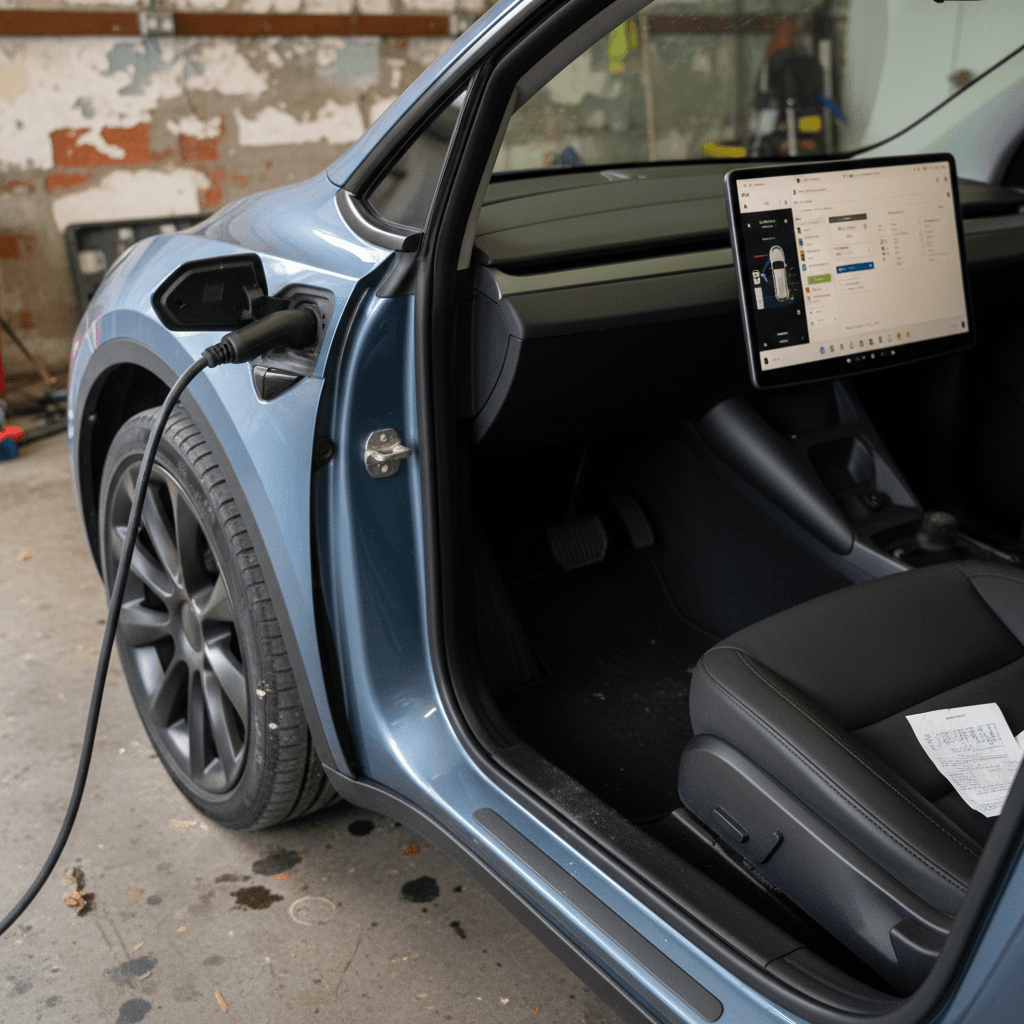
Quick Answer: Tesla Model Y Years to Avoid vs. Best Years
Used Tesla Model Y Year Snapshot
Here’s the simple breakdown if you’re trying to decide which used Model Y years to chase and which to treat with caution:
Tesla Model Y Years: High-Risk vs. Better Bets
Use this as a starting point, then judge each vehicle on its own condition and history.
Higher-Risk / Years to Approach Carefully
- 2020 Model Y – First model year, many reports of panel gaps, paint defects, trim issues, plus early hardware and software bugs.
- 2021 Model Y – Highest overall complaint counts and large recall tally; still early in the production learning curve.
- 2022–2023 Model Y (esp. Europe) – German TÜV 2026 report shows the worst defect rate of any 2–3‑year‑old car in a decade, driven by suspension, brakes and lighting faults.
You don’t have to automatically walk away from these years, but they demand a deeper inspection and stronger price justification.
Lower-Risk / More Attractive Used Years
- Late‑2021 to 2022 U.S. builds – Manufacturing quality improves versus 2020, though still not perfect.
- 2023–2024 Model Y – Many early build issues ironed out; Consumer Reports and owner reviews show stabilizing or improving satisfaction.
- 2025 updates – Freshened styling and interior and a quieter cabin; still new in the used market, so prices may be high but reliability data is encouraging.
Condition, battery health and price still matter more than the odometer alone, even in the “better” years.
Don’t Over-Simplify the Year Question
How We Ranked the Best and Worst Model Y Years
Before singling out any model year, it’s worth understanding what’s behind the labels. For this guide, we looked at trends from multiple sources rather than one scorecard.
- Owner complaint volumes by model year from databases that track thousands of issues; 2021 and 2023 Model Ys show some of the highest problem counts reported so far.
- Independent reliability scores from organizations such as Consumer Reports, where Model Y swings from "best so far" in 2021 to "worst so far" in 2023, before improving in 2024.
- Inspection data from Germany’s TÜV 2026 report, which found the 2022–2023 Model Y had the highest serious defect rate of any nearly new car tested, largely due to suspension and brake issues.
- Recall counts and types (hardware vs. software-fixable) across model years.
- Real‑world owner reviews from outlets like Kelley Blue Book, where late‑model owners often rate performance and reliability highly even as earlier years attract more complaints.
Why European Data Matters in the U.S.
Tesla Model Y “Worst Years” to Avoid Used
Different sources point to different low points, but a few themes are consistent. When people ask about the Tesla Model Y worst year to avoid used, they’re usually talking about a mix of early build quality and mid‑cycle reliability dips.
Tesla Model Y Risk Profile by Model Year
Higher risk doesn’t mean “never buy” – it means negotiate harder, dig deeper into history and consider third‑party inspections.
| Model Year | Overall Risk Level (Used) | Why It’s Risky | What To Look For |
|---|---|---|---|
| 2020 | High | Launch year with widespread reports of panel gaps, paint issues, water leaks and early software quirks. | Inspect body alignment, paint, seals and interior trim closely; verify all recall work is complete. |
| 2021 | High | Highest number of owner‑reported problems so far; many recalls and maturing production lines. | Check for suspension noise, trim rattles, camera/sensor issues and any history of repeated service visits. |
| 2022 | Medium–High | Some hardware and build improvements, but early examples still show quality variability; 2–3‑year‑old German cars flagged for suspension and brake defects. | Road‑test over bumps and under braking; look for uneven tire wear, clunks or vibration. |
| 2023 | Medium–High | TÜV 2026 report shows ~17% of 2022–2023 Model Ys failing inspection with serious defects, worst in a decade. | Be extra careful with cars that have high mileage on poor roads; get an underbody and suspension inspection. |
| 2024 | Medium | Reliability scores and owner satisfaction stabilize; far fewer recalls, but long‑term data is still limited. | Prioritize cars with clean histories and no accident damage; check for even tire wear and smooth ride. |
| 2025 | Low–Medium (early data) | Updated styling and interior, quieter ride, and early reliability predictions look better; very new in the used market. | Treat like a nearly new vehicle: focus on price vs. new, warranty coverage and any early TSBs or recalls. |
Risk level is based on complaint data, recalls, reliability scores and inspection results through early 2026.
So, Is There a Single “Worst Year” to Avoid?
Better Bets: Best Years for a Used Tesla Model Y
On the other side of the ledger, later Model Ys benefit from several rounds of manufacturing refinement, fewer serious recalls and better predicted reliability. They’re not perfect, but they’re generally less risky if you find a well‑cared‑for example.
2021–2022: Early Sweet Spot (With Caveats)
Despite high complaint counts, 2021 models actually earned the Model Y’s best Consumer Reports reliability score so far, and 2022 models scored well in owner satisfaction and resale ratings. If you can verify that a specific car has had its issues sorted under warranty, these years can be strong value plays.
- Look for later‑build 2021s (VIN and build‑date in late year).
- Prefer cars with complete service history from Tesla.
- Use reliability concerns as leverage on price.
2023–2025: Refinement and Better Owner Reviews
For U.S. buyers, 2023 and especially 2024–2025 Model Ys show better road‑test scores and solid owner ratings, with 2024 owners often praising performance and perceived reliability. The 2025 refresh adds a quieter cabin and improved interior materials.
- Expect to pay more but get fresher hardware and software.
- Look for remaining factory warranty to limit your downside.
- Still inspect brakes, suspension and tires carefully.
Where Recharged Fits In
Ready to find your next EV?
Browse VehiclesCommon Tesla Model Y Used-Car Problems by Year
Beyond broad “good year/bad year” labels, you should understand the specific issues that pop up when these cars hit the used market. Many are repairable but expensive if you’re out of warranty.
Most Common Used Model Y Issues (and When They Show Up)
Use this as a checklist during your test drive and visual inspection.
2020–Early 2021: Build Quality & Water Leaks
- Misaligned body panels and hatch.
- Uneven gaps around doors and trim.
- Paint thin spots, overspray or chips from delivery.
- Reports of water intrusion around rear hatch seals.
You’ll spot most of these in the first 60 seconds if you look carefully at panel alignment and seals.
2020–2022: Stiff Ride & Suspension Wear
- Extra‑firm ride on Performance models, leading to complaints on rough roads.
- Premature suspension wear and clunks over bumps reported in some cars.
- European inspections highlight suspension and brake issues on 2–3‑year‑olds.
Budget for possible suspension work if you’re buying an early Performance or high‑mileage car.
2020–2023: Software & Driver-Assist Glitches
- Infotainment freezes or random reboots.
- Camera, Autopilot or cruise‑control behavior that feels inconsistent.
- Occasional false collision warnings.
Many software issues improve via updates, but persistent problems can hint at sensor or camera hardware faults.
All Years: Charging & 12V System Problems
- On‑screen charging errors at certain DC fast chargers.
- On older cars, 12V battery failures that strand owners.
- Charge‑port door alignment or freezing in cold climates.
Test both AC and DC charging if possible, and check for any past service addressing charging hardware.
2021–2023: Recalls & Safety Systems
- Multiple recalls related to forward collision avoidance and speed control behavior.
- Airbag and exterior lighting complaints on later cars.
Verify that all recalls are completed on the specific VIN, don’t assume software updates fixed everything.
High-Mileage Cars: Brakes, Tires, Suspension
- Heavier EV curb weights eat tires and bushings faster than many gas crossovers.
- Hard‑driven Performance models can show early rotor and pad wear.
A thorough pre‑purchase inspection should include a lift‑bay look at tires, bushings and brakes.
Battery Health and Range on a Used Model Y
The good news: most Model Y batteries age more gracefully than social media suggests. The bad news: battery health is invisible in most classified listings, and replacement costs are high enough that you can’t afford to guess.
Typical Model Y Battery Degradation
- Compare the car’s displayed full‑charge range with EPA estimates for that trim and year. A big gap can signal heavier degradation or repeated fast‑charge abuse.
- Ask the seller for charging habits: mostly home Level 2 at 60–80% is ideal; constant DC fast‑charging to 100% is not.
- Look for any battery‑related service history or high‑voltage system warnings in the car’s records.
- On a test drive, pay attention to unexpected drops in state of charge or big swings in predicted range.
How Recharged De‑Risks Battery Unknowns
Price Trends, Depreciation and Value Traps
Used Tesla pricing has been volatile. In some recent years, average used Tesla values dropped by double digits year‑over‑year, with Model Y among the hardest hit. More recently, tax‑credit changes and shifting new‑car pricing have sent some used Tesla prices back up even as other EVs get cheaper.
- Early years (2020–2021) may look cheap, but repair risk is higher. Deep discounts should reflect that.
- 2022–2023 cars sit in the middle: old enough to have meaningful mileage, new enough to command higher prices. Don’t overpay just because the tech feels “current.”
- 2024–2025 models are still expensive in many markets. In some cases, lightly used cars list close to new prices once you factor in federal and state incentives on new EVs.
Watch for the “Pretty but Problematic” Trap
Checklist: How to Shop a Used Tesla Model Y the Smart Way
11 Steps Before You Buy Any Used Model Y
1. Start With the VIN and Build Date
Confirm the exact model year, build month and factory. For borderline years (2020–2023), later build dates often benefit from running changes and fixes.
2. Pull a Full History Report
Look for accident damage, repeated service visits and lemon/buy‑back labels. Walk away from cars with unclear titles or airbag deployments unless they’re deeply discounted and independently inspected.
3. Check Recall Completion
Use Tesla’s VIN recall checker and ask for documentation. Many recalls are software‑based, but hardware campaigns, especially around brakes, suspension or seatbelts, matter most.
4. Inspect Panel Gaps and Paint Up Close
Walk the car in good light. Consistent gaps, smooth door closures and even paint texture are must‑haves, especially on 2020–2021 cars.
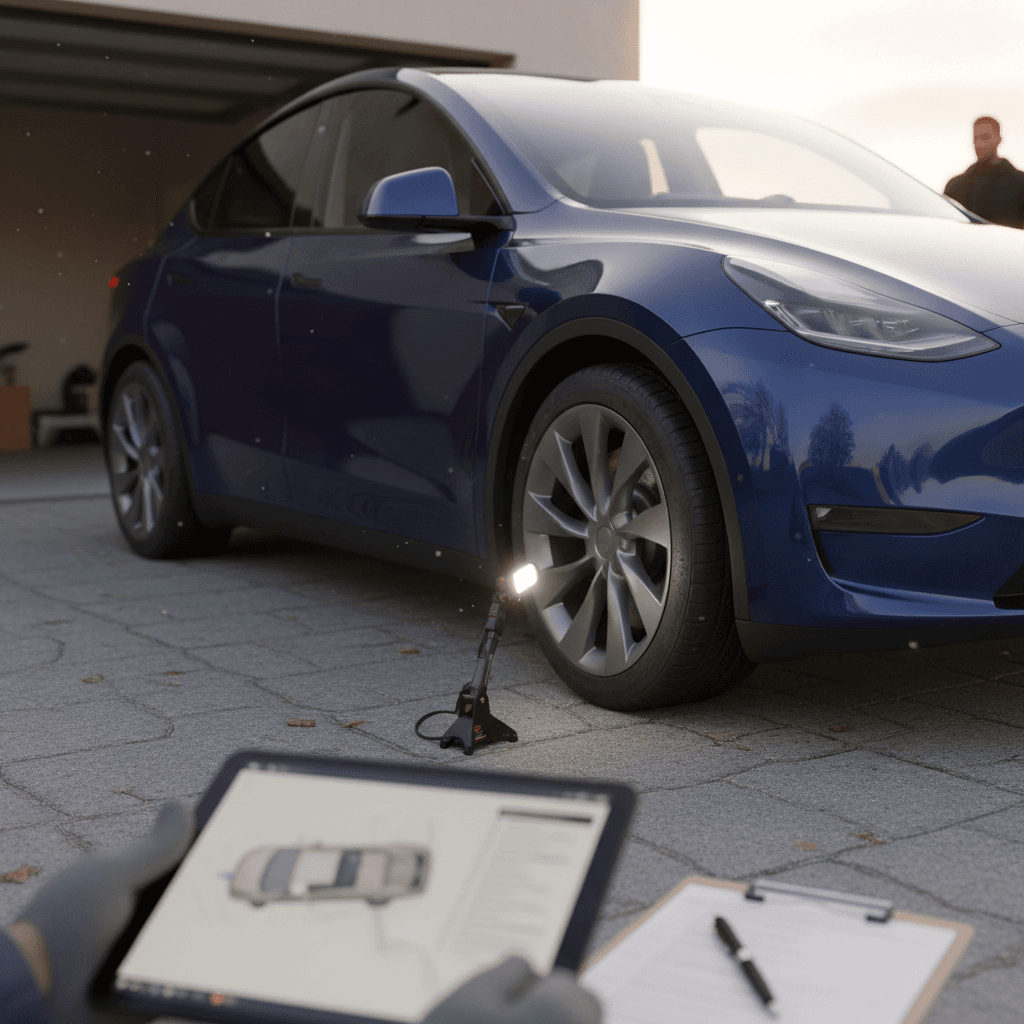
5. Look Underneath for Suspension and Rust
If possible, get the car on a lift. Check for bent control arms, leaking shocks, rust, and uneven tire wear that hints at alignment or suspension issues.
6. Test Drive Over Bad Pavement
A quick suburban loop isn’t enough. Drive over patched asphalt and speed bumps. Listen for clunks, rattles or steering play that suggest worn components.
7. Evaluate Battery Health, Not Just Mileage
Compare the displayed full‑charge range to original specs. If you’re buying through Recharged, use the Recharged Score battery report to compare similar cars side by side.
8. Verify Charging Behavior
Plug into at least one Level 2 charger; if possible, test a DC fast charger. Watch for errors, inconsistent charging rates or heat warnings.
9. Run Through All Software and Driver‑Assist Features
Check cameras, Autopilot, navigation, Bluetooth and over‑the‑air update status. Quirky behavior that persists after updates may point to deeper hardware issues.
10. Confirm Remaining Warranty Coverage
Tesla’s basic and battery warranties are generous, but vary by in‑service date and mileage. A car still under battery and drivetrain coverage is inherently less risky.
11. Compare Total Cost of Ownership
Look beyond the sticker price. Factor in insurance, tires, potential suspension work and any financing costs. A slightly newer, more reliable year can be cheaper over 3–5 years.
Make the Numbers Work for You
FAQ: Tesla Model Y Worst Years to Avoid Used
Frequently Asked Questions About Used Tesla Model Y Years
Bottom Line: Should You Avoid a Used Tesla Model Y?
You don’t have to avoid the Tesla Model Y on the used market, you just have to be selective. Launch‑year and early‑production cars (especially 2020, and some 2021–2023 builds) have enough documented issues that they belong in the “extra‑cautious” bucket. Later years show real progress, but no EV this complex is risk‑free.
If you treat model year as a risk signal, not a final verdict, and pair it with solid inspection, battery‑health data and sensible pricing, a used Model Y can be an excellent daily driver with low running costs. And if you’d rather not decode all of that alone, Recharged can help you compare cars, pre‑qualify for EV financing, and ship a vetted Model Y to your driveway with the Recharged Score report already in hand.