If you just watched your Tesla Model Y winter range loss jump from 280 miles to 180 the moment the temperature dropped, you’re not alone. Cold weather can hit EV range hard, but there’s a big difference between “normal” winter loss and a real problem. This guide breaks down what to expect from a Model Y in winter, why it happens, and the specific habits that can claw back a surprising amount of range.
Quick takeaway
Why your Tesla Model Y loses range in winter
Lithium‑ion batteries hate the cold. As temperatures drop, the electrolyte inside the battery becomes more viscous and internal resistance rises. That means it takes more energy to move electrons, so your Model Y has to work harder just to deliver the same power to the wheels. On top of that, the car suddenly has to spend energy on things your summer self never thinks about: heating the cabin, warming the battery pack, defrosting glass, and pushing through snow and slush.
- Colder chemistry – At freezing and below, the battery can’t accept or deliver energy as efficiently, so you see higher consumption for the same trip.
- Cabin and battery heating – Unlike a gas car, an EV can’t steal waste heat from an engine. Your Model Y is essentially powering a 3–6 kW space heater to keep you warm and to preheat the battery.
- Thicker air & rolling resistance – Cold air is denser and winter tires and slush increase rolling resistance, so highway driving takes more energy.
- Limited regen braking – When the pack is cold, Tesla limits regenerative braking. Energy you’d normally recapture as you slow down is now turned into heat in the friction brakes instead of going back into the battery.
What Tesla says about cold weather
How much winter range loss to expect in a Model Y
Typical Tesla Model Y winter range loss
Independent fleet‑wide studies of EVs in 2024–2025 winter data show that most models average around 20% range loss in freezing temperatures, with better‑optimized cars, including Teslas with heat pumps, often doing a bit better. The Model Y in particular tends to retain about 86% of its normal range in freezing conditions, putting it near the top of the EV pack for cold‑weather efficiency, even if it can still feel like a big drop compared with its EPA sticker.
Rough Model Y winter range examples
Illustrative estimates based on typical losses. Your exact results will vary with speed, wind, elevation, and HVAC use.
| Outside temp | Driving mix | Approx. range | What that feels like |
|---|---|---|---|
| 50°F (10°C) | City/highway mix | 260–280 miles | You’ll notice some loss, but it’s easy to live with. |
| 32°F (0°C) | City/highway mix | 230–260 miles | Plan a bit more buffer for longer drives. |
| 20°F (-7°C) | Mostly highway | 190–230 miles | Road trips need more frequent Supercharger stops. |
| 0°F (-18°C) | Mostly highway | 160–200 miles | Aggressive heating and higher speeds quickly burn range. |
Assumes a Long Range Model Y rated around 310 miles in mild weather.
Beware short, cold trips
Heat pump, tires, and trim: how spec changes winter range
What affects Model Y winter efficiency the most?
Some features help you; others quietly nibble away at range.
Heat pump & Octovalve
Wheel & tire choices
AWD vs. RWD and terrain
Performance vs. Long Range in winter
The Model Y Performance rides on larger wheels and stickier tires than a Long Range version. In winter, that can mean noticeably higher consumption at 70–75 mph, even though the EPA ratings aren’t that far apart on paper. If you’re a frequent winter road‑tripper, the Long Range on smaller wheels will usually be the more forgiving choice.
Winter tires: worth the tradeoff
Dedicated winter tires will knock a few percent off your efficiency but dramatically improve traction and stopping distances on snow and ice. Tesla notes that regen may be temporarily limited while the system recalibrates to new tires, another small factor in early‑drive efficiency, but for safety, winter tires are almost always the right call in snow states.
City vs. highway: how driving style amplifies winter loss
Cold weather punishes some driving patterns more than others. Two Model Y owners in the same town can report very different winter experiences simply because one spends most of their time on a 10‑mile freeway commute at 75 mph, while the other does 30 miles of slower city driving with lots of opportunities for regen.
- Highway in the cold – Dense air, snow tires, and continuous cabin heating add up. At 70–75 mph on a 20°F day, it’s perfectly normal to see 30–40% loss versus summer.
- City / suburban driving – Lower speeds mean less aerodynamic drag, and you recapture more energy with regenerative braking once the pack is warm. Loss may be closer to 15–25% in similar temps.
- Stop‑and‑go in deep cold – If every trip starts with a cold pack and you keep the cabin toasty, the heater becomes the biggest energy hog. You’ll often see the worst‑case numbers here.
Watch your Wh/mi, not just %
12 ways to cut Model Y winter range loss
Practical steps to protect your Model Y’s winter range
1. Always precondition while plugged in
Use the Tesla app to preheat the cabin and battery before you leave, ideally 20–45 minutes ahead in very cold weather. Because you’re drawing from the wall instead of the pack, you start the trip with a warm cabin and battery without sacrificing as much driving range.
2. Use scheduled departure
In the Tesla app or on the screen, set a <strong>scheduled departure</strong> time. The car will automatically time charging and preconditioning so the pack is warm and near your target state of charge right when you leave, which improves both efficiency and DC‑fast‑charging speeds at your first stop.
3. Favor seat and steering‑wheel heaters
Heated seats and steering wheel use far less energy than blasting the cabin heater. Set the cabin a few degrees cooler than you would in summer and let the seat heater do the comfort work.
4. Dial back your speed
Above about 60 mph, aerodynamic drag climbs quickly, and cold air is denser. Dropping from 75 to 65 mph on a 20°F day can save tens of miles of range over a long drive without meaningfully changing your arrival time on a shorter trip.
5. Clear snow and ice thoroughly
Snow on the roof, hood, and wheel wells increases drag and rolling resistance. Completely brushing off the car and knocking packed snow out of the wheel arches gives your efficiency a small but noticeable boost.
6. Keep tires properly inflated
Tire pressure falls in cold weather (about 1 psi for every 10°F drop). Under‑inflated tires increase rolling resistance and reduce range. Check pressures regularly and keep them near the door‑jamb recommendation unless your tire shop advises otherwise for winter conditions.
7. Avoid topping off to 100% for short trips
In winter the car may spend extra time conditioning the pack to protect it when you charge all the way to 100%. For day‑to‑day use, keeping the battery around <strong>60–80%</strong> is usually more efficient and healthier long‑term, and you can save 90–100% charges for road trips.
8. Group errands into one warm trip
String several errands together instead of doing multiple short, cold starts. Once the battery and cabin are warm, each additional mile costs you less energy than the first few miles did.
9. Park indoors or in the sun when possible
A garage, even an unheated one, keeps the pack warmer than open air. If you’re parking outside, choose a sunny spot so the cabin and battery gain a few free degrees during the day.
10. Use navigation to Superchargers early
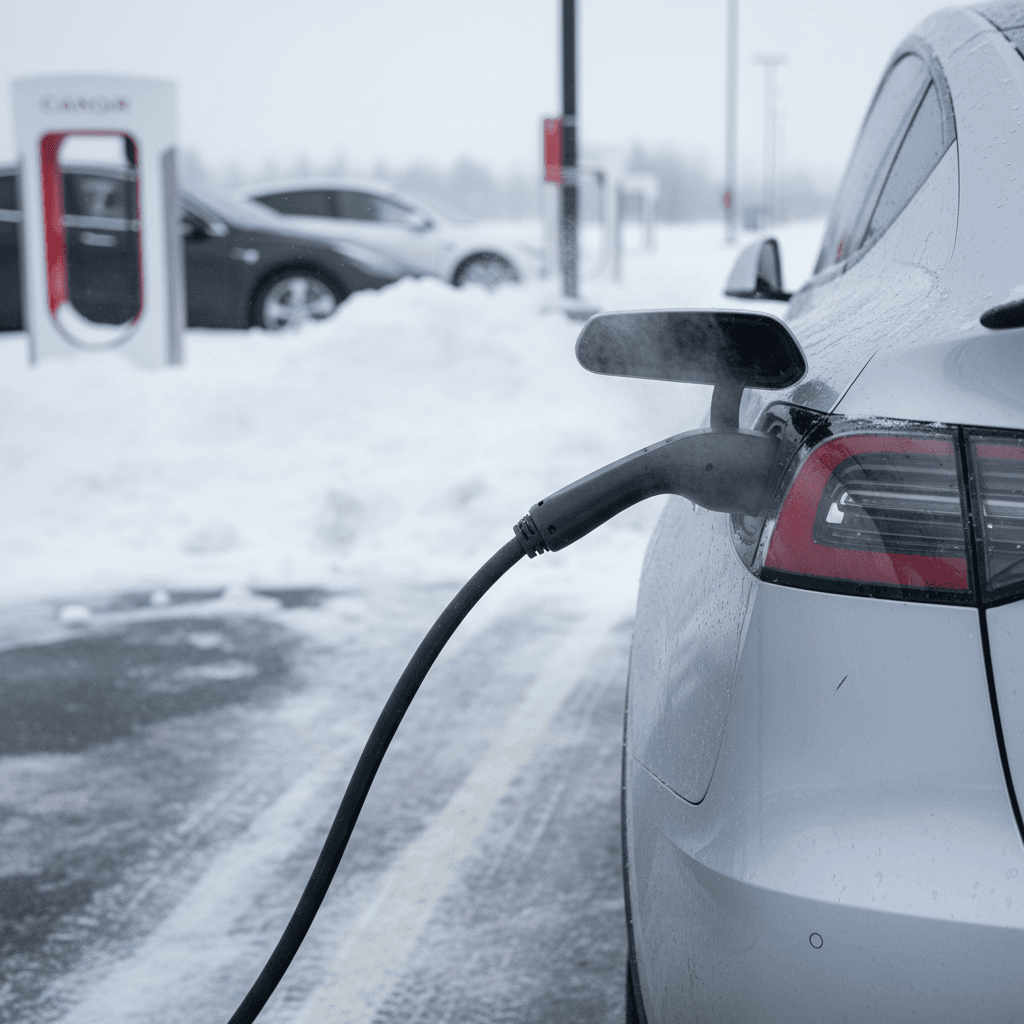
If you’re heading to a Supercharger or other DC fast charger, put it into the nav before you leave. The car will <strong>precondition the battery for fast charging</strong>, which shortens charge times and improves how much energy you can add in a given stop.
11. Watch for the blue “cold battery” icon
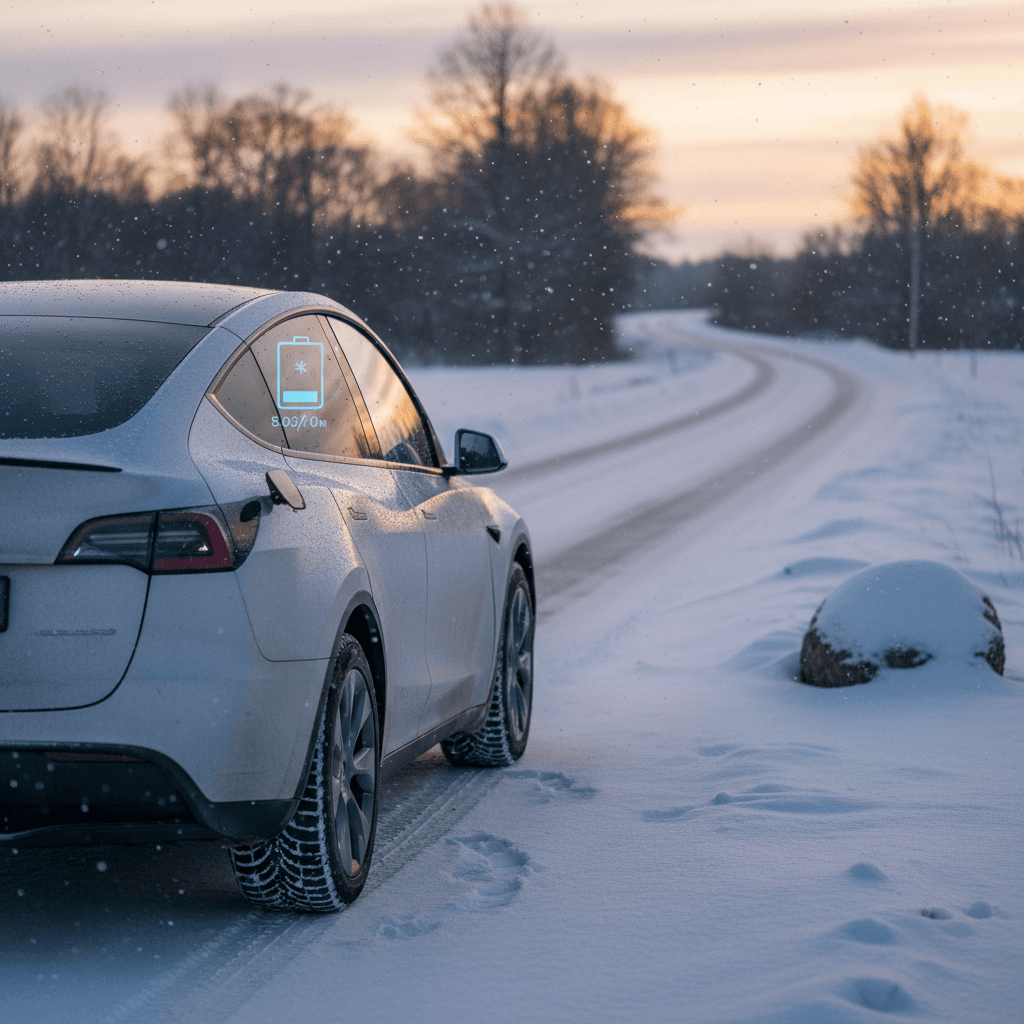
If you see a blue snowflake icon on the battery, capacity and regen are temporarily reduced because the pack is cold. That’s a sign to expect lower regen and higher consumption until you’ve driven a bit or the car has had time to precondition.
12. Keep software updated
Tesla frequently tweaks thermal management and efficiency via over‑the‑air updates. Staying current ensures you benefit from the latest winter‑driving improvements, especially on newer heat‑pump‑equipped Model Ys.
Planning winter road trips in a Model Y
Range loss feels most stressful when you’re staring at a long winter highway day. The key is to plan for realistic winter numbers, not the optimistic EPA rating on your window sticker, and to build in a bit of buffer for wind, slush, and unexpected detours.
Sample winter road‑trip planning for a Model Y Long Range
Very rough planning numbers for a 300‑mile winter highway day in a Long Range Model Y at 20–30°F.
| Item | Summer assumption | Winter planning target |
|---|---|---|
| Usable range at 100% | ~300 miles | Plan on 190–220 miles |
| Typical driving speed | 70–75 mph | 65–70 mph when convenient |
| Charge stops for 300 miles | 1 quick stop | 2 shorter, predictable stops |
| Arrival state‑of‑charge buffer | 5–10% | 15–20% in snow country |
Use this as a framework, then fine‑tune with Tesla’s Trip Planner and your own experience.
Road‑trip tactics that make winter easier
A little planning turns winter range loss into a non‑event.
Use Tesla Trip Planner
Think in time, not just miles
Prioritize safety and comfort
Does winter hurt your Model Y battery long‑term?
Cold weather feels harsh, but for lithium‑ion batteries it’s heat, not cold, that does most of the long‑term damage. Short‑term capacity loss in winter is largely reversible: when temperatures rise back into the 60s and 70s, your displayed range should rebound to its normal summer pattern.
- Tesla actively manages battery temperature to keep it in a healthy window, even when parked, as long as there’s charge in the pack.
- Occasional fast charging in winter, especially with preconditioning, is not harmful. What you want to avoid is repeatedly fast‑charging a stone‑cold battery without allowing it to warm up.
- Daily charging to 70–80% and avoiding sitting at 0% or 100% for long periods will do more for battery longevity than anything else you tweak for winter.
Good news for used‑Model‑Y shoppers
Shopping a used Tesla Model Y? Think about winter
If you’re considering a used Model Y and you live in a four‑season climate, it pays to look beyond the sticker EPA range and think practically about how the car will behave from December through March. A car that feels perfect on a sunny test drive can feel very different on a dark, 15°F commute with a strong headwind.
Questions to ask the seller
- What wheel and tire setup does it run in winter? A second set of wheels with snow tires is a big plus.
- Has the car spent time in extremely hot climates that could accelerate long‑term degradation?
- What’s the current displayed full‑charge range in mild weather?
- Do they routinely charge to 100% or leave it parked at very low state of charge?
How Recharged makes winter performance transparent
When you buy a used EV through Recharged, every vehicle comes with a Recharged Score Report that includes objective battery‑health data and a fair‑market pricing review. That means you’re not guessing how much real‑world range you’ll have, winter or summer, and our EV specialists can talk you through what to expect on your specific commute and favorite road‑trip routes.
Trade‑in tip
FAQ: Tesla Model Y winter range loss
Common questions about Model Y winter range
Bottom line on Model Y winter range
Every EV loses range in the cold, and the Tesla Model Y is no exception. But the data suggests it’s actually one of the stronger performers in winter, typically keeping around four‑fifths or more of its normal range in freezing conditions, provided you drive with the season in mind. If you lean on preconditioning, let the heat pump do its job, and plan road trips around realistic winter numbers instead of the sunniest EPA rating, winter range loss becomes something you anticipate and manage, not a reason to fear EV ownership.
If you’re moving into a Model Y from a gas vehicle, or stepping into a used Tesla for the first time, a little education goes a long way. That’s exactly why Recharged backs every used EV with a transparent Recharged Score Report and EV‑savvy advisors who can walk you through what winter will look like on your driveway, not just on a lab dyno. With the right expectations and a few simple habits, winter becomes just another season, not a deal‑breaker.