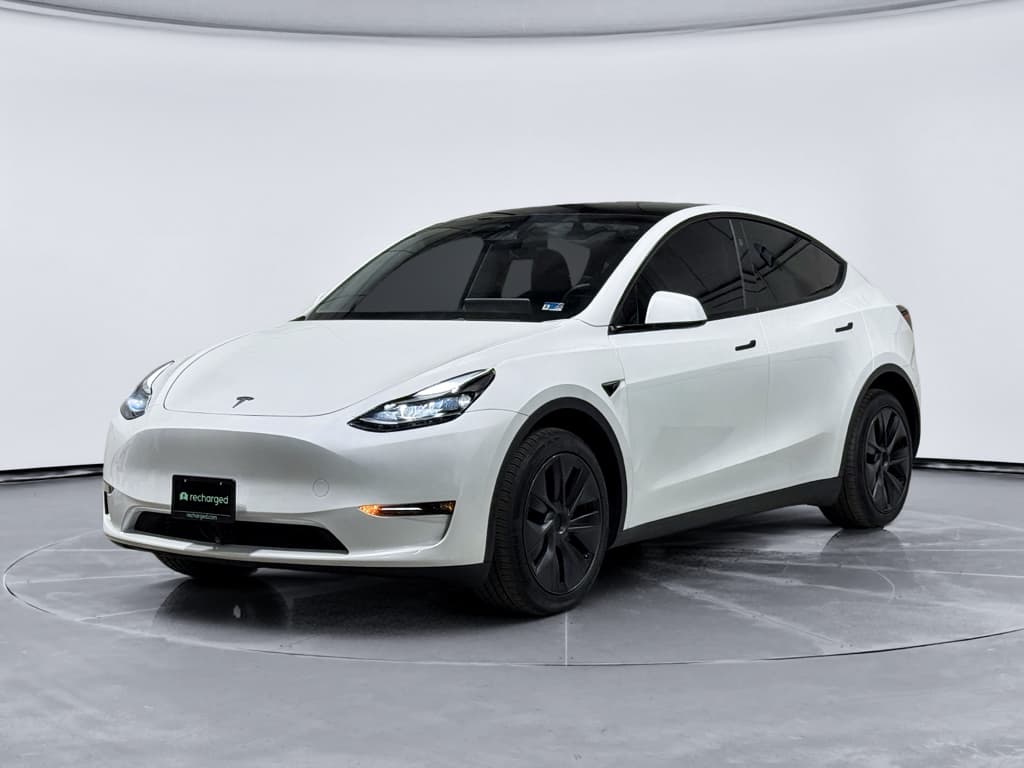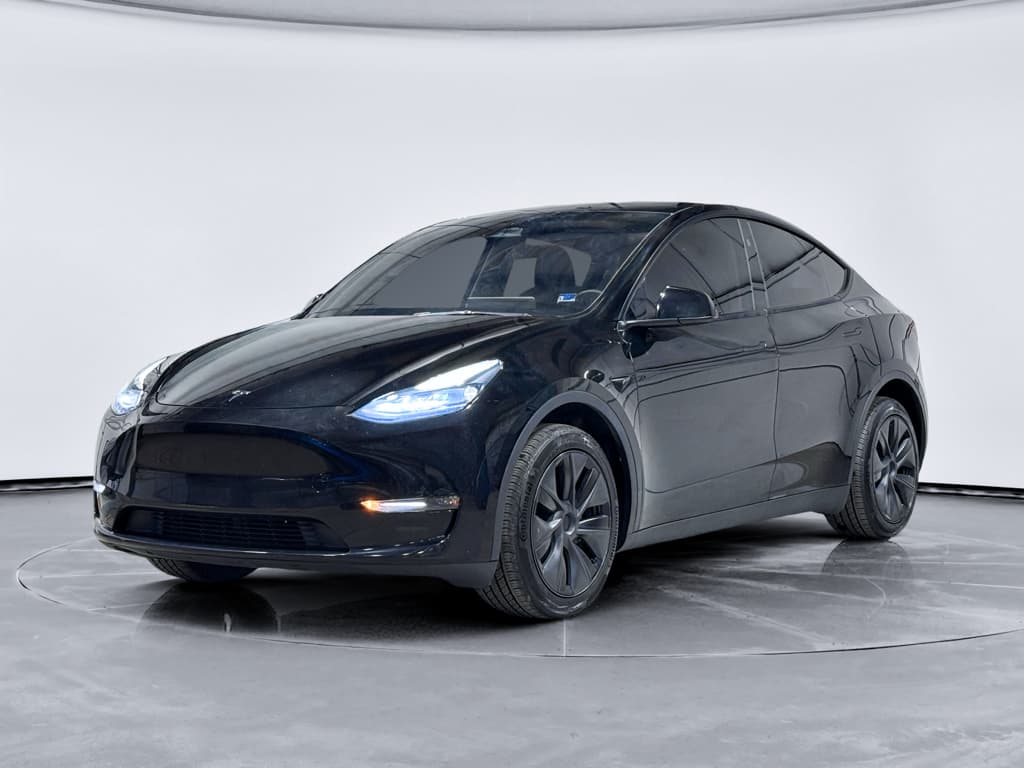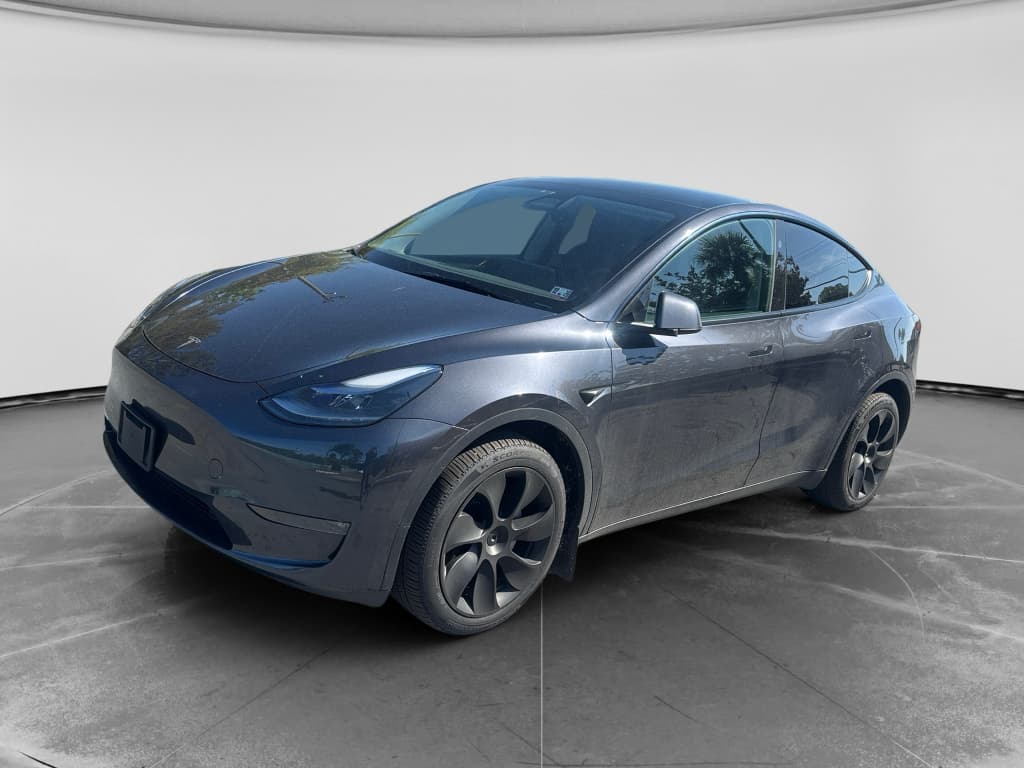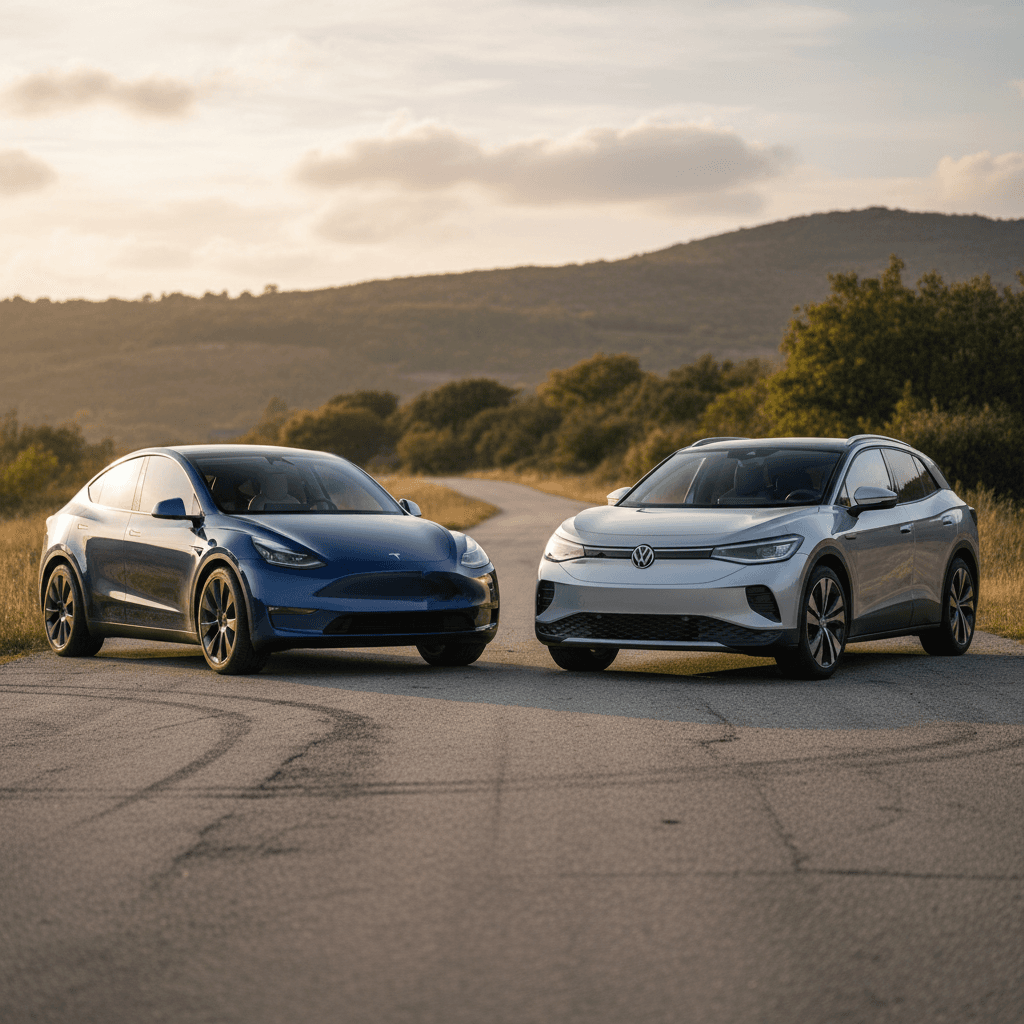
If you’re cross‑shopping the Tesla Model Y vs Volkswagen ID.4, you’re already on the right track. These are two of the most important electric SUVs on the road today: the Model Y is the range and performance benchmark, while the ID.4 leans into comfort, value, and familiarity. But they deliver very different day‑to‑day experiences, especially in the used market, where pricing, battery health, and features can vary a lot from one car to the next.
Big picture
Overview: Tesla Model Y vs Volkswagen ID.4
Tesla Model Y in a nutshell
- Strengths: Excellent range, fast charging on the Supercharger network, quick acceleration, strong resale, top safety scores.
- Weak spots: Firm ride, minimalist interior not for everyone, higher insurance and repair costs in many markets.
- Best for: Frequent highway drivers, tech enthusiasts, families who road‑trip.
Volkswagen ID.4 in a nutshell
- Strengths: Comfortable ride, quieter and more relaxed, traditional SUV feel, often lower purchase price for similar age/miles, still very practical.
- Weak spots: Shorter range in many trims, slower DC fast charging, software quirks on earlier model years.
- Best for: Daily commuting, families who prioritize comfort over speed, drivers new to EVs who prefer a familiar cockpit.
Why these two matter in the EV world
Quick specs: Tesla Model Y vs VW ID.4
Core specs comparison (typical U.S. trims)
Approximate figures for common 2023–2024 trims you’re likely to see on the used market. Always verify the exact numbers for the specific vehicle you’re considering.
| Spec | Tesla Model Y Long Range (AWD) | Volkswagen ID.4 Pro (RWD) |
|---|---|---|
| EPA range (mi) | ~330 miles | ~291 miles |
| 0–60 mph | ~4.8 seconds | ~7.5 seconds |
| Battery capacity | ~75 kWh usable | ~77 kWh usable (82 kWh gross) |
| Drive | Dual‑motor AWD | Single‑motor RWD (AWD optional) |
| Max DC fast charge | Up to ~250 kW peak | Up to ~170 kW peak |
| On‑board AC charger | 11.5 kW | 11 kW |
| Seating | 5 (optional small 3rd row on some trims) | 5 |
| Cargo volume (rear seats up) | ~30 cu ft | ~30–33 cu ft depending on trim |
EPA ranges shown are for popular trims; other variants may differ.
Numbers vary by year and trim
Range and battery: how far will they really go?
On paper, the Tesla Model Y wins the range game. Long Range AWD examples commonly advertise around 320–330 miles of EPA range, while many rear‑wheel‑drive Model Y variants are in the mid‑200s to low‑300s depending on year and wheel size. The Volkswagen ID.4 Pro and Pro S trims with the larger pack typically land in the high‑200‑mile range, while early standard‑battery cars can dip closer to the low‑200s.
- Model Y: usually the better pick if you regularly drive 200+ miles in a day, or road‑trip often.
- ID.4: perfectly adequate for most commuting and family duty, but you’ll stop more often on long highway runs, especially in smaller‑battery trims.
- Both: cold weather, high speeds, and roof boxes can shave 15–30% off those sticker ranges, just like any EV.
Look past the window sticker
Charging and road‑trip ability
Here’s where ownership experience can feel very different. Tesla built the Model Y around its Supercharger network, while Volkswagen leans on public CCS providers like Electrify America and others. In 2024–2025, more non‑Tesla EVs started gaining access to Superchargers via adapters and NACS ports, but the experience still isn’t identical.
Charging: what you’ll feel day to day
Home charging is similar; public fast charging is where they diverge.
Home charging
- Model Y: 11.5 kW onboard charger means ~30–40 miles of range per charging hour on a 240V Level 2 setup.
- ID.4: 11 kW onboard charger is effectively similar for overnight home charging.
- Takeaway: With a good Level 2 charger, both go from low to full comfortably overnight.
Public fast charging
- Model Y: Up to ~250 kW peak on compatible Superchargers; stations are dense and usually simple to use.
- ID.4: Peaks around 135–170 kW depending on year; charging curves are flatter but max speeds are lower.
- Takeaway: For frequent inter‑state trips, the Model Y still has the smoother, generally faster experience, especially in rural areas.
Adapters and future‑proofing
Interior space, comfort and practicality
Both SUVs are genuinely practical. They ride on similar footprints and have comparable cargo numbers on paper, but they deliver that space differently. The Model Y feels airy and open, with a huge glass roof and upright seating. The ID.4 feels more like a traditional compact‑to‑midsize SUV, still roomy, but cocooning rather than minimalist.
Cabin feel: which one will you enjoy living with?
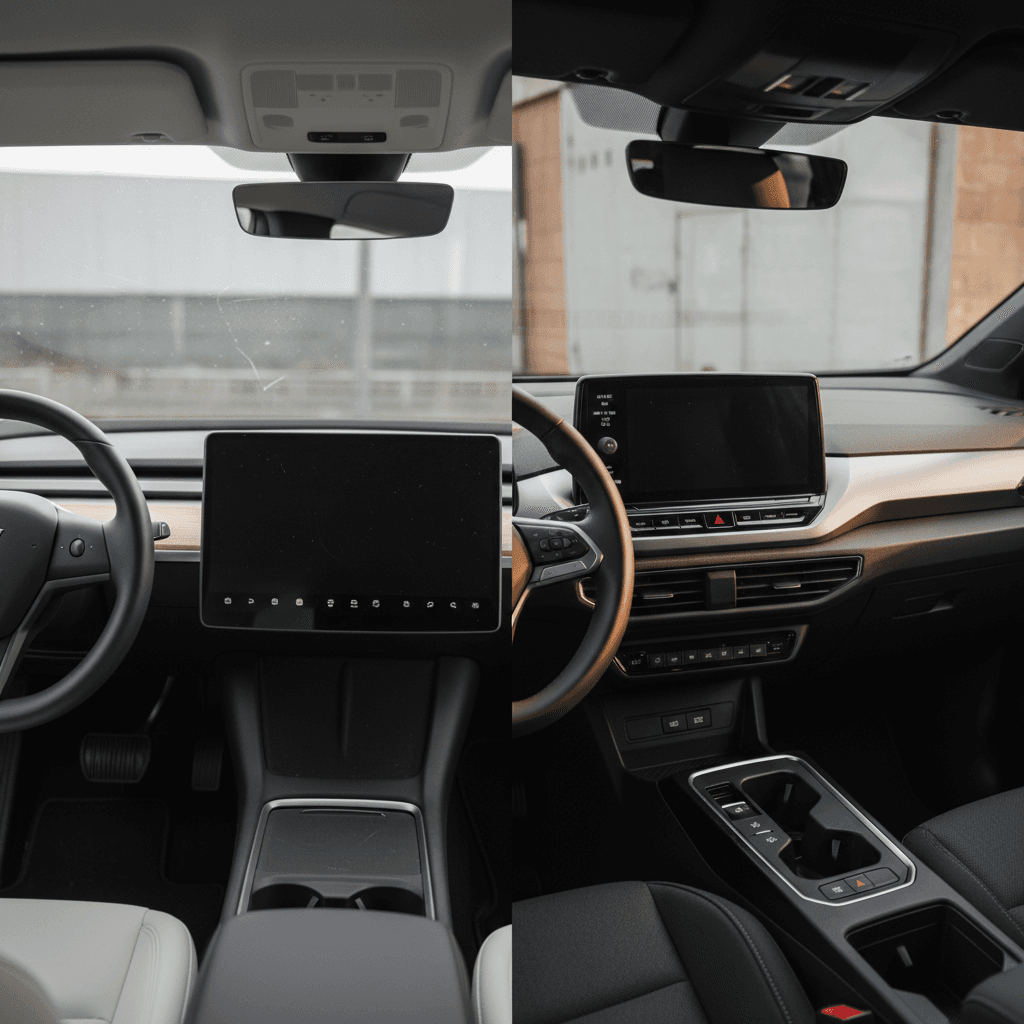
Two very different ideas of what a modern EV interior should be.
Comfort & ride
- Model Y: Seats are supportive, but the ride can be firm, especially on larger wheels and rough pavement.
- ID.4: Softer suspension tuning and more traditional seats; feels more relaxed for passengers.
Space & storage
- Model Y: Deep trunk well, front trunk (frunk), and fold‑flat rear seats; optional tiny 3rd row on some trims.
- ID.4: No frunk, but a wide, square cargo area that’s easy to load with strollers and gear.
Noise & refinement
- Model Y: Road and wind noise are acceptable but not luxury‑quiet.
- ID.4: Generally a bit quieter and more relaxed at highway speeds; feels more like a well‑sorted traditional VW crossover.
Family‑friendly touches
Tech, driving experience and overall feel
Slide from an ID.4 into a Model Y and it feels like switching from a well‑equipped family SUV to a smartphone on wheels. That’s either thrilling or exhausting, depending on your personality.
Inside the Tesla Model Y
- Interface: Almost everything happens through a large central touchscreen, HVAC, wipers, drive modes, even opening the glovebox.
- Updates: Tesla pushes frequent over‑the‑air software updates that can change features, add apps, or tweak efficiency.
- Driving feel: Quick steering, strong acceleration even in base trims, and one‑pedal driving that quickly becomes second nature.
- Quirks: Lack of Apple CarPlay/Android Auto, reliance on Tesla’s navigation and voice control.
Inside the Volkswagen ID.4
- Interface: Mix of touchscreen and physical controls. Later model years improve the UI, but it’s still less slick than Tesla’s.
- Smartphone integration: Apple CarPlay and Android Auto make it feel familiar on day one.
- Driving feel: More relaxed and “normal.” Acceleration is brisk enough, but not neck‑snapping; ride quality leans comfort over sport.
- Quirks: Earlier software versions had laggy menus and confusing touch sliders; many cars have since been updated, but you should test drive the exact vehicle.
Test‑drive the interface, not just the car
Safety ratings and driver assistance
Both SUVs are serious about safety. The Tesla Model Y has earned 5‑star ratings from NHTSA and Top Safety Pick+ honors from the IIHS in multiple model years, thanks to a strong structure and advanced crash‑avoidance tech. The ID.4 has also scored well in global crash tests and comes loaded with standard driver‑assist features like lane keeping and automatic emergency braking.
- Model Y: Advanced camera‑based driver assist system (Autopilot) with optional upgrades. Smooth lane‑centering on highways when it’s happy, but demands driver attention at all times.
- ID.4: More traditional adaptive cruise and lane‑keeping tech. It may feel less ambitious than Tesla’s system but also less intrusive for some drivers.
- Both: Excellent crash protection, strong structural safety, and multiple airbags. For family duty, either is among the safer choices on the road.
Stay in charge of driver assistance
Ownership costs, reliability and depreciation
From a dollars‑and‑cents perspective, both beat comparable gas SUVs on fuel and routine maintenance. Where they differ is in purchase price, insurance, repairs, and depreciation, especially on the used market.
Cost and reliability: where money changes hands
Think beyond the sticker price to the full life of the vehicle.
Purchase price & depreciation
- Model Y: Higher original MSRP, but strong demand keeps used prices firm for desirable trims.
- ID.4: Typically costs less new and used; incentives and early depreciation can make it a bargain as a pre‑owned EV.
Reliability & repairs
- Model Y: Simple powertrain, but body and glass repairs can be pricey; parts availability varies by region.
- ID.4: Benefits from VW’s large dealer network; early software niggles are common, but mechanical complaints are less dramatic.
Insurance & running costs
- Model Y: Insurance can run higher than for some rivals due to repair costs; fuel savings still substantial vs gas SUVs.
- ID.4: Insurance often slightly lower; electricity cost per mile is similar when charged at home.
TCO studies favor EVs overall
Which one is better for you?
Helping you pick your winner
Choose the Tesla Model Y if…
You value long range, fast charging, and cutting‑edge tech above all. You drive often on highways, road‑trip multiple times a year, and you’re comfortable living inside a big touchscreen. The firmer ride and higher insurance bills are worth it to you for the performance and Supercharger access.
Choose the Volkswagen ID.4 if…
You want an electric SUV that feels familiar and comfortable, with a softer ride and more traditional controls. Most of your driving is around town or within a couple hundred miles. You’d like to save money versus a Tesla, especially on the used market, and you’re okay with slightly slower charging on road trips.
You’re a first‑time EV owner
Start by thinking about your actual daily miles, parking situation, and how often you realistically road‑trip. It’s easy to overbuy on range; for many drivers, a well‑priced ID.4 Pro is more than enough. If you’re nervous about public charging or love Tesla’s tech, a Model Y might feel easier to live with.
You care about future resale
Historically, Tesla products have held value better than many competitors, especially in regions with strong Supercharger coverage. That said, a deeply discounted used ID.4 with verified battery health can undercut a Model Y’s lifetime cost despite softer resale.
Either way, get the battery story
Ready to find your next EV?
Browse VehiclesBuying a used Model Y or ID.4 with confidence
In the used market, the Tesla Model Y vs Volkswagen ID.4 decision is less about brand loyalty and more about finding the right individual vehicle. Mileage, charging history, accident repairs, and software version can matter more than model‑year bragging rights.
Key checks before you buy
1. Verify battery health and usable range
Ask for recent full‑charge range readings, typical daily charge limits, and fast‑charging frequency. With Recharged, every vehicle includes a <strong>Recharged Score battery health diagnostic</strong> so you’re not guessing.
2. Confirm charging options at home and on the road
Make sure your electrical panel and parking situation support Level 2 charging. Check the Supercharger and CCS maps for your region, and know whether your ID.4 or Model Y includes required adapters.
3. Inspect for software and feature differences
Tesla updates features over the air, and Volkswagen has rolled out major ID.4 software revisions. During your test drive, confirm that key systems work the way you expect: driver assists, smartphone integration, charge scheduling, and climate controls.
4. Look at total monthly cost, not just price
Compare payment, insurance, and expected charging costs. A slightly more expensive Model Y with lower electricity rates and better efficiency might cost less to run than a cheaper SUV on pricey public fast chargers, or vice versa.
5. Use expert help when you can
If you’re unsure how to compare two specific vehicles, a 2022 Model Y vs a 2023 ID.4, for example, lean on EV‑savvy staff. At Recharged, EV specialists can walk you through battery reports, feature differences, and financing so you don’t have to decode everything alone.
FAQ: Tesla Model Y vs Volkswagen ID.4
Frequently asked questions
Lined up spec‑for‑spec, the Tesla Model Y vs Volkswagen ID.4 debate comes down to priorities. If you want maximum range, the best public‑charging experience today, and snappy performance, the Model Y is hard to beat. If you prefer a calmer ride, a more traditional driving environment, and the potential for excellent used‑market value, the ID.4 makes a very strong case. Either way, focusing on the specific car in front of you, its battery health, software, and history, matters more than brand arguments. That’s where tools like the Recharged Score, EV‑savvy guidance, and transparent pricing can turn a complicated choice into a confident one.