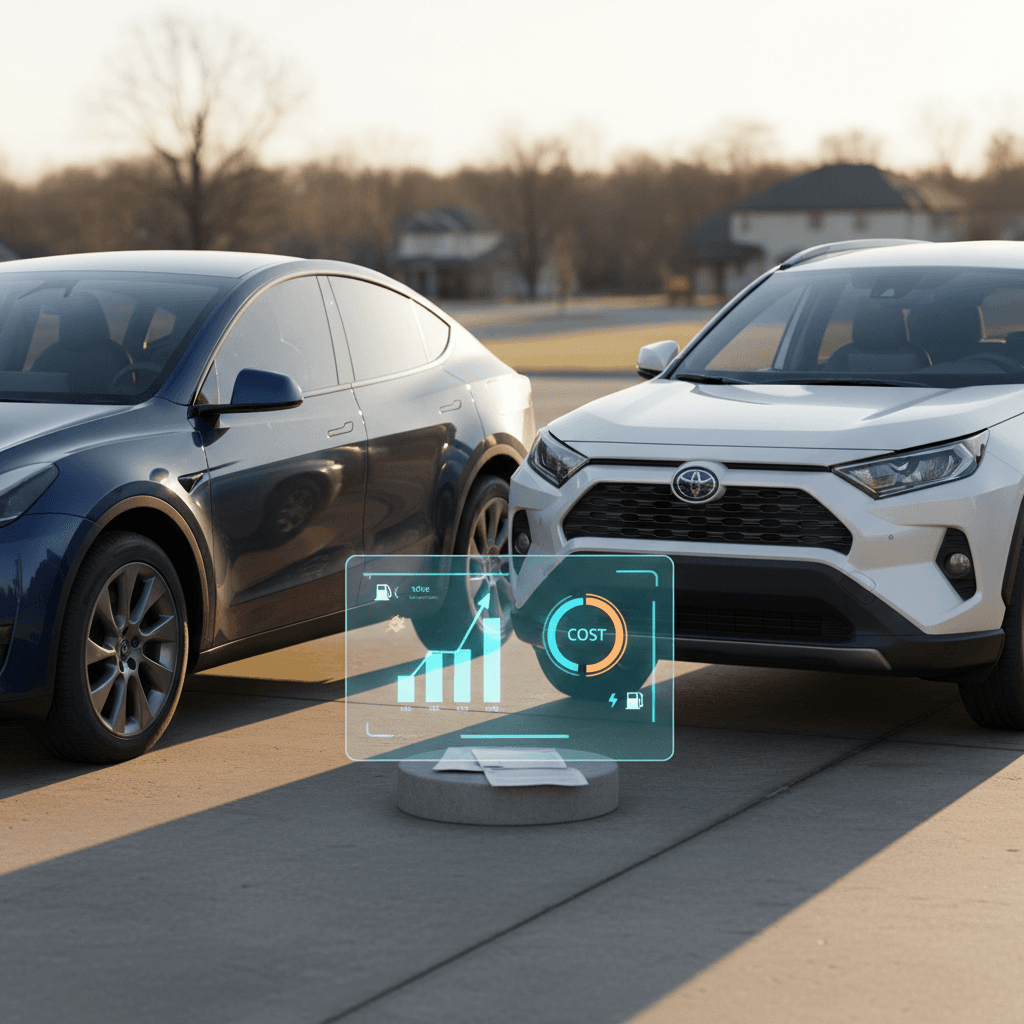
If you’re cross‑shopping a Tesla Model Y against a Toyota RAV4 Hybrid, you’re not really asking which one is faster or cooler. You’re asking a more adult question: over five years, which one quietly eats less of your money? This guide walks through the total cost of ownership, purchase, fuel or electricity, maintenance, insurance and depreciation, so you can see how “Tesla Model Y vs Toyota RAV4 Hybrid total cost” actually plays out in the real world.
EV vs hybrid: 30‑second summary
Why compare Tesla Model Y vs Toyota RAV4 Hybrid on total cost?
These two crossovers are America’s new family default options: the RAV4 Hybrid is the rational, relentlessly efficient gasoline‑adjacent choice, while the Model Y is the all‑electric status symbol that also happens to be a very practical appliance. Both seat five, both have usable cargo space, and both can knock down a long highway day without complaint. The difference is how, and how much, you pay over time.
Looking only at sticker price misses the story. Electricity is typically two to three times cheaper per mile than gasoline, while EVs usually win on maintenance but lose ground on insurance and depreciation. Hybrids sit in the middle: more efficient than gas, less risky to insurers and used‑car buyers than many EVs. That’s why a clean, apples‑to‑apples total cost of ownership (TCO) comparison is the only honest way to judge these two.
Quick 5‑year cost snapshot (U.S. averages, rounded)
Read the fine print
Our assumptions and baseline specs
To keep this comparison grounded, we’ll work with realistic, mid‑trim examples rather than unicorn lease deals or base models nobody actually buys.
Baseline models used for cost comparison
Representative trims, prices and efficiency used to compare Tesla Model Y vs Toyota RAV4 Hybrid total cost.
| Model | Example trim (2025 U.S.) | MSRP (approx.) | Drivetrain / range | Efficiency |
|---|---|---|---|---|
| Tesla Model Y | Model Y RWD / Long Range | $43,000–$49,000 before fees | Battery electric, ~260–310 miles EPA range | ~3.1–3.6 mi/kWh (27–32 kWh/100 mi) |
| Toyota RAV4 Hybrid | XLE / XSE AWD | $34,000–$39,000 before fees | 2.5L hybrid, AWD, ~580–600 miles per tank | ~38–40 mpg combined |
You can mentally adjust up or down for fancier trims; the relationships between EV and hybrid costs stay similar.
- 5‑year ownership period
- 75,000 miles total (about 15,000 miles per year)
- Mostly home charging for the Tesla; mostly regular gas (not premium) for the Toyota
- Average U.S. electricity around $0.13–$0.16/kWh; average gas around $3.10–$3.40/gal
- Standard financing: 60–72 months, average new‑car APR
- No major accidents, normal wear and tear
Where a used EV marketplace fits in
Purchase price, incentives and financing
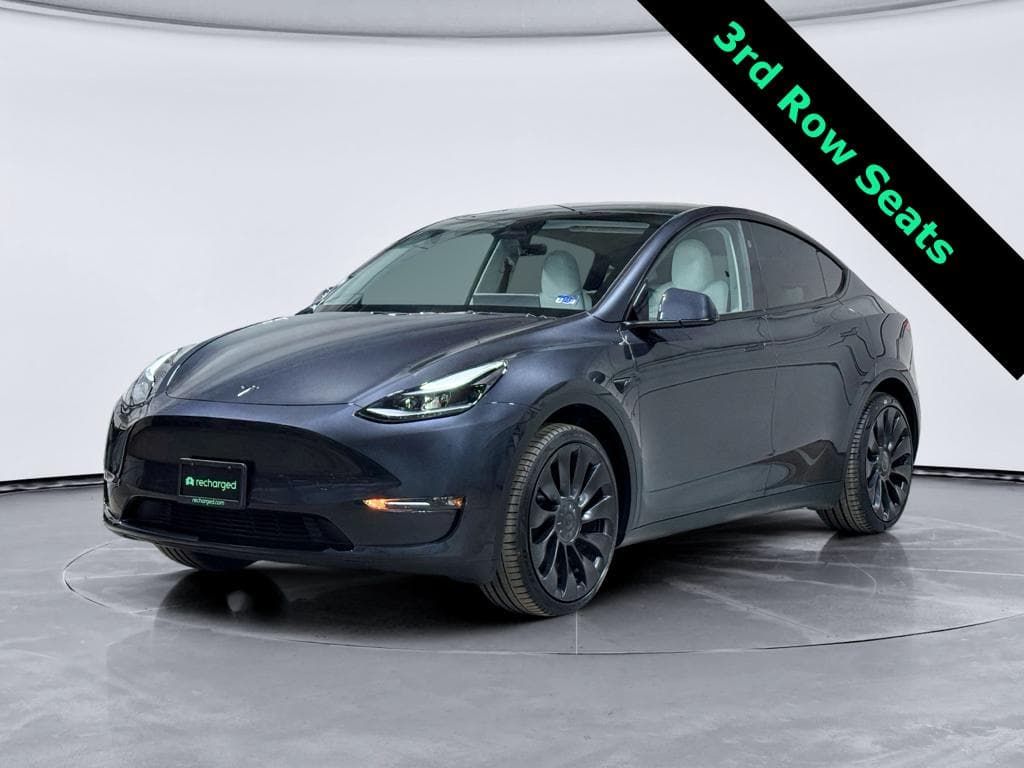
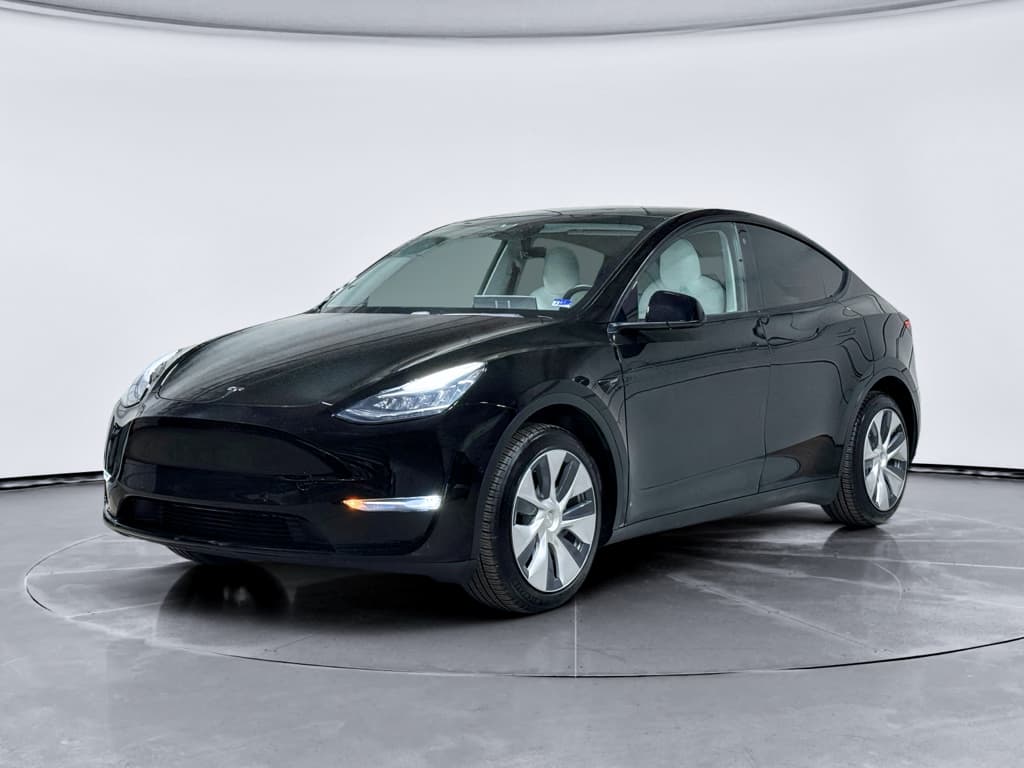
On day one, the Toyota looks cheaper. A typical RAV4 Hybrid XLE/XSE walks out the door in the mid‑$30,000s before taxes and fees. A comparably equipped Model Y usually lives in the mid‑$40,000s. Even before we talk about electrons vs gasoline, you may be financing $8,000–$10,000 more for the Tesla.
Tesla Model Y: higher sticker, fewer incentives
- MSRP: roughly mid‑$40k for common builds.
- Destination and doc fees add another ~$1,500–$2,000.
- Federal EV tax credits have come and gone in various forms; many buyers today are relying on state/local incentives or dealer discounts instead of a guaranteed $7,500 windfall.
- Financing a higher amount at today’s rates adds several thousand in interest over 5–6 years.
Toyota RAV4 Hybrid: cheaper to buy, easier to finance
- MSRP: generally mid‑$30k before options and fees.
- Hybrids don’t qualify for federal EV credits, but you’re starting several thousand dollars lower than the Tesla anyway.
- Toyota’s captive financing often runs aggressive promo APRs on popular trims, trimming interest costs.
- Lower principal + often lower APR = smaller monthly payment and less paid in finance charges over time.
What about used pricing?
Fuel vs electricity: what it really costs to drive
Electricity is where the Model Y quietly claws money back. At typical U.S. residential rates, around 13–16¢ per kWh, and realistic efficiency (about 27–30 kWh per 100 miles), you’re looking at roughly 3.5–4.5¢ of electricity per mile. Most analysis pegs an average Tesla at about 4–5¢/mile in energy cost when you charge mostly at home.
The RAV4 Hybrid is a champ by gasoline standards. At ~40 mpg and $3.20/gal, you’re around 8¢ of gasoline per mile, about double the Tesla’s energy cost, but far better than a regular compact SUV, which can easily run 13–17¢/mile in fuel alone.
Estimated 5‑year energy costs (75,000 miles)
Approximate U.S. averages assuming mostly home charging for the Tesla and regular unleaded for the Toyota.
| Model | Per‑mile energy cost (est.) | Annual miles | 5‑year energy cost (est.) |
|---|---|---|---|
| Tesla Model Y (home charging heavy) | $0.045/mile | 15,000 | ≈$3,375 |
| Tesla Model Y (frequent fast charging) | $0.08–$0.10/mile | 15,000 | ≈$6,000–$7,500 |
| Toyota RAV4 Hybrid | $0.08–$0.09/mile | 15,000 | ≈$6,000–$6,750 |
If you rely heavily on public DC fast charging, the Model Y’s energy advantage shrinks but usually doesn’t disappear.
Public charging can erase the EV energy advantage
Maintenance and repairs: EV vs hybrid reality
Mechanically, the RAV4 Hybrid is still a gasoline car with a very complicated CVT and a lot of heat and vibration. The Model Y is closer to a laptop with wheels. That design difference shows up in maintenance bills.
Typical maintenance patterns over 5 years
Same 75,000 miles, very different service schedules.
Tesla Model Y
- No oil changes, spark plugs or timing belts.
- Regenerative braking drastically extends brake pad life.
- Common costs: tire rotations, cabin air filters, brake fluid checks, occasional alignment.
- Industry data suggests 30–40% lower annual maintenance than comparable gas vehicles; around 8¢/mile when you blend in long‑term wear items.
Toyota RAV4 Hybrid
- Regular oil and filter changes, engine air filters and fluid services.
- Hybrid system is durable, but you still have exhaust, fuel system and more complex transmission hardware.
- Brake wear is better than pure gas SUVs thanks to regenerative assistance, but not EV‑level.
- Real‑world cost lands slightly higher than EVs, think ≈9–10¢/mile in maintenance over time.
Where Recharged’s battery data saves you money
Insurance, taxes and fees
Here’s where the RAV4 Hybrid quietly wins back ground. EVs in general, and Teslas in particular, still carry a reputation for expensive collision repairs. Higher MSRPs, aluminum body structures, dense sensor suites and limited certified body shops combine to push premiums up.
Tesla Model Y insurance profile
- Average EV insurance costs run higher than equivalent gas or hybrid vehicles.
- Some state‑by‑state studies show Model Y owners paying thousands more over 5 years than RAV4 drivers in the same ZIP codes.
- Rough ballpark: $1,800–$2,200 per year for full coverage, depending on driver profile and location.
- Many states also tack on extra EV registration fees to replace lost gas‑tax revenue.
Toyota RAV4 Hybrid insurance profile
- Hybrids tend to sit near the middle of the pack for premiums.
- Lower purchase price, widely available parts and a Toyota badge all help calm insurers down.
- Ballpark: $1,600–$1,900 per year for similar coverage.
- Registration fees are usually standard, you’re still paying gas tax at the pump, so fewer states add special hybrid surcharges.
Don’t skip an insurance quote before you buy
Depreciation and resale value
Depreciation is the invisible line item that dwarfs your tire rotations and oil changes. For years, Toyota has written the book on residual value; RAV4s of every flavor are famously easy to sell. EVs have had a rougher adolescence, with rapid tech updates and shifting incentives sometimes punching used values in the nose.
How each model tends to age over 5 years
Numbers vary by market, but the behavior is consistent.
Tesla Model Y
- Biggest hit comes in the first 3 years as tech improves and new‑car pricing moves around incentives.
- Some TCO analyses assume roughly 50% residual value at 5 years, meaning you’ve effectively burned through half the purchase price.
- Battery warranties (8 years/100,000+ miles) help support resale, but shoppers remain sensitive to degradation concerns.
Toyota RAV4 Hybrid
- Historically strong resale thanks to Toyota reliability and hybrid reputation.
- Many cost models peg higher 5‑year residuals than comparable EVs, think closer to 60% in a normal market.
- Net effect: lower annual depreciation cost even if your fuel bill is higher.
Market mood matters
5‑year total cost of ownership: head‑to‑head
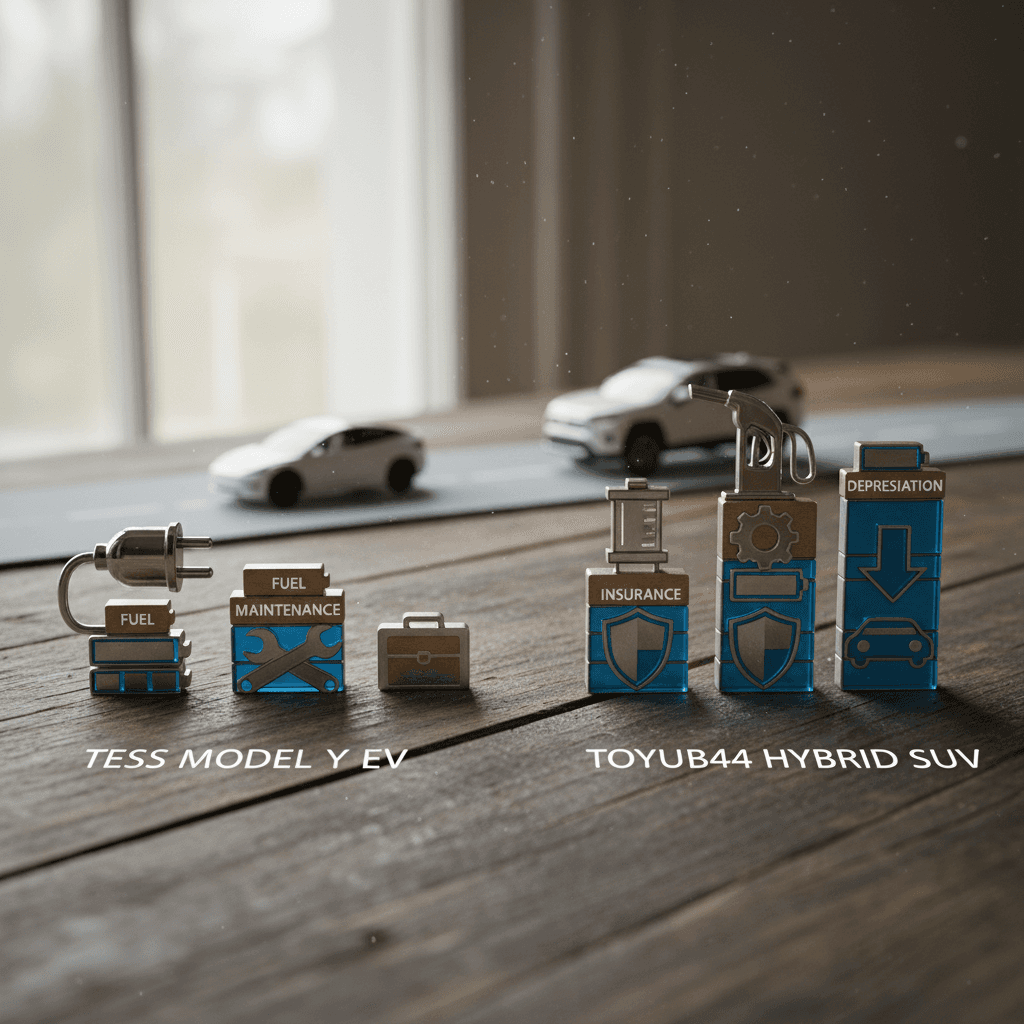
Let’s put this together. Below is a representative 5‑year, 75,000‑mile TCO comparison using realistic U.S. averages. These aren’t the single cheapest or most expensive scenarios, they’re a middle lane that reflects how a lot of households actually use these cars.
Illustrative 5‑year TCO: Tesla Model Y vs Toyota RAV4 Hybrid
Rounded example costs for a new purchase, 75,000 miles driven, mostly home charging for the Tesla, typical insurance and financing.
| Cost category (5 years) | Tesla Model Y (est.) | Toyota RAV4 Hybrid (est.) | What’s going on? |
|---|---|---|---|
| Purchase price after fees & incentives | ≈$45,000 | ≈$36,000 | RAV4 Hybrid starts cheaper and often has better finance deals. |
| Financing charges (typical APR) | ≈$6,000 | ≈$4,500 | Higher principal + similar APR = more interest for the Tesla. |
| Energy (electricity or fuel) | ≈$3,400 (home‑heavy charging) | ≈$6,200 | Model Y roughly halves energy cost vs hybrid SUV if you charge mostly at home. |
| Maintenance & wear items | ≈$4,500 | ≈$5,000–$5,500 | EVs skip oil changes and many wear parts; hybrids are efficient but still ICE‑based. |
| Insurance | ≈$9,000–$11,000 | ≈$8,000–$9,500 | Teslas tend to be pricier to insure, especially in high‑cost states. |
| Taxes & registration | ≈$3,000–$3,500 | ≈$2,500–$3,000 | Some states add EV surcharges; MSRPs differ. |
| Depreciation (value lost) | ≈$22,000–$25,000 | ≈$15,000–$18,000 | RAV4 Hybrid usually holds value better over 5 years. |
| Approx. 5‑year TCO (all‑in) | ≈$50,000–$55,000 | ≈$45,000–$50,000 | In many ‘average’ scenarios, the RAV4 Hybrid edges out the Model Y on total cost. The closer your charging is to cheap home rates, and the more miles you drive, the closer the Tesla gets. |
Use this as a framework. Plug in your actual quotes for a personalized picture.
Where the Model Y can win outright
How buying used flips the script
Everything above assumes you buy new. But many shoppers are really deciding between a used Model Y and a new or lightly used RAV4 Hybrid. That’s where EV economics get interesting.
How a used Model Y on Recharged can beat a new RAV4 Hybrid
1. Depreciation hit already taken
A 2‑ to 3‑year‑old Model Y has already absorbed the steepest part of its depreciation curve. You’re paying closer to its true long‑term value, not the hype‑inflated new price.
2. Purchase price gap narrows
On Recharged, it’s common to see used Model Y pricing overlap or even undercut what people are paying for new RAV4 Hybrids at the dealer, especially once you factor in fees and dealer markups.
3. Battery health is verified
The biggest fear in used EVs is battery degradation. Recharged’s <strong>Recharged Score</strong> includes a detailed battery health report, so you’re not guessing about range or looming pack issues.
4. Lower operating costs kick in immediately
You get EV‑level fuel and maintenance savings from day one, but without the new‑car price premium that makes many TCO comparisons look harsh on EVs.
5. Digital buying and nationwide delivery
Recharged offers a fully digital purchase experience, trade‑in options, financing and <strong>nationwide delivery</strong>. That makes it much easier to shop for the right used Model Y than hunting for a unicorn RAV4 Hybrid at local dealers.
Run your own 5‑year scenario
Tesla Model Y vs RAV4 Hybrid: which is cheaper for you?
Choose the Tesla Model Y if…
- You can reliably charge at home at a sensible electricity rate.
- You drive enough miles that the fuel savings matter (15,000+ per year is ideal).
- Your local insurance quotes aren’t punishingly high compared with a RAV4 Hybrid.
- You want the EV driving experience: quick, quiet, one‑pedal-ish driving and software‑heavy features.
- You’re open to buying used with verified battery health through a marketplace like Recharged.
Choose the Toyota RAV4 Hybrid if…
- You can’t easily charge at home and would rely on public stations.
- You prioritize resale value predictability and mainstream repair networks.
- Your insurance quotes on the Tesla are dramatically higher.
- You want a simple, long‑haul commuter with gas‑station flexibility and no charging learning curve.
- You tend to replace vehicles every 3–5 years and care a lot about residuals.
Viewed strictly through a 5‑year, dollars‑and‑cents lens, the RAV4 Hybrid still has a slight edge for many American households, especially those who buy new and don’t drive huge mileages. But the Tesla Model Y fights back hard with cheaper energy and lower maintenance, and if you buy a well‑vetted used Model Y, that math can tilt the other way. The smart move is to price out both scenarios with your real insurance quotes and local energy costs, then browse used Model Ys with Recharged Score reports to see how much electric performance you can afford for the same total cost.
FAQ: Tesla Model Y vs Toyota RAV4 Hybrid costs
Common questions about Model Y vs RAV4 Hybrid total cost
If you’re ready to see what your own numbers look like, start by collecting real quotes: insurance for both vehicles, your local electricity rate, and current RAV4 Hybrid pricing. Then compare them to used Tesla Model Y listings on Recharged with Recharged Score reports. Once you line up the math, the right answer, EV or hybrid, usually reveals itself quickly.