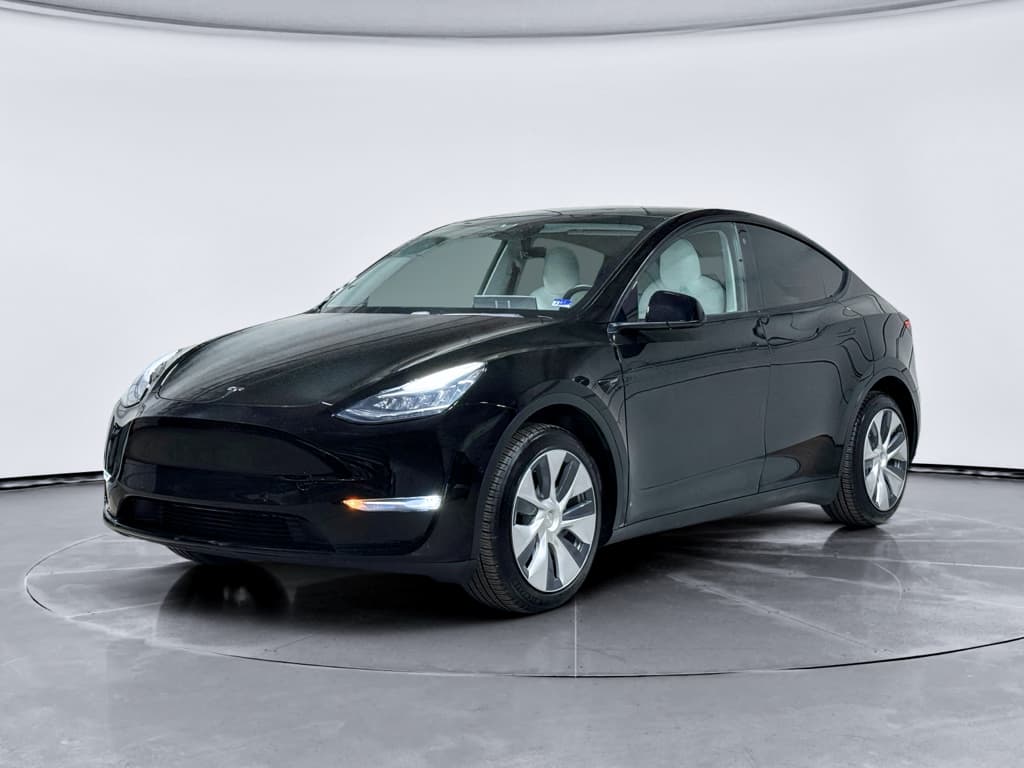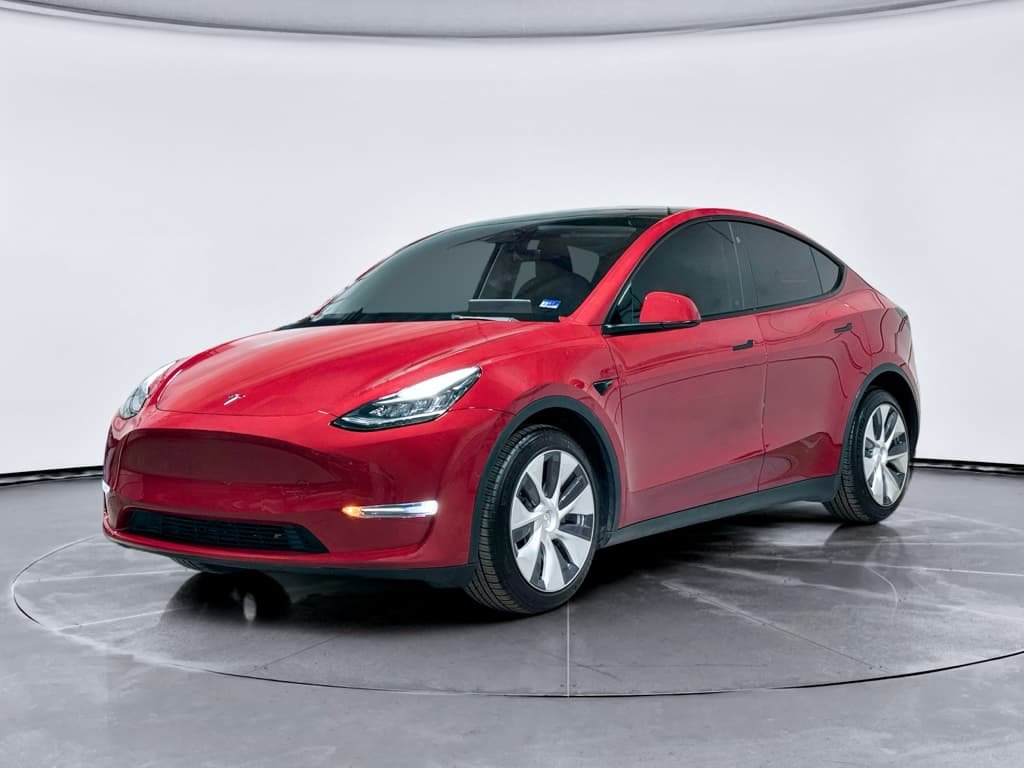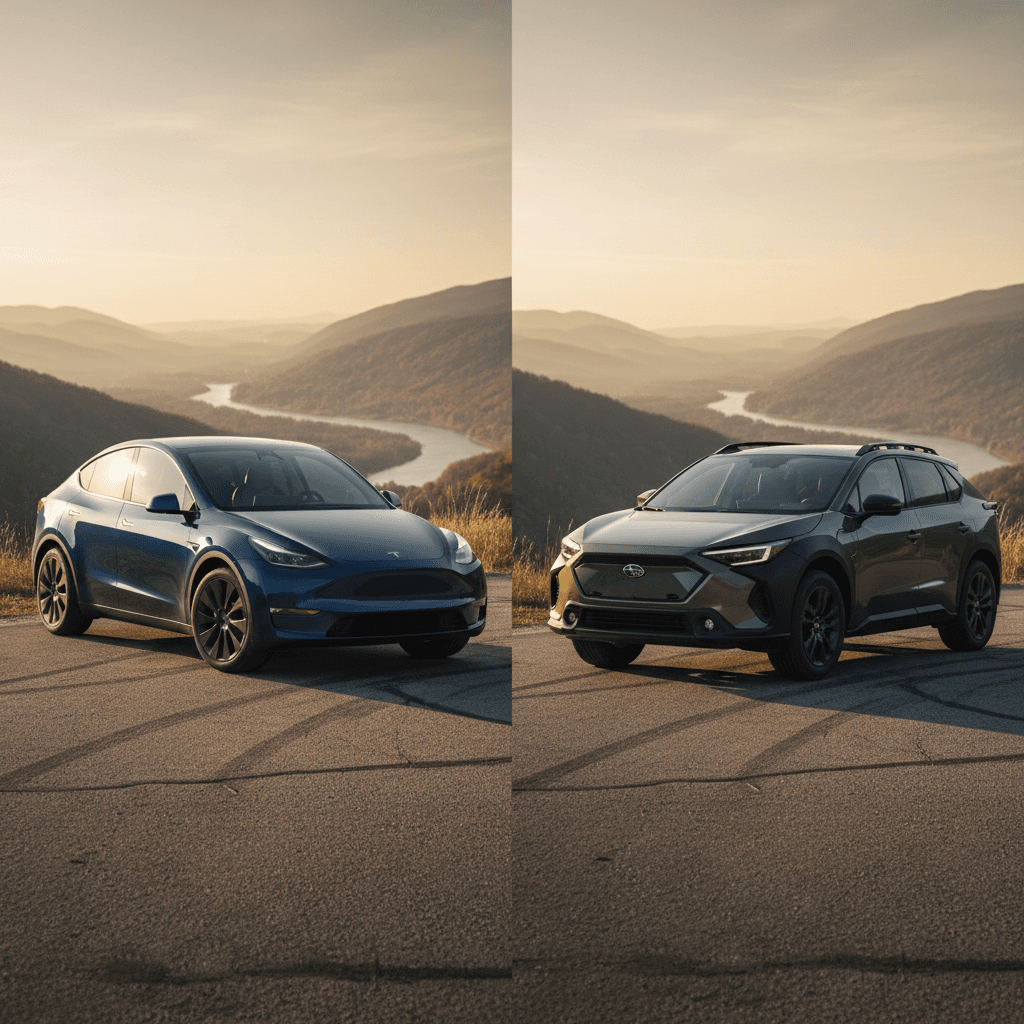
You’re cross‑shopping the Tesla Model Y and Subaru Solterra and trying to figure out which is better. On paper they’re both compact electric SUVs with all‑wheel drive and room for the family. In practice, they have very different personalities, strengths, and long‑term ownership stories. This guide walks through range, charging, performance, space, safety, tech, and costs so you can decide which one actually fits your life.
At a glance
Tesla Model Y vs Subaru Solterra: key takeaways
Quick take: how the Model Y and Solterra stack up
- If you care most about range, charging speed, and long‑distance travel, the Tesla Model Y is unequivocally better for most drivers.
- If you prioritize snow traction, a more conventional cabin, and Subaru’s safety story, the Solterra is more aligned with those values.
- In the U.S. used market, Model Y supply is huge, which often means better pricing and choice; Solterra inventory is thinner but sometimes heavily discounted.
- For apartment dwellers or short‑range commuters who value comfort over road‑trip speed, a well‑priced Solterra can be a perfectly rational choice.
- If you want access to the Tesla Supercharger network with zero adapters or caveats, the Model Y keeps things simplest. Newer Solterra model years are gaining access but depend on region, software, and adapters.
Core specs: Tesla Model Y vs Subaru Solterra
Core spec comparison: 2024–2025 Tesla Model Y vs Subaru Solterra (U.S.)
High‑level specs for mainstream trims. Exact numbers vary by configuration and model year, but this gives you the shape of the tradeoffs.
| Spec | Tesla Model Y (typical U.S. trims) | Subaru Solterra (2023–2025 U.S.) |
|---|---|---|
| Battery size (usable, approx.) | ~75–82 kWh, depending on trim | ~72.8 kWh |
| EPA range (most common trims) | ~260–310 miles | ~222–228 miles |
| Drivetrain | RWD or dual‑motor AWD | Dual‑motor AWD standard |
| 0–60 mph (approx.) | 3.5–6.0 seconds depending on trim | Around 6.5–7.0 seconds |
| Max DC fast‑charge rating | Roughly 170–250 kW, depending on year/trim | Around 100 kW on early years, improving toward ~150 kW on newer |
| Onboard AC charger | Up to 11.5 kW (~48 A) | About 7 kW (~32 A) |
| Seating | 5 seats (5+2 optional third row on some years) | 5 seats |
| Tow rating (where equipped) | Up to ~3,500 lbs in many markets | No meaningful factory tow rating in the U.S. as of early generations |
| Charging port (North America) | NACS (Tesla connector) | CCS initially; roadmap toward NACS access via adapter and software updates in many regions |
| Notable strengths | Range, efficiency, Supercharger access, software | Standard AWD, ground clearance, Subaru safety image, comfort |
Always confirm exact specs for the specific VIN you’re considering, especially in the used market.
Spec sheet trap
Range and efficiency: which goes farther?
Range is where the Tesla Model Y pulls out to a clear lead. Mainstream U.S. Model Y trims typically land between roughly 260 and 310 miles EPA range, depending on motor count, wheel size, and year. Real‑world highway range will be lower, but the underlying efficiency of Tesla’s motors and aerodynamics means you generally go farther per kWh than in the Subaru.
The Subaru Solterra, by contrast, has a roughly 72.8 kWh pack and EPA ratings around 222–228 miles on most U.S. trims. That’s acceptable for daily commuting and regional trips, but noticeably shorter than what many cross‑shoppers expect from a modern EV SUV. On a cold‑weather highway run at 70–75 mph, it’s easy to see effective range dip under 200 miles, which tightens your planning window.
Where the Model Y wins
- Longer usable range at highway speeds, especially in cold weather.
- More trims that comfortably clear 250–270 real‑world miles between charges.
- Better efficiency helps offset higher energy prices in some regions.
Where the Solterra is “enough”
- Typical American commute easily covered with overnight Level 2 charging.
- More than adequate for weekend trips under ~150 miles each way.
- If you mainly stay within one metro area, you may never feel range‑limited.
Practical rule of thumb
Charging speed and road‑trip viability
Charging behavior is the other big separation between these two SUVs. The Tesla Model Y is designed around fast, repeatable DC fast charging on the Supercharger network. On a strong DC charger, many Model Y trims will briefly spike well over 200 kW at low state of charge and sustain high rates long enough to add 150–200 miles in 15–25 minutes when conditions are ideal.
Early Subaru Solterra model years, especially 2023, developed a reputation for conservative DC curves. Subaru quotes maximum DC rates in the ~100 kW neighborhood for those years, and real‑world testing usually shows average charging in the high‑60 kW range from 10–90% state of charge, roughly 45–50 minutes for a deep fast‑charge session when everything goes right. Later model years have improved peak speeds and cold‑weather behavior, inching closer to ~150 kW under ideal conditions, but the curve remains gentler than most rivals, including Tesla.
Charging showdown: Model Y vs Solterra
What typical DC fast‑charge stops feel like in the real world
Tesla Model Y on road trips
- Optimized for the Supercharger network, which is dense along major U.S. corridors.
- Often adds 150+ miles of range in the time it takes for a bathroom break and coffee.
- Battery preconditioning, route‑integrated charging stops, and generally reliable stations reduce planning friction.
Subaru Solterra on road trips
- Slower average DC charging, especially on early model years and in cold weather.
- Plan on ~35–50 minutes for a substantial 10–80% session, depending on conditions and model year.
- Public CCS network quality varies; station reliability and peak power can be hit‑or‑miss by region.
Cold‑weather caveat
Driving experience and performance
Performance is less about raw numbers here and more about character. Even in its more modest trims, the Tesla Model Y feels quick and responsive. Dual‑motor variants launch with the kind of instant torque EVs are known for, and Performance trims veer into genuinely silly territory for a family crossover. Steering is light and direct, suspension tuning is firm, and overall the Y feels like a tall hatchback that happens to be an SUV.
The Subaru Solterra is tuned very differently. Dual‑motor output around 215 hp makes it perfectly adequate in city and suburban driving but not remotely Tesla‑quick. What you do get is a more relaxed, Subaru‑like ride quality, a chassis that feels at home on bad pavement, and traction‑oriented drive modes (with X‑MODE) that inspire confidence on gravel, wet roads, and light off‑road use. If you spend a lot of time on unplowed streets or rural byways, that Subaru tuning may matter more than 0–60 bragging rights.
Model Y driving feel
- Sports‑sedan acceleration in many trims.
- Firm, sometimes busy ride on rough concrete.
- Low center of gravity and tight steering make it feel smaller than it is.
Solterra driving feel
- Slower but predictable acceleration; feels like a modern compact SUV.
- Softer suspension absorbs potholes and broken pavement better.
- Standard AWD and drive modes tuned for low‑grip surfaces.
Space, practicality, and ride comfort
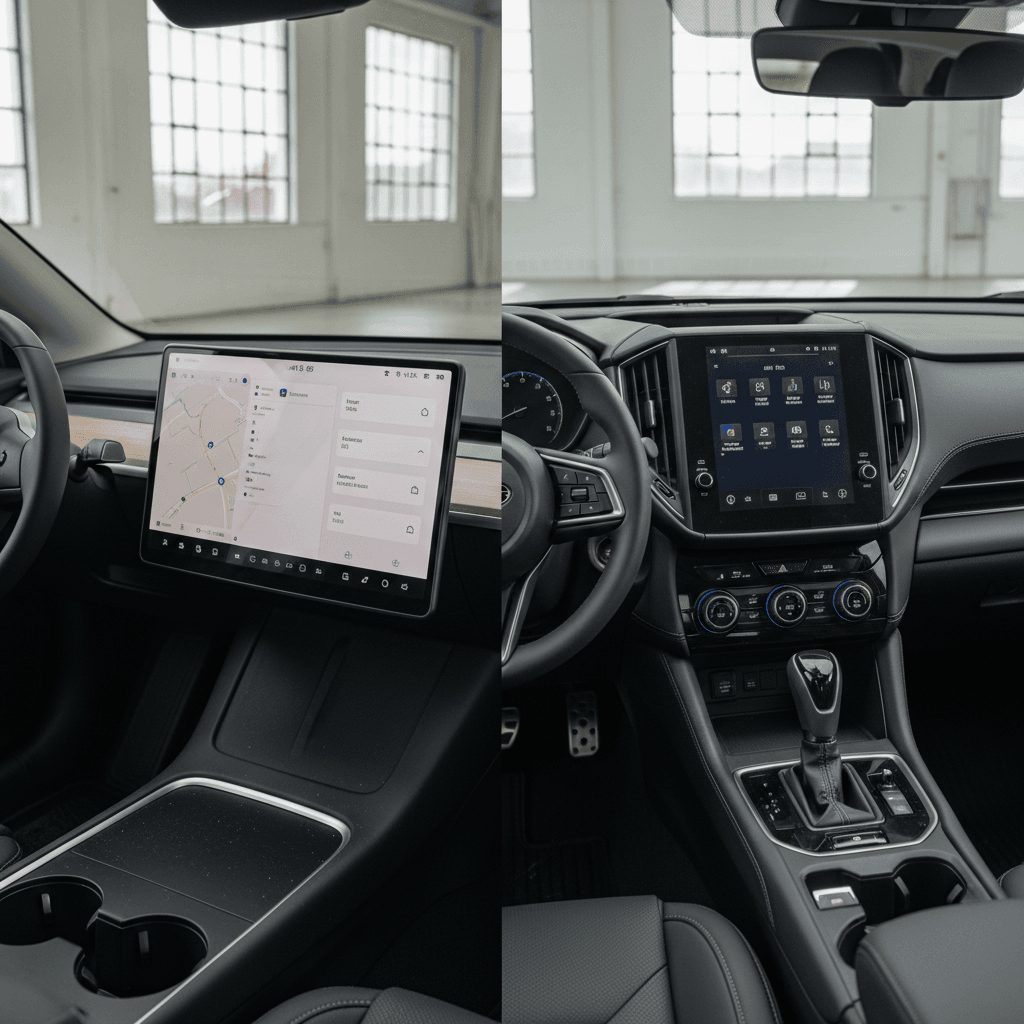
Both vehicles are broadly similar in footprint, but they package their interiors differently. The Tesla Model Y’s glass roof and minimalist dash make the cabin feel airy and open. Cargo space behind the second row is generous, and the deep rear well and front trunk (frunk) add usable volume for road‑trip gear. Optional third‑row configurations in some model years offer emergency seating for kids, though adults won’t want to spend long back there.
The Solterra’s interior will feel immediately familiar if you’ve driven recent Subarus or Toyotas. You get a more conventional instrument cluster, physical buttons for climate and key functions, and mainstream crossover seating. Rear legroom is competitive, and the roofline is slightly more upright, which helps rear‑seat headroom. Cargo space is solid but can’t quite match a Model Y with its frunk and especially deep under‑floor storage.
Practicality highlights
How each EV SUV handles real family duties
Model Y strengths
- More total cargo volume with frunk and rear well.
- Available third row (select years/trims) for occasional extra passengers.
- Flat load floor makes big‑box runs easy.
Solterra strengths
- Comfortable, upright seating position many SUV owners prefer.
- Standard roof rails and Subaru‑style utility vibe.
- Controls that feel intuitive to anyone coming from a gasoline crossover.
Family comfort
- Both offer plenty of space for rear‑facing child seats.
- Quiet, vibration‑free electric drivetrains reduce fatigue on long drives.
- Ride quality: Solterra is more forgiving on broken pavement; Model Y can feel firmer.
Safety ratings and driver assistance
Safety is a genuine strong point for both of these SUVs. Recent Subaru Solterra model years have earned top marks from major safety organizations, including an IIHS Top Safety Pick+ designation in the U.S. thanks to solid crash performance and an extensive suite of active safety tech (EyeSight‑based features, lane‑keeping, adaptive cruise, and more).
Tesla’s Model Y has also scored very well in crash testing globally, aided by its EV‑specific structure and low center of gravity. Tesla’s active‑safety and driver‑assistance suite is branded differently (Autopilot, Enhanced Autopilot, and various options over time), but in practice you’re looking at adaptive cruise, lane‑centering, automatic emergency braking, and plenty of camera coverage. The tuning and user‑experience differ from Subaru’s, but both deliver modern safety capabilities that far exceed decade‑old gas SUVs.
Insurance and safety perception
Technology, UX, and learning curve
The Tesla Model Y is unapologetically software‑first. Nearly every vehicle function, navigation, climate, wipers, drive settings, even glovebox access, flows through the big central touchscreen. Updates deliver new features and tweaks over the air with unusual frequency by auto‑industry standards. If you’re comfortable living on a screen and want deep integration with trip planning and charging, the Model Y is unmatched right now.
The Subaru Solterra takes a more conventional approach. You still get a central touchscreen, smartphone integration, and a modern infotainment stack, but core driving and comfort functions remain on dedicated controls. For drivers transitioning from traditional gas crossovers, or for households where not everyone is tech‑obsessed, the Solterra often feels less intimidating. You trade some software polish and ecosystem integration for approachability.
Model Y tech pros
- Best‑in‑class trip planner tightly integrated with charging network.
- Fast, fluid interface with frequent OTA updates.
- Native app ecosystem, remote control features, and data visibility.
Solterra tech pros
- Traditional controls for high‑frequency tasks like climate and audio.
- CarPlay/Android Auto usage feels more "normal" to most drivers.
- Less of a learning curve for non‑enthusiast family members.
Ownership costs, depreciation, and incentives
Sticker price is only part of the story. In the U.S., the Tesla Model Y has been one of the best‑selling EVs for several years, which means huge used inventory and relatively liquid resale markets. Prices have come down as supply has grown and as Tesla has adjusted new‑car pricing. That’s good news if you’re buying used; you can often find a Model Y at attractive prices with plenty of range left.
The Subaru Solterra, on the other hand, has sold in much smaller numbers. That has led to some steep discounts on both new and used examples in certain regions, especially as Subaru and dealers have worked to move early inventory. The flip side: the buyer pool is thinner, so resale could be less predictable. Insurance and maintenance should be broadly similar between the two (EVs have fewer moving parts than gas vehicles), though Tesla’s service model is more centralized and app‑based while Subaru relies on its traditional dealer network.
Cost factors to evaluate for each model
1. Local incentives and tax credits
Check current federal and state EV incentives, plus utility rebates. Eligibility can differ by brand, assembly location, and battery sourcing, especially for new purchases.
2. Energy costs where you live
If home electricity or public charging is expensive, the Model Y’s higher efficiency will compound into meaningful long‑term savings vs the Solterra.
3. Insurance quotes
Get quotes for both VINs you’re considering. Brand perception, safety ratings, and repair costs can move premiums up or down.
4. Depreciation trends
Look at 3‑ to 5‑year‑old examples of each model in your region. Model Y resale is fairly well understood; Solterra’s trajectory is still forming, which can create both bargains and uncertainty.
5. Charging infrastructure access
Factor in what’s realistically convenient for you: home Level 2, workplace charging, public CCS vs NACS, and how often you truly need fast charging.
How Recharged can help on costs
Ready to find your next EV?
Browse VehiclesWhich is better for different types of drivers?
Model Y vs Solterra: best fit by driver type
Road‑trip families and frequent highway drivers
Prioritize a <strong>Tesla Model Y Long Range or similar</strong> for the combination of range and Supercharger access.
You’ll spend less time stopped on trips, especially in winter or at higher speeds.
Look for dual‑motor trims if you also want strong passing power when loaded with people and cargo.
Snow‑belt and rural drivers
A <strong>Subaru Solterra</strong> plays to Subaru’s strengths: traction, stability, and comfort on bad roads.
Standard AWD and ground clearance matter when plows run late and gravel roads wash out.
Be honest about your trip patterns: if you rarely DC fast‑charge, slower fast‑charging may be a non‑issue.
Urban and suburban commuters
Either vehicle works, but your charging situation is decisive.
If you have home Level 2 charging and value tech and efficiency, lean <strong>Model Y</strong>.
If you prefer a more conventional interface and see a deeply discounted lease or used deal, a <strong>Solterra</strong> can be the smarter economic play.
First‑time EV owners nervous about change
The <strong>Solterra’s familiar controls</strong> and dealer network can feel like a softer landing.
The <strong>Model Y</strong> demands more adjustment but rewards it with integrated charging, software, and efficiency.
If you’re on the fence, test‑drive both on the same day, on the same roads, and pay attention not just to speed but to <em>how relaxed you feel</em>.
Buying a used Tesla Model Y or Subaru Solterra
On the used market, the Model Y’s popularity is a double‑edged sword. The upside is choice: different trims, wheel sizes, interiors, Autopilot configurations, and mileage bands. The downside is variance: some early cars have lived on fast chargers, some have accident history, and over‑the‑air feature changes can make two nominally similar cars feel quite different. A structured battery‑health and feature audit is important.
With the Solterra, inventory is thinner but deals can be excellent when they appear. The key used‑EV questions shift a bit: you’re less likely to be choosing between dozens of trims and more focused on charging behavior (especially for 2023 cars), winter performance, and warranty coverage. Because the Solterra’s fast‑charging profile is more conservative, pack degradation risk from heavy DC fast‑charging may be lower than in some rivals, but verifying real‑world behavior still matters.
Used Model Y vs Solterra: checklist before you buy
Confirm battery health
Ask for an independent battery‑health report. On Recharged, the Recharged Score gives you a quantified view of state of health so you’re not guessing about range loss.
Test DC fast‑charging once
If possible, do a supervised fast‑charge test: note peak power, time from ~10–60%, and behavior in cold vs warm conditions. This is especially useful on early Solterra years.
Inspect tires and suspension
EVs are heavy; worn tires and tired dampers show up earlier than many buyers expect. Budget replacements into your total cost calculation.
Check software and features
For Model Y, verify which driver‑assist and connectivity options are active. For Solterra, make sure infotainment and safety systems have the latest updates.
Review warranty status
Look at bumper‑to‑bumper and high‑voltage battery warranty time and mileage remaining. A low‑mileage Solterra with lots of warranty left can be a compelling value.
Leverage a digital‑first buying journey
FAQ: Tesla Model Y vs Subaru Solterra
Frequently asked questions
Bottom line: which EV SUV is actually better?
If you’re asking, “Tesla Model Y vs Subaru Solterra, which is better?” the honest answer is that the Model Y is the more capable EV for most drivers. It delivers more range, faster and more reliable fast‑charging, tighter integration with its charging network, and a mature software experience that makes living electric unusually convenient, especially if you take regular road trips.
That doesn’t make the Solterra a bad EV. For buyers who value Subaru’s AWD character, a more traditional interior, and a comfortable ride, and who mostly drive locally, a well‑priced Solterra can be a smart, underrated choice. Its limitations show up primarily on long highway days and in heavy reliance on DC fast charging, not in school runs or commutes with predictable home charging.
The best next step is to map these tradeoffs onto your real life: how far you actually drive, how often you road‑trip, what your local charging landscape looks like, and how much you and your passengers care about cutting‑edge software versus conventional controls. If you want help doing that with actual vehicles rather than just spec sheets, Recharged can walk you through Model Y and Solterra options, share detailed Recharged Score battery‑health reports, arrange financing and trade‑ins, and deliver the EV that genuinely fits you, not just the one that looks best on a chart.