If your Tesla Model Y suspension noise has gone from whisper-quiet to clunks, creaks, or rattles, you’re not imagining it. EVs are naturally quieter than gas cars, so any suspension sound that does exist is easier to hear, and harder to ignore. The good news: most noises are diagnosable, many are fixable, and some are just quirks you can safely live with.
Why suspension noise feels worse in EVs
Why your Model Y suspension suddenly sounds loud
Before diving into specific Tesla Model Y suspension noise types, it helps to understand why a car that felt tight and solid at delivery can start sounding loose a year or two later. Most of it comes down to three things: wear in rubber bushings and ball joints, temperature changes affecting plastics and metal, and wheels/tires transmitting more impact as they age.
Three main reasons Model Y suspension starts making noise
Not every new sound means a dangerous failure
Normal wear and tear
Suspension components like bushings, ball joints, and end links wear with mileage and harsh roads. As clearances grow, noises appear before true safety issues.
Temperature & environment
Cold weather stiffens rubber and plastics, leading to creaks over speed bumps. Heat can dry out bushings and increase squeaks.
Wheels, tires & alignment
Low-profile tires, curb hits, or misalignment can all increase impact and vibration noise, even if the core suspension is fine.
When new noises are a red flag
Common Tesla Model Y suspension noises and what they mean
Suspension noise diagnosis starts with pattern recognition. Pay attention to when the sound happens (bumps, turns, low speed, high speed), where it seems to come from (front, rear, left, right), and how it feels (through the steering wheel, seat, or floor). Here are the most common Tesla Model Y suspension noises owners report, and the usual suspects behind them.
Tesla Model Y suspension noise cheat sheet
Match the sound you hear to likely causes before you head to a shop.
| Noise description | When it happens | Likely area | Common causes |
|---|---|---|---|
| Single solid clunk | Pulling out of driveway, over speed bumps | Front | Loose upper control arm ball joint, end link, top hat nut, steering rack play |
| Repeated rattling | Rough pavement, cobblestones | Front or rear | Loose sway bar end links, brake hardware chatter, plastic underbody panels |
| Creaking / groaning | Slow turns, entering driveways, parking maneuvers | Front | Dry control arm bushings, top mount bearing, subframe movement |
| Thump or "booming" | Sharp potholes at speed | Usually one corner | Blown shock absorber, damaged bump stop, bent wheel |
| High-pitched squeak | Low-speed bumps, cold mornings | Any corner | Stiff cold bushings, dust/dirt on rubber components |
| Drumming / resonance | Highway speeds, certain surfaces | Mostly rear | Tires, rear hatch area, sometimes rear subframe bushings |
This table is a starting point, not a substitute for a professional inspection.
Pro tip: Record the sound
Quick DIY checks before you panic
You don’t need a lift or special tools to rule out the most obvious, and cheapest, sources of suspension-like noise. Spend ten minutes with your Model Y parked on a flat surface and you can often separate harmless annoyances from true hardware problems.
Simple driveway checks for Model Y suspension noise
1. Empty the cargo area
Remove loose items from the trunk, underfloor storage, and door pockets. The Model Y’s open cabin and hatch can make normal objects sound like mechanical rattles.
2. Check wheel torque visually
Look for any missing or clearly loose lug nuts. Don’t over-tighten them yourself; if anything looks off, have the wheels torqued properly by a shop or service center.
3. Inspect tires and rims
Check for bubbles, sidewall damage, or bent rims from potholes. Damaged wheels and tires often create thumps and vibrations that mimic suspension problems.
4. Bounce test each corner
Push down firmly on each corner of the car and release. The body should rebound once and settle. Repeated bouncing or loud clunks suggest worn shocks or mounts.
5. Listen at low speeds with windows down
In a quiet parking lot, drive slowly over small bumps or turn the steering wheel fully left and right. Note which maneuvers reliably reproduce the noise.
6. Check frunk and hood latches
A slightly loose frunk or hood latch can create a hollow clunk that feels like suspension. Make sure both are fully latched and their rubber bump stops are evenly adjusted.
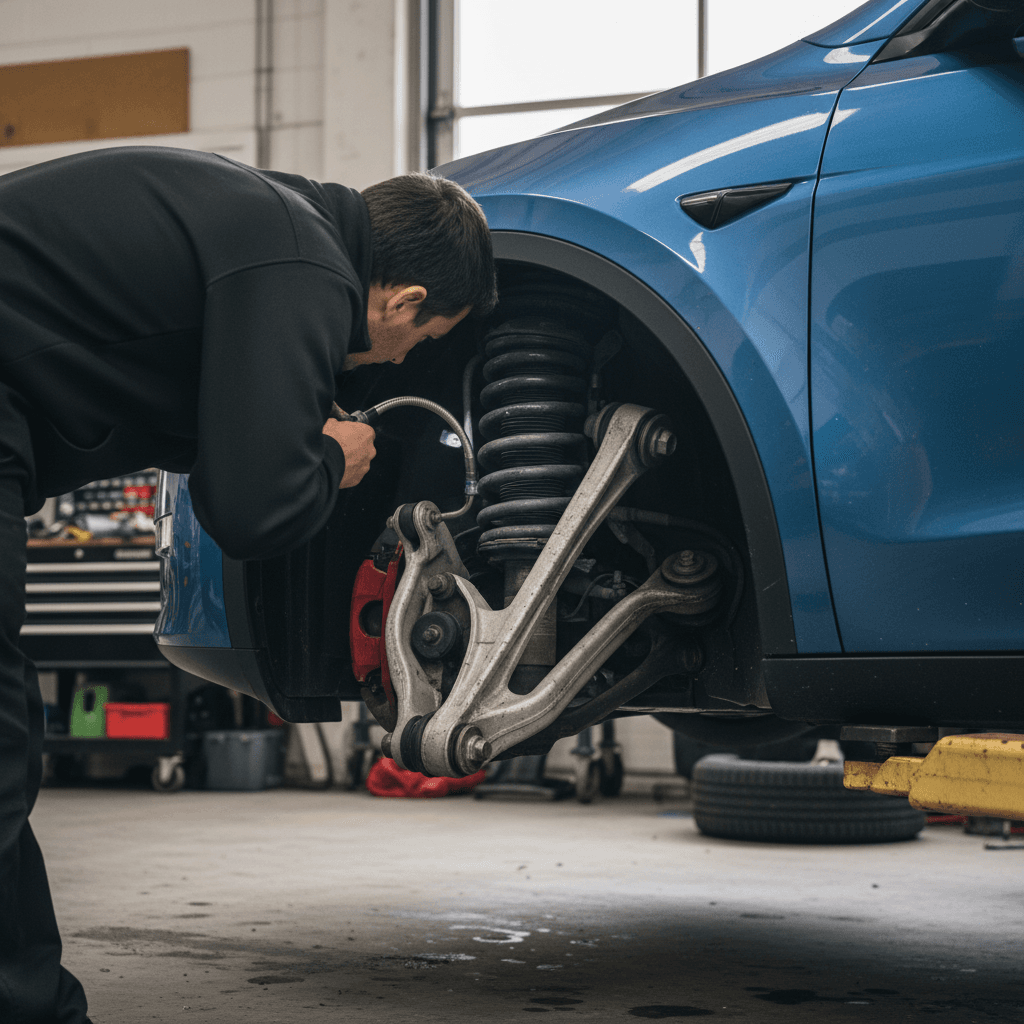
Known Model Y suspension quirks vs real problems
Like any high-volume vehicle, the Model Y has a few characteristic noises that owners discuss frequently. Some are harmless quirks, others have led to documented service bulletins or common repair patterns. Understanding which is which can save you both anxiety and money.
Normal or common quirks
- Light creaks in very cold weather when turning or going over speed bumps, especially at low speed.
- Mild, dull thumps over expansion joints from 19"–21" wheels and stiff low-profile tires.
- Occasional plastic trim squeaks from wheel well liners or underbody panels on rough roads.
- Road roar from performance tires that can sound like a worn bearing but doesn’t change with steering input.
If the car still tracks straight, rides consistently, and the noise isn’t rapidly getting worse, you’re probably dealing with annoyance more than danger.
Signs of an actual suspension issue
- Sharp metallic clunk when transitioning from braking to acceleration or over small bumps.
- Steering that won’t self-center or requires frequent correction, especially with noise.
- Visible uneven tire wear on inner or outer shoulders combined with clunks or creaks.
- Play in the wheel when rocked at 3-and-9 or 12-and-6 o’clock positions (checked safely with car lifted).
These symptoms suggest wear or looseness in control arms, ball joints, tie rods, or shocks that deserves a professional inspection.
Don’t ignore steering-related noises
How suspension issues show up when you buy used
Suspension condition is one of the easiest things for a used-car seller to gloss over, and one of the most expensive for you to inherit. Because the Model Y is a relatively heavy EV with strong acceleration and firm low-profile tires, high-mileage examples are more likely to have tired bushings, end links, and shocks even if they still drive decently around the block.
Why suspension checks matter on used EVs
At Recharged, every vehicle goes through a Recharged Score inspection that doesn’t stop at the battery and software. Suspension components are checked for play, leaks, and abnormal tire wear so you’re not guessing from the driver’s seat on a 5‑minute test drive.
How Recharged helps you avoid surprise suspension bills
Diagnosing Model Y suspension noise like a pro
Professional techs don’t have magical ears, they follow a structured process. You can borrow most of that process to describe the problem clearly, even if you’re not turning the wrenches yourself. The better your description, the fewer parts end up replaced “just to see if it helps.”
- Start with a controlled test drive on a known loop that includes slow speed bumps, tight turns, and a short highway stretch.
- Note the exact conditions: speed, steering angle, braking/accelerating, temperature, and whether passengers or cargo are on board.
- Identify whether the noise is single-impact (clunk, thump) or continuous (rattle, creak, drumming).
- With the car safely parked, have a helper bounce or rock each corner while you listen closely near the wheel wells.
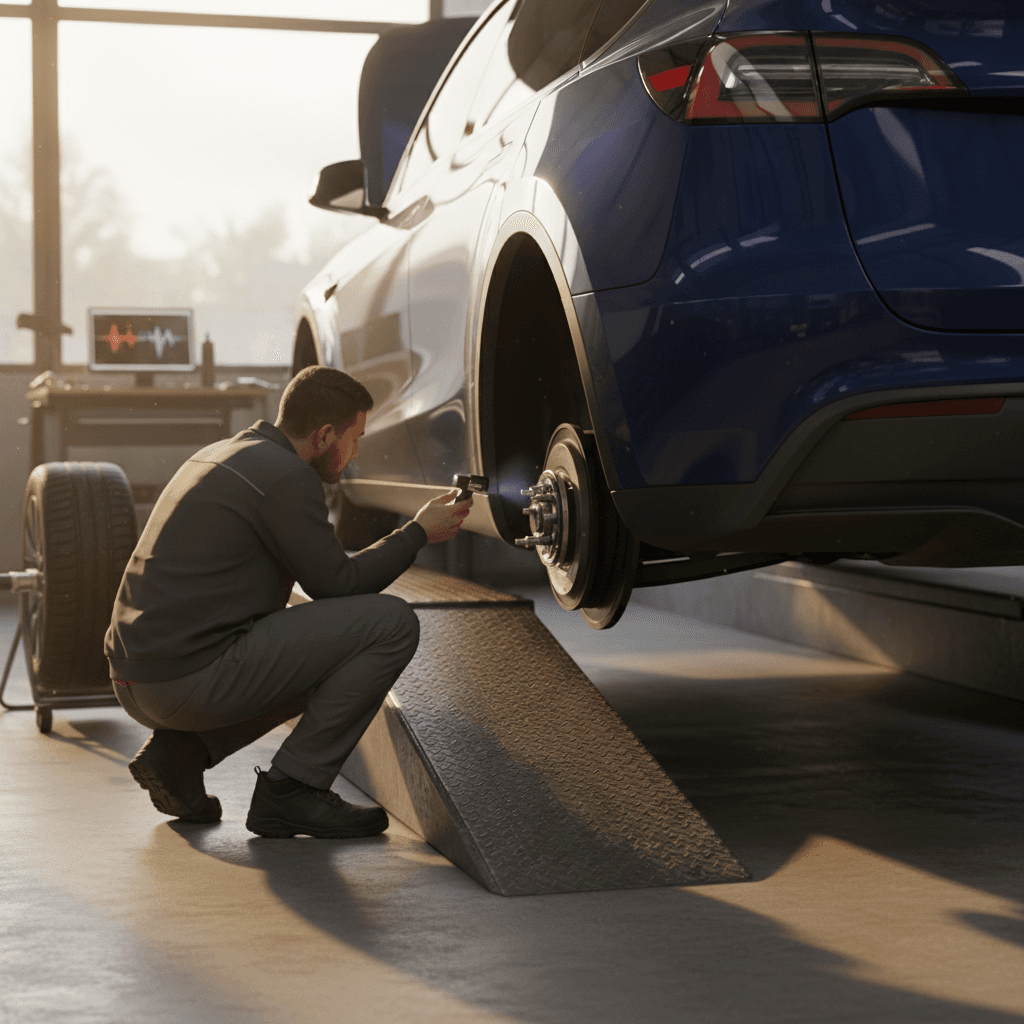
- If you have access to a shop, check for play in tie rods, ball joints, and control arms with the wheels off the ground.
- Document everything in your service request, time-stamped notes, videos, and photos of any obvious wear or damage.
Good diagnosis is about patterns, not guesswork. If a noise happens under the same conditions every time, you’re already halfway to the answer.
Repair options, costs, and when to use Tesla vs independent shops
Once you’ve confirmed that your Tesla Model Y suspension noise is more than just trim creaks, you have a choice: book a visit with Tesla Service, or look for a qualified independent EV or suspension shop. Both can work; what matters is matching the problem to the best resource.
Typical Model Y suspension noise fixes and cost ranges
Ballpark numbers to help you budget. Actual pricing varies by region and shop.
| Issue | Typical repair | Where to start | Approx. cost (parts+labor) |
|---|---|---|---|
| Light rattles, clunks over small bumps | Sway bar end links, hardware tightening | Independent shop or Tesla | $200–$450 |
| Creaks at low speed, especially when turning | Control arm bushings or arms, top mounts | Tesla or suspension specialist | $500–$1,200 |
| Harsh thumps, bouncy ride | Shock/strut replacement on one axle | Suspension specialist | $800–$1,600 |
| Steering play with noise | Tie rods, control arms, possible rack check | Tesla or high-end alignment/suspension shop | $700–$2,000+ |
| Severe camber or inner tire wear | Multiple arm replacement plus alignment | Tesla or specialist | $1,000–$2,500+ |
Always request a written estimate and make sure an alignment is included when major components are replaced.
Tesla Service vs independent shop
Preventing future suspension noise on your Model Y
You can’t make potholes disappear, but you can drive in ways that dramatically cut down on suspension wear and noise over the life of your Model Y. Think of it as preserving the car’s “EV quietness dividend”, that sense of calm you enjoyed when it was new.
Habits that keep your Model Y suspension quiet longer
Small changes in how you drive and maintain the car pay off later
Slow for sharp hits
EVs are heavy. Back off the throttle when approaching potholes, speed bumps, and driveway lips. A 5 mph difference can mean far less stress on bushings and shocks.
Stay on top of alignment
Have alignment checked after any large pothole hit or curb strike, and at least every 12–18 months. Proper alignment reduces both noise and tire wear.
Inspect annually
Ask for a suspension and underbody check during your regular tire rotations. Catching play early is cheaper than replacing multiple arms and tires later.
Bundle checks with tire rotations
FAQ: Tesla Model Y suspension noise
Frequently asked questions about Model Y suspension noise
Bottom line on Model Y suspension noise
A noisy suspension doesn’t mean your Tesla Model Y is a bad car, or that it’s unsafe, but it is your car’s way of telling you something has changed. By paying attention to when and how the noise happens, ruling out simple causes, and getting a structured inspection when needed, you can separate minor quirks from real problems. If you’re shopping used, insist on transparent inspection data rather than guessing from a short drive; that’s exactly why Recharged builds battery, suspension, and underbody checks into every Recharged Score Report.
Whether you’re already living with a clunk or trying to avoid one on your next purchase, treating suspension noise as early feedback, not just an annoyance, will keep your Model Y feeling solid, safe, and worthy of the EV quiet you bought it for.