If you own a Tesla Model Y, or you’re eyeing a used one, learning how to maximize battery life is one of the smartest things you can do. The high‑voltage pack is the most valuable component in the car, and your daily habits have a bigger impact on long‑term health than any single road trip or cold snap.
Normal degradation vs. problems
Why battery life matters, especially for used Model Y buyers
From a financial perspective, battery health is central to the total cost of owning a Model Y. Range loss shows up in everyday convenience, how far you can drive between charges, but it also directly affects resale value. A car that still gets “close to rated” range at 80–100k miles is simply worth more than one that’s lost a big chunk of capacity.
- You keep more of your original range for commuting and road trips.
- You reduce the chance you’ll feel forced to replace or sell early.
- You make your Model Y more attractive if you ever trade in or sell it.
- If you’re shopping used, a healthier pack means fewer surprises.
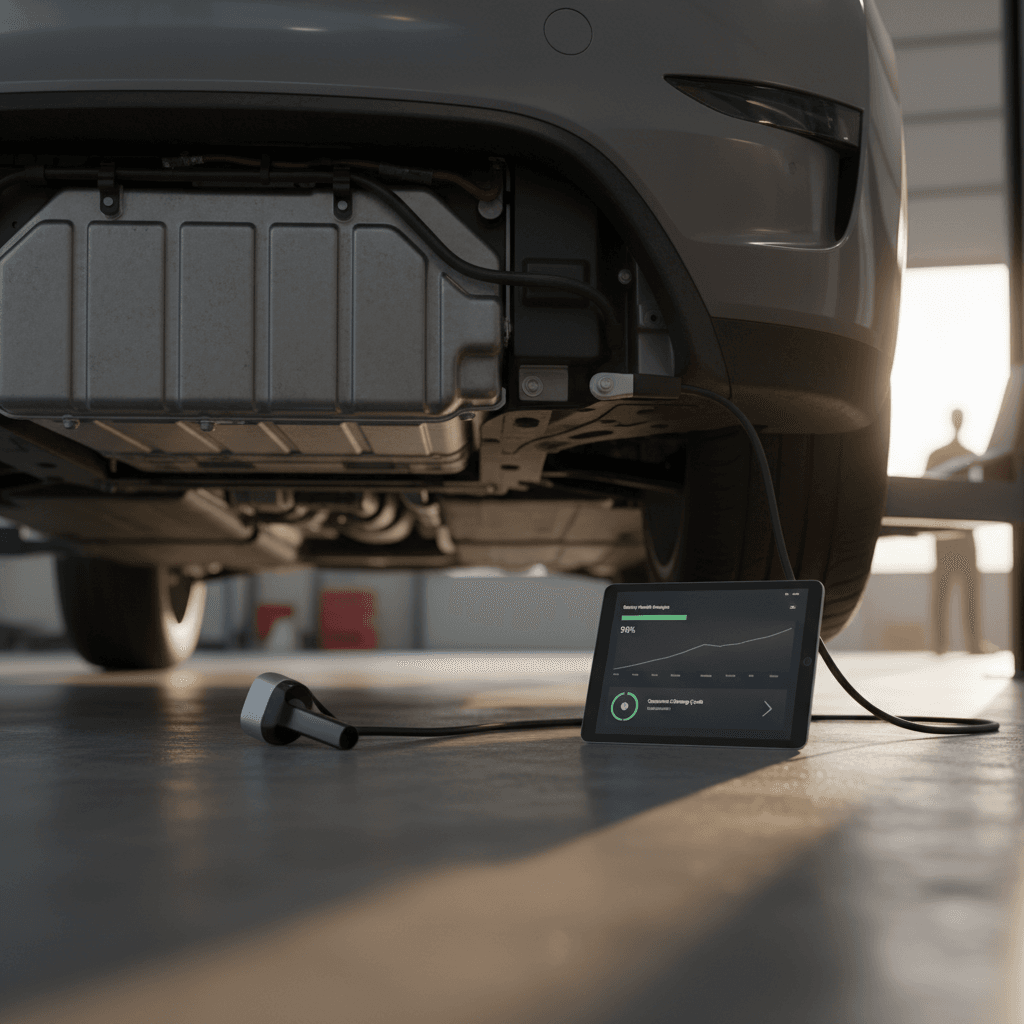
At Recharged, we see this play out every day. Our Recharged Score Report includes verified battery health diagnostics on every used EV we sell, because buyers increasingly ask, “How much range has this car lost?” Learning the right habits now means you’ll have a better story to tell later, backed by data, not guesswork.
Understanding your Model Y battery chemistry and what it means
Not every Model Y uses the exact same battery chemistry, and that matters for how aggressively you can charge it. Broadly, there are two families you’ll encounter:
Two main Model Y battery types
Your ideal charging strategy depends on which one you have.
NCA / NCM (nickel‑based) packs
Found in most Long Range and Performance Model Y variants in North America.
- Higher energy density (more range per kg).
- More sensitive to high state of charge and heat.
- Best practice: use a daily limit around 70–80%, only go higher when you need it.
LFP (lithium iron phosphate) packs
Found in many newer Rear‑Wheel Drive / Standard Range Model 3 and increasingly Model Y base trims.
- More tolerant of 100% charging.
- Tesla often labels them “Set to 100% for daily use” in the charging screen.
- Still happier if you avoid sitting at 0% or extreme heat for long periods.
How to tell which battery you have
In this guide, we’ll call out where recommendations differ by chemistry. If you’re not sure, you can still follow the conservative guidance, charging less aggressively and avoiding extreme conditions helps every lithium‑ion pack.
Daily charging habits that maximize Model Y battery life
Your daily charge routine is the single biggest lever you control. The good news is that optimizing it is mostly a matter of “set it and forget it.”
Model Y daily charging best practices
1. Use a sane daily charge limit
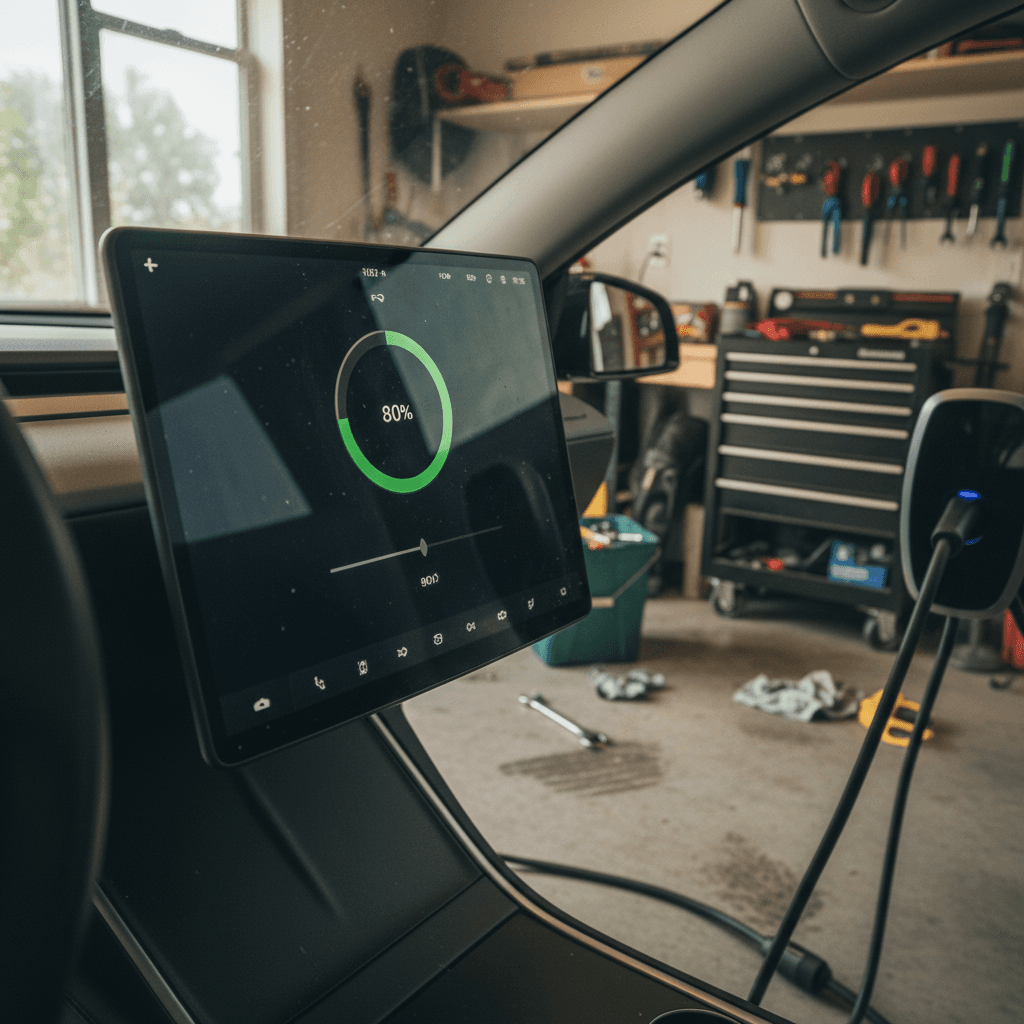
For nickel‑based packs, set your daily charge limit around <strong>70–80%</strong>. Only slide it up to 90–100% on days when you truly need the range, and try to start driving soon after it reaches full.
2. Keep it plugged in when parked
Tesla’s own guidance is simple: <strong>plug in when you can</strong>. The car will top itself off in small increments and manage pack temperature behind the scenes. There’s no “memory effect” to worry about.
3. Avoid sitting full or nearly empty
Short visits to 0–5% or 95–100% aren’t catastrophic, but letting the car sit there for hours or days adds stress. Aim to live mostly between about 20–80% for nickel‑based packs when it’s convenient.
4. Favor Level 2 home charging
A 240‑volt Level 2 charger at 32–48 amps is gentler on the pack than frequent DC fast charging. It also lets you schedule charging for off‑peak electricity rates and finish right before departure.
5. Let software do the work
Use the Tesla app’s <strong>Scheduled Departure</strong> or <strong>Off‑Peak Charging</strong> so the car finishes charging close to the time you leave. This keeps the average state of charge lower and the battery warmer in cold weather.
Don’t obsess over the exact percentage
Smart use of Supercharging and fast charging
Tesla’s Supercharger network is one of the Model Y’s biggest strengths. Used wisely, it won’t destroy your battery; abused, it can accelerate wear over many years. Think of DC fast charging as a powerful tool you use strategically, not your daily fuel pump.
- Use Superchargers primarily for road trips and true convenience emergencies, not as your default daily charger if you have home or reliable workplace charging.
- In cold weather, navigate to the Supercharger in the Tesla nav 15–30 minutes before arrival so the car can precondition the pack. A warm battery charges faster and more gently.
- Unplug or stop the session once you reach 70–80% on trips unless you absolutely need more. Above ~80%, charging slows down and the pack spends more time at high voltage.
- If you routinely fast‑charge (rideshare, high‑mileage driving), consider being more conservative the rest of the time, lower daily limits, more garage parking, etc., to balance out the extra stress.
The real issue with constant fast charging
Driving habits that reduce battery stress
How you drive your Model Y affects battery life through both heat and how deep your cycles are. You don’t need to baby the car, but avoiding extremes will pay off in long‑term health.
Driving choices that help your battery
Small changes to your style can add up over years.
Avoid constant full‑throttle launches
Using all the torque occasionally is fine, the car is built for it. But turning every stoplight into a drag race heats the battery and drivetrain. Over time, that can add up, especially in hot climates.
Smooth, anticipatory driving
Looking further ahead means fewer hard accelerations and brake‑regen spikes. That keeps current more moderate, lowering heat and stretching range at the same time.
Watch speed in extreme heat
In very hot weather, high speeds plus A/C plus elevation gain can drive battery temperatures up. When possible, ease off a bit or take breaks to let the pack cool, especially right after fast charging.
Efficiency is a two‑for‑one win
Temperature, climate control, and battery longevity
Lithium‑ion batteries are like people: they’re happiest neither freezing nor sweltering. Tesla’s thermal management system does a lot automatically, but you can still help it out with a few deliberate choices.
When it’s hot out
- Park in shade or a garage when you can. Every degree cooler the cabin is, the less work the pack and HVAC have to do.
- Use Cabin Overheat Protection thoughtfully. It protects the interior and indirectly the battery, but running it constantly in a hot climate does consume energy.
- Avoid charging to high percentages and then baking in the sun all day. If you need a full charge, try to finish close to departure.
When it’s cold out
- Use Scheduled Departure and preconditioning while plugged in so the battery and cabin heat up on grid power instead of stored energy.
- Expect temporarily reduced regen and range when the battery is cold, this isn’t permanent degradation.
- In very cold climates, it’s better to keep the car plugged in so it can maintain its own temperature and avoid deep cold‑soaked states at low state of charge.
Cold range loss vs. real degradation
Storage and rare use: how to treat a Model Y that sits
Not every Model Y is a daily driver. If you store your car at a vacation home, leave for extended work travel, or just don’t rack up many miles, you’ll want a slightly different routine to protect the battery.
Model Y long‑term storage tips
1. Aim for a mid‑range state of charge
Before leaving the car for weeks, set the charge limit around <strong>50–60%</strong> and let it settle there. This is a very low‑stress state for lithium‑ion cells.
2. Leave it plugged in if possible
A plugged‑in Model Y can manage its own pack temperature, run periodic cell balancing, and avoid drifting toward very low state of charge due to background consumption.
3. Avoid deep cold at low charge
If the car will sit outdoors in sub‑freezing temperatures, try not to leave it parked for days below ~20–30%. The combination of cold and low SOC is harder on the chemistry.
4. Don’t worry about starting it up weekly
You don’t need to “exercise” a lithium‑ion pack the way you might a lead‑acid battery. Let the car manage itself, just check the app occasionally to confirm the state of charge is stable.
Don’t ignore the 12‑volt / low‑voltage system
Monitoring battery health on a new or used Model Y
You don’t need to obsess over every mile of estimated range, but a few simple checks will help you keep an eye on your Model Y’s battery health, especially if you’re buying or selling used.
Simple signals of Model Y battery health
What to look at, what it means, and when to dig deeper.
| Signal | Where to see it | What’s normal | When to investigate |
|---|---|---|---|
| Estimated range at 100% | Charging screen / app | A modest drop (5–10%) over 100k miles | Sharp step‑change or loss >15–20% with normal use |
| Energy consumption (Wh/mi) | Trips & Energy app | Higher in winter; improves in mild weather | Huge jump at all temps with no driving‑style change |
| Frequent thermal alerts | Alerts, service messages | Occasional notices in extreme climates | Repeated warnings in mild conditions |
| Supercharging behavior | On‑screen charge curve | Slower above ~60–70% is normal | Sudden, permanent slowdowns across many sites |
Use these signals as trends over time, not one‑off verdicts.
Buying used? Get real battery data.
Model Y battery myths vs. realities
EV forums and social media are full of half‑remembered chemistry lessons and outdated folklore. Let’s separate some common myths from practices that actually matter for your Model Y.
Common Model Y battery myths, debunked
Focus on the habits that actually move the needle.
Myth: You must fully discharge often
Reality: Tesla’s batteries have no memory effect. Deep discharges are actually harder on the chemistry than shallow cycles. It’s fine to top up from 50–60% back to 70–80% every night.
Myth: Supercharging a few times ruins the pack
Reality: Superchargers are part of normal use. The risk comes from constant DC fast charging at high state of charge in hot conditions. Occasional road‑trip use is well within what the pack is designed for.
Myth: You must charge to 100% weekly to “calibrate”
Reality: The Model Y’s battery management system uses sophisticated algorithms and cell balancing in the background. A rare full charge can refine the range estimate, but it’s not a magic health reset, and it slightly increases wear if you let it sit at 100%.
Truth: Average state of charge matters
Spending most of your time between roughly 20–80% for nickel chemistries, combined with moderate temperatures and currents, is one of the most powerful predictors of long service life.
The smartest EV owners worry less about any single charging session and more about their averages: average state of charge, average temperature, and average use of fast charging.
FAQ: Tesla Model Y battery life and best practices
Frequently asked questions about Model Y battery life
Key takeaways, and when to consider a used Model Y
The recipe for maximizing Tesla Model Y battery life is surprisingly simple: avoid extremes, stay plugged in with a sensible charge limit, treat fast charging as a tool rather than a lifestyle, and let the car’s software do the heavy lifting. You don’t have to turn every drive into a science experiment, just make a few good habits automatic and your battery will thank you years from now.
- For nickel‑based packs, spend most of your time in the 20–80% window and keep 90–100% for the days you truly need it.
- Use Level 2 home or workplace charging as your default; keep Supercharging for trips and the occasional busy day.
- Respect temperature: shade and garages in the heat, preconditioning and staying plugged in when it’s cold.
- If the car will sit, leave it around 50–60% and plugged in if you can.
- Watch trends in range and alerts over time rather than obsessing over any single number.
If you’re shopping for a used Model Y, these same principles still apply, but starting from a healthy baseline matters. Buying through Recharged means every car comes with a Recharged Score battery health report, fair‑market pricing, and EV‑specialist support. That way you’re not just hoping the previous owner treated the pack well, you can see it in the data before you ever sign or schedule nationwide delivery.