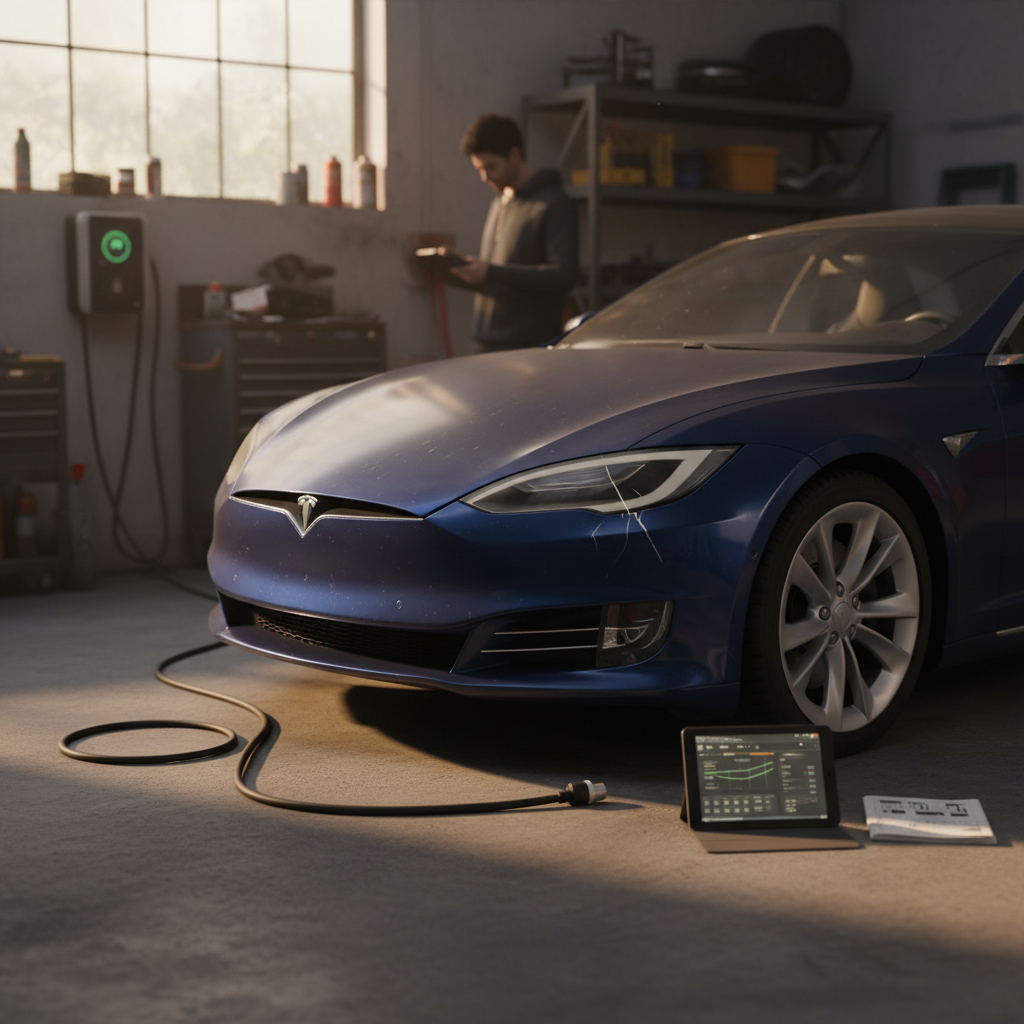
If you’re shopping used, the obvious question is: how much should you actually offer for a used Tesla Model Y? With prices falling fast in 2025 and thousands of Model Ys hitting the market, it’s easy to either overpay or make offers so low that sellers won’t take you seriously. This guide turns current pricing data into clear offer ranges you can use today.
Where used Model Y prices sit right now
Why used Model Y prices are dropping in 2025
To decide how much to offer on a used Tesla Model Y, you first need to understand why prices are softening even as the broader used‑car market is still relatively expensive.
- Lots of supply. Tesla has sold well over a million Model Ys in the U.S., and many early buyers are now trading up to newer trims or other EVs, flooding the used market with inventory.
- Rapid new‑car price cuts. Tesla has repeatedly trimmed new Model Y pricing and introduced lower‑cost RWD and updated trims, which pulls used values down to stay competitive.
- EV market maturing. Buyers now have more non‑Tesla EV options, so used Teslas have to be priced more aggressively to stand out.
- Technology cycles. Each refresh (range updates, interiors, Autopilot hardware) makes older Model Ys feel dated faster than a typical gas SUV, which accelerates depreciation.
Tesla Model Y used‑market snapshot (2025
Why this helps you as a buyer
Quick answer: how much to offer for a used Model Y
Here’s the short version most shoppers want: in today’s market, a fair but buyer‑friendly starting offer for a clean used Tesla Model Y is usually about 8–15% below a realistic market value once you’ve adjusted for year, trim, mileage, options, and battery health.
Used Tesla Model Y quick offer cheat sheet (2025 market)
Approximate private‑party ranges for well‑maintained U.S. cars with clean history. Use these as starting points, then adjust for your region and the vehicle’s specifics.
| Model year & type | “Good deal” asking price | Reasonable opening offer | Likely landing zone |
|---|---|---|---|
| 2020–2021 Model Y (any trim, 40k–80k miles) | $23,000–$28,000 | $1,500–$3,000 under asking | Split the difference: $1,000–$2,000 off ask |
| 2022 Model Y Long Range / Performance (30k–60k miles) | $28,000–$33,000 | 8–12% under asking | 5–8% below ask if demand is normal |
| 2023 Model Y Long Range / Performance (under 45k miles) | $30,000–$36,000 | 10–15% under asking | 7–10% below ask |
| 2024–early 2025 Model Y Long Range / Performance (<30k miles) | $32,000–$40,000 | 8–12% under asking | 5–9% below ask |
| Late‑model RWD / base trims (<30k miles) | $30,000–$36,000 | 8–10% under asking | 4–8% below ask |
These ranges assume average options and no major accident or battery issues.
Important disclaimer
Price ranges by year, trim, and mileage
To move from ballpark to precision, break your target Model Y into three dimensions: year, trim, and mileage. That’s how pricing tools and professional buyers do it.
How year and trim affect a used Model Y’s value
Match what you’re shopping to the closest description below, then fine‑tune for mileage and condition.
2020–2021: early build years
Typical asking (2025): low‑mid $20,000s to around $30,000 depending on miles and trim.
- Best value if you’re price‑sensitive.
- Tech and hardware a bit older, but still very usable.
- Look closely at battery health and Autopilot hardware.
2022–2023: sweet‑spot used buys
Typical asking: upper‑$20,000s to mid‑$30,000s for Long Range and Performance.
- Most of the modern features without new‑car pricing.
- Many off‑lease cars in the 25k–50k mile range.
2024–early 2025: nearly new
Typical asking: low‑$30,000s to around $40,000, often just a step below leftover new inventory.
- Consider new with tax credits if pricing is close.
- Great candidates for aggressive offers, especially if they’ve sat on the lot.
How mileage changes what a used Model Y is worth
Very rough nationwide guidance; local markets and condition can move these numbers up or down.
| Odometer reading | Typical impact on value | Suggested offer adjustment |
|---|---|---|
| Under 15,000 miles | Feels nearly new; commands a premium | Be prepared to pay close to strong‑market value, maybe 3–5% under. |
| 15,000–35,000 miles | Normal lightly used range | Target 5–10% under comparable listings. |
| 35,000–60,000 miles | Noticeable wear, but still in prime life | Push harder: 8–15% under comparable lower‑mile comps. |
| 60,000–90,000 miles | High but acceptable for many buyers | Demand a bigger discount: 15–25% below similar low‑mile vehicles. |
| 90,000+ miles | Value EV territory; resale risk | Only proceed with sharp pricing and excellent battery data; discounts of 25%+ versus lower‑mile cars are reasonable. |
Use these mileage bands to tweak your offer relative to similar listings.

Step‑by‑step: how to calculate a fair offer
Instead of guessing, treat your offer like a simple worksheet. Here’s a practical, repeatable way to land on a number you can defend, and negotiate from.
Six steps to price your used Model Y offer
1. Start with real comps, not asking prices
Search multiple sources, Tesla’s own used inventory, major listing sites, and EV‑focused marketplaces, for <strong>similar Model Ys in your region</strong>. Match year, trim, mileage, and equipment as closely as possible.
2. Establish a realistic market value
Ignore obvious outliers and average the middle of the pack. That gives you a practical “<strong>likely selling price</strong>” instead of the highest dream number on the page.
3. Adjust for mileage and options
Compared with your comps, add value for lower miles or desirable options (tow hitch, 7‑seat interior, upgraded wheels) and subtract for higher miles or missing features. Think in <strong>$500–$1,500</strong> moves, not pennies.
4. Factor in battery health and history
If you can see recent battery diagnostics, like the <strong>Recharged Score</strong> on vehicles listed through Recharged, use that to adjust. Stronger‑than‑average battery health justifies paying closer to market value; weaker health demands a discount.
5. Decide your target “walk‑away” price
Pick the <strong>maximum you’re truly comfortable paying</strong> based on your budget and financing. That number is your personal ceiling, no matter what the seller asks.
6. Back into a first offer
From your realistic market value, subtract 8–15% depending on how soft your local market is and how long the car has been listed. That’s your <strong>opening offer</strong>, giving you room to move up while still landing at or below your target number.
Using Recharged to shortcut the math
Adjusting your offer for battery health and condition
With any used EV, battery health is the single biggest wild card. Two Model Ys with the same year and mileage can have very different real‑world range and long‑term value.
Battery health adjustments
- Excellent health (range near original spec): Car’s real‑world range closely matches EPA estimates for its trim. You can justify paying near the higher end of your price range, maybe only 5–8% below market value.
- Average health: Some expected degradation (a modest drop in rated range), but nothing alarming. Stick with your standard discount target of 8–15% below market.
- Below‑average health: Noticeably reduced range, many fast‑charge sessions in history, or ambiguous data. Either walk away or cut your offer significantly, often by an extra $1,500–$3,000.
Physical condition and history adjustments
- Accident history: Any structural or airbag deployment should trigger a big discount or a pass. Minor cosmetic repairs are negotiable leverage, but may not be deal‑breakers.
- Interior and wheels: Curb rash, worn bolsters, and heavily scratched plastic trim add up. Think in $300–$800 chunks for meaningful flaws.
- Maintenance and records: Clean service records, recent tires, and software kept up‑to‑date justify a smaller discount. Unknown history should push you toward the lower end of your offer range.
Don’t ignore missing keys and accessories
Private party vs. dealer vs. EV marketplaces
How much you should offer also depends on who you’re buying from. A private seller, a traditional dealer, and a specialized EV marketplace each treat negotiation differently.
Where you buy changes how much to offer
Match your approach to the seller type for better results.
Private party
Pros: Often the lowest prices, direct conversation with the owner, detailed history.
Offer strategy: Start 8–15% below your estimate of fair value, explain your reasoning, and be ready to move quickly if they agree.
Franchise or independent dealer
Pros: Easier trade‑ins, potential warranties, more financing options.
Offer strategy: Dealers expect negotiation but have tighter floors. Offers 5–10% below a realistic market value are usually taken seriously, especially on aged inventory.
EV‑focused marketplace (like Recharged)
Pros: Transparent pricing, EV‑specific inspections, battery health reports, digital buying.
Offer strategy: Many cars are priced near true market value already. You may have less back‑and‑forth, but more confidence you’re not overpaying.
How incentives and financing change what you can offer
The right offer isn’t just about the car’s value; it’s about what the deal really costs you over time. Financing terms and incentives can justify walking away from an aggressively priced used Model Y, or stepping up a bit for the right one.
- Compare used vs. new monthly costs. New Model Ys may still qualify for federal or state incentives that used cars don’t. A slightly higher used purchase price can still win if you’re getting better interest rates or lower fees.
- Pre‑qualification gives you a hard ceiling. Getting pre‑qualified for financing (for example, through Recharged) tells you what lenders are comfortable with, and keeps you from stretching your offer beyond what fits your budget.
- Watch the interest rate more than the sticker. A rock‑bottom used price with a high APR can cost more over the life of the loan than a slightly higher price with a lower APR.
- Trade‑in value belongs in the math. If you’re trading a current vehicle, look at the full deal: selling price for the Model Y, trade‑in value, and fees. Negotiate each piece, not just the monthly payment.
Why it helps to pre‑qualify through Recharged
Negotiation strategies that work on used Model Ys
Some sellers still think every Tesla is a license to print money. In 2025, that’s no longer true, but you’ll need a clear, calm strategy to bring expectations back to reality.
Practical negotiation moves for a used Model Y
Lead with data, not attitude
Show comparable listings on your phone or laptop and explain how you arrived at your offer. It’s harder for a seller to dismiss <strong>current, local comps</strong> than a random lowball.
Use time on market as leverage
If the car has been listed for weeks or months without moving, politely point that out. Slow movers often have room for <strong>larger discounts</strong> than fresh arrivals.
Focus on out‑of‑pocket cost
For dealer deals, talk in terms of “<strong>out‑the‑door price</strong>” (including taxes and fees). That helps you avoid fake discounts that get clawed back with add‑ons.
Be ready to walk away
The best leverage you have is your willingness to leave your offer on the table and keep shopping. In a market with plenty of Model Ys, another good candidate will appear.
Move fast when the deal is right
When you see a clean, fairly priced car with strong records and battery health, hesitate too long and someone else will grab it. Have your financing prepped so you can say yes quickly.
Common mistakes when bidding on a used Model Y
Knowing what not to do is just as important as knowing how much to offer. Here are pitfalls I’ve watched shoppers fall into repeatedly.
- Chasing the rare color or wheels at any cost. Unique specs are nice, but they rarely justify paying thousands above what the rest of the market is doing.
- Ignoring battery data. Don’t assume all Model Ys age the same. Fast‑charging habits and climate matter; insist on some kind of battery health documentation or walk away.
- Over‑valuing FSD (Full Self‑Driving). Many buyers don’t value FSD at anywhere near its original price. Treat it as a small bonus, not a reason to pay thousands more.
- Forgetting software and hardware generations. Different Autopilot hardware and interior updates affect desirability. Do your homework so you’re not overpaying for an older spec just because the mileage is low.
- Letting excitement override your budget. The right Model Y is a great EV, but there will always be another one. Don’t bid your way past a payment that keeps you up at night.
Never skip a proper inspection
FAQ: used Tesla Model Y offers
Frequently asked questions about making offers on a used Model Y
Bottom line: how much you should offer
If you remember nothing else, remember this: your offer on a used Tesla Model Y should be anchored in current local comps, adjusted for battery health, mileage, and condition, and padded with 8–15% room to negotiate. In today’s market, that usually puts you somewhere between the low‑$20,000s and mid‑$30,000s for most 2020–2023 Model Ys, and the low‑$30,000s to around $40,000 for newer, low‑mile examples.
Take the time to gather real‑world pricing data, get an EV‑savvy inspection, and line up your financing before you make an offer. If you’d rather not do the heavy lifting yourself, browsing vehicles on Recharged gives you pre‑analyzed pricing and verified battery health from day one, so you can focus less on second‑guessing the number, and more on choosing the Model Y that actually fits your life.