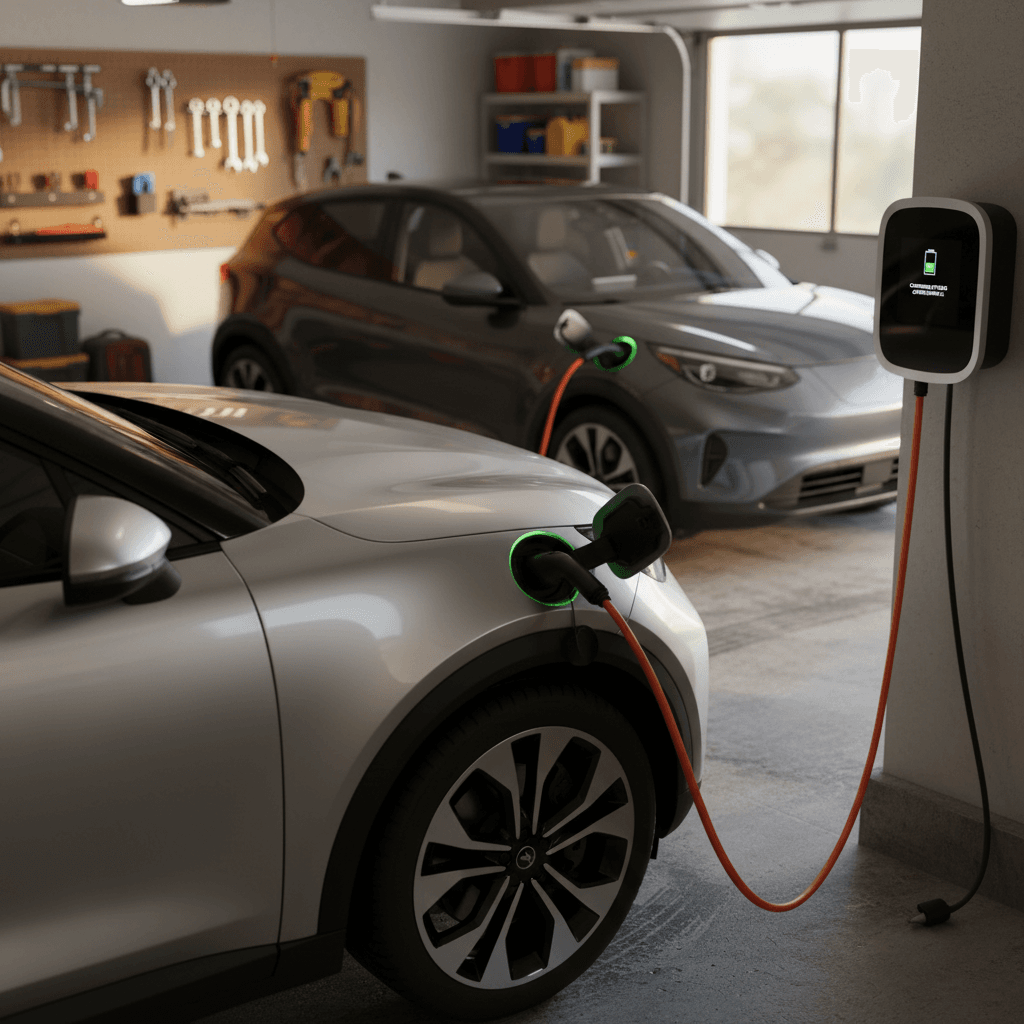
Search for a Tesla Model Y charging speed test and you’ll see wildly different numbers: 10–80% in 25 minutes, 36 minutes, even 45 minutes. The reality is that charging speed depends on the exact Model Y you drive, the charger you use, and the conditions you’re charging in. This guide pulls together independent test data and practical experience so you know what to expect, from a brand‑new Model Y on a V3 Supercharger to a used one you’re eyeing on a marketplace like Recharged.
What this article covers
Why Tesla Model Y charging speed matters
Charging speed isn’t just a bragging right. It affects how often you stop on road trips, whether you can comfortably rely on public fast charging, and how forgiving your daily routine is if you forget to plug in at home. For used shoppers, charging behavior can also hint at how a previous owner treated the battery, which is why battery‑aware drivers pay close attention to these tests.
Three ways charging speed shapes ownership
Especially important if you rely on public fast charging or have limited home charging access
Road trip flexibility
On a well‑planned route, a faster‑charging Model Y spends more time driving and less time parked at a charger. A difference of even 10 minutes per stop compounds over a full day on the road.
Everyday convenience
If you street‑park or share a charger, how quickly you can top up from 20–80% determines whether a 30‑minute grocery stop adds meaningful range, or just a token bump.
Battery health signals
Overly aggressive fast‑charging habits can, over time, affect how much energy your pack holds and how quickly it charges. Consistent, repeatable speed tests are a useful way to spot outliers.
Tip for road‑trippers
Tesla Model Y batteries and charging hardware
Before you look at any charging speed test, you need to know which Model Y you’re talking about. Between battery sizes, chemistries, and trims, there are meaningful differences in peak power and how long the car can hold high rates.
Tesla Model Y trims, battery sizes, and peak charging power
Typical battery capacities and DC fast‑charging capability for recent Model Y variants. Exact numbers can vary slightly by market and model year.
| Trim | Approx. usable battery | EPA range (recent U.S. models) | Max AC charge power | Max DC fast charge rating |
|---|---|---|---|---|
| RWD / Standard Range | ~64 kWh | mid‑250s–260 miles | 11.5 kW | ~170–225 kW |
| Long Range AWD | ~75–78 kWh | ~311–330+ miles | 11.5 kW | up to 250 kW |
| Performance AWD | ~82–84 kWh | ~270–280 miles | 11.5 kW | up to 250 kW |
Long Range and Performance trims share similar peak DC ratings, while rear‑wheel‑drive versions charge a bit more slowly at fast chargers.
Spec sheet vs. reality
DC fast charging speed tests (Supercharger & CCS)
Let’s start with what most people mean when they search for a Model Y charging speed test: how fast it can go from low state of charge (SoC) to a practical road‑trip level at a high‑power DC fast charger such as a Tesla Supercharger or a CCS station with an adapter.
Headline DC fast‑charging results for Tesla Model Y
Those headline figures flatten out a lot of nuance, so it’s worth looking at how the charging curve behaves across the SoC range and what a full 0–100% test actually looks like in practice.
Example: Tesla Model Y Performance DC fast charging curve
Independent test data for a recent Model Y Performance on a high‑power DC fast charger, starting at 10% SoC.
| SoC window | Time for window | Avg. power | Energy added (approx.) | Notes |
|---|---|---|---|---|
| 10–30% | ~8–10 min | 180–230 kW | ~20 kWh | Near peak power; best time to add lots of range quickly. |
| 30–50% | ~9–10 min | 130–170 kW | ~20 kWh | Still very strong; power is starting to taper but remains well above 100 kW. |
| 50–80% | ~17–18 min | 70–110 kW | ~22 kWh | Taper becomes noticeable; this is where many drivers unplug on road trips. |
| 10–80% total | ~36 min | ~100–105 kW | ~62 kWh | Representative real‑world 10–80% result for a Performance trim on a good charger. |
| 10–100% total | ~72–75 min | ~65–70 kW | ~79–80 kWh | Top 20% is slow; avoid on road trips unless you truly need the extra range. |
This is representative of a healthy Performance pack on a strong 250 kW‑class charger in good conditions, not a worst‑case winter scenario.
Supercharger types matter
For Long Range AWD trims, independent tests and aggregated owner data consistently show 10–80% times in the mid‑20s to around 30 minutes on a V3 Supercharger under good conditions, with peak power just over 220–240 kW. Rear‑wheel‑drive trims, which often have lower peak DC ratings and smaller packs, tend to land around 32–38 minutes for the same 10–80% window.
When to stop on a road trip
Home and Level 2 charging speed tests
Fast charging dominates the marketing, but most of your charging will happen at home or work on Level 1 or Level 2 AC power. That’s where you control the hardware and where a simple speed test gives you a clear picture of your daily experience.
Common home charging setups for Model Y
Approximate real‑world rates; your utility voltage and circuit size will tweak the numbers slightly.
120V Level 1 outlet
Power: ~1.4–1.8 kW
Rate: ~3–5 miles of range per hour
Use case: Nightly top‑ups for very short commutes; emergency backup.
240V 30A dryer‑style circuit
Power: ~5.7 kW
Rate: ~20–25 miles of range per hour
Use case: Apartment/garage with limited amperage; solid solution for many drivers.
240V 48A wall connector
Power: up to 11.5 kW
Rate: ~40–44 miles of range per hour on a Model Y
Use case: Dedicated home charging for heavier daily use and faster overnight recovery.
Approximate 0–100% home charging times for Model Y Long Range
Assumes a roughly 75 kWh usable pack and typical North American voltages.
| Charging method | Power | Time 10–80% | Time 0–100% | Best for |
|---|---|---|---|---|
| 120V Level 1 | ~1.4 kW | ~30–35 hrs | 40–45+ hrs | Low‑mileage drivers, emergency use. |
| 240V 30A (~24A continuous) | ~5.7 kW | ~5.5–6 hrs | ~8–9 hrs | Most urban/suburban daily driving needs. |
| 240V 60A (~48A continuous) | up to 11.5 kW | ~3–3.5 hrs | ~6–7 hrs | Heavy commuters, frequent road‑trippers between days. |
Real‑world charging will rarely go 0–100%; plan around how much energy you actually need overnight.
Safety first with home charging
Real‑world factors that slow or speed up charging
If your own Model Y charging test doesn’t match the pretty charts you see online, that doesn’t automatically mean something is wrong with your car or the charger. Charging speed is a tug‑of‑war between hardware capability, software limits, and conditions.
Key variables that change your charging speed
1. State of charge (SoC) when you plug in
Tesla packs charge fastest at low SoC. Expect your highest kW between roughly 5–30%. If you plug in at 50%, you’ll never see the headline peak, and your average power will be lower.
2. Battery temperature
Cold packs can slash charging power until the car warms them up. Precondition the battery by setting the charger as your navigation destination; the car will heat or cool the pack on the way.
3. Charger power and sharing
Older 72 kW urban Superchargers and 120–150 kW V2 sites simply can’t match V3/V4 sites. On some hardware, sharing a pedestal with another car can also reduce your available power.
4. Software limits and battery health
Tesla updates can subtly change charging curves. Over years, battery health can also alter how quickly your pack accepts power, though SoC and temperature usually matter more in day‑to‑day use.
5. Your charge target
Going to 100% always takes disproportionately longer. If you compare a 10–80% test for one car to a 10–95% test for another, you’re not doing an apples‑to‑apples comparison.
Reproducing test results
How the Model Y’s charging speed compares to other EVs
In isolation, a 25–36 minute 10–80% window might not mean much. The question buyers actually care about is how the Model Y stacks up against other popular electric crossovers on long‑distance drives.
Model Y vs. rival EVs: 10–80% DC fast charging
Representative independent test results for popular EV crossovers on high‑power DC fast chargers. Times are approximate and depend on conditions.
| Vehicle | Battery (usable, approx.) | Peak DC rating | Typical 10–80% time | Notes |
|---|---|---|---|---|
| Tesla Model Y Long Range | ~75–78 kWh | up to 250 kW | ~25–30 min | Strong charging curve plus excellent efficiency and charger availability. |
| Tesla Model Y Performance | ~82–84 kWh | up to 250 kW | ~30–36 min | Slightly larger pack; performance tires reduce efficiency on the highway. |
| Hyundai Ioniq 5 AWD | ~77 kWh | up to 230–240 kW | ~18–22 min | 800V architecture enables very fast 10–80% times in good conditions. |
| Kia EV6 AWD | ~77 kWh | up to 230–240 kW | ~18–22 min | Similar architecture to Ioniq 5; known for excellent road‑trip charging. |
| Volkswagen ID.4 | ~77 kWh | up to ~170–190 kW | ~30–36 min | Improved with software updates but generally slower than Model Y. |
Hyundai and Kia tend to post excellent raw charging times, but Tesla’s combination of efficiency and Supercharger access narrows the real‑world gap.
Speed vs. network
How to test your own Model Y charging speed
You don’t need lab equipment to run a useful charging speed test on your own Tesla Model Y. With a little planning and your smartphone’s timer, you can see if your car performs in line with expectations, or if there’s a reason to dig deeper.
Step‑by‑step: Run a Model Y fast‑charging test
1. Pick the right charger
Choose a known high‑power site, ideally a V3 Supercharger. Avoid older 72 kW or 120–150 kW sites for this test, and try not to share a paired stall if you can help it.
2. Arrive near 10% SoC
Drive until your battery is around 10%. Use the navigation to the charger so the car can precondition the pack; you should see a snowflake icon disappear or a message about battery conditioning as you approach in cold weather.
3. Start a timer and note stats
Plug in, then start a timer when the charging session begins. Note your starting SoC, and keep an eye on peak kW on the in‑car display or in the Tesla app.
4. Stop at 80% and record the time
When you hit 80% SoC, stop the timer and unplug. That duration is your personal 10–80% time. For an LR or Performance Model Y on a healthy V3 charger in good conditions, expect something in the 25–36 minute range.
5. Save a screenshot or photo
Capture the charger screen or your in‑car display showing time, kW, and energy added. This makes it easier to compare later or share with a service center if results seem off.
6. Repeat in different conditions
If you really want to understand your car, repeat the test in winter and summer, or at another site. You’ll quickly see how temperature and charger quality impact your experience.
What “normal” looks like
Used Model Y buyers: what charging speed reveals
If you’re shopping for a used Tesla Model Y, charging behavior is more than trivia. It’s a window into how the previous owner used the car and how much useful life you can expect from the battery, by far the most valuable component in any EV.
What you want to see
- 10–80% DC fast‑charging times roughly in line with recent test data for that trim.
- Pack capacity and range that match what you’d expect for the odometer reading and climate history.
- Normal taper behavior: strong power at low SoC, steady reduction as SoC rises.
This pattern suggests a battery that’s aging as expected, not one that’s been repeatedly hammered at high SoCs or overheated.
When to ask more questions
- Charging session never exceeds ~120–130 kW on a V3 site, even at low SoC with preconditioning.
- 10–80% times are consistently far slower than peers under similar conditions.
- Range estimates are much lower than typical for that trim and year.
Slower charging doesn’t always mean a bad battery, it could be a weak charger or cold pack, but it’s a good reason to investigate further.
How Recharged uses charging data
When you’re buying used, a data‑backed view of battery health and charging behavior is worth more than any cosmetic detailing. Batteries are the new engine, and you want proof, not promises.
FAQ: Tesla Model Y charging speed test
Common questions about Model Y charging speed
Bottom line: is the Model Y a fast charger?
Viewed through the lens of real‑world charging speed tests, the Tesla Model Y sits in a strong position. It doesn’t always top the leaderboard for raw 10–80% times, that crown often goes to 800‑volt competitors from Hyundai and Kia, but its combination of competitive charging curves, excellent efficiency, and access to a massive Supercharger network makes it one of the most road‑trip‑friendly EVs you can buy.
For current owners, understanding how state of charge, temperature, and charger type affect your results will help you plan smarter stops and avoid unnecessary anxiety about a “slow” session. For used‑Model‑Y shoppers, paying attention to charging performance, and leaning on tools like the Recharged Score Report, turns battery health from a question mark into a measurable, transparent metric. In an EV world where the battery is the heart of the car, that clarity is worth its weight in kilowatt‑hours.