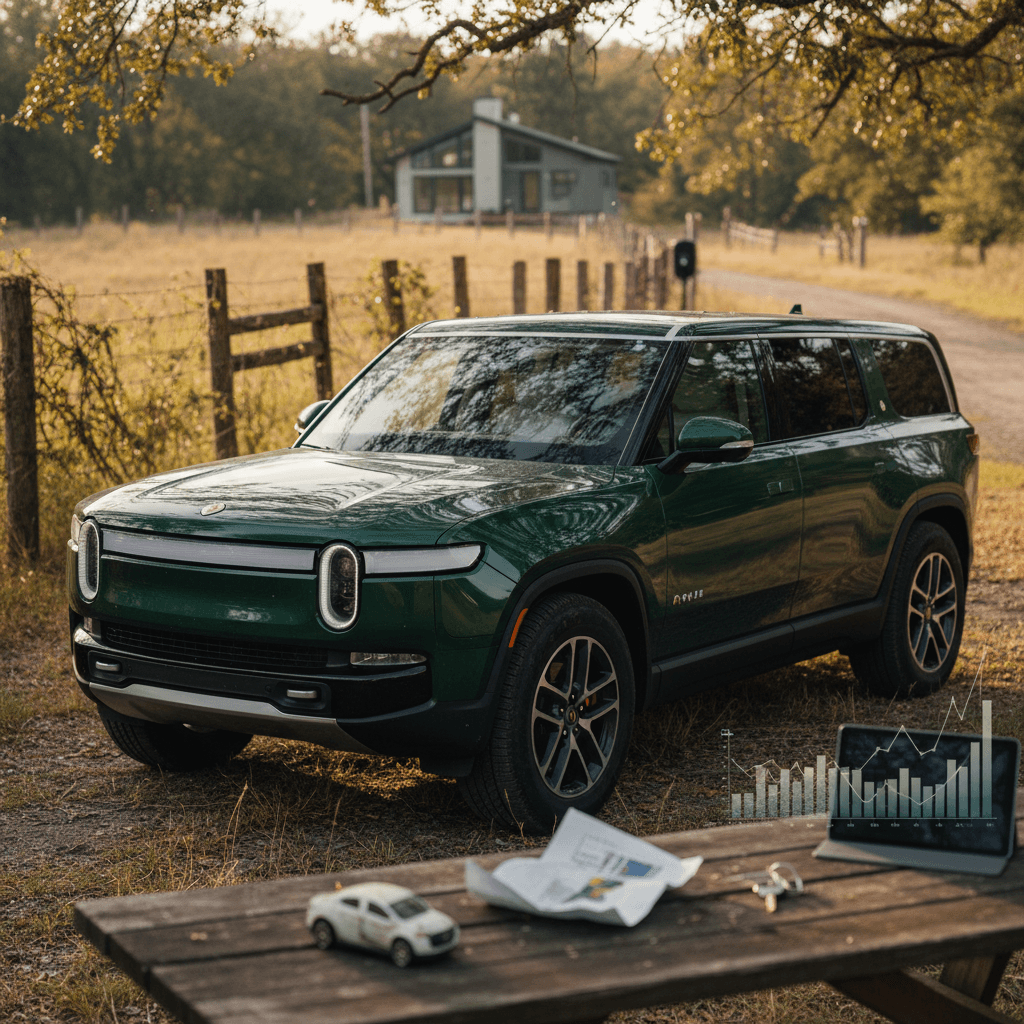
If you read Rivian forums long enough, you’ll come away with two impressions about the Rivian R1S: it might be the best all‑around family adventure EV on sale, and it might also be the most stressful new car you can own. This one‑year Rivian R1S owner review pulls together real‑world experiences, both glowing and grim, so you can decide whether this three‑row electric SUV is a dream, a gamble, or a bit of both.
What this review is (and isn’t)
One year with a Rivian R1S: what owners are saying
Rivian R1S at 1 year: big smiles, big caveats
The pattern that emerges from one‑year ownership is remarkably consistent: the R1S is a home‑run product wrapped in start‑up build quality. Owners rave about comfort, performance, and design. Many will tell you they’d buy it again tomorrow. At the same time, you’ll find threads from people on their fourth set of half‑shafts or waiting weeks while a low‑mileage truck sits in service for a mysterious high‑voltage fault.
So if you’re cross‑shopping a used R1S against, say, a Volvo XC90 Recharge or Tesla Model X, you’re really choosing between flavors of compromise. The Rivian’s compromise is: "You’ll love it when it’s in your driveway." The risk is how often it isn’t.
Comfort, space and everyday livability
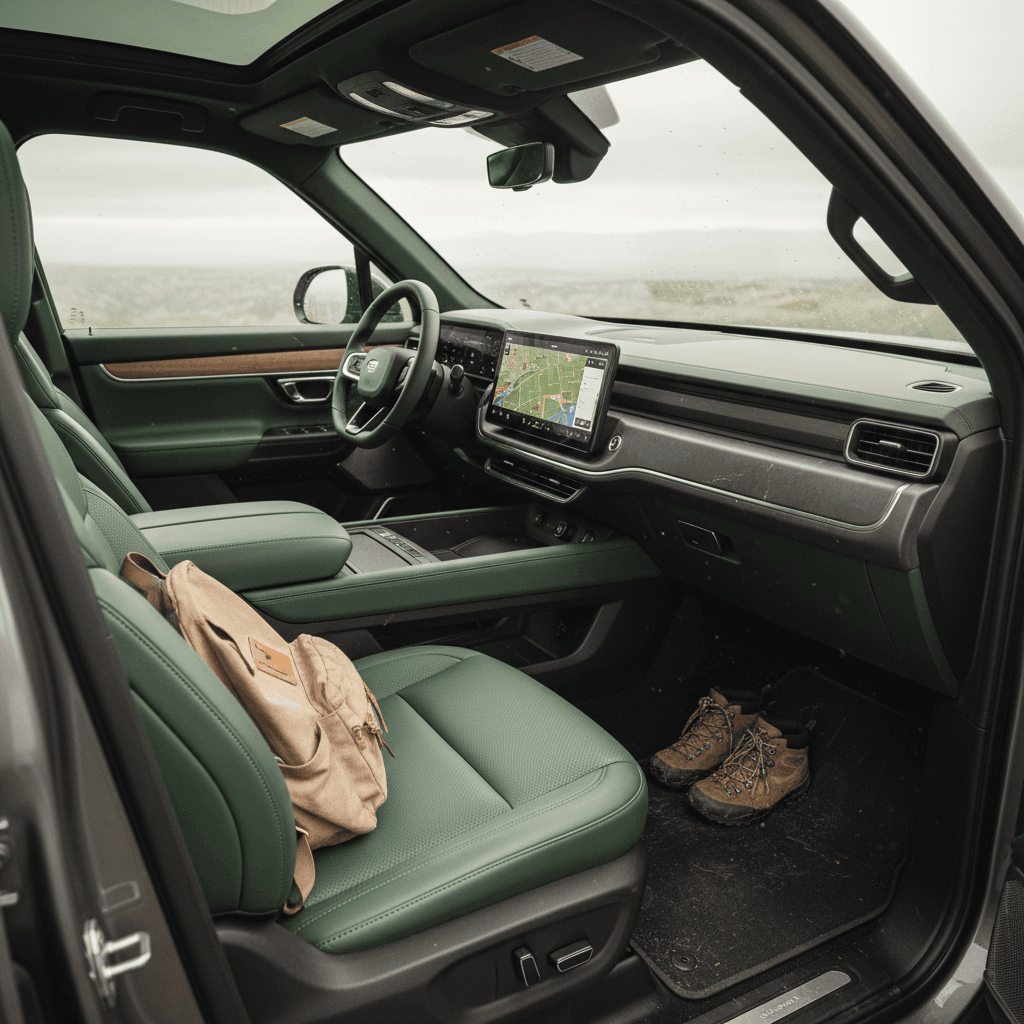
How the R1S works as a daily family appliance
One year in, this is where Rivian gets it most right.
Space & seating
Cargo & flexibility
Noise & ride
Cabin quality is more REI flagship store than German bank vault. The design is warm, the seats are excellent over long days, and the big glass area makes this tall truck feel airy rather than oppressive. But this is still an early‑stage manufacturer: there are reports of misaligned doors, wind noise at highway speed, and the odd trim piece going walkabout. Most are fixable under warranty; the question is how patient you are with that process.
Shopping used? Inspect the details
Performance and driving dynamics after 12 months
Acceleration that never gets old
Whether you choose Quad‑Motor or the newer Dual‑Motor setups, owners don’t get bored with the instant shove. Even after a year, you still have a three‑row family bus that hustles like an AMG on a short fuse. Passing power at highway speeds is abundant, and the thing will embarrass many sports sedans away from lights.
Ride, handling and off‑road
Adaptive air suspension is the R1S party trick and, occasionally, its headache. In the first year most owners love the balance: comfy in “Soft,” planted in “Sport,” and almost cartoonishly capable off‑road. Others notice the ride getting clunky or bouncy, or encounter errors where the truck sticks in kneel or throws suspension warnings. Those cases tend to trigger a service visit for dampers, compressor or sensors.
Steering feel is better than most big SUVs, light in town, reassuring on the highway. Driver+ (Rivian’s driver‑assist suite) is still a work in progress at one year. Owners praise it when it’s available, but complain that mapped coverage is limited and occasional glitches can take adaptive cruise or lane centering offline until a restart.
Mind the recalls and software updates
Charging, road trips and real-world range
Zoom out from YouTube drag races and you find the real question for year‑one owners: does the R1S make electric road‑tripping feel normal? The consensus: mostly yes, if you have a plan and the right charging at both ends.
What one‑year R1S owners report about charging
Home Level 2 is essentially mandatory
Owners who install a 48A Level 2 at home treat the R1S like any other family SUV: it leaves the driveway full every morning, and 99% of charging happens while you sleep.
Road trips require more planning than in a Tesla
On a 500–700‑mile run, expect 1–3 DC fast‑charge stops each way. Many owners say this only adds 30–60 minutes they would have stopped anyway for food and bathrooms, but you need to choose stations with amenities, especially with kids.
Charging costs vary wildly
Pay‑per‑kWh DC fast charging at $0.45–$0.60 can make energy costs similar to, or even higher than, a decent gas SUV. Home charging on off‑peak rates is significantly cheaper and where the real savings live.
Driver+ and chargers don’t always play nice
Some owners report momentary cruise‑control or Driver+ dropouts around certain chargers or on poorly mapped highways, usually cured with a restart. Annoying, but rarely trip‑ending.
The Tesla adapter changes the game
Real‑world range after a year is highly use‑case‑dependent. An R1S driven mostly around town in mild climates can feel like a 300‑mile EV all day. Load up the family, bolt on all‑terrains, climb mountain passes into a headwind and 220–240 miles between stops is more typical. The key is that range doesn’t seem to fall off dramatically in the first 12 months; owners talk more about how and where they drive than about any noticeable battery fade.
Reliability, recalls and ownership headaches
Here’s where the record scratches. One‑year R1S owners tend to fall into two camps: people who’ve had a couple of minor quirks and would buy the truck again tomorrow, and people who feel like unpaid beta testers for an ambitious EV start‑up.
Common R1S issues reported in the first 1–2 years
Not every owner sees these problems, but they’re recurring themes in owner forums and reliability surveys.
| Area | Typical Symptoms | Owner Impact | Usual Remedy |
|---|---|---|---|
| Electrical & software | Frozen cameras, glitchy proximity locking, random warnings, intermittent Driver+ | Annoying, occasionally trip‑disrupting | Software updates, hard resets, sometimes replacement modules |
| Suspension & half‑shafts | Clicks or clunks on acceleration, harsh ride, persistent warnings | Drivability concerns; may feel unsafe if ignored | Replacement half‑shafts, control arms, or dampers under warranty |
| Body & trim | Wind noise, misaligned doors, rattles, overspray or minor paint issues | Mostly NVH and cosmetic, but hurts perceived quality | Service adjustments, resealing, trim replacement |
| HV battery & charging | Rare but serious errors like "Vehicle Battery Issue" or DC fast‑charge failures on road trips | Trip‑ending; vehicle may need a flatbed to service | High‑voltage diagnostics; in extreme cases, pack or component replacement |
| Safety & driver‑assist | Recalls for seat belts, lighting, and driver‑assist behavior | Potential safety risk if ignored | Recall campaigns and OTA updates; must be kept current |
Always check a used R1S for software currency and completed recall work; many problems are addressed via OTA updates or revised parts.
Why recalls matter more with a young brand
If you’re unlucky, a single early‑life failure, like a high‑voltage battery fault at a public charger, can strand the vehicle and turn your "epic weekend" into “waiting for a flatbed.” If you’re lucky, you’ll go a full year with nothing worse than a stubborn door latch and a rattly panel, fixed in one visit. Both stories exist in the same subreddit.
Cost of ownership: tires, energy and maintenance
The real-world costs that show up in year one
Sticker shock doesn’t end with the Monroney.
Tires wear quickly
Energy costs depend on where you charge
Maintenance is light, but service time isn’t
Budget for alignment and extras
Battery health after a year
The good news, and it is genuinely good, is that R1S battery packs are not dropping like flies. Across owner reports, you see very few credible examples of meaningful range loss in the first 12 months. What you do see are software‑related quirks: range estimates that wander, state‑of‑charge displays that need recalibration, and, on newer LFP‑equipped Gen 2 Dual Standard trucks, ongoing battery calibration campaigns to improve accuracy.
- Most year‑one owners report no obvious degradation in day‑to‑day range.
- Occasional calibration routines (charging to 100% and deep cycling) may be needed to sync the gauge to real capacity.
- Fast‑charging regularly does not appear to cause immediate, dramatic decline, but long‑term data is still limited on Gen 2 packs.
- Thermal management is robust; what kills range more in year one is driving style, wheel/tire choice and climate, not chemistry.
How Recharged measures battery health
Should you buy a used Rivian R1S?
Who the R1S is perfect for after a year
- You want a three‑row EV that can genuinely replace an SUV and a pickup in one driveway.
- You value design, comfort and off‑road ability as much as outright range.
- You live within reasonable distance of a Rivian Service Center and can tolerate the occasional long service visit.
- You’re willing to treat the truck like a tech product: updates, campaigns, and a few quirks along the way.
Who should think twice
- You live far from service and can’t afford multi‑day downtimes if something complex breaks.
- You’re allergic to recalls, TSBs and “we’re working on a software fix.”
- You need iron‑clad, Toyota‑grade reliability more than you need adventure‑mobile charm.
- You’re not ready to install Level 2 charging at home, so you’d be living off public infrastructure.
The value case for a used R1S
How Recharged helps you shop a used R1S smarter
Because the R1S is such a high‑reward but high‑variance vehicle, the difference between a great used example and a nightmare can be as simple as what you don’t see in the listing photos. That’s where a structured, EV‑specific buying process matters.
Buying a Rivian R1S through Recharged
Reducing the gamble, keeping the grin.
Recharged Score battery diagnostics
EV‑specialist inspection
Financing, trade‑in and delivery
The bottom line: the R1S is a deeply compelling EV that rewards informed, eyes‑open buyers. With the right example, and the right support, it can be the best family vehicle you’ve ever owned. Without that diligence, you’re rolling loaded dice.
FAQ: Rivian R1S one-year ownership
Frequently asked questions about 1‑year R1S ownership
After a year, the Rivian R1S feels less like a mere vehicle and more like a thesis statement: this is what the electric family truckster can be when the engineers are in charge and the accountants are duct‑taped in a closet. It is brilliant, flawed, occasionally exasperating, and for the right buyer, absolutely worth the trouble. If you’re shopping used, go in with data, not vibes, and lean on EV‑specific tools like the Recharged Score to separate the great trucks from the science experiments.