When people ask about Tesla Model Y charging cost per mile, they’re really asking one thing: how cheap is this SUV to live with day to day compared with gas. The answer: in most of the U.S., a Model Y’s electricity cost per mile is roughly 3–6 cents at home and 8–15 cents at Superchargers, depending on your rates and driving style.
Key takeaway
Tesla Model Y charging cost per mile at a glance
Typical Tesla Model Y electricity cost per mile (U.S.)
Quick rule of thumb
How to calculate Tesla Model Y charging cost per mile
Under all the charts and forums, cost per mile for any EV comes down to one simple formula:
1. Cost per kWh
This is what you pay your electric utility or charging network operator for energy.
- Home: Check the “$/kWh” line on your bill. Many U.S. homes land between 12–25¢/kWh.
- Public / Supercharger: The charger or app will show a price, often 30–55¢/kWh for DC fast charging depending on location and time.
2. Energy used per mile
Think of this as your EV’s "MPG" number, but in kWh per 100 miles or Wh/mi:
- A typical Tesla Model Y averages about 260–310 Wh/mi in mixed, real‑world driving.
- That’s about 26–31 kWh per 100 miles, or 0.26–0.31 kWh per mile.
Once you have those two inputs, the math is straightforward:
- Take your electricity price in $/kWh.
- Multiply by your Model Y’s kWh used per mile (for example, 0.28).
- The result is your charging cost per mile.
Example with national‑average electricity
Real-world examples by Model Y trim and battery
Tesla has tweaked the Model Y lineup several times, but from a charging‑cost perspective you can group most versions into a few buckets. Below, we’ll use simple, rounded assumptions to keep things practical. Your exact numbers will shift with temperature, speed, and terrain.
Approximate home charging cost per mile by Model Y trim
Assumes 17¢/kWh residential rate and mild weather. Efficiency values are rounded for simplicity.
| Trim | Typical real-world efficiency (kWh/mi) | Cost per mile @ $0.17/kWh | Cost per 1,000 miles |
|---|---|---|---|
| Model Y RWD / Standard Range | 0.25–0.27 | $0.043–$0.046 | $43–$46 |
| Model Y Long Range (AWD) | 0.27–0.30 | $0.046–$0.051 | $46–$51 |
| Model Y Performance | 0.29–0.32 | $0.049–$0.054 | $49–$54 |
| Older Model Y (larger wheels, colder climate) | 0.32–0.35 | $0.054–$0.060 | $54–$60 |
Use this table as a directional guide, not a precise quote. Your local rates and driving style matter more than the trim label.
Why your number may be higher than EPA figures
Home charging vs Supercharger cost per mile
Where you plug in matters just as much as which Model Y you drive. Home charging is almost always cheaper per mile than DC fast charging, because utilities sell you electricity at near‑wholesale prices, while public networks layer on infrastructure and demand costs.
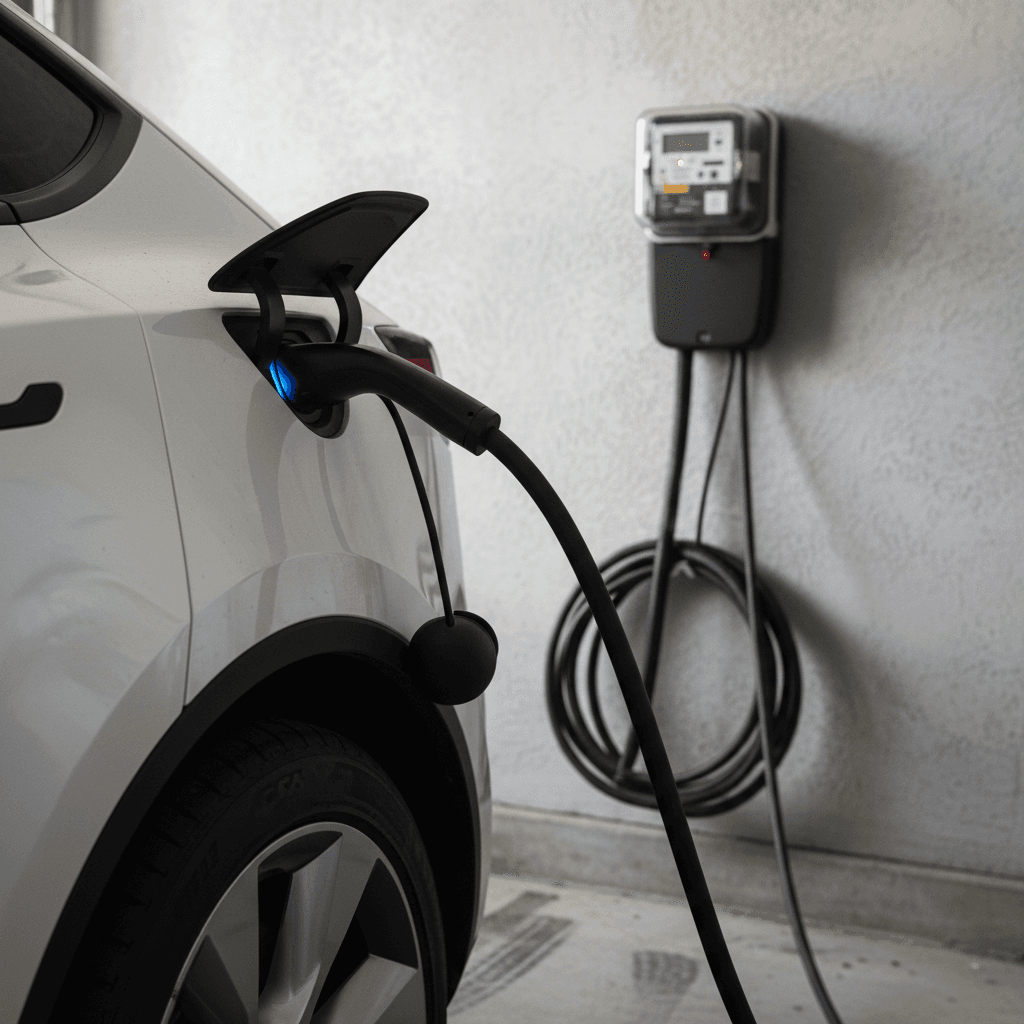
Typical Tesla Model Y cost per mile: home vs public
Illustrative examples for a Long Range Model Y at 0.28 kWh/mi
Home – low rate
Electricity: 12¢/kWh
Cost/mi: 0.12 × 0.28 ≈ 3.4¢
Cost/1,000 mi: ≈ $34
Common in areas with cheap power, off‑peak rates, or solar.
Home – typical rate
Electricity: 17¢/kWh
Cost/mi: 0.17 × 0.28 ≈ 4.8¢
Cost/1,000 mi: ≈ $48
Roughly in line with U.S. residential averages.
Supercharger – DC fast
Electricity: 40–50¢/kWh (varies widely)
Cost/mi: 0.40–0.50 × 0.28 ≈ 11–14¢
Cost/1,000 mi: ≈ $110–$140
Still often cheaper than a 22 mpg gas SUV at $3.50/gal (~16¢/mi).
Use home for routine, Superchargers for trips
5 biggest factors that change your cost per mile
- Electricity rate: The single biggest lever. A Model Y charged on 12¢/kWh power can cost nearly half as much per mile as one charged on 25¢/kWh.
- Driving speed: Aerodynamic drag ramps up fast above ~65 mph. At 80 mph you might see 15–25% higher Wh/mi than at 65 mph.
- Climate and HVAC use: Very cold or very hot weather steals range and raises consumption. Short winter trips are especially inefficient.
- Wheel and tire setup: Larger wheels and performance tires usually add a few percent to consumption compared with smaller aero wheels.
- Battery and software efficiency: Tesla has improved efficiency over time. A 2024 Model Y may sip slightly less energy per mile than an early 2020 build, all else equal.
Cold-climate heads-up
How your electric bill translates into EV cost per mile
If you already own a home, you don’t need a special EV plan to understand Model Y charging costs. You just need a recent bill and a couple of minutes with a calculator, or the notes app on your phone.
Walk through your bill and find your real rate
1. Grab a full billing statement
Don’t rely on the front‑page teaser rate. You want a statement that shows total kWh used and total charges including delivery and fees.
2. Divide total dollars by total kWh
Take the <strong>total bill (including all line items)</strong> and divide by the total kWh. If the bill is $180 and usage is 900 kWh, your all‑in rate is 20¢/kWh.
3. Estimate your Model Y efficiency
A good starting point is 0.27–0.30 kWh/mi. If you drive fast, tow, or live in a cold region, use the high end of that range.
4. Multiply rate by kWh/mi
If your all‑in rate is 20¢ and you assume 0.29 kWh/mi, your cost per mile is 0.20 × 0.29 ≈ <strong>5.8¢</strong>.
5. Compare to your current gas cost
Take your current MPG and fuel price. For example, 22 mpg at $3.75/gal is ~<strong>17¢ per mile</strong>. That makes the Model Y about <strong>two‑thirds cheaper</strong> to fuel per mile in this scenario.
Where used EV shoppers save the most
Used Tesla Model Y: what to watch for on running costs
A used Model Y is still inexpensive to “fuel,” but two extra variables creep into the cost‑per‑mile picture: battery health and wheel/tire choices. That’s where a transparent inspection can protect your wallet over the long haul.
Cost-per-mile checks when buying a used Model Y
These factors won’t change electricity prices, but they do change how much energy you need to go a mile.
Battery health & usable capacity
A pack that’s lost several kWh of usable capacity still costs the same to charge per kWh, but:
- Your real‑world range shrinks.
- You may need to charge more often on trips.
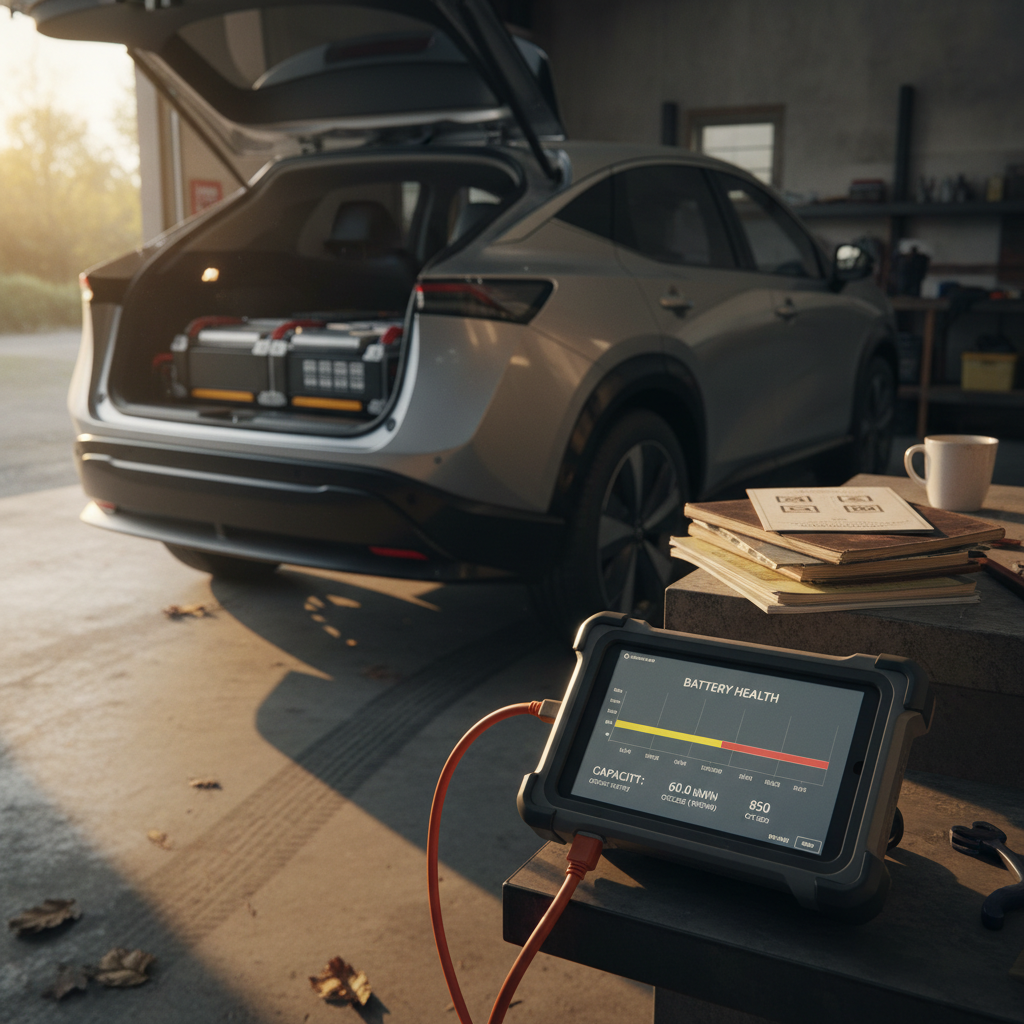
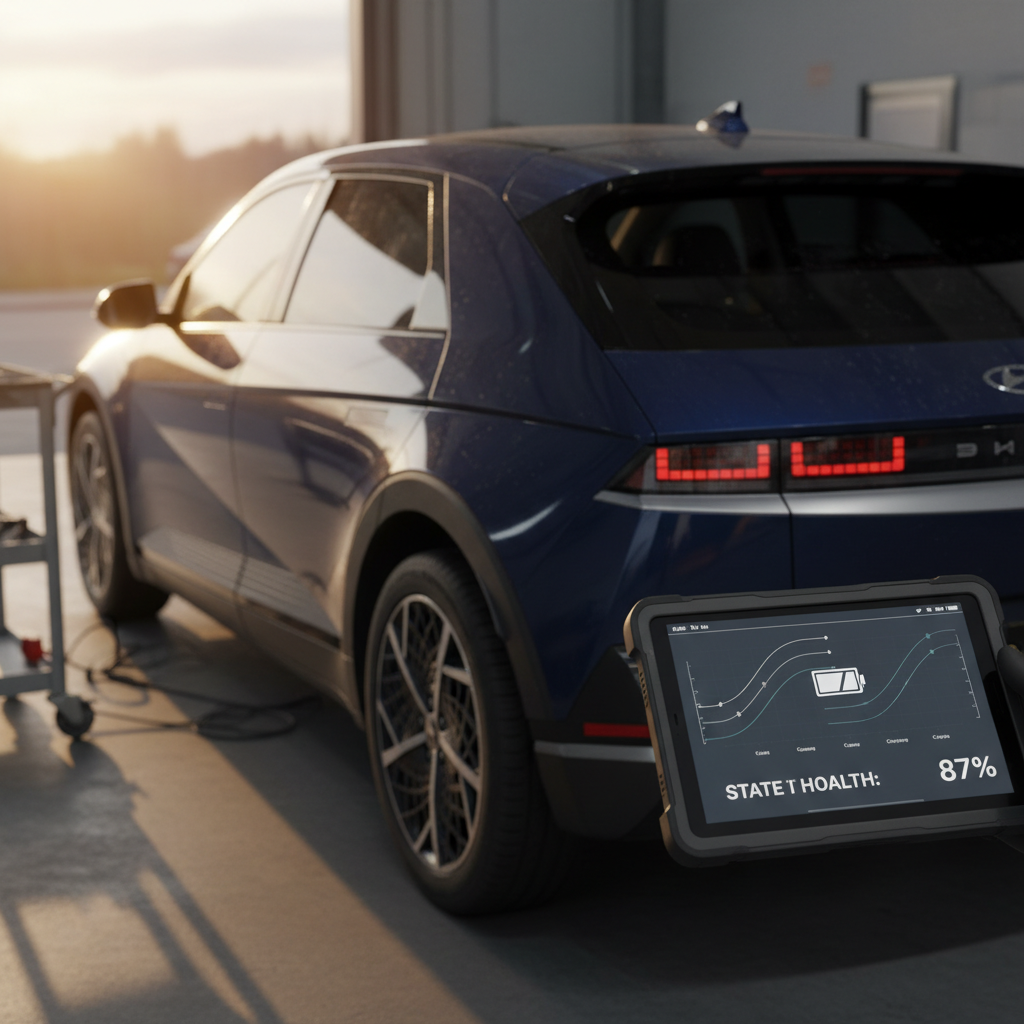
Tools like the Recharged Score battery health report measure pack condition so you know what you’re getting before you buy.
Wheels, tires, and alignment
Oversized wheels, aggressive tires, or poor alignment can raise Wh/mi noticeably.
- Ask which wheel package the vehicle came with.
- Check for uneven tire wear that can hint at alignment issues.
Those details directly affect your long‑term cost per mile.
How Recharged helps
Checklist: estimate your own Model Y cost per mile
Ready to plug in your own numbers? Use this simple checklist to build a realistic estimate for your situation, whether you already own a Model Y or you’re still shopping.
Personal Tesla Model Y cost-per-mile calculator
1. Confirm your electricity prices
Note your <strong>home rate (¢/kWh)</strong>, plus any off‑peak rate you can access. If you rely on public charging, jot down common rates for your go‑to networks or Superchargers.
2. Pick an efficiency number
Start with 0.27 kWh/mi for gentle mixed driving in mild weather. Bump to 0.30–0.32 kWh/mi if you drive fast, have larger wheels, or live in colder regions.
3. Calculate home cost per mile
Multiply your home $/kWh by your chosen kWh/mi. That’s your baseline cost per mile for most of your driving.
4. Estimate public-charging usage
Decide what percent of your annual miles will be on DC fast charging or other paid public chargers (0–100%). Many owners land around 10–20%.
5. Blend the two numbers
Take a weighted average: for example, 80% of miles at 5¢/mi (home) and 20% at 12¢/mi (public) yields a blended cost of <strong>≈6.4¢ per mile</strong>.
6. Compare against your gas costs
Use your current vehicle’s MPG and fuel price to find gas cost per mile. This makes the savings from a Model Y concrete, especially at 10,000+ miles per year.
FAQ: Tesla Model Y charging cost per mile
Frequently asked questions about Model Y charging costs
Bottom line: is a Tesla Model Y cheap to run?
Look past the sticker price and the Tesla Model Y charging cost per mile is one of its biggest strengths. In much of the U.S., a Model Y costs the equivalent of $1–$2 per gallon in fuel when you convert electricity costs into gas‑car terms. Even if you lean on Superchargers, it usually undercuts a comparable gasoline SUV on energy costs, while offering lower maintenance and no oil changes.
If you’re evaluating a used Model Y, the smart move is to pair these cost‑per‑mile estimates with hard data on battery health and pricing. That’s exactly what Recharged is built for: every vehicle includes a Recharged Score Report with verified battery diagnostics, fair‑market pricing, and support from EV specialists who live this math every day. When you understand your charging cost per mile going in, it’s much easier to buy, and drive, with confidence.