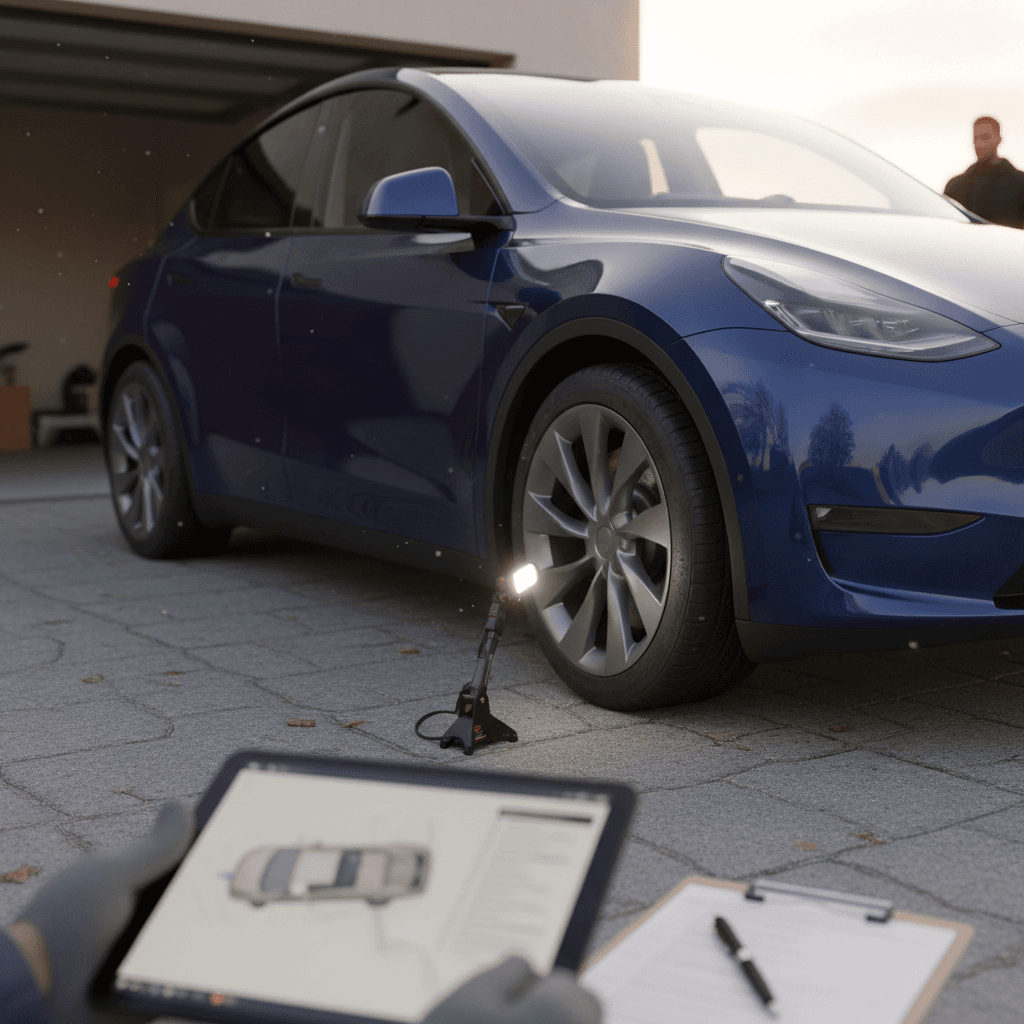
Shopping for a Tesla Model Y is exciting, and a little intimidating. Between battery health, software options, Autopilot levels, and fast‑changing prices, it’s easy to miss something important. This Tesla Model Y buying checklist walks you step‑by‑step through what to research, inspect, and test so you can buy with confidence, especially if you’re considering a used Model Y.
Who this checklist is for
Why a Tesla Model Y buying checklist matters
The Model Y has become one of the most popular EVs in the U.S., which means there are a lot of them on the used market, some excellent, some just okay. At the same time, EV technology and Tesla pricing have changed quickly, leading to sharper depreciation than many gas SUVs. A structured Tesla Model Y buying checklist helps you avoid cars with hidden issues, understand where you’re getting a deal, and focus on the items that actually affect safety, range, and long‑term costs.
Model Y value and ownership at a glance
Why details matter more with EVs
Decide: new vs used Model Y and set your budget
New vs used Model Y: quick comparison
Decide which path fits your budget, risk tolerance, and timeline.
Buying a new Model Y
- Pros: Full factory warranty, latest hardware and software, known history, easier financing.
- Cons: Steeper first‑year depreciation, higher purchase price, possible wait times for build/delivery.
- Best for: Long‑term keepers, buyers who want the latest tech and minimal risk.
Buying a used Model Y
- Pros: Let someone else absorb depreciation, potential savings of tens of thousands vs. new, wide selection of trims and years.
- Cons: Battery health varies, prior accident or repair history, more homework required.
- Best for: Value‑focused shoppers, first‑time EV buyers, anyone willing to trade "new" for savings.
Budget and deal‑breakers checklist
1. Set your total budget, not just payment
Decide your maximum out‑the‑door price (including taxes and fees) before you look at monthly payments. Financing can make a too‑expensive Model Y appear affordable on paper.
2. Choose new vs used up front
Be honest about whether you’re comfortable with prior owners, some cosmetic wear, and faster depreciation in exchange for a lower price.
3. Decide your must‑have features
List features like <strong>All‑Wheel Drive</strong>, <strong>Long Range</strong> battery, <strong>Autopilot</strong> or <strong>FSD</strong>, 7‑seat third row, or a towing package so you don’t compromise under pressure.
4. Plan for charging and insurance
Get quotes for insurance and know where you’ll charge (home Level 2, workplace, or public DC fast charging). These dramatically affect your real cost of ownership.
5. Leave room for extras
Budget for accessories like a home charger, winter tires, and potential wheel/tire repairs, low‑profile Tesla wheels are easier to curb.
Confirm the right Model Y configuration for your needs
Before you inspect any specific SUV, narrow down which Model Y configuration actually fits your life. Tesla has tweaked trims and names over the years, but you’ll usually see variations like Rear‑Wheel Drive (RWD), Long Range All‑Wheel Drive (AWD), and Performance, plus optional third‑row seating.
Common Model Y trims and what they mean
Exact range and specs vary by year, wheel size, and software version, but this table will get you oriented.
| Trim type | Drivetrain | Typical role | What to watch for |
|---|---|---|---|
| Rear‑Wheel Drive | Single motor RWD | Lower price, adequate performance, slightly less range in many years | Check real‑world range if you drive in cold climates; may feel less secure on snow without winter tires. |
| Long Range AWD | Dual motor AWD | Best balance of range, traction, and performance for most buyers | Higher resale demand; verify tire wear and alignment, torque can chew through tires. |
| Performance | Dual motor AWD, sport‑tuned | Quickest acceleration and sportier feel, often with 21" wheels | Larger wheels hurt range and ride comfort; inspect rims for curb rash and tires for uneven wear. |
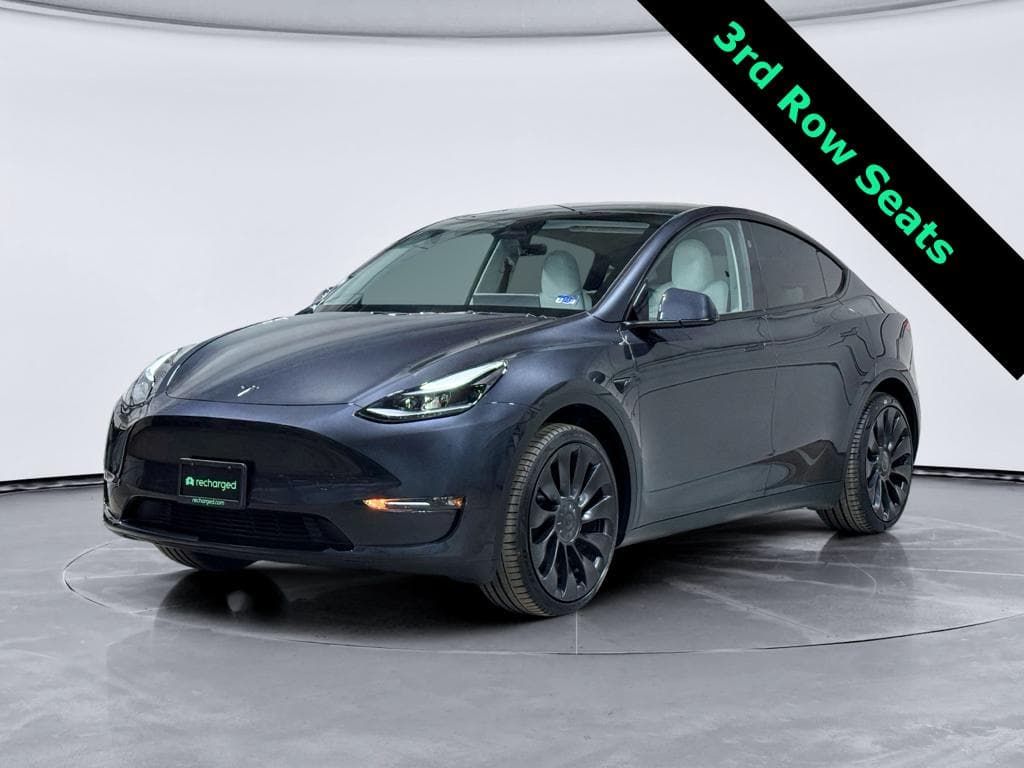
| 7‑seat configuration | RWD or AWD with third row | Occasional third‑row use for kids and extra cargo flexibility | Sit in the third row yourself, space is tight. Verify that all seat mechanisms and belts work smoothly. |
Use this as a starting point, then verify details for the specific VIN you’re considering.
Decode a car’s exact configuration
Pre‑purchase research: history, warranty, and recalls
Once you’ve found a promising Model Y, do your homework before you ever start the car. EVs hide fewer mechanical secrets than gas cars, but you still want to know how a particular vehicle has been treated and what coverage is left.
History and warranty checklist
1. Run a full history report
Look for accident records, structural damage, lemon‑law buybacks, flood history, odometer inconsistencies, and frequent auction transfers. Multiple owners in a short time can be a red flag.
2. Confirm remaining Tesla warranties
Tesla’s Basic Vehicle Limited Warranty is typically 4 years/50,000 miles from in‑service date. The <strong>Battery and Drive Unit Limited Warranty</strong> is generally 8 years with a mileage cap (often 100,000–120,000 miles on most Model Y trims) and at least 70% battery capacity retention during that period. Verify exact terms for the VIN and in‑service date.
3. Check recall status
Use the VIN on the NHTSA website to see open recalls, and confirm that any high‑voltage or power‑loss recalls have been completed by Tesla. Ask for service records or screenshots from the Tesla app when possible.
4. Review service history
A Model Y doesn’t need oil changes, but it does need tire rotations, cabin air filters, brake service in salty climates, and occasional alignment. Spotty service can show up as uneven tire wear and premature suspension issues.
5. Confirm clean and transferable title
Avoid cars with salvage or rebuilt titles unless you deeply understand Tesla repair economics and your insurer is comfortable covering the vehicle.
6. With Recharged, get a Recharged Score report
Every vehicle sold through <strong>Recharged</strong> includes a Recharged Score with verified battery health, pricing analysis, and inspection details, taking much of this pre‑purchase detective work off your plate.
Battery and charging checklist
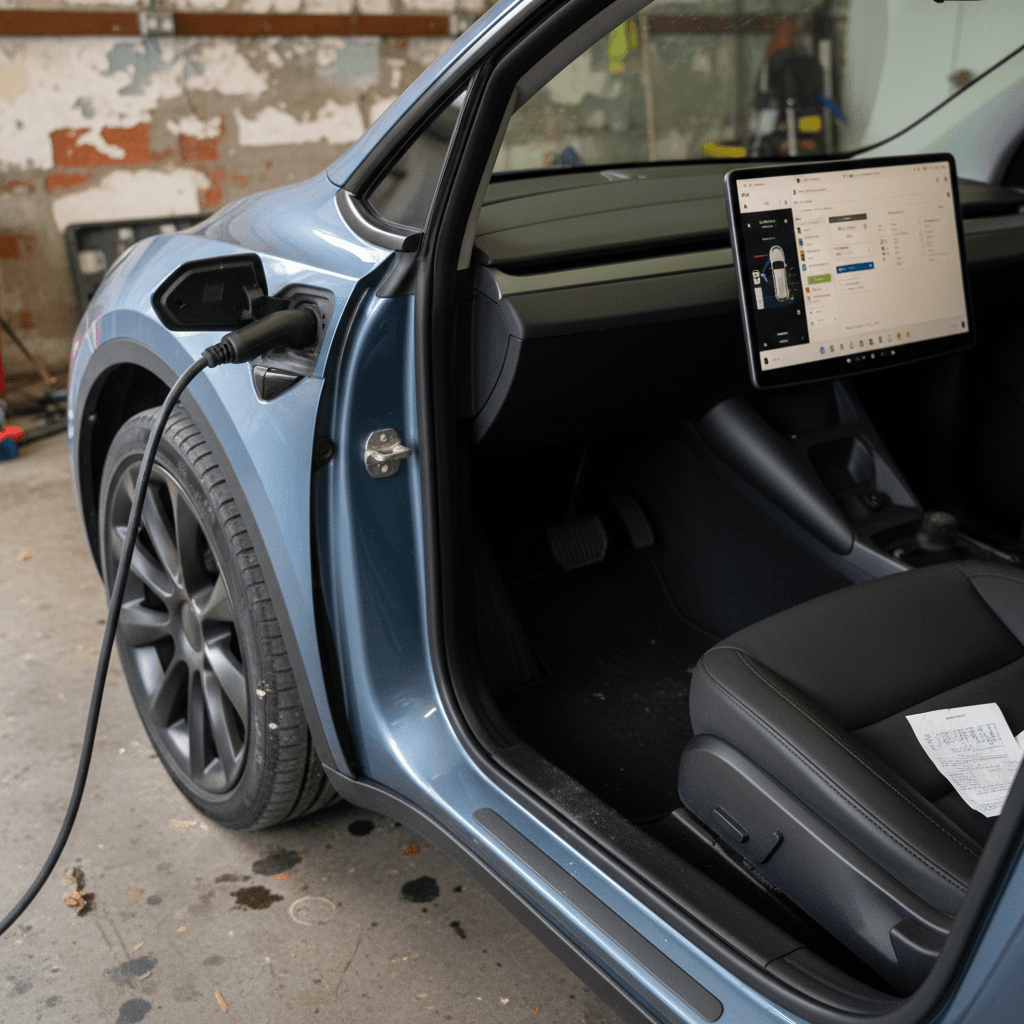
The battery pack is the heart of the Model Y, and while Tesla’s packs have proven durable, their condition is central to your decision. A 5‑year‑old Model Y with a strong battery can be a better buy than a newer one that’s been fast‑charged hard and driven aggressively.
- Ask the seller (or Recharged advisor) for a recent full‑charge estimate from the touchscreen or Tesla app. Compare that to the original EPA range for that trim and wheel size to estimate degradation.
- Check how the car has typically been charged: mostly home Level 2 charging is ideal; constant DC fast charging isn’t automatically bad, but can contribute to faster battery wear over many years.
- Make sure the car includes the correct mobile connector or any promised adapters. Replacements aren’t cheap.
- Inspect the charge port, latch, and charge‑port door for damage, paint chipping, or misalignment.
- If possible, plug into a charger and confirm that the car starts charging promptly and doesn’t throw any error messages.
Don’t guess on battery health
Software, Autopilot, and connectivity checks
A huge part of the Model Y’s value lives in its software: Autopilot levels, Full Self‑Driving (FSD) capability, connectivity, and over‑the‑air update history. Two identical‑looking cars can differ by thousands of dollars in value depending on what software is active and transferable.
Software and feature checklist
Confirm what’s installed, what’s active, and what will transfer to you.
Autopilot & FSD
- Tap Controls → Software → Additional Vehicle Information to see which driver‑assist features are enabled.
- Verify whether Enhanced Autopilot or FSD is active and will remain with the vehicle after ownership transfer, this has changed over the years.
- Test basic Autopilot on a safe, well‑marked road if possible.
Connectivity & apps
- Check that the car can connect to Wi‑Fi and LTE and that maps and streaming features work.
- Confirm Premium Connectivity status, if advertised, this affects live traffic and streaming media.
- Have the seller demonstrate the Tesla app if they still have access, so you can see charging and climate controls in action.
Updates & settings
- Look at the Software screen for update history and current version.
- Confirm basic safety settings (collision warning, automatic emergency braking) are active.
- Check that all cameras display clearly and that Sentry Mode works if included.
Protect yourself from surprise downgrades
Physical inspection: body, interior, and tires
Tesla has improved build quality over time, but even newer Model Y vehicles can show panel‑gap quirks, paint issues, or wheel damage. Because there’s no engine noise to mask them, squeaks and rattles also stand out more on test drive.
Exterior and interior inspection checklist
1. Body alignment and paint
Walk around the car looking for inconsistent panel gaps, misaligned doors or hatch, paint mismatches, and overspray. For a used Model Y, small imperfections are normal, large color differences or ripples can signal prior repairs.
2. Glass and roof
Inspect the big glass roof and windshield for chips, cracks, or signs of poor replacement. Those panels are expensive to replace out of warranty.
3. Wheels and tires
Check for curb rash, bent rims, and uneven tire wear that could signal alignment or suspension issues. Verify that tires match on each axle and have adequate tread depth for your climate.
4. Interior wear and tech
Test every window switch, seat control, climate function, and the audio system. Look for abnormal seat wear, loose trim, stains, and strange odors. Make sure both key cards or key fobs are present if advertised.
5. Trunk, frunk, and seals
Open and close the rear hatch, front trunk, and charge port multiple times. Seals should be soft, uncracked, and well‑attached to avoid water leaks and wind noise.
6. Professional inspection when possible
If you’re not buying from a specialist, consider a third‑party EV inspection. At Recharged, Model Y vehicles go through an EV‑focused inspection that looks for battery, suspension, and high‑voltage issues that generic shops can miss.
Test‑drive checklist: how a good Model Y should feel
A proper test drive is non‑negotiable, even on a low‑mileage Model Y. You’re listening for silence, not just noise: the fewer creaks, vibrations, and clunks you hear, the better.
What to do on the test drive
- Start cold: If possible, start the car after it has been sitting. Pay attention to any startup messages or warnings.
- Low‑speed driving: In a parking lot or side street, listen for suspension clunks over bumps and slow‑speed steering noises.
- Highway driving: At 55–70 mph, note wind noise, vibrations, and steering stability. The car should track straight with minimal correction.
- Braking: Try both gentle and firm braking. Feel for pulsation, pulling, or grinding noises.
- Regen settings: Toggle regenerative braking levels and see how the car feels coming to a stop.
Red flags during the drive
- Warning lights or persistent alerts on the touchscreen, especially related to the battery, drive unit, or Autopilot cameras.
- Strong pull to one side when driving straight, could be alignment or accident repair.
- Harsh vibrations through the steering wheel at highway speeds, which may be wheel balance or more serious suspension issues.
- Inconsistent acceleration or lag that feels different from other Teslas you’ve driven.
- Owner reluctance to let you drive on the highway or use Autopilot, this can be a sign they’re hiding something.
What a healthy Model Y feels like
Ownership costs and depreciation
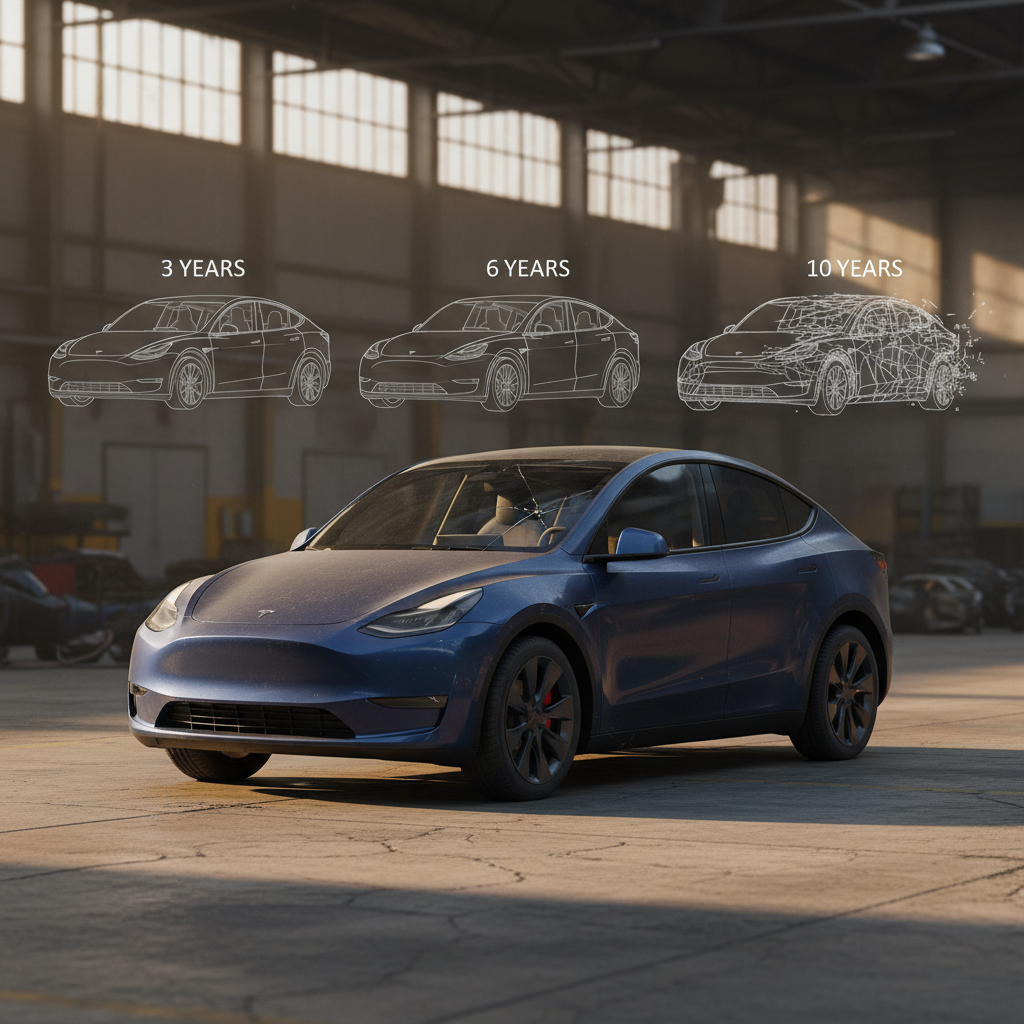
Many shoppers focus on the purchase price and forget about what a Model Y will cost over 5–8 years. EVs save money on fuel and routine maintenance, but they can depreciate faster than gas counterparts, and insurance can be higher than you expect.
Key Model Y cost and value factors
Use these to compare one Model Y against another, and against other EVs or gas SUVs you’re considering.
| Factor | What to look for | Why it matters |
|---|---|---|
| Depreciation | How much the car has dropped from its original MSRP based on year, miles, and condition. | Model Y SUVs have commonly lost 40–60% of their value by year five. Buying after the steep first years can lower your total cost of ownership. |
| Insurance | Quotes from at least two insurers using the specific VIN. | High repair costs and technology can push premiums up. Shop around before you commit. |
| Energy costs | Your local electricity rates and charging plan. | Home charging at off‑peak rates is usually far cheaper than public fast charging. This is where EVs save real money. |
| Maintenance & repairs | Remaining warranty, tire condition, brake wear, and any prior collision damage. | Routine maintenance is light, but tires, glass, and body repairs can be expensive on any Tesla. |
| Battery warranty window | Time and mileage left on the 8‑year battery/drive unit warranty for that VIN. | Staying within the warranty window reduces your risk of a large unexpected bill if something fails. |
The best deal is rarely just the lowest price; it’s the best combination of condition, battery health, equipment, and future value.
Use depreciation to your advantage
Financing, trade‑in, and buying from Recharged
Once a specific Model Y passes your checklist, it’s time to make the numbers work. That includes structuring financing, handling your current car, and deciding where to buy.
Smart money moves for a Model Y purchase
Line up financing and trade‑in options before you fall in love with a specific VIN.
Financing terms
- Compare rates from your bank or credit union with any dealer or marketplace offers.
- Run the math on 36‑, 48‑, and 60‑month terms instead of stretching to the longest option.
- Prioritize the total interest you’ll pay, not just the monthly payment.
Trade‑in or sell outright
- Get quotes from multiple sources: dealers, online buyers, and marketplaces.
- Factor tax savings you may get from trading in a vehicle instead of selling it privately (varies by state).
- With Recharged, you can get an instant offer or use consignment to potentially capture more value.
Why buy through Recharged
- Every used EV comes with a Recharged Score report covering battery health, vehicle history, and fair‑market pricing.
- EV‑specialist advisors help you interpret the data so you’re not guessing about degradation or prior use.
- Digital paperwork, nationwide delivery, and a transparent, EV‑focused experience centered on used electric vehicles.
Tesla Model Y buying checklist summary
Tesla Model Y master buying checklist
1. Clarify use case and configuration
Decide on RWD vs AWD, range needs, Performance vs comfort, and whether you truly need the optional third row.
2. Decide new vs used and set budget
Choose which side of the market fits your finances and risk tolerance, and set a firm out‑the‑door price ceiling.
3. Research history, recalls, and warranty
Pull a history report, verify remaining basic and battery warranties, and confirm that all recalls are completed.
4. Evaluate battery and charging health
Check estimated range vs original EPA spec, how the car has been charged, and whether it includes the right charging equipment.
5. Verify software, Autopilot, and features
Photograph the Software screens, confirm Autopilot or FSD status, connectivity, and camera health, these are major value drivers.
6. Inspect body, interior, and tires
Look for signs of collision repair, water leaks, hard use, or neglected maintenance; confirm both keys/cards are present.
7. Conduct a thorough test drive
Drive at low speed and highway speed, test regen and braking, and note any noises, vibrations, or warning messages.
8. Confirm total cost and financing
Estimate 5‑year costs including insurance and energy, then secure financing and trade‑in terms that fit your budget.
9. Prefer EV‑specialist sellers
When possible, buy from EV‑focused retailers like <strong>Recharged</strong> that provide battery diagnostics and transparent inspection reports, not just a quick wash and detail.
The Tesla Model Y can be a terrific EV, roomy, efficient, and packed with technology, but not every example on the market is equal. By working through this Tesla Model Y buying checklist step by step, you’ll separate the truly good candidates from the merely convenient ones, avoid costly surprises, and choose a car that fits both your lifestyle and your long‑term budget. If you’d rather have experts do the heavy lifting, Recharged can pair you with a carefully vetted used Model Y and a clear picture of its battery health, history, and value before you ever click “buy.”