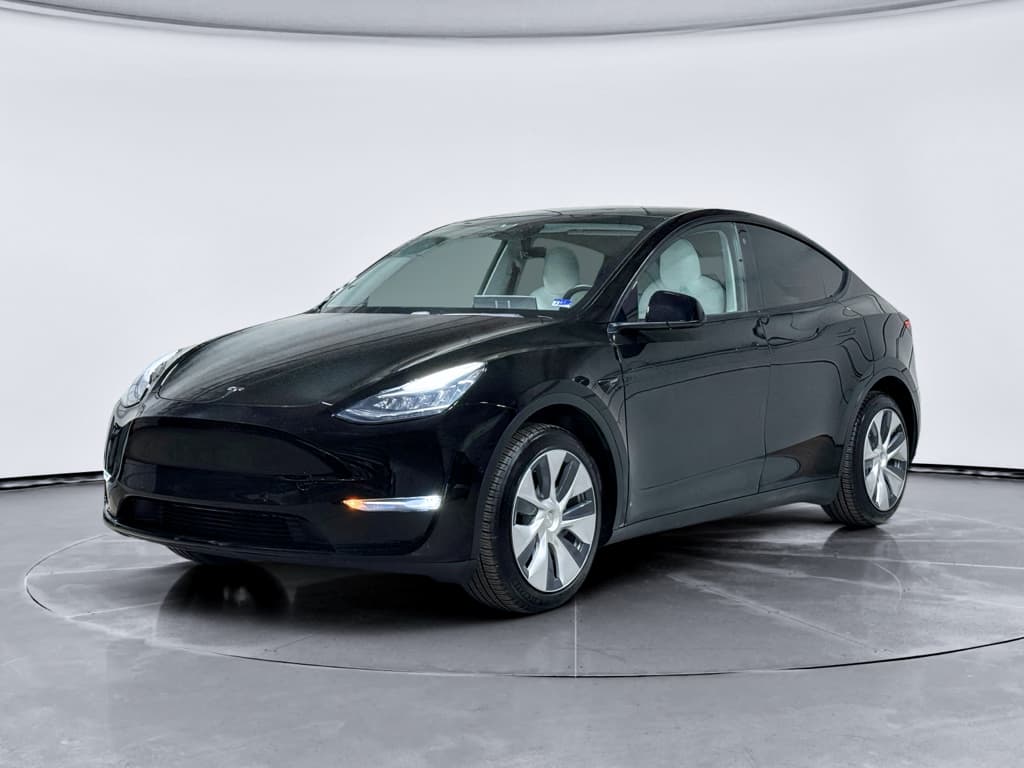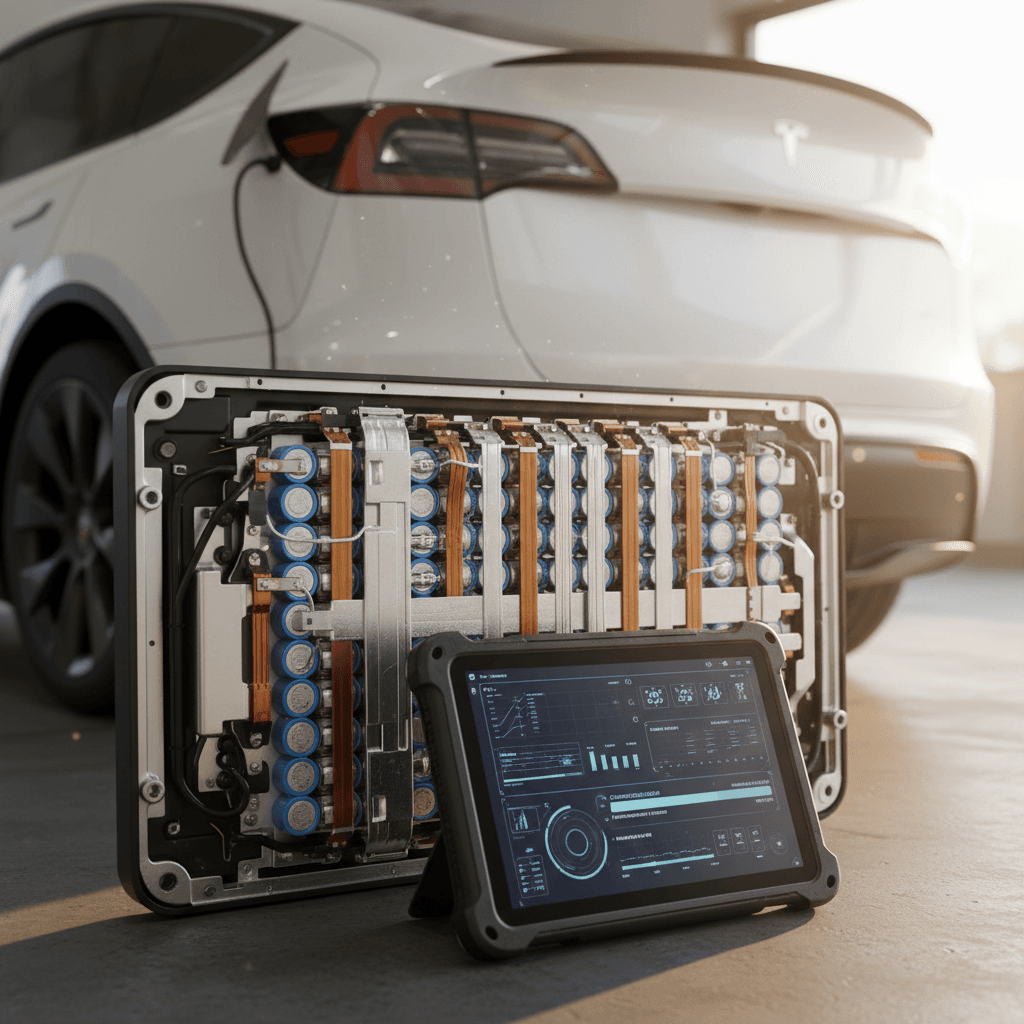
If you own, or are thinking about buying, a Tesla Model Y, the health of the high‑voltage battery is probably top of mind. The pack is the single most expensive component in the car, so understanding the exact Tesla Model Y battery warranty details is crucial, especially if you’re shopping used.
Key takeaway
Overview: Tesla Model Y battery warranty at a glance
Tesla Model Y battery warranty snapshot (U.S.)
Tesla splits its warranties into several buckets, but for Model Y shoppers two parts really matter: the Basic Vehicle Limited Warranty and the Battery and Drive Unit Limited Warranty. The basic warranty is 4 years/50,000 miles in the U.S., while the battery/drive unit coverage runs 8 years with a mileage cap that depends on configuration. During that 8‑year window, Tesla also promises the battery will retain at least 70% of its original capacity; if it doesn’t, you may be eligible for repair or replacement.
How long the Tesla Model Y battery warranty lasts
On paper, all Model Y battery warranties look similar, 8 years of coverage and a cap on miles, but the exact mileage limit changes by trim. That matters a lot for high‑mileage drivers and used‑car buyers.
Model Y U.S. battery and drive unit warranty by trim
Warranty terms for current‑generation Tesla Model Y variants sold in North America.
| Model Y trim (U.S.) | Battery & drive unit warranty term | Mileage limit | Capacity guarantee |
|---|---|---|---|
| Rear-Wheel Drive (RWD) | 8 years from in‑service date | 100,000 miles | Minimum 70% battery capacity during warranty |
| All-Wheel Drive (AWD) | 8 years from in‑service date | 100,000 miles | Minimum 70% battery capacity during warranty |
| Long Range All‑Wheel Drive | 8 years from in‑service date | 120,000 miles | Minimum 70% battery capacity during warranty |
| Performance All‑Wheel Drive | 8 years from in‑service date | 120,000 miles | Minimum 70% battery capacity during warranty |
Always confirm your specific car’s coverage in the Tesla app or PDF warranty booklet, terms can change by build date and market.
Watch the earlier of years or miles
The clock starts on the car’s in‑service date, which is the original delivery date to the first owner, not the date you buy it used. A 2021 Model Y Long Range delivered on March 1, 2021 will have battery coverage until March 1, 2029 or 120,000 miles, regardless of how many owners it’s had in between.
Battery capacity and the 70% rule explained
Tesla’s battery warranty isn’t just about outright failures; it also includes a capacity retention promise. For Model Y, Tesla guarantees the high‑voltage battery will retain at least 70% of its original usable capacity over the 8‑year/mileage warranty period.
- If your pack’s usable capacity falls below 70% while it’s still within the 8‑year + mileage window, Tesla may repair or replace the battery under warranty.
- The 70% threshold is based on the battery’s original usable capacity, not EPA range ratings that can change with software or test cycles.
- Tesla looks at diagnostic data from the pack, not just what you see on the dash, when deciding if it’s below the warranty threshold.
Capacity vs. range: not the same thing
Real‑world data suggests Model Y batteries typically lose capacity fastest in the first few years, then the curve flattens out. That S‑shaped degradation pattern is common to modern lithium‑ion packs. Tesla designed its warranty so normal, moderate degradation is not a warranty event; only unusually rapid loss, dropping below that 70% threshold, triggers coverage.
What is and isn’t covered by the Model Y battery warranty
What’s generally covered
- Defects in materials or workmanship in the high‑voltage battery pack and drive unit.
- Battery modules, pack enclosure, contactors, BMS and other internal components when Tesla determines they’re defective.
- Internal failures that prevent the car from charging or driving normally, not caused by outside damage.
- Capacity loss below 70% during the warranty term, once Tesla verifies it via diagnostics.
Coverage is subject to Tesla’s inspection and diagnostic data; they decide whether a fault meets warranty criteria.
What’s generally not covered
- Normal or expected degradation that still leaves you above 70% capacity.
- Damage from accidents, floods or road debris (often an insurance claim, not warranty).
- Damage from unauthorized repairs or modifications, including non‑approved battery work.
- Abuse or misuse, like ignoring critical warnings or continuing to drive with known faults.
- Third‑party bi‑directional adapters or chargers if they cause damage the warranty explicitly excludes.
As with any warranty, Tesla draws a line between a defect they’re responsible for and damage or wear they’re not.
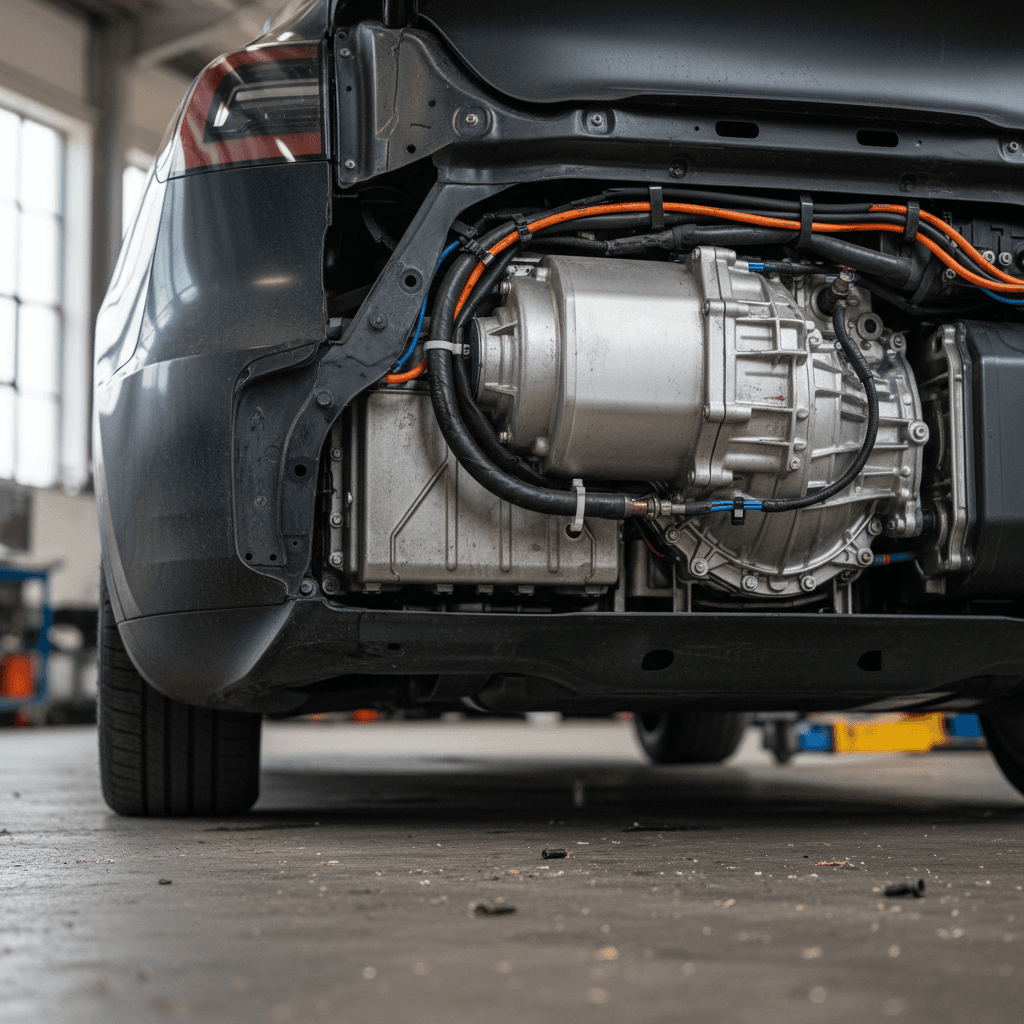
Be careful with third‑party high‑voltage mods
Regional differences: U.S. vs. other markets
Most of this guide focuses on U.S. and Canadian warranty terms, which are similar and easy to summarize. But Tesla does tweak warranties by region, and that can matter if you’re importing a car or reading owner stories from overseas.
Model Y warranty differences by region (high level)
Always check the Tesla site for your specific country before buying.
United States
- Basic warranty: 4 years / 50,000 miles.
- Battery & drive unit: 8 years / 100k–120k miles, 70% capacity guarantee.
- Separate ZEV‑related warranties in some states (e.g., CA).
Canada
- Broadly similar structure to U.S.
- Battery & drive unit: 8 years with kilometre caps (e.g., ~160,000–192,000 km).
- Provincial rules can layer on top of Tesla’s own coverage.
Other markets
- Some countries (like Australia & New Zealand) now offer longer basic warranties on new Model 3/Y.
- Battery & drive unit still ~8 years with distance caps, but exact numbers vary.
- Local consumer law can effectively extend coverage in practice.
Local law can beat the small print
What happens to the battery warranty when you buy a used Model Y
Unlike traditional automakers that run franchise dealers and complex certified pre‑owned programs, Tesla sells both new and used cars directly. The good news: the remaining battery and drive unit warranty always follows the car, even if you buy it from a third‑party dealer or a private party, as long as the ownership transfer is done properly.
Steps to verify remaining Model Y battery warranty when buying used
1. Confirm build date and in‑service date
Use the VIN in the Tesla app or on the Tesla website (if you have access) or ask the seller for a screenshot of the car’s ‘Warranty’ screen. The in‑service date is what starts the 8‑year clock, not the model year.
2. Identify the exact trim
Mileage limits differ between RWD/AWD (100,000 miles) and Long Range/Performance (120,000 miles). Make sure you know which variant you’re looking at, since that determines how much runway is left.
3. Check current odometer mileage
Subtract today’s mileage from the cap for that trim (100k or 120k). The battery warranty will expire on whichever comes first: hitting that mileage or reaching 8 years from in‑service date.
4. Ask for a recent battery health screenshot
Range at 100% charge isn’t a perfect proxy for capacity, but it gives you a directional sense. Combine that with age and miles to judge how the pack has been treated.
5. Confirm ownership transfer process
If the car is still tied to the previous owner’s Tesla account, make sure they complete Tesla’s official ownership transfer. That’s how you get the car into your app and retain digital records and service history.
How Recharged handles battery warranty on used Teslas
Ready to find your next EV?
Browse VehiclesExtended coverage beyond 8 years: Battery ESA and options
As Model 3 and Model Y volumes skyrocketed, Tesla eventually introduced a paid High Voltage Battery and Drive Unit Extended Service Agreement (often called the Battery ESA) in the U.S. and Canada. It’s not an extension of the original capacity guarantee, but it can provide extra breathing room once that 8‑year term ends.
Tesla Battery ESA vs. standard battery warranty
What changes when you buy extended coverage on a Model Y.
Standard Battery & Drive Unit Warranty
- Included with every new Model Y.
- 8 years / 100k–120k miles depending on trim.
- Includes 70% capacity retention guarantee.
- No per‑visit deductible for covered work.
High Voltage Battery & Drive Unit ESA
- Optional paid add‑on for eligible Model 3/Y in U.S. & Canada.
- Kicks in after the factory battery warranty ends.
- Covers failures of the pack or drive unit, but not normal capacity loss.
- Has a term (e.g., 24 months / 30,000 miles) and a per‑visit deductible.
Don’t wait until after your warranty expires
For buyers of older used Model Ys, especially high‑mileage examples where the 8‑year or 100k/120k‑mile window is close, this extended coverage can be a useful hedge if you plan to keep the car well into its second decade. On the other hand, if you’re likely to sell the car not long after the factory battery warranty ends, you may be better off banking the premium yourself or looking at third‑party coverage.
How to protect both your warranty and battery health
The best warranty is the one you never need to use. The way you charge and drive your Model Y has a real impact on both long‑term battery health and how cleanly you can argue a warranty claim if something goes wrong.
Best practices to keep your Model Y battery (and warranty) happy
Charge mostly between ~10% and 80–90%
Tesla’s own guidance for everyday use emphasizes moderate states of charge. Reserve 100% charges for road trips and start driving soon after you top up to avoid prolonged high‑voltage stress.
Limit frequent DC fast charging when you can
Supercharging is fine, and essential for road trips, but constant DC fast charging adds more heat and stress. When you have time, use Level 2 AC charging at home or work.
Avoid extreme heat and deep discharges
Parking in shade, using ‘Cabin Overheat Protection,’ and not repeatedly running the pack near 0% all help slow degradation. Let the car manage its own thermal system; don’t disable protections to save a few watt‑hours.
Keep software up to date
Firmware updates often include tweaks to battery management, cooling strategies, and range estimation. Staying current gives you the latest calibration Tesla is supporting.
Document issues early
If you notice unusually rapid range loss, charging errors or repeated warnings, schedule service through the Tesla app while the car is still under warranty. Early diagnostic logs can be key evidence if problems worsen later.
Use reputable service partners
For out‑of‑warranty work, choose shops that understand high‑voltage safety and Tesla systems. For in‑warranty cars, stick with Tesla Service so there’s no question about parts or procedures if you need a battery claim approved.
How Recharged helps you avoid battery surprises
Tesla Model Y battery warranty FAQs
Common questions about Model Y battery coverage
Should you worry about Model Y battery life?
From an ownership‑cost standpoint, Tesla’s Model Y battery warranty details are fairly generous: 8 years of coverage, a clear mileage limit by trim, and a 70% capacity floor. Real‑world data suggests that most packs won’t come close to that limit under normal use. Where owners get into trouble is misunderstanding when the clock started, how many miles are already on the odometer, or what “capacity loss” actually means in practice.
If you’re buying new, the takeaway is simple: treat the battery reasonably and expect it to last well beyond the warranty window. If you’re buying used, the homework matters more, verify the in‑service date, trim, mileage and current battery health rather than assuming ‘it’s a Tesla, so the battery is fine.’ That’s exactly the gap Recharged was built to close, with transparent diagnostics and expert guidance on every used EV we sell.