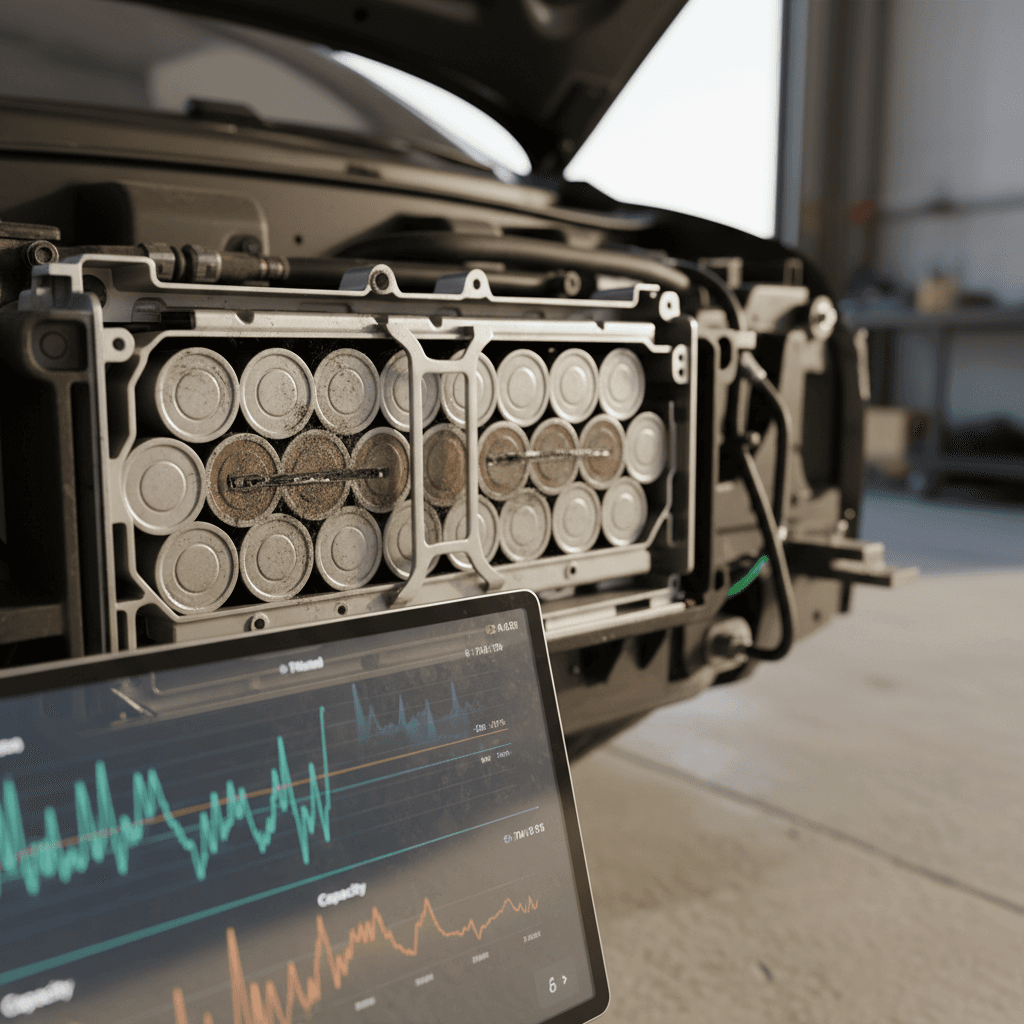
If you’re driving, or thinking about buying, a Tesla Model Y, the question of battery degradation per year is more than academic. It determines how much real-world range you’ll have in year five or year eight, and whether a used Model Y is a smart long-term bet.
Key takeaway in one sentence
Overview: How Tesla Model Y batteries degrade per year
Quick Tesla Model Y battery degradation snapshot
That data paints a reassuring picture: the Model Y’s battery is designed to last the life of the car for most owners. But degradation isn’t perfectly linear, and owner anecdotes can make things seem worse (or better) than they really are. Let’s unpack how degradation works and what’s normal year by year.
How EV battery degradation actually works
Lithium‑ion batteries like the one in your Tesla Model Y don’t suddenly “die.” Instead, they gradually lose usable capacity. Think of it as your fuel tank slowly shrinking over time. The big points to understand:
- Degradation is front‑loaded. Many Model Y owners see a noticeable drop in estimated range in the first 1–2 years, then a much slower decline afterward.
- Calendar age matters as much as miles. A three‑year‑old, low‑miles Model Y will usually show some degradation simply from time and heat cycles.
- Temperature and charging habits are big levers. Frequent DC fast charging, parking full in hot weather, and living in very hot climates tend to accelerate loss.
- Software estimates can bounce around. What you see as rated range on the screen includes software assumptions; it’s a proxy for battery health, not a lab measurement.
Think in capacity, not panic over one reading
Real-world Tesla Model Y degradation numbers
Because the Model Y has been on the road in volume since 2020, we now have several useful data sources: Tesla’s own warranty language, independent fleet studies, and hundreds of thousands of real‑world owner data points.
What the main data sources say
Putting Tesla’s promises and real-world fleet data side by side
Tesla warranty language
Tesla’s official warranty for most Model Y trims promises at least 70% of original capacity over 8 years / 100,000–120,000 miles (trim‑dependent). That doesn’t say exactly how much you’ll lose each year, but it sets a minimum floor of performance.
Independent fleet studies
Large EV fleet analyses that include Model 3/Y commonly find around 1.5–2.5% capacity loss per year on average after the initial drop, aligning with what we see owners report in normal use.
Owner-reported results
Real owners often report about 5–10% loss in the first 3–5 years on a Model Y, with high‑mileage cars still comfortably above Tesla’s 70% warranty threshold.
The key is that most Model Y degradation curves are not straight lines. The pattern is usually:
- First 6–18 months: faster apparent loss (for many owners, 5–10% drop in indicated range).
- Years 2–5: curve flattens to around 1–2% capacity loss per year in typical use.
- Beyond year 5: small annual losses continue, but many cars are still above 80–85% capacity by year 8.
Why anecdotal horror stories look so bad
Model Y degradation by year and mileage
No two Model Ys degrade exactly the same way, but if you blend the studies with real‑world owner reports, you get a reasonable expectation curve. Think of the percentages below as ballpark norms for a well‑cared‑for Model Y, not hard guarantees:
Approximate Tesla Model Y battery degradation over time
Illustrative averages for a typical U.S. driver, assuming mixed charging (home AC plus some DC fast charging) and moderate climate.
| Age / Mileage | What many owners see | Approx. remaining capacity | Approx. loss vs. new |
|---|---|---|---|
| Year 1 (0–15,000 mi) | Noticeable early drop in indicated range | ~92–95% | 5–8% |
| Year 3 (~30,000–40,000 mi) | Curve starts to flatten | ~88–92% | 8–12% |
| Year 5 (~60,000–75,000 mi) | Slow, steady decline | ~85–90% | 10–15% |
| Year 8 (~100,000–120,000 mi) | Still above warranty floor for most cars | ~80–85% | 15–20% |
| Very high mileage (~200,000 mi) | Fleet data suggests solid performance | ~85% vs. original at that mileage | ~15% total loss |
Real cars will vary based on climate, driving style, and charging behavior, but this table is a helpful sanity check if you’re evaluating your own Model Y, or shopping used.
EPA range vs. real-world range vs. capacity
Tesla Model Y battery warranty and what 70% really means
Tesla backs every new Model Y battery with an 8‑year Battery and Drive Unit Limited Warranty. For current U.S. variants, that coverage looks roughly like this:
- Model Y Long Range / Performance: 8 years or around 120,000 miles (region‑specific wording), with a guarantee that usable battery capacity will not drop below 70% during that period.
- Some Standard Range trims: 8 years with a slightly lower mileage cap (often ~100,000 miles) but the same 70% capacity floor.
What the 70% threshold really covers
There are a few important implications for you as an owner or used‑car shopper:
- If your 3‑year‑old Model Y is sitting at ~88–92% capacity, that’s well within normal expectations.
- A car at, say, 75% capacity within the warranty window is borderline and worth documenting and raising with Tesla Service.
- On a used Model Y that’s near the end of its 8‑year coverage, a verified capacity number materially affects value, you want to know if you’re buying an 82% pack or a 68% out‑of‑warranty one.
Don’t assume “warranty left” equals “battery is fine”
What speeds up or slows down Model Y battery degradation
The Model Y’s pack chemistry and thermal management are robust, but your habits still matter. If you care about long‑term battery health, or you’re assessing how a previous owner treated the car, these are the big levers.
Factors that accelerate degradation
- Frequent DC fast charging (Superchargers or other DC networks) as your primary charging method, especially in hot weather.
- Regularly charging to 100% and letting the car sit full, particularly in summer heat.
- Consistently depleting the battery very low (near 0%) before recharging.
- Extreme heat (hot climates, outdoor parking with no shade) over many years.
- High average speed and aggressive driving that keep the pack warm for long periods.
Habits that protect the battery
- Home Level 2 charging as your default, reserving DC fast charging for road trips.
- Daily charge limits in the 60–80% range for NCA packs, with 100% reserved for trip days.
- Avoiding extended sitting at 0–5% or 95–100% state of charge.
- Preconditioning while plugged in in very hot or cold weather so climate control doesn’t hammer the pack when it’s cold soaked.
- Parking in a garage or shade whenever practical to reduce thermal stress.
The good news for everyday drivers
How to check Tesla Model Y battery health (especially on a used one)
Whether you already own a Model Y or are shopping for a used one, you want more than a gut feel. You want a specific battery state‑of‑health number and some context. Here’s how to get there.
Practical ways to assess Model Y battery health
1. Note the age and mileage first
Before you even look at range, write down in‑service date and odometer. A 2021 Model Y with 70,000 miles will naturally have more loss than a 2023 with 20,000 miles. You can’t judge health without age and use context.
2. Look at rated range at a known state of charge
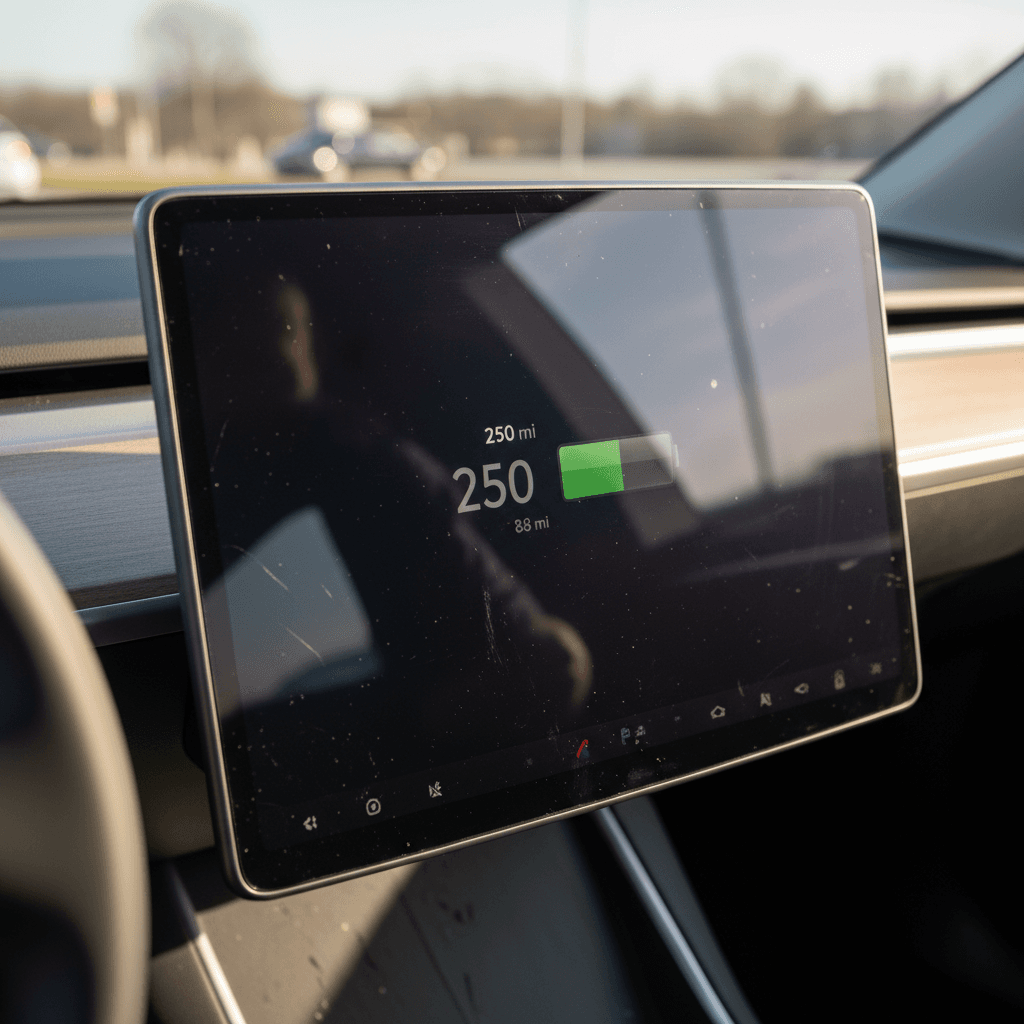
Charge to a consistent SOC, commonly 80% or 100%, and note the rated miles shown. Compare that to the original EPA‑rated figure for that trim. Keep in mind this is an estimate, not a laboratory test, but it’s a quick directional check.
3. Use Tesla’s built-in battery health test (where available)
Newer Tesla software includes an official <strong>Battery Health Test</strong> that walks you through charging and resting the car, then reports an estimated retention percentage. This is far more useful than guessing from range alone.
4. Pull data via a reputable third-party tool
If the owner is comfortable, tools like energy‑tracking apps can read pack capacity estimates from the car’s telemetry and plot them over time. Beware of single snapshots; the trend is more telling than one number.
5. Ask about charging habits and environment
A Model Y that lived its life in Phoenix, fast‑charging multiple times a week, is a different proposition than one that trickle‑charged in a Seattle garage. When you’re evaluating used cars, the story behind the numbers matters.
6. Get an independent EV battery report when buying used
For a high‑value purchase, consider a professional battery health test. On Recharged, every used EV comes with a <strong>Recharged Score battery report</strong> that includes verified pack health, so you’re not buying blind.
Buying a used Model Y? Battery health checklist
For used‑car shoppers, battery degradation is no longer theoretical, it’s dollars and cents. A Model Y that’s lost 8% capacity is a very different ownership proposition from one that’s already flirting with Tesla’s 70% warranty floor.
Used Tesla Model Y battery checklist
Confirm in-service date and exact trim
Battery warranty clocks start at first delivery, not model year. Verify the in‑service date and whether it’s a Long Range, Performance, or Standard Range car; each has slightly different original capacity and range figures.
Check how much warranty remains
Calculate how many years and miles of battery coverage are left. An 8‑year/100k–120k‑mile warranty with 3 years and 40k miles remaining is far more comforting than a car sitting at year 7 with 90k already on the clock.
Get a concrete state-of-health number
Request documentation of a recent <strong>battery health test</strong>, ideally something more precise than just a photo of the gauge. On Recharged, this is built into the Recharged Score report for every used Model Y we list.
Compare capacity to age-mileage norms
If a 3‑year‑old car is showing ~88–92% capacity, that’s generally in the sweet spot. If it’s already drifted down near 75%, investigate: talk to Tesla Service, ask about heavy fast‑charging, and consider pricing in the risk.
Ask for charging history and climate exposure
A car that spent most of its life parked in a cooled garage and charged on Level 2 overnight is usually a safer bet than one that lived outdoors and Supercharged multiple times a week.
Price the car relative to its battery health
Battery health is a major piece of a used EV’s value. Two cars with identical odometers but different state‑of‑health scores shouldn’t command the same price. Recharged’s fair‑market pricing tools factor this in for you.
Why marketplaces with verified battery data matter
FAQ: Tesla Model Y battery degradation
Frequently asked questions about Model Y battery life
Bottom line: What to expect from Model Y battery life
Pulled together, the evidence suggests that Tesla Model Y battery degradation per year is modest for the vast majority of owners. You may see a noticeable step down in the first year or two, then a long stretch where the curve flattens and your capacity declines slowly, on the order of a couple of percentage points per year.
For new‑car buyers, that means you can plan around the idea that a sensibly driven, home‑charged Model Y will likely retain the bulk of its range through at least the 8‑year warranty period, and often much longer. For used‑car shoppers, it means battery health is both knowable and priceable, you don’t have to guess, and you shouldn’t.
If you’re considering a used Model Y or any used EV, look for more than pretty photos and a clean history report. Ask for a real battery health number, understand how it compares to age‑and‑mileage norms, and make sure the price reflects what you’re getting. Recharged was built around that idea: every vehicle includes a Recharged Score battery report, transparent pricing, and EV‑specialist guidance, so your next electric can be a confident long‑term choice, not a range‑anxiety gamble.