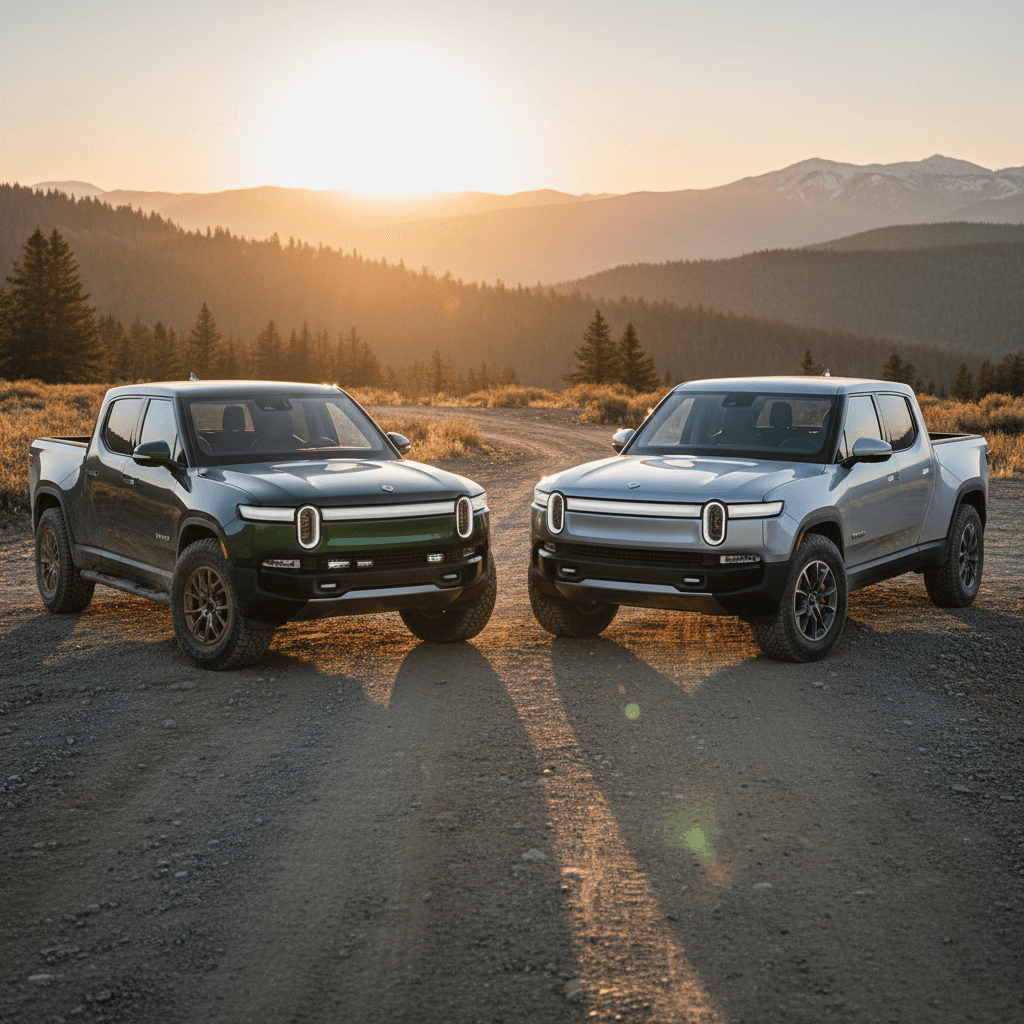
If you’re cross‑shopping a used Rivian R1T, you’ve probably seen early listings that mention Adventure and Explore trims. The target keyword “Rivian R1T Adventure vs Explore” shows up in a lot of searches, but Rivian quietly killed the Explore package early on. This guide breaks down what the Explore trim was, how it compares to Adventure, and what actually matters if you’re buying a used R1T today.
Quick reality check
Rivian R1T Adventure vs Explore at a glance
R1T trim landscape in one snapshot
When Rivian first detailed the R1T, shoppers could choose between Launch Edition, Adventure, and a lower‑content Explore trim. On paper, the powertrain and off‑road hardware were the same; the big differences were in interior materials, convenience features, and a few bed‑area upgrades. Today, however, Rivian has simplified the lineup around Adventure (and now Ascend on newer trucks), which is why nearly every used R1T you’ll find is branded, or built, as an Adventure.
What was the R1T Explore trim, and why was it dropped?
Rivian positioned the Explore package as the entry‑level R1T. It kept the truck’s core capability, dual‑ or quad‑motor powertrains, large battery, air suspension, and off‑road chops, but trimmed back interior luxury and a few convenience features to hit a lower starting price. Early pricing guidance had Explore starting around the mid‑$60,000s, undercutting Adventure by roughly $7,500–$8,000.
- Same skateboard platform, battery packs, and dual/quad‑motor options as Adventure
- Simpler interior: textile headliner, standard audio system, less premium trim materials
- Manual bed tonneau cover instead of the Adventure’s powered cover
- Heated front seats, but no ventilation and less adjustability
- Fewer premium touches like the Meridian Elevation audio and ash wood interior
Important timeline note
That decision means most of what you’ll read about the R1T Explore vs Adventure is essentially historical. If you see a used R1T listing today, assume it’s an Adventure‑equivalent build, even if the original buyer once held an Explore reservation.
Adventure vs Explore: key feature differences
Even if you’re unlikely to ever see a true Explore on the used market, understanding the original trim strategy helps you evaluate features and pricing. Here’s how Rivian R1T Adventure vs Explore stacked up on paper.
Rivian R1T Adventure vs Explore: feature comparison
Originally announced differences between the two R1T trims. Nearly all used trucks today align with the Adventure column.
| Category | Explore (discontinued) | Adventure (common) |
|---|---|---|
| Base MSRP (launch era) | ~$67,500 | ~$75,000 |
| Battery / motors | Same packs and dual/quad options | Same packs and dual/quad options |
| Off‑road upgrade | Optional or bundled on some builds | Standard (skid plates, tow hooks, compressor) |
| Interior materials | Textile headliner, simpler trim | Ash wood trim, premium finishes |
| Front seats | Heated, manual/limited adjust | Heated & ventilated, more adjustability |
| Audio system | Standard Rivian audio | Meridian Elevation 360° premium audio |
| Bed tonneau cover | Manual | Power tonneau cover standard |
| Gear Guard | Basic security features | Full Gear Guard with bed camera and cable |
| Floor mats | Standard recycled mats | Chilewich premium floor mats |
Mechanical hardware stayed the same; the differences were mainly comfort, convenience, and appearance.
How to read used listings
Explore interior feel
The original Explore spec leaned toward a more utility‑focused cabin, still modern and tech‑heavy, but with simpler materials and fewer luxury touches. Think of it as the work‑truck version of an R1T that Rivian never truly brought to market at scale.
Adventure interior feel
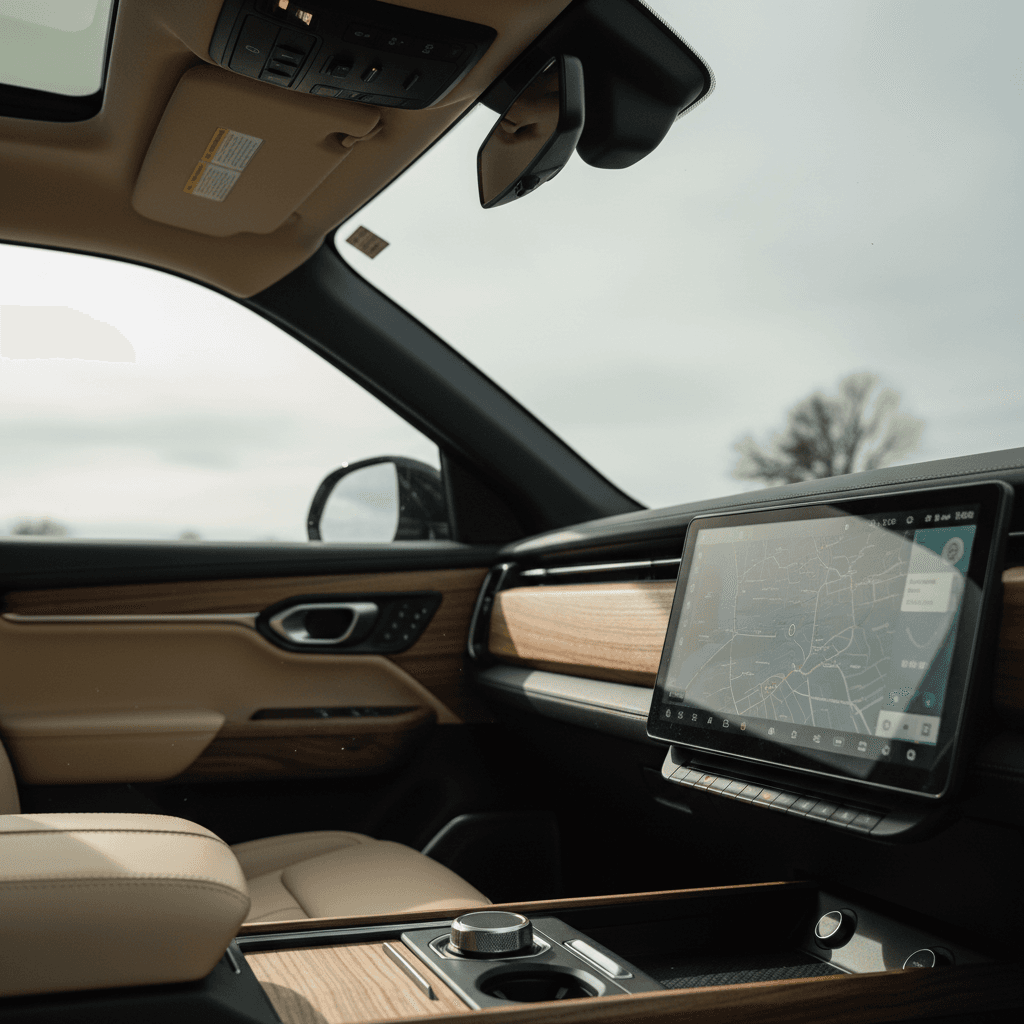
The Adventure trim is the R1T most people know: perforated vegan leather seats, ash wood trim, richer lighting and audio, and more adjustability. It fits the R1T’s premium pricing and pairs better with the truck’s performance and tech story.
How the Adventure vs Explore feel on the road and off it
One reason Rivian could drop Explore without angering more owners: the driving experience between R1T Adventure vs Explore was designed to be essentially identical. Same chassis, same air suspension, same massive battery packs, same dual‑ or quad‑motor powertrains. Where they diverged was in how you experienced that capability from the driver’s seat.
Driving differences that would have mattered
These are theoretical today, but they explain Rivian’s original trim strategy.
Ride and handling
Both trims were engineered to share the same adaptive air suspension and drive modes. On pavement, you wouldn’t feel a meaningful difference between Adventure and Explore.
Off‑road capability
With the off‑road upgrade standard on Adventure, you’d see skid plates, tow hooks, and an integrated air compressor every time. On an Explore, those were more dependent on boxes checked at order time.
Comfort over long miles
Heated and ventilated front seats, extra lumbar adjustment, and the premium audio system make the Adventure more comfortable if you road‑trip or tow frequently.
Cabin experience
The Meridian Elevation 360° audio, ash wood trim, and nicer materials in Adventure turn the cabin into more of a luxury truck space than a bare‑bones work rig.
Good news for used buyers
Pricing, availability, and what you’ll actually see used
On the new‑truck side, Rivian’s pricing has shifted several times as battery options, motor configurations, and trims have evolved. Adventure now fills the role Explore was meant to play: the core R1T for most buyers. On the used side, the picture is clearer, Adventure dominates listings and sets the market.
How R1T Adventure vs Explore pricing evolved
Conceptual view of how Rivian’s pricing strategy shifted from three trims to a simplified lineup.
| Model year / era | Available trims | New‑truck positioning | What you’ll see used |
|---|---|---|---|
| 2021–early 2022 | Launch Edition, Adventure, planned Explore | Three‑trim strategy, Explore as entry point | Mostly Launch Edition and Adventure |
| Mid‑2022 | Explore canceled, Adventure becomes entry | Simplified to faster‑to‑build Adventure | Adventure dominates used listings |
| 2024–2025+ | Adventure, Ascend and evolving powertrains | Adventure as volume trim, Ascend as flagship | Early examples of higher‑spec trucks joining used market |
Actual used prices will vary by mileage, battery pack, motor configuration, and options.
Used Rivian R1T Adventure trucks in the U.S. often show asking prices ranging from the low‑$40,000s for higher‑mileage early builds to the $60,000s for newer, low‑mileage examples with larger battery packs and more options. Because Rivian never built a real volume of Explore units, there isn’t a distinct Explore price band to analyze, another reason to evaluate trucks by equipment, battery, and condition instead of trim names.
Where Recharged fits in
Which Rivian R1T trim is right for you?
If you’re approaching this as a straightforward “Rivian R1T Adventure vs Explore” choice, the real‑world answer is simple: you’ll almost certainly be choosing between different Adventure‑spec trucks rather than trim names. Still, it helps to think about how you plan to use the truck.
Match your R1T to how you actually drive
Daily driver & light adventure
Prioritize comfort features: ventilated seats, Meridian audio, driver‑assist tech.
Standard‑ or large‑pack battery is usually enough unless you regularly exceed 200‑mile days.
Look for 21‑inch or 22‑inch wheels if you’re mostly on pavement and care about efficiency and ride.
Backcountry camping & overlanding
Off‑road package and underbody protection are must‑haves.
20‑inch all‑terrain wheels and the integrated air compressor make trail life easier.
Roof rack, camp kitchen prep, and bed‑based accessories add real utility for multi‑day trips.
Towing and hauling
Focus on dual‑ or quad‑motor configurations with larger battery packs to preserve usable range while towing.
Factory tow package is non‑negotiable; confirm hitch rating and wiring in the listing.
Check for bed cargo solutions, Gear Guard, and power tonneau to secure tools or gear.
Tech‑first early adopter
Newer software builds and hardware revisions may matter more than nominal trim name.
Look for trucks with driver‑assistance upgrades and connectivity features already enabled.
Consider where and how you’ll charge, including <a href="/articles/tesla-supercharger-access-for-rivian">access to Tesla Superchargers</a>.
Buying a used R1T: battery health, warranty, and value
With any used EV, especially a high‑performance pickup like the Rivian R1T, battery health and warranty coverage matter more to total ownership cost than whether the original trim was called Adventure or Explore. That’s doubly true in a market where Explore is basically a historical footnote.
Key checks that matter more than trim name
Use these lenses as you compare R1T listings.
Battery state of health
Ask for objective data, not just “range feels fine.” A battery in better shape can be worth thousands over the life of the truck.
Warranty coverage
Confirm in‑service date and how much of the battery and drivetrain warranty remains. Earlier trucks may be closer to their limits.
Repair and recall history
Request service records and ensure any recalls or service campaigns have been addressed before you sign.
Usage profile
Mileage alone doesn’t tell the story. City commuting, frequent DC fast charging, and heavy towing all affect long‑term battery and brake wear.
Total cost of ownership
Factor insurance, charging costs, and potential tire wear into your budget, not just the monthly payment.
Independent inspection
Consider a specialist EV inspection or a Recharged Score Report to surface hidden issues and validate pricing.
Don’t skip battery diagnostics
Every R1T sold through Recharged includes a Recharged Score that quantifies battery health and high‑voltage system condition, plus an evaluation of fair‑market pricing based on mileage, options, and current market data. That lets you compare multiple Adventure‑spec trucks on a level field, rather than guessing based on listing language alone.
Checklist: Comparing R1T Adventure vs Explore on a test drive
Practical checklist for evaluating a used R1T
1. Confirm actual trim and options
In the Rivian app or with the seller, verify whether the truck is Adventure and which option packages it has (off‑road, tow, audio, wheels). Ignore early‑order Explore language and focus on the build that was delivered.
2. Inspect interior materials and features
Look for vegan leather seats, ash wood trim, Meridian audio, and cooled front seats. These are Adventure hallmarks and affect comfort and resale value.
3. Check bed functionality
Test the tonneau cover (power vs manual), Gear Guard camera, in‑bed power outlets, and any accessory rails or crossbars. These details matter if you camp, tow, or haul gear.
4. Review charging behavior
Ask how the truck has been charged, mostly at home Level 2 or frequent DC fast charging, and confirm compatible networks, including access to Tesla Superchargers where available.
5. Validate software and driver‑assist
Confirm over‑the‑air updates are current, driver‑assist features work as expected, and there are no persistent warning messages on the displays.
6. Get independent battery data
Use a trusted report like the <strong>Recharged Score</strong> or a third‑party EV diagnostic to understand real‑world battery health before you finalize a deal.
Rivian R1T Adventure vs Explore: FAQ
Frequently asked questions
Bottom line: Don’t overthink the nameplate
The phrase “Rivian R1T Adventure vs Explore” makes it sound like you’re facing a tough trim decision. In reality, Rivian’s early pivot means you’re almost always comparing Adventure‑spec trucks with different options, miles, and histories. Focus on the details that matter: battery health, remaining warranty, off‑road and towing hardware, interior comfort features, and how the truck fits your daily life.
If you want help cutting through the noise, Recharged is built for exactly this kind of decision. With verified battery diagnostics, transparent pricing, EV‑savvy financing, and nationwide delivery, you can shop a used R1T Adventure with the same confidence you’d bring to a traditional truck lot, minus the guesswork over a trim level Rivian left behind.