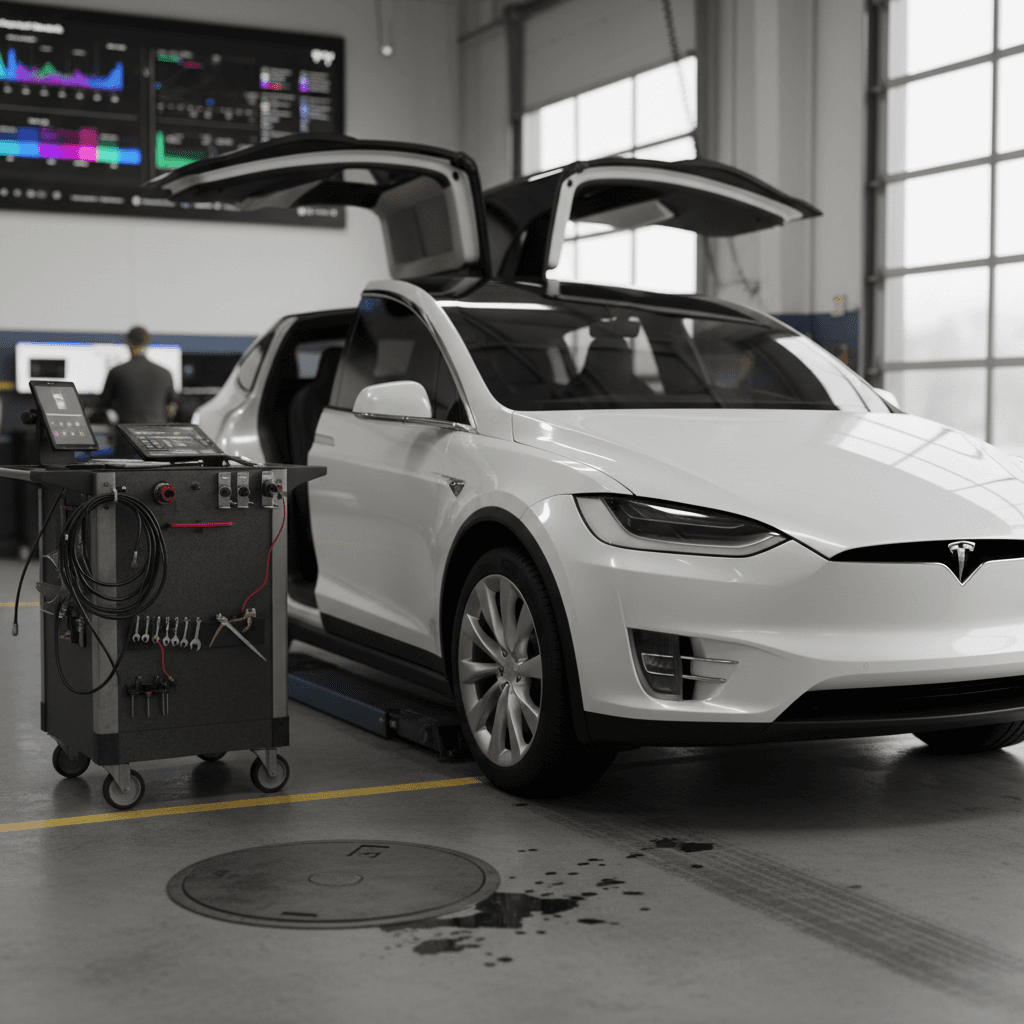
If you’re coming from a gasoline SUV, the Tesla Model X service schedule can feel almost nonexistent. No oil changes, spark plugs, or transmission service. But that doesn’t mean you can ignore maintenance. The real question is: what actually needs to be serviced on a Model X, and when?
Quick reality check
Why the Tesla Model X service schedule looks different
Tesla’s official language is that the Model X “does not require annual maintenance” in the traditional sense. Instead, the owner’s manual lists maintenance items and intervals that are largely independent of mileage: brake fluid checks, air filters, wiper blades, tire rotation, and brake caliper service. This reflects the underlying economics of an EV: far fewer moving parts than an internal‑combustion SUV, and heavy use of regenerative braking to reduce wear on friction brakes.
On top of that, Tesla has gradually shifted from static, printed schedules to in‑car maintenance reminders accessed via Controls > Service > Maintenance on the touchscreen. Later software (for example 2024.44.25 and beyond) surfaces cabin filter and HEPA replacement timelines directly in the car, which helps align recommendations to how and where you drive rather than a one‑size‑fits‑all schedule.
Important for 2025–2026 shoppers
Official Tesla Model X service intervals at a glance
Tesla’s Model X owner’s manuals over the last several years have converged on a fairly simple list of recommended service items. Exact numbers vary slightly by region and software version, but for a North American Model X, you can expect roughly the following:
Core Tesla Model X service recommendations (typical guidance)
High‑level view of the most important maintenance items on a Tesla Model X and how often they usually come up.
| Maintenance item | Typical interval | Notes |
|---|---|---|
| Tire rotation / inspection | Every 6,000–10,000 miles or when tread difference ≥ 1.5 mm | More frequent if you drive aggressively or on 22" wheels. |
| Cabin air filter | About every 1–3 years | HEPA‑equipped Model X often shows a ~12–36 month interval in the car, depending on region and conditions. |
| HEPA + carbon filters (Bioweapon Defense Mode cars) | Roughly every 3 years | Shorter interval in dusty or polluted environments. |
| Brake fluid health check | Every 4 years; replace only if contaminated | Heavy towing or mountain driving can justify earlier checks. |
| Brake caliper clean & lube (salted roads) | About every 12 months or 12,500 miles | Critical if you live where roads are salted in winter. |
| Wiper blades | About every 12 months | Replace sooner if streaking or chattering. |
| A/C desiccant bag | Often “no routine replacement” on heat‑pump cars | Earlier Model X generations without a heat pump had 4–6 year guidance; newer guidance leans on condition‑based checks. |
| Battery coolant | No fixed short interval; serviced with components or if issues arise | Coolant is part of the sealed thermal system and isn’t a 30k–60k mile wear item like in a gas car. |
Always confirm intervals in your specific Model X owner’s manual and Maintenance screen, as software and guidance change over time.
Where to see your car’s recommendations
Model X service schedule by time and mileage
To make this more concrete, here’s how a typical Tesla Model X service schedule plays out over the first 8 years or 100,000 miles for a U.S. owner. This assumes normal use, no frequent towing, and a mix of highway and city driving.
Model X service timeline (approximate)
Year 1 (0–12,000 miles)
Rotate tires at 6,000–10,000 miles, or when you see noticeable front–rear wear differences. Replace wiper blades if they’re noisy or streaking. In salty‑road states, have brake calipers cleaned and lubed as winter ends.
Year 2 (12,000–24,000 miles)
Repeat tire rotation. In higher‑pollution or dusty areas, this is a good time to replace the cabin air filter even if the car hasn’t prompted you yet, especially on older Model X generations that listed yearly cabin filter replacement.
Year 3 (24,000–36,000 miles)
Another tire rotation, plus cabin filter replacement if you haven’t done it yet. HEPA‑equipped cars are often due for HEPA + carbon filter replacement around this point, particularly if you regularly use Bioweapon Defense Mode.
Year 4 (36,000–48,000 miles)
Tire rotation as needed. Schedule a <strong>brake fluid health check</strong>; replace fluid only if the test shows contamination. In salted‑road regions, you’ve typically done caliper cleaning at least three or four times by now.
Years 5–6 (48,000–72,000 miles)
Continue tire rotations, brake caliper service (if needed in your climate), and filter replacements on the same cadence. This is also when alignment checks and suspension inspections become more common, especially on heavier, performance‑oriented Model X builds.
Years 7–8 (72,000–100,000+ miles)
Expect another brake fluid test, cabin and HEPA filter refresh, and more frequent attention to suspension components, door hardware, and charge‑port mechanisms. None of these are guaranteed failure points, but age and weight start to show here.
Good news for used‑Model‑X shoppers
Maintenance items explained: what each service actually does
Cabin and HEPA filters
The Model X uses a standard cabin air filter plus, on many builds, a massive HEPA filter and carbon element that enable Bioweapon Defense Mode. Together, these keep pollen, dust, smoke, and fine particulates out of the cabin.
Over time, these filters clog with debris and moisture. You’ll notice reduced airflow, more fan noise, foggy windows, or musty smells. Replacing the filters restores airflow and HVAC efficiency, and it’s one of the lowest‑cost, highest‑impact maintenance items on a Model X.
Brakes, brake fluid, and caliper service
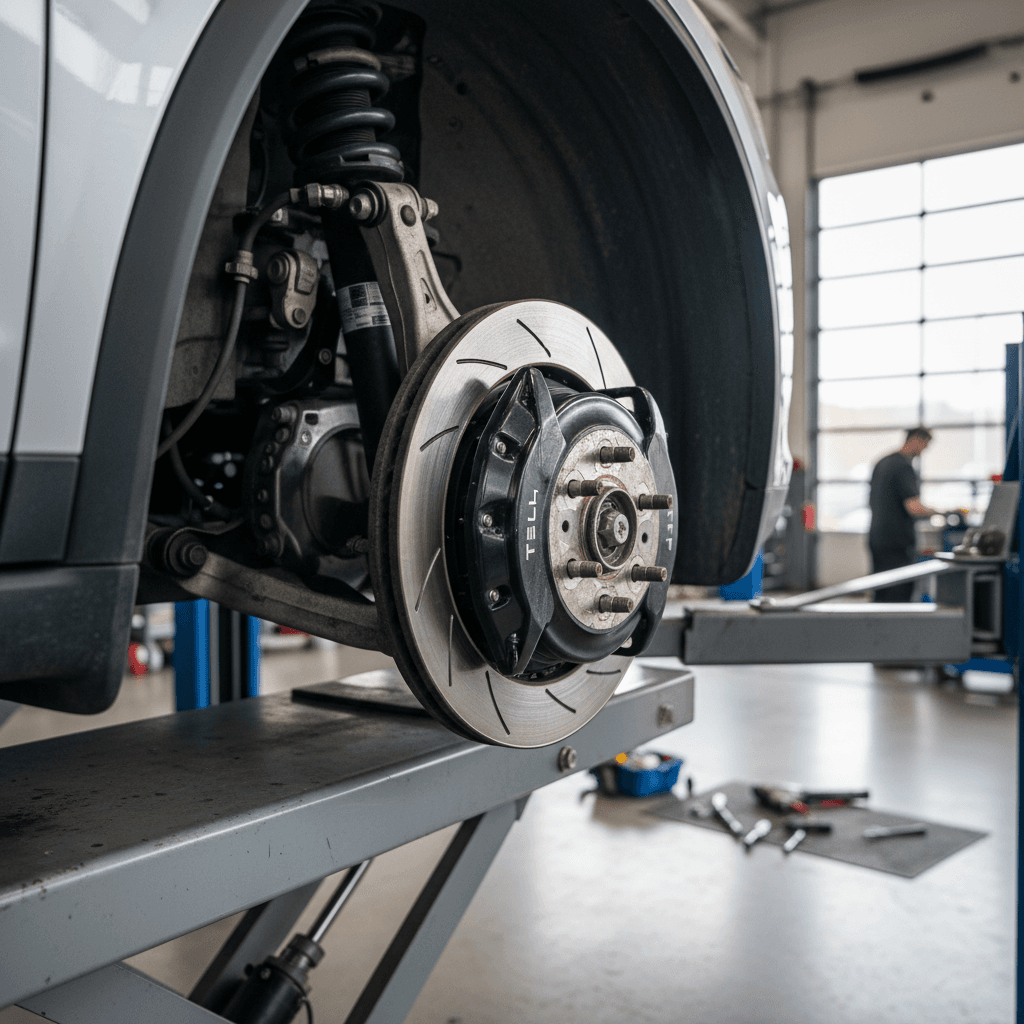
Because Model X relies heavily on regenerative braking, physical brake pads and rotors wear slowly, but they can still suffer from corrosion, especially in climates where roads are salted.
That’s why Tesla recommends periodic brake fluid contamination checks and, in salted‑road areas, annual caliper cleaning and lubrication. The goal is to prevent seized calipers and rusty hardware, not to constantly replace pads and rotors.
Other key Model X maintenance items
None of these are glamorous, but all of them matter for long‑term reliability.
Tire rotation & alignment
With heavy curb weight and optional 22" wheels, the Model X can eat through tires if you’re not careful. Rotating every 6,000–10,000 miles and checking alignment when you see uneven wear will materially extend tire life.
Wiper blades & washer fluid
Simple but important. Replace wiper blades as they streak, and keep washer fluid topped up. Many service visits that owners think of as "maintenance" boil down to these basics.
A/C desiccant & coolant
Earlier Model X generations used a defined interval for A/C desiccant bag replacement. Newer guidance, especially on heat‑pump cars, is more condition‑based. Battery coolant, meanwhile, generally isn’t a routine wear item; it’s serviced when components are opened or if there’s a fault.
Don’t ignore the high‑voltage side
Tesla Model X maintenance costs and budgeting
Real‑world Tesla Model X maintenance expectations
Based on owner data and real‑world shop invoices, budgeting around $650–$750 per year for routine Tesla Model X maintenance over the first five years is reasonable under normal U.S. driving. That number includes tire rotations, cabin and HEPA filters, the occasional set of wiper blades, and periodic inspections. It does not include accident repair or cosmetic work like wheel rash.
The wild card is tires. A heavy, all‑wheel‑drive, three‑row EV on sticky, staggered‑fitment tires can burn through a set far faster than you might expect. If you opt for high‑performance tires or 22" wheels, it’s smart to treat tire replacement as a separate line item in your budget, potentially $1,200–$2,000 every 25,000–40,000 miles depending on your driving style.
How Recharged helps you forecast costs
Service Center vs independent shop vs DIY
Tesla Service Center
Best for software‑linked repairs, warranty work, high‑voltage issues, and anything that requires factory diagnostic tools. Tesla also handles many routine items like cabin filters, brake fluid tests, and wipers, often scheduled directly through the app.
Pros: Deep expertise, direct access to parts, seamless software integration.
Cons: Appointment backlogs in some markets, higher hourly rates.
Independent EV specialist
For out‑of‑warranty Model X owners, a good EV‑focused independent shop can handle brakes, suspension, tires, and many HVAC issues at lower labor rates. Some are becoming adept at non‑warranty battery and drive‑unit repairs too.
Pros: Often cheaper, more flexible, sometimes closer to home.
Cons: Quality varies; verify genuine parts and high‑voltage training.
DIY where it makes sense
If you’re mechanically inclined, you can DIY cabin filters, wiper blades, and even brake caliper cleaning with proper tools and procedures. Tesla now publishes a surprising amount of DIY documentation for items like filters and basic checks.
Never DIY: High‑voltage battery work, coolant leaks, or anything that requires opening the battery pack.
Know your limits
How the Model X service schedule changes as it ages
The official Tesla Model X service schedule doesn’t include a hard stop at year 8 or 100,000 miles. Instead, the character of maintenance changes. Early years are mostly about filters and tires; later years introduce more wear‑and‑tear items as suspension bushings, door hardware, and seals age.
Model X maintenance focus by age band
What typically deserves more attention as the odometer climbs.
0–5 years / 0–60,000 miles
- Filters (cabin + HEPA)
- Brake fluid test at year 4
- Tire rotation and possible first tire set
- Door alignment tweaks or minor squeaks/rattles
6–10 years / 60,000–120,000 miles
- More frequent suspension inspections (control arms, bushings, ball joints)
- Charge‑port door and latch issues become more common
- Additional brake fluid test around year 8
- Weather seals, window regulators, and trim wear
Battery packs and drive units are engineered to last well beyond this window, and many high‑mileage Model X vehicles are still on their original major components. But as with any aging luxury vehicle, the number of small, nuisance repairs can creep up even if the big‑ticket EV hardware behaves itself.
Used Tesla Model X: what service history to look for
If you’re evaluating a used Model X, whether through a private sale, a traditional dealer, or a digital marketplace like Recharged, the service schedule becomes a checklist. You’re not just asking “is this car cool?” You’re asking “has this owner actually done the boring stuff that keeps it alive?”
Service‑history checklist for a used Model X
1. Tire rotation and replacement records
Look for evidence of tire rotations every 6,000–10,000 miles and at least one tire replacement set on higher‑mileage vehicles. Uneven wear patterns without rotation history are a red flag.
2. Cabin and HEPA filter replacements
Ask when the cabin filter and HEPA filter were last changed. A seller who can show recent invoices, or who at least knows what these items are, is usually a more attentive owner.
3. Brake fluid health checks
By year 4 and again around year 8, there should be documentation of brake fluid testing or replacement. It’s not a deal‑breaker if it’s missing, but you should plan to have it done soon after purchase.
4. Brake caliper service in salty regions
In northern climates, annual caliper cleaning and lubrication is cheap insurance against seized hardware. If the car comes from a heavy‑salt state with zero evidence of this, budget proactively for a thorough brake service.
5. Suspension and alignment work
On higher‑mileage or pothole‑prone cars, some combination of control arms, links, or alignment adjustments is normal. A complete absence of any such work on a 100,000‑mile Model X is more suspicious than reassuring.
6. Software and recall history
Confirm that over‑the‑air updates are current and that any safety‑related service campaigns or recalls have been addressed. This is easy to check in the car and through a Tesla or EV‑focused shop.
How Recharged screens used EVs
Ready to find your next EV?
Browse VehiclesFAQ: Tesla Model X service schedule
Frequently asked questions about the Tesla Model X service schedule
Bottom line on the Tesla Model X service schedule
The Tesla Model X doesn’t have a thick, dealer‑driven maintenance book, and that’s a feature, not a bug. Its service schedule boils down to a handful of sensible, mostly low‑drama items: keep tires rotated and aligned, replace cabin and HEPA filters on a reasonable cadence, test brake fluid every few years, and stay ahead of corrosion in salty climates. For most owners, that translates into noticeably lower maintenance spend than a comparable gasoline SUV.
If you’re shopping used, the right question isn’t “has this car been babied,” it’s “has this owner actually followed the basic Model X maintenance rhythm?” That’s exactly the kind of detail a Recharged Score Report is designed to surface, battery health, service history, and realistic ownership costs, all in one place. Do that homework up front, and a well‑maintained Model X can be one of the lowest‑stress, highest‑comfort EVs you can own.