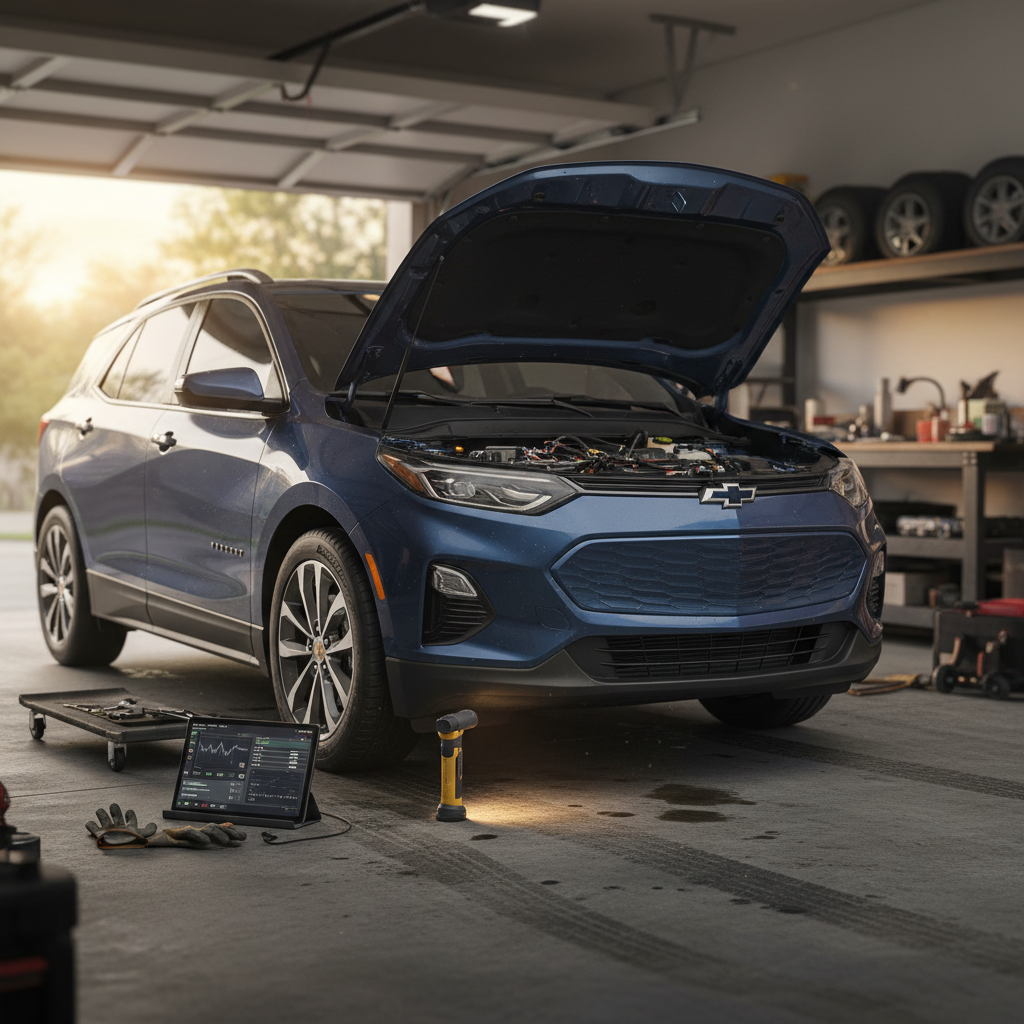
If you’re looking for a clear, current **2023 Chevrolet Bolt EUV recalls list**, you’ve probably fallen down the same rabbit hole everyone else does: battery-fire headlines from earlier years, legal ads, and a lot of out-of-date information. Let’s sort out what actually applies to the 2023 Bolt EUV today, and what it means if you already own one or you’re shopping used.
Quick truth
Overview: 2023 Bolt EUV recalls at a glance
2023 Chevy Bolt EUV safety snapshot
You’ll see some sources claim the **2023 Bolt EUV has “zero recalls”** and others talking about new safety campaigns. The gap usually comes down to **what they count as a recall** (only vehicle-level NHTSA recalls vs. equipment recalls and service campaigns) and when the data was last updated. When you’re buying or owning a 2023 EUV, you want to look at **everything that can show up tied to your VIN**, not just the headline-grabbing fire recall from earlier years.
Is the 2023 Chevy Bolt EUV part of the big battery fire recall?
2017–2022: The infamous LG battery recall
GM’s high‑profile battery‑fire recall covered virtually every **2017–2022 Bolt EV and 2022 Bolt EUV**. Owners were told not to park in garages or charge overnight until software limits and, ultimately, battery replacements could be completed.
The root cause was a specific manufacturing defect in certain LG battery cells, plus how those cells were assembled into packs.
2023: Built after the fix
By the time the **2023 Bolt EUV** rolled off the line, GM had:
- Revised its battery production and quality‑control processes
- Updated diagnostics and monitoring software
- Resumed production with revised packs after a long shutdown
As a result, **2023 Bolt EUVs are not listed in the original battery fire recall population**, a key distinction when you’re evaluating risk on a used car.
Good news for 2023 buyers
2023 Chevrolet Bolt EUV recalls list
Below is the **most relevant 2023 Chevrolet Bolt EUV recalls list** for U.S. owners and shoppers as of April 2026. Always confirm with a VIN lookup, but this will give you a clear starting point.
Major recalls and campaigns touching 2023 Bolt EUVs
This table focuses on recalls and service campaigns that can reasonably apply to a 2023 Bolt EUV in the U.S., either directly or through included equipment.
| Campaign / NHTSA # | Type | What’s affected | Primary risk / issue | Does it affect 2023 EUV? |
|---|---|---|---|---|
| 23E065 – Webasto portable charging cord | Safety recall (equipment) | Certain Webasto 120V portable charge cords supplied with 2022–2023 Bolt EUVs | Incorrect hardware/software combination in the cord’s electronics can create a risk of electrical shock during use or handling. | Yes, if your car came with an affected cord. |
| Battery label correction (e.g., N232404821) | Service campaign / bulletin | 2022–2023 Bolt EV/EUV packs with mislabeled battery module design level (N2.1 vs N2.2) | Incorrect battery labels could lead to the wrong software or service procedures being applied later. | Possibly; depends on pack, but this is a labeling/administrative correction, not a safety defect. |
| N23432430 – Mileage counter / SOC limiter | Service update | 2020–2023 Bolt EV and 2022–2023 EUV with advanced diagnostic software installed | Odometer and internal mileage counter may reset during some module reprograms, limiting state of charge to ~80% until updated. | Likely applies if your 2023 EUV received earlier diagnostic software. |
| N242443002 – High-voltage battery fire detection | Safety recall (ongoing) | Selected Bolt EV/EUVs previously repaired under the main battery campaign | Verification and enhancement of battery fire detection strategy on already‑repaired vehicles. | Primarily targets earlier model years; most 2023 EUVs are outside this population. Confirm by VIN. |
Not every 2023 Bolt EUV will be affected by all of these actions. Eligibility depends on build date, equipment, and prior repairs.
Recall 23E065: Webasto portable charging cord shock risk
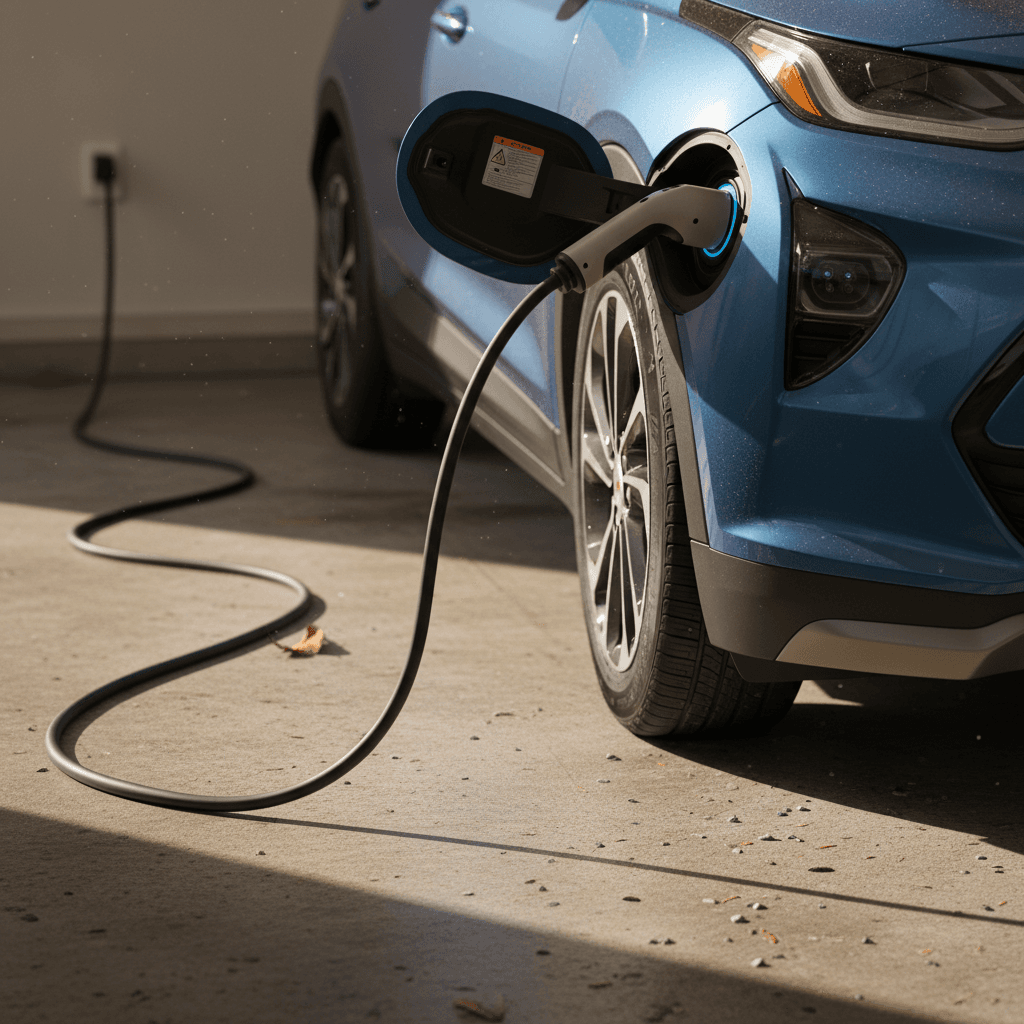
The most concrete **2023 Chevy Bolt EUV recall** you’re likely to encounter is actually aimed at the **portable 120‑volt charging cable**, not the car’s high‑voltage battery.
- GM discovered that some Webasto‑supplied portable cords for **2022–2023 Bolt EUVs** were built with an incorrect hardware/software combination in the control box.
- In rare cases, that mismatch can compromise the unit’s protection circuitry, creating a potential **electric shock hazard** for the person plugging, unplugging, or handling the cord.
- The fix is to **inspect the cord’s part number and build info** and replace affected units with a revised design at no cost.
Important nuance
Battery label correction: N2.1 vs N2.2 modules
You may see service paperwork or online chatter about a campaign where dealers **crossed out part of the battery label with a marker** on certain 2023 Bolt EUVs. It sounds alarming, but this one is bureaucratic more than dramatic.
- Some replacement or late‑build battery packs had the **wrong design-level sticker** (for example, labeled N2.2 when the pack internals corresponded to N2.1, or vice versa).
- Technically, the pack itself complied with the post‑recall standard; the issue was that the **paper label didn’t match GM’s records** for that VIN.
- The campaign instructs dealers to correct or strike through the incorrect part of the sticker so future technicians don’t install the wrong software or follow the wrong service procedure.
What it means for you
Service update N23432430: Mileage counter & 80% charge limit
GM also issued **service update N23432430** covering **2020–2023 Bolt EVs and 2022–2023 Bolt EUVs** that had advanced diagnostic software installed as part of the earlier battery campaign.
- Under certain conditions, typically after a module reflash, the **internal EV mileage counter can reset**, confusing the system that decides when it’s safe to remove an 80% state‑of‑charge limit.
- Until that counter reaches about **6,231 miles (10,000 km)** again, the battery may be **stuck at roughly 80% usable capacity**, even though the car drives normally.
- The update corrects this behavior so the odometer and the internal counter stay properly aligned.
Shopping tip
Other bulletins and service campaigns that may touch 2023 Bolt EUVs
Beyond formal recalls, GM issues **technical service bulletins (TSBs)** and internal programs that can still matter when you’re evaluating a 2023 Bolt EUV. They’re not always labeled as recalls, but they steer dealers toward known fixes.
Common campaign themes for 2022–2023 Bolt EUVs
Not recalls by themselves, but helpful clues when you’re looking at maintenance history.
Drive battery service bulletins
GM maintains detailed procedures for high‑voltage battery **module or pack replacement** on 2022–2023 Bolt EUVs. These bulletins don’t mean every car needs a new pack, but if one was installed, the bulletin number will show on the service invoice.
Accessory harness & charging issues
Some 2022–2023 owners have reported **charging interruptions, module faults, or harness issues**. In many cases the fix is a component or harness replacement documented via a TSB rather than a recall.
Software / calibration updates
Updates to **battery management software, range estimation, and charging behavior** show up as service campaigns or bulletins. They often improve drivability and long‑term battery health, even when there’s no safety defect.
Common issues & complaints owners report (not recalls – yet)
A clean recall record doesn’t mean **no one ever has problems**. Sift through owner forums and complaint databases for 2023 Bolt EUVs and a few themes pop up, even if NHTSA hasn’t turned them into formal recalls.
- Charging module or onboard charger failures – Some owners have reported brand‑new cars that suddenly wouldn’t charge at home or at public stations. Diagnosis often points to a failed onboard charging module, which is replaced under warranty.
- “Propulsion power reduced” messages – A few early‑life 2023 EUVs have thrown reduced‑power warnings tied to auxiliary pump or other drivetrain codes. Again, these are typically handled as individual warranty repairs, not recalls.
- 12‑volt battery drain or no‑start conditions – A handful of complaints mention the car not waking up or showing a drained low‑voltage battery after sitting for a few days. Software updates or 12‑volt battery replacement are common dealer responses.
- Range or state‑of‑charge quirks – Especially on cars involved in earlier software campaigns, owners sometimes see odd range estimates or SOC limits that trace back to calibration, not hardware failure.
Recall vs. one‑off problem
How to check your 2023 Bolt EUV for open recalls
Before you buy, or if you’ve owned the car for a while, take ten minutes to run a **VIN‑based recall check**. It’s the only way to know which campaigns actually apply to your specific 2023 Bolt EUV.
Step‑by‑step: Checking recall status on a 2023 Bolt EUV
1. Locate your VIN
You’ll find the 17‑character VIN at the base of the windshield (driver’s side), on the driver‑door jamb sticker, and on your registration or insurance card.
2. Search NHTSA’s recall database
Go to NHTSA’s recall lookup site and enter the VIN. This will show any **federal safety recalls** that are open or completed, including equipment recalls like the Webasto portable cord if they’re tied to your car.
3. Check GM’s recall/owner center
Log into GM’s owner portal or the Chevrolet owner site, enter the VIN, and confirm that **GM’s internal campaigns, software updates, and service actions** are also clear.
4. Ask the dealer for a warranty history printout
If you’re buying from a dealer, ask for a **GM service history report**. It will list completed recalls, service campaigns, and warranty repairs by date and mileage.
5. Inspect the portable charging cord
Look for **part numbers and labels** that match the Webasto recall criteria or ask a Chevy service advisor to verify whether your cord is affected by 23E065.
6. Keep records with the car
Once recall or campaign work is done, keep the **RO (repair order)** and any recall letters in the glovebox. It adds confidence for the next owner and helps if questions come up later.
Shopping used? How recalls affect a 2023 Bolt EUV purchase
If you’re cross‑shopping a 2023 Bolt EUV against other used EVs, the recall story is actually a **selling point**. Unlike earlier Bolts, the 2023 model year isn’t living under a cloud of battery‑fire headlines, but you still want to go in with eyes open.
Questions to ask about recalls on a used 2023 Bolt EUV
Use these talking points with a private seller or dealer.
“Have all recalls and campaigns been completed?”
Ask for paperwork or screenshots from GM’s owner portal. A seller who’s on top of recall work is usually on top of routine maintenance too.
“Can I see the service history?”
Look for completed work related to the **portable charging cord**, any battery label campaigns, and software updates like N23432430. This history tells you how the car’s life has gone so far.
“Has the high‑voltage battery ever been replaced?”
A replacement pack isn’t necessarily bad news, in fact, it can be a plus, but you want to know why it was replaced and whether the car had prior battery‑related warnings or failures.
“Does the included charging equipment match the VIN?”
If the portable cord or wall‑mount gear doesn’t match what originally came with the car, ask whether it was replaced under recall (good) or simply lost along the way (factor into price).
Price vs. peace of mind
How Recharged evaluates used Chevy Bolt EUVs
At Recharged, a 2023 Bolt EUV doesn’t just get a quick test‑drive and a wash. Every car goes through our **Recharged Score** process so you’re not rolling the dice on a complex EV with a complicated recall history.
- VIN‑level recall and campaign check – We run every 2023 Bolt EUV through recall databases and GM resources to confirm whether **safety recalls, equipment recalls, and software campaigns** are open or complete.
- Battery health diagnostics – Using our Recharged Score tools, we look beyond “it charges to 100%” and evaluate the **actual usable capacity and pack consistency** so you know how the battery is aging.
- Charging equipment verification – If the car comes with a portable cord or other accessories, we confirm **part numbers and condition**, critical for cars that might be in the Webasto cord recall population.
- Road test for real‑world behavior – Range estimates, charging behavior, and warning messages all get evaluated on the road, not just on a scan tool screen.
- Transparent reporting – You get a **Recharged Score Report** that lays out battery health, recall status, fair‑market pricing, and any issues we’ve addressed before you ever hit “Buy.”
Why this matters on a 2023 Bolt EUV
Ready to find your next EV?
Browse VehiclesFAQ: 2023 Chevrolet Bolt EUV recalls & safety
Frequently asked questions about 2023 Bolt EUV recalls
Bottom line on 2023 Bolt EUV recalls
The **2023 Chevrolet Bolt EUV recalls list** is shorter and far less dramatic than the story attached to earlier Bolt model years. You’re not dealing with the original LG pack fire recall, but you do need to pay attention to **the Webasto portable charging cord recall, a handful of software updates, and several small but important service campaigns** tied to labeling and diagnostics.
If you already own a 2023 EUV, take the time to **run a VIN check and verify your charging equipment**. If you’re shopping used, treat recall status, battery health, and charging behavior as part of the same conversation, because in an EV, they are.
And if you’d rather let someone else do that homework, buying a Bolt EUV through Recharged means every car comes with a **Recharged Score Report**, expert EV guidance, and a clear picture of how past recalls and service campaigns affect the vehicle in your driveway.