
If you’re looking at a used Tesla Model X, you’ve probably heard that Tesla has had its share of recalls. The **Tesla Model X recalls list** can look intimidating at first glance, especially when you see headlines about millions of Teslas recalled at once. The reality is more nuanced: many campaigns are quick software fixes, while a smaller number require parts and service visits. This guide walks you through the major Model X recalls by era, what they actually mean for safety, and how to shop a used Model X with confidence.
A quick note on S & X being discontinued
Why the Tesla Model X recalls list matters for owners and used buyers
Tesla, like every automaker, issues safety recalls when vehicles don’t comply with federal safety standards or pose an unreasonable safety risk. The Model X has been affected by a mix of **traditional hardware recalls** (like airbag and latch issues) and **software‑only recalls** where Tesla pushes an over‑the‑air (OTA) update to fix the problem remotely.
- Multiple recalls on a single VIN don’t automatically mean the car is a lemon; many are minor software compliance issues.
- Hardware recalls (airbags, steering, suspension, latches) are more relevant to long‑term ownership than one‑time software tweaks.
- For a used buyer, the right question isn’t “Has this car ever been recalled?” but **“Are all open recalls completed and documented?”**
Don’t ignore “small” recalls
How Tesla recalls work: software vs hardware fixes
Software (OTA) recalls
Tesla leans heavily on OTA updates to address many safety issues. Common software‑related Model X recalls have included:
- Warning light font size not meeting federal visibility standards.
- Airbag control logic needing changes to meet occupant‑protection rules.
- Backup camera behavior or visibility not complying with rear‑visibility standards.
In these cases, Tesla pushes a software update to affected vehicles. As an owner or buyer, you mostly need to confirm that:
- The car has an active data connection and receives updates.
- The software version installed is at or above the recall remedy version.
Hardware recalls & service visits
Other recalls require a physical inspection or part replacement at a Tesla Service Center. For Model X, that has included:
- Driver and passenger airbag modules that could tear or may not meet standards.
- Steering or suspension components in earlier years in some markets.
- Door latches, hood latches, or seat issues that could affect occupant safety.
These matter more to used buyers because they involve tangible wear items. Always verify that any hardware recalls show as “completed” on the VIN before you sign paperwork.
Ask for a software screenshot
Major Tesla Model X recalls: 2016–2025 overview
The Model X launched in 2015 and, like most clean‑sheet vehicles, saw more recalls in its early years and around major hardware changes. Below is a high‑level look at the most significant themes you’ll see when you pull a VIN history for a 2016–2025 Model X.
Key Model X recall themes over time
From early falcon‑wing teething issues to recent airbag and software campaigns
Early build quality & latches
Early Model X units (2016–2017) were known for teething issues: falcon‑wing door sensors and latches, seat back strength, and parking brake components. Many of these issues were addressed through recalls and service bulletins.
Airbag & occupant protection
Later years shifted focus to airbag compliance, particularly front passenger airbags that had to meet specific rules for unbelted or out‑of‑position children, and driver airbags that could tear under rare deployment conditions.
Software & UI compliance
More recent large Tesla recalls have been driven by software and user‑interface issues: backup camera visibility, warning‑light font size, and other details that regulators treat as safety‑critical.
Tesla Model X recall landscape in context
Recall ≠ repair history
Recent high‑impact Model X recalls (2022–2025)
Rather than list every obscure campaign number, it’s more useful to focus on the **high‑impact Tesla Model X recalls** owners are most likely to see from the 2021+ refresh era in a VIN report. Here are several you’ll encounter frequently on 2021–2025 vehicles.
Selected recent Tesla Model X recalls (simplified)
These examples are simplified for shoppers. Exact coverage varies by build date, options, and region, so always run a VIN search before buying.
| Rough timeframe | Issue (simplified) | Typical affected years | Type of fix | Why it matters |
|---|---|---|---|---|
| Late 2022–2023 | Front passenger airbag logic may not meet child‑safety standard in certain low‑speed crashes | 2021–2023 | OTA software update to airbag controller | Ensures the airbag deploys within U.S. standards for unbelted/out‑of‑position children. |
| 2023–2024 | Driver airbag could tear under certain deployment conditions, or wrong airbag installed with steering‑wheel swaps | 2021–2025 (subset) | Service center inspection and airbag replacement | Physical tear risk is low but serious; this one is worth verifying as complete. |
| Early 2024 | Brake, park, and ABS warning‑light icons too small on the display | 2016–2024 | OTA software update to UI graphics | Cosmetic at first glance, but NHTSA treats clear warnings as a core safety function. |
| Late 2024 | Parking lights and low‑beam headlights may flicker on a small batch | A small number of 2024 Model X | OTA update, with follow‑up hardware only if needed | Reduced lighting can increase crash risk; confirm recall status on newer vehicles. |
| Early 2025 | Rearview camera image can be lost due to circuit‑board short | 2023–2025 Model X | OTA software + possible replacement of affected computer | No backup camera image severely compromises rear visibility when reversing. |
Key Tesla Model X recalls affecting many 2021–2025 vehicles.
Airbag recalls deserve priority
Tesla Model X recalls list by model year
Because Tesla runs large multi‑model campaigns, most Model X years share recall campaigns with Model S, 3, or Y. Think in terms of **eras** rather than memorizing every campaign code. Here’s how recall exposure tends to break down by model year group:
Model X recall patterns by era
What you’re likely to see on a VIN report for each generation
2016–2018: Early production & falcon‑wing learning curve
- More recalls and service bulletins tied to doors, seats, and parking brakes.
- Typical campaigns involve seat‑back strength, third‑row seats, and latch hardware.
- These cars are now older: you’ll want extra scrutiny on body hardware and suspension beyond recall status.
2019–2020: Mid‑cycle refinement
- Fewer headline‑grabbing hardware issues, more incremental updates.
- Still covered by large multi‑model campaigns (e.g., some Autopilot behavior or UI‑related recalls).
- Age means you should check for completed drive‑unit, MCU, or suspension work outside of recalls.
2021–2022: Refresh models
- New interior and steering yoke options brought airbag and steering‑wheel compatibility recalls.
- Passenger airbag compliance recall; multiple vehicles fixed via OTA software.
- High‑impact airbag campaigns plus the big UI/warning‑light recall to ensure compliance.
2023–2025: Software‑heavy & camera/lighting focus
- Recalls skew toward instrument‑cluster fonts, rearview cameras, and lighting behavior.
- 2023–2025 Model X units were swept into a backup‑camera recall where a circuit‑board issue could wipe the image.
- Small 2024 batch saw a flickering headlight/parking‑light recall fixed by OTA software.
Don’t over‑penalize a car for many small recalls
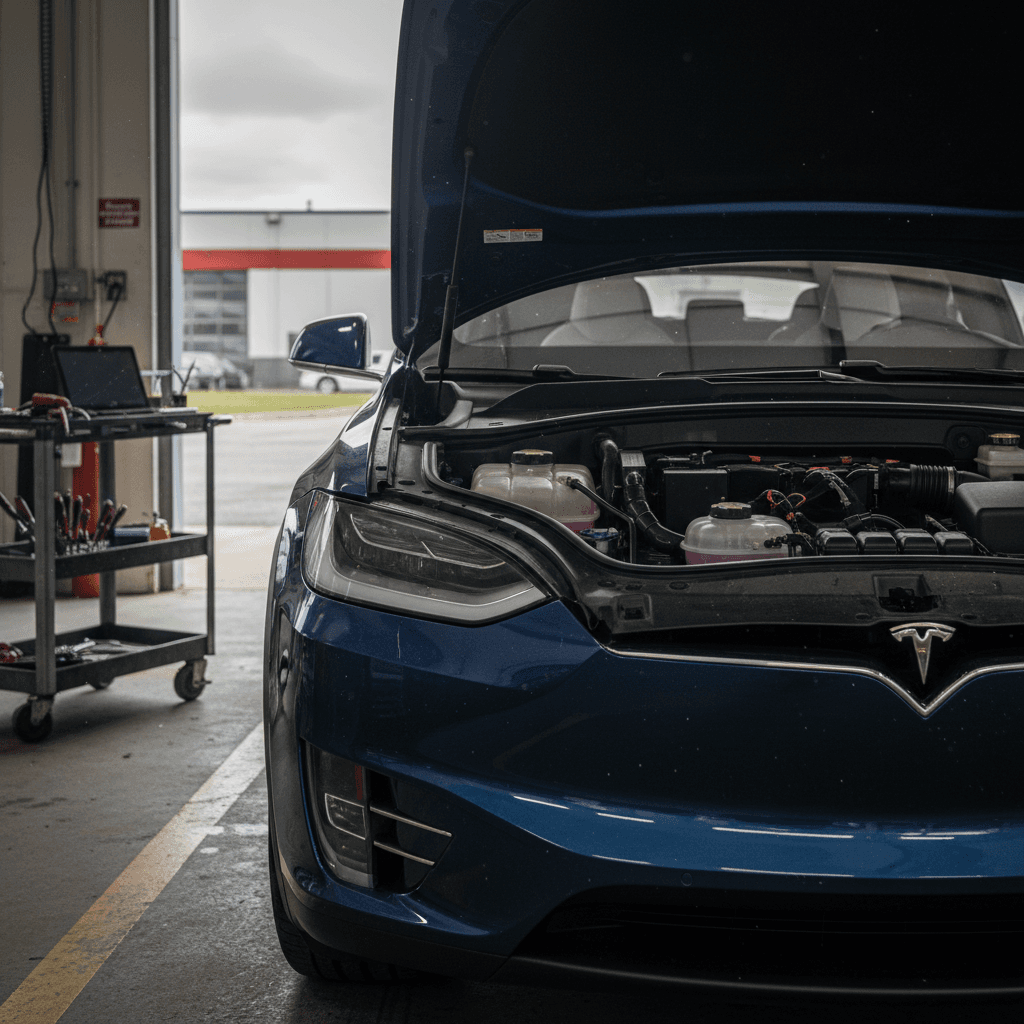
How to check recall history on a used Model X
Whether you’re buying from a private seller, a traditional dealer, or a digital retailer, you should always independently verify the Tesla Model X recalls list for the specific VIN you’re considering. Fortunately, that’s straightforward.
Step‑by‑step: Checking recalls on a Model X VIN
1. Get the full 17‑digit VIN
Locate the VIN on the lower left corner of the windshield, on the door jamb sticker, or in the Tesla’s “Software” screen. Don’t rely on a partial VIN or stock number.
2. Run the NHTSA VIN recall search
Go to the official NHTSA recall lookup and enter the VIN. You’ll see all open safety recalls that have not yet been marked as completed. Closed recalls may not appear, so combine this with service records when possible.
3. Check Tesla’s own recall lookup
Tesla maintains a VIN recall search on its website. This sometimes provides more detail on whether Tesla has a remedy available yet and how the repair will be completed (OTA vs service visit).
4. Ask for Tesla service history
If the car has been serviced through Tesla, the owner can usually pull a service and invoice history in the app. Look for records that correspond to major recall campaigns, especially airbags, steering, and camera issues.
5. Confirm no open recalls at delivery
If you’re buying from a retailer, ask for a written statement that there are <strong>no open safety recalls</strong> on the VIN as of the delivery date, or that any open recall has a scheduled appointment on the books.
6. After purchase, keep the car updating
Post‑purchase, make sure your Model X stays connected to Wi‑Fi or cellular data and that you install OTA updates promptly. This keeps it current on future software‑based recalls as regulators and Tesla continue to refine the fleet.
Leverage professional inspection
What the recalls mean for used Tesla Model X shoppers
From an ownership‑cost and risk perspective, recalls are a **piece of the puzzle**, not the whole picture. Here’s how I’d interpret the Tesla Model X recalls list if I were in the market today.
- A long recall list dominated by software updates is less worrying than a short list full of structural or suspension defects.
- Airbag and seat‑related recalls deserve extra scrutiny, confirm they’ve been completed and look for any associated damage history.
- For early Model X (2016–2018), prioritize inspection of falcon‑wing door operation, seat mounts, and suspension components beyond just recall status.
- For 2021+ refresh vehicles, focus on airbag campaigns, any steering‑wheel/yoke changes, and evidence the car has stayed current on OTA updates.
- Cross‑shop total cost of ownership: insurance, out‑of‑warranty repairs, and tire/suspension wear can matter more to your budget than a font‑size recall.
If you’re buying from a private seller
- Insist on a fresh VIN recall check from both NHTSA and Tesla at the time you meet.
- Ask for screenshots from the Tesla app showing service history where recall work was completed.
- Budget time for a Tesla Service Center visit if an important recall (like an airbag replacement) is still open.
If you’re buying from a retailer or marketplace
- Verify that they have a formal recall policy: Do they ground vehicles with open safety recalls? Are fixes completed before listing?
- Ask how they handle future OTA recalls and whether they help coordinate any required in‑person service.
- Look for third‑party battery and health reports in addition to recall status, for example, the Recharged Score Report on every vehicle at Recharged.
How Recharged approaches recall‑heavy vehicles
How Recharged evaluates recall and safety history
Because the Model X is such a feature‑dense vehicle, our view at Recharged is that you have to look past the simple yes/no of “has this car been recalled.” Instead, we treat recall and safety history as one signal within a structured, EV‑specific evaluation.
Inside a Recharged Score Report on a Model X
How recalls fit into the broader health picture
Battery & charging health
The Recharged Score includes a verified battery health diagnostic, fast‑charge behavior, and DC fast‑charging exposure. Recalls don’t directly measure pack condition, but our tests do.
Recall & safety compliance
We check NHTSA data and Tesla records to confirm all applicable safety recalls are closed or clearly disclosed, with documentation available to shoppers.
Fair market pricing
Recall history, warranty status, mileage, and condition all feed into a fair, transparent price. A Model X that’s up to date on safety campaigns and software is worth more than one that isn’t.
Ready to find your next EV?
Browse VehiclesIf you decide to trade in or sell a Model X you already own, Recharged can provide an instant offer or consignment option. That process starts with the same fundamentals: VIN‑level recall and safety checks, battery diagnostics, and an itemized condition report, so buyers on the other end see a transparent story instead of a mysterious recall list.
Tesla Model X recalls list: FAQ
Frequently asked questions about the Tesla Model X recalls list
Tesla’s Model X has lived a long and complicated life, and its recall record reflects that reality. The **Tesla Model X recalls list** can look overwhelming out of context, but once you separate OTA compliance tweaks from truly critical hardware fixes, a clearer picture emerges. If you verify that all safety campaigns are complete, pair that with a battery‑health check and a thorough inspection, a used Model X can still be an appealing, high‑capability EV, especially when you buy through a platform like Recharged that turns recall history into transparent, decision‑ready data rather than a guessing game.